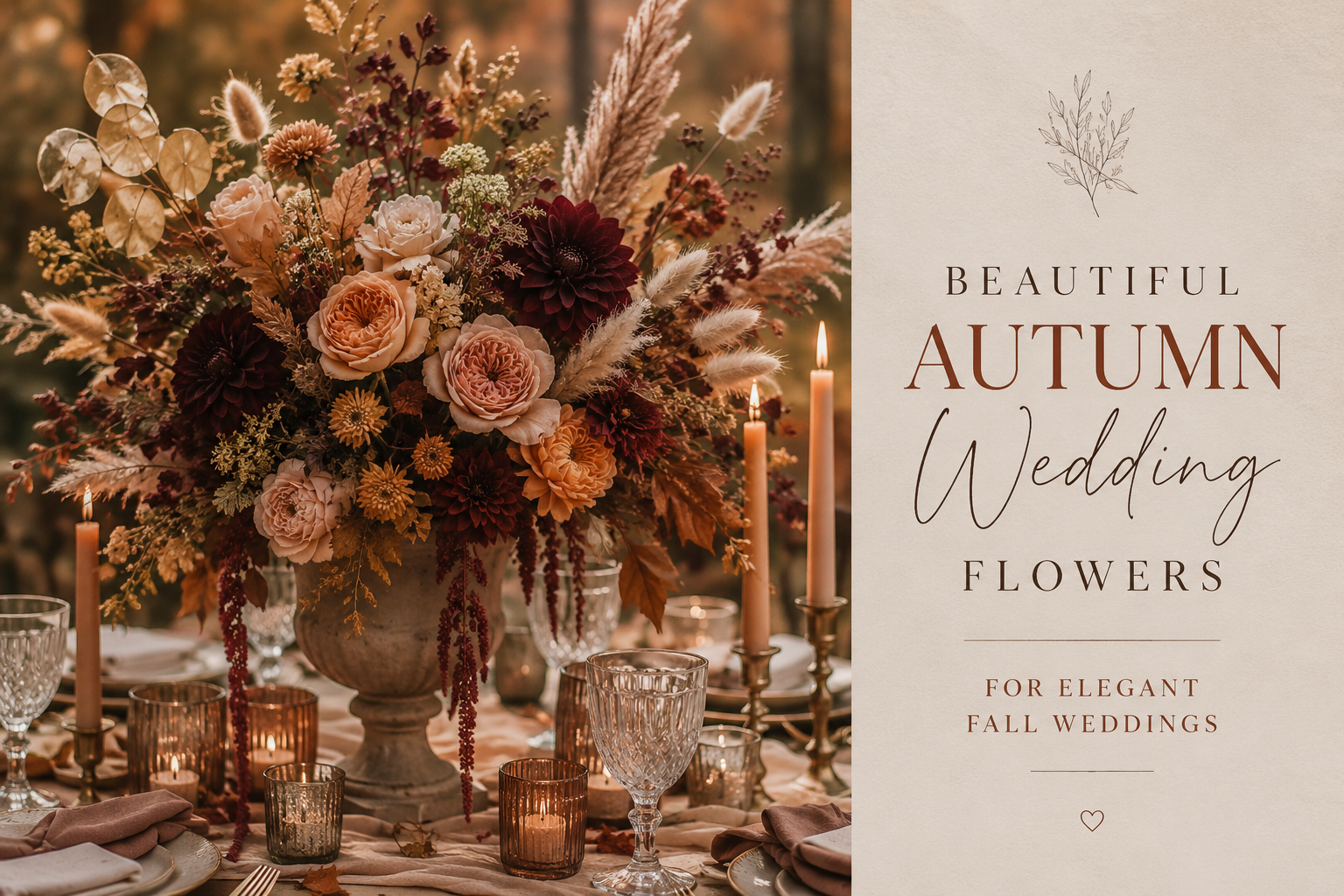
Beautiful Autumn Wedding Flowers for Elegant Fall Weddings
The Autumn Floral Edit · 2026
Autumn Wedding Flowers
The Complete Guide to Seasonal Floral Design for an Unforgettable Celebration
From dark dahlias and copper foliage to dried botanicals, berry-laden branches, and the most breathtaking bouquets of the season — your definitive guide to autumn wedding flowers in 2026.
Autumn wedding flowers are not simply chosen from a season — they are drawn from it. The hedgerows, the woodlands, the harvest fields and the kitchen garden all contribute to an abundance that no other time of year can match for richness, drama, or beauty.
⚠ This post contains affiliate links. If you click and purchase through these links, I may earn a small commission at no extra cost to you. I only recommend products I genuinely believe will add value for my readers. Thank you for supporting Wedding Avenue Studio.
Introduction
Why Autumn Is the Most Extraordinary Season for Wedding Flowers
Ask any florist which season offers them the richest, most creatively expansive palette for wedding work, and the answer will almost always be the same: autumn. No other time of year provides such an extraordinary abundance of material — from the deepest jewel-toned dahlias and garden roses to the burnished copper of turning foliage, the architectural interest of seed pods and dried grasses, the drama of berry-laden branches, and the wild, textured beauty of hedgerow botanicals that make even the most abundant summer arrangement look somehow sparse by comparison. Autumn wedding flowers are not a compromise made against a challenging season. They are a celebration of one of nature’s most magnificent annual performances.
The autumn wedding floristry aesthetic in 2026 reflects the full richness of the season with greater confidence and creative ambition than at any previous point. The trend toward garden-gathered, asymmetric, abundantly textured arrangements — begun years earlier but now fully established — has found its perfect expression in the autumn palette. Dark Café au Lait dahlias tumbling alongside smoke bush and rosehip. Oxblood roses paired with dried grasses and blackberry vine. Deep burgundy scabiosa against the bone-white of dried lunaria. These are not flower arrangements in the conventional sense. They are compositions — layered, considered, and deeply evocative of the world outside the venue door.
This guide covers every dimension of autumn wedding flower planning — from the season’s defining blooms and foliage to bouquet styles, ceremony and reception design, the role of dried botanicals, and the full planning timeline for briefing the florist who will bring your autumn wedding flowers to life.
The Season’s Blooms
The Essential Autumn Wedding Flowers: A Seasonal Bloom Guide
The foundation of any extraordinary autumn wedding flower scheme is a thorough understanding of what the season actually offers — and the confidence to use those materials with intention rather than defaulting to flowers that happen to be available year-round. Autumn’s most beautiful blooms are those that only appear in this season, or reach their absolute peak in September, October, and November. They carry the specific visual character of the time of year in a way that roses ordered from a refrigerated van cannot, however beautiful those roses may be. The florist who builds an autumn wedding scheme from the season’s actual offerings will always produce something more evocative, more cohesive, and more genuinely extraordinary than one who simply uses out-of-season flowers in darker colours.
01
The Dahlia
The undisputed queen of autumn wedding flowers. Available in an extraordinary range of forms — from the dinner-plate dahlia with its architectural volume to the delicate pompon, the shaggy decorative, and the iconic Café au Lait in its warm blush-caramel tone — the dahlia is irreplaceable in any autumn flower scheme. In deep burgundy, terracotta, apricot, and near-black, it carries the visual language of the season more completely than any other bloom.
02
The Garden Rose
Garden roses reach their second, deeply beautiful flush in autumn — richer in colour, more complex in fragrance, and more layered in petal structure than their summer counterparts. In champagne, deep blush, warm peach, and oxblood, they anchor autumn wedding flower arrangements with a romantic gravitas that no other rose achieves. The autumn garden rose is not simply a summer rose in a darker colour. It is a different, more magnificent thing entirely.

03
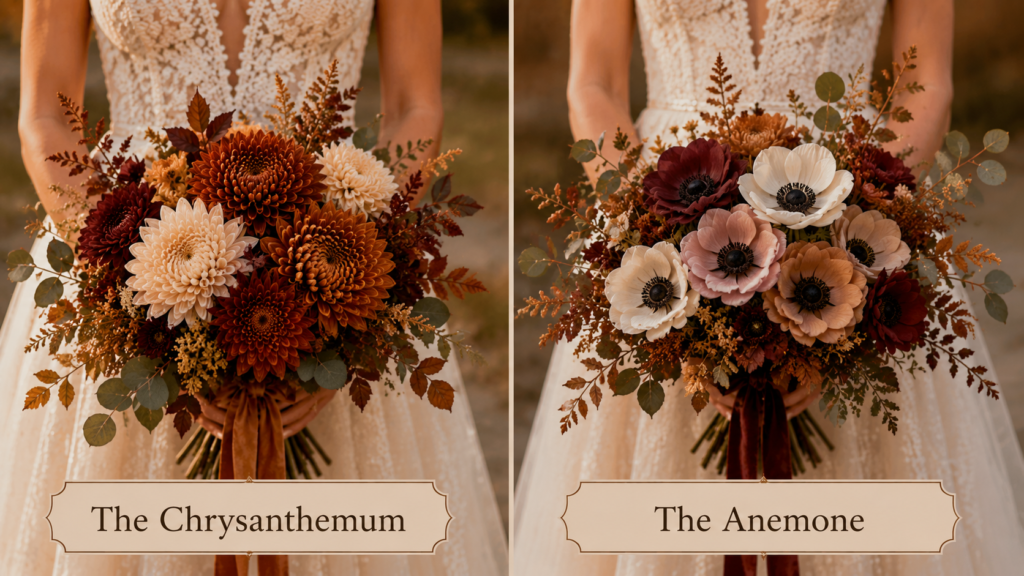
The Chrysanthemum
Once unfairly dismissed as purely a funeral flower, the chrysanthemum has undergone a complete and thoroughly deserved editorial rehabilitation in recent years. In 2026 it is one of the most celebrated of all autumn wedding flowers — particularly in deep rust, bronze, and warm amber tones where its globe-shaped, densely petalled heads create a textural richness that few other blooms can match at a comparable price point.
04
The Anemone
One of autumn’s most graphic and distinctive wedding flowers. The anemone’s deeply coloured petals — wine-red, inky purple, deep magenta — surrounding a near-black centre create a visual impact that is disproportionate to the flower’s modest scale. They photograph with extraordinary depth and add a wild, almost jewel-like quality to autumn wedding flower arrangements of every style.
“The florist who truly understands autumn wedding flowers does not simply order darker roses. She walks the hedgerows, visits the kitchen garden, and fills her van with the season itself — then builds something that could only ever have been made in October.”
— The Autumn Floral Edit
Foliage & Texture
Autumn Foliage, Berries, and Botanicals: The Materials That Make the Difference
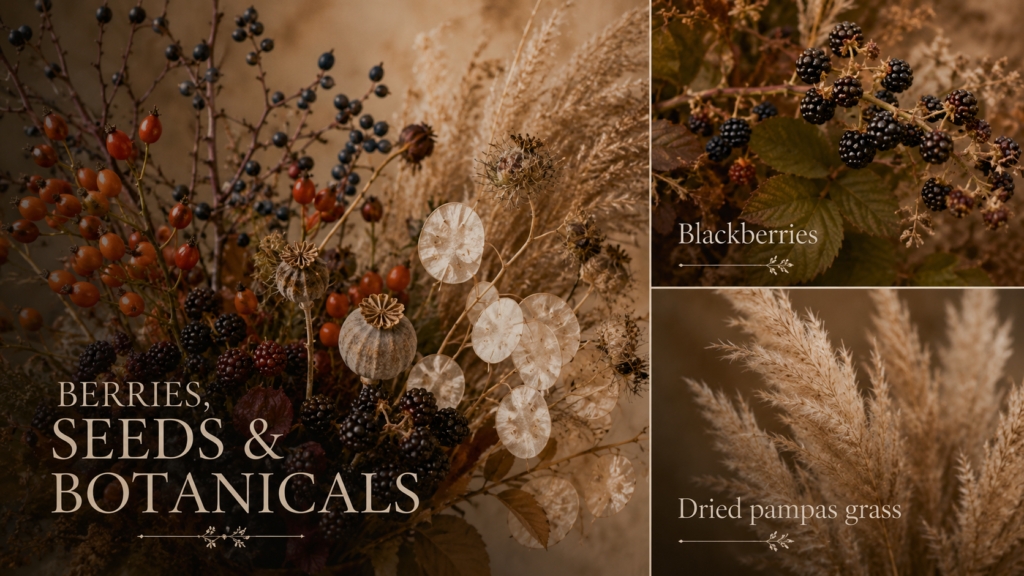
In autumn wedding flower design, foliage is not a background material. It is a feature — as visually significant as any bloom and in many cases more dramatically beautiful. The turning foliage of beech, oak, and maple in September and October provides a range of copper, amber, and russet tones that no flower can replicate. Smoke bush offers deep burgundy-purple clouds of texture that transform any arrangement from beautiful to extraordinary. Rosehip and sloe branches bring both colour and architectural structure. Blackberry vine adds a wild, abundant quality. And the dried and skeletal botanicals — seed heads, teasels, dried grasses, preserved lunaria — provide the textural depth that distinguishes an autumn wedding flower scheme from a generic floral arrangement in dark colours.
The most celebrated autumn wedding flower schemes of 2026 use foliage and botanical materials in roughly equal proportion to blooms — or in some cases, with botanical materials taking the dominant role and flowers used as the accent rather than the anchor. This approach produces arrangements of extraordinary visual complexity and natural beauty that feel completely of their season, photographing magnificently in the low, golden light that is autumn’s greatest gift to any wedding day.
Foliage to Request
- Turning beech — copper, amber, and tawny brown
- Smoke bush — deep burgundy-purple cloud texture
- Oak branches with acorns for architectural scale
- Olive and eucalyptus for silver-green contrast
- Dark-leafed elder for brooding depth
- Copper beech — the richest of all autumn foliages
Berries, Seeds & Botanicals
- Rosehips — orange-red, abundant, wildly beautiful
- Sloe berries — deep blue-black on bare branches
- Blackberries on the vine for trailing arrangements
- Dried pampas grass for architectural height
- Poppy and nigella seed heads for delicate structure
- Dried lunaria — translucent silver discs of extraordinary beauty
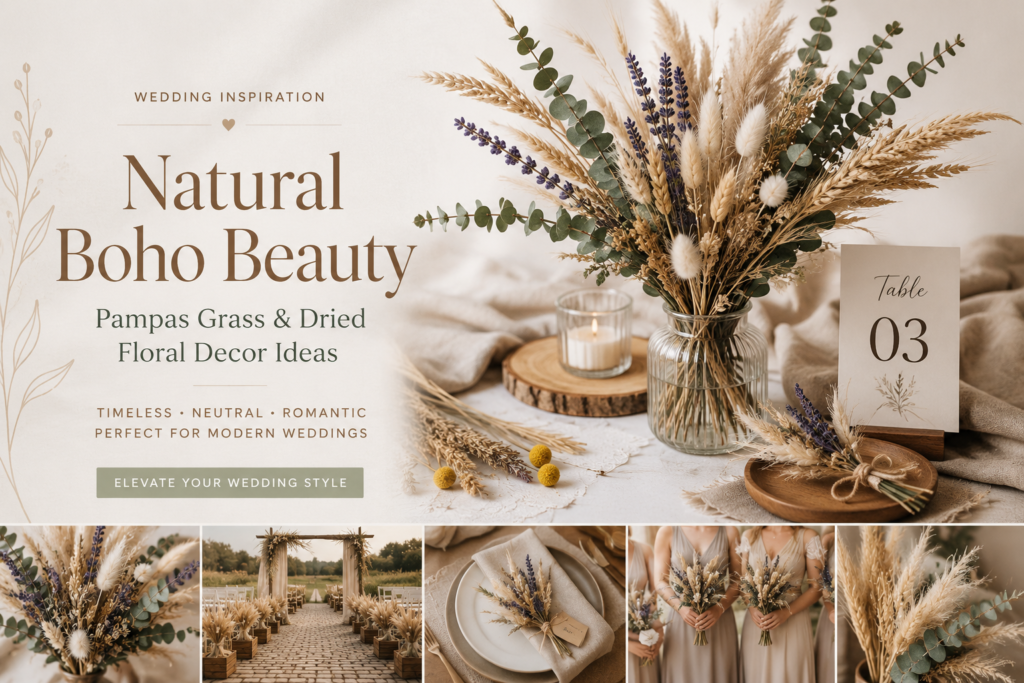
🌾 Create extraordinary architectural height in your autumn arrangements: A generous dried pampas grass bouquet transforms any autumn wedding installation — ceremony arches, tall urns, welcome displays — with the specific feathery texture and warm cream tone that no other botanical can replicate at this scale.
The Forager’s Approach to Autumn Wedding Flowers
The most extraordinary autumn wedding flower schemes in 2026 are those where the florist has sourced locally and seasonally — visiting farm flower growers, cutting gardens, kitchen gardens, and in some cases the hedgerows and woodland edges near the venue itself. Ask your florist about their approach to local and seasonal sourcing. A florist who can tell you exactly where each element comes from and why it belongs in October will produce something of a completely different quality from one who orders from a central flower market regardless of the calendar.
The Bridal Bouquet
The Autumn Wedding Bouquet: Abundance, Structure, and Seasonal Soul
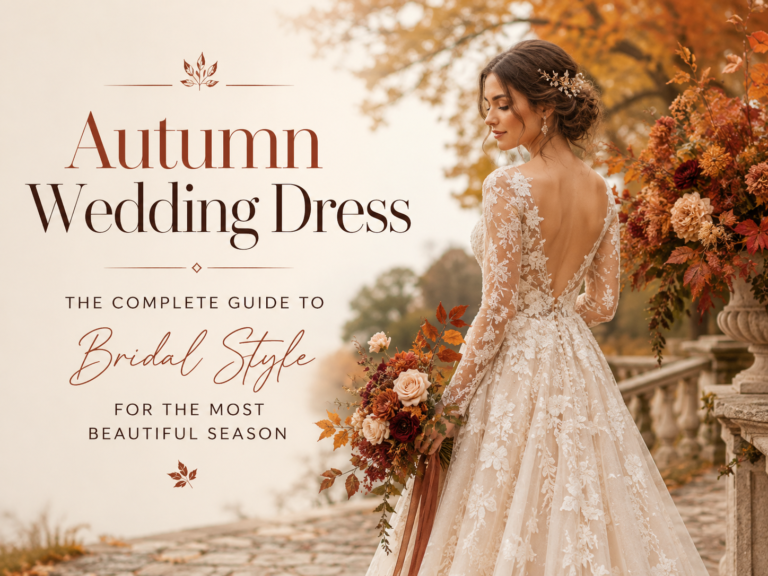
The autumn wedding bouquet is one of the most glorious creative commissions in all of floristry. The season’s abundance means there is simply more to work with — more colour variation, more textural complexity, more structural material, more of everything that makes a bouquet memorable. An autumn bridal bouquet can contain layer upon layer of visual interest: a deep burgundy dahlia surrounded by warm peach garden roses, threaded through with wine-red anemones, backed by smoke bush and copper beech, and trailed with rosehip vine and dried lunaria. It is not arranged so much as composed — and in the hands of an exceptional florist, an autumn wedding bouquet is one of the most beautiful objects in the entire celebration.
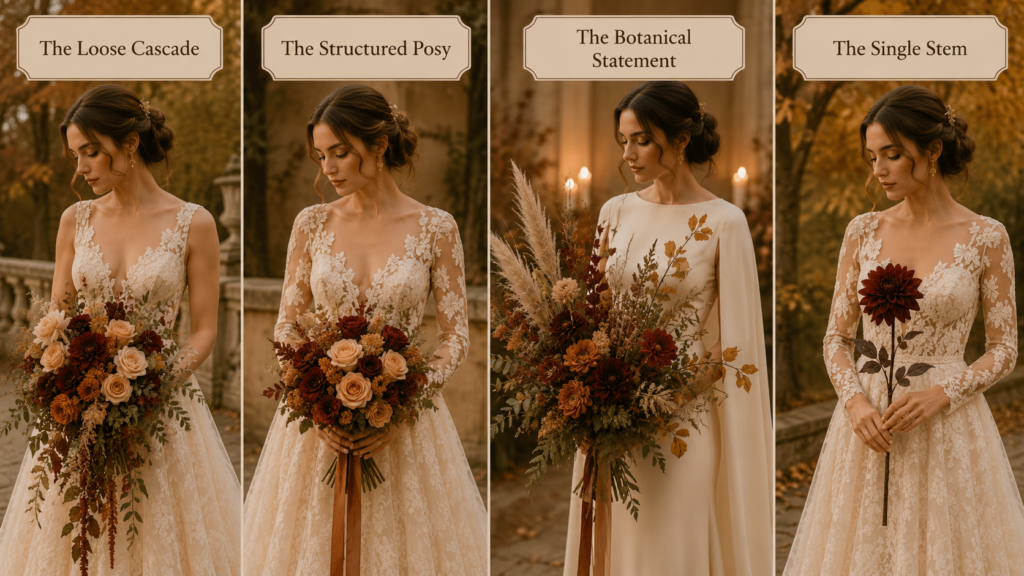
The dominant bouquet style for autumn wedding flowers in 2026 is the loose, garden-gathered cascade — an arrangement that appears to have been picked from the garden moments before the ceremony, generous and slightly asymmetric, with trailing elements that create movement in photographs and a sense of organic abundance that tightly structured round bouquets cannot replicate. This style is particularly well-suited to autumn’s materials because it allows the foliage and botanical elements to trail and move naturally, and because it responds beautifully to the low, angled light conditions that autumn provides for outdoor photographs.
🍂
The Loose Cascade
The defining autumn bouquet style of 2026. Abundantly gathered, gently asymmetric, with trailing foliage and botanical elements. Appears effortless and photographs magnificently in movement and natural light.
🌿
The Structured Posy
A tightly gathered, hand-tied bouquet in a dome or rounded form. Autumn colours and textures in a structured posy create an effect of concentrated luxury — deep and rich and completely of the season.
🌾
The Botanical Statement
A bouquet led by foliage, dried grasses, and botanical material with blooms used as accent rather than anchor. Deeply textured, intensely seasonal, and unlike anything possible in any other time of year.
🍁
The Single Stem
For the minimalist autumn bride — a single spectacular dinner-plate dahlia or an architectural branch of turning oak. More considered and more memorable than a conventional bouquet, and entirely of the moment.
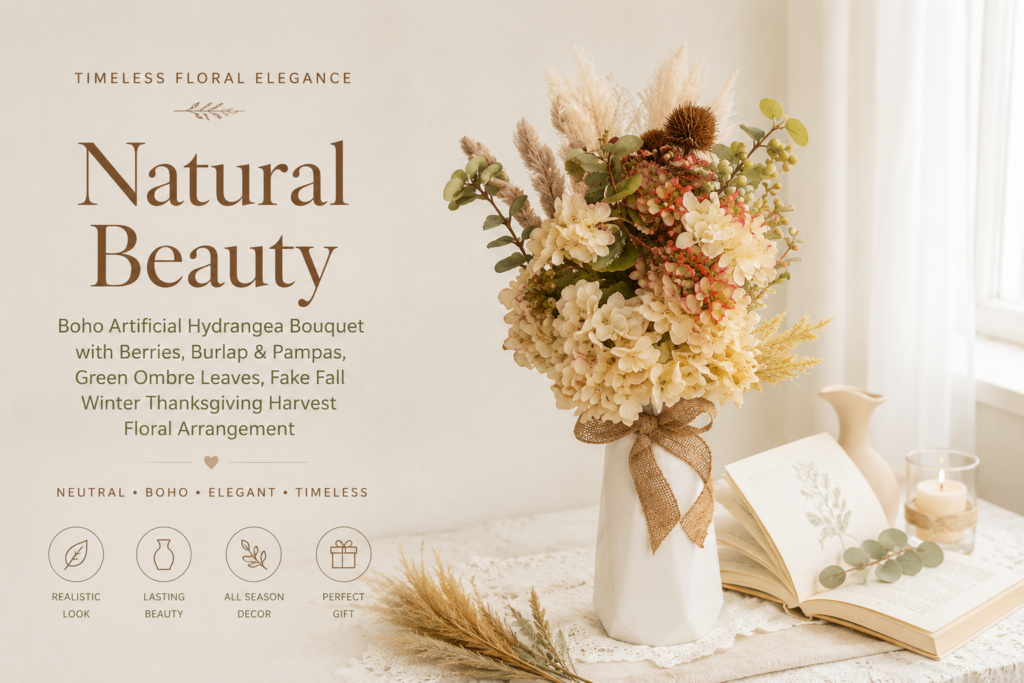
💐 A complete dried botanical arrangement, ready to style: A premium dried flower bouquet brings the full textural complexity of the autumn botanical aesthetic in a single, beautifully curated arrangement — perfect as a centrepiece, a gift, or the starting point for a larger floral installation.
Ceremony & Reception Design
Autumn Wedding Flower Design: From Ceremony Arch to Reception Table
The full expression of an autumn wedding flower scheme extends far beyond the bridal bouquet. Every floral moment in the day — the ceremony arch or altar arrangement, the aisle markers, the reception centrepieces, the installations, the candle surrounds, the cake flowers, the place settings — contributes to the overall atmosphere. And in an autumn wedding, the opportunity to create a genuinely immersive, season-specific floral world is greater than at any other time of year. The challenge is not finding enough material. It is having the restraint and the vision to use the abundance of the season with coherence and purpose.
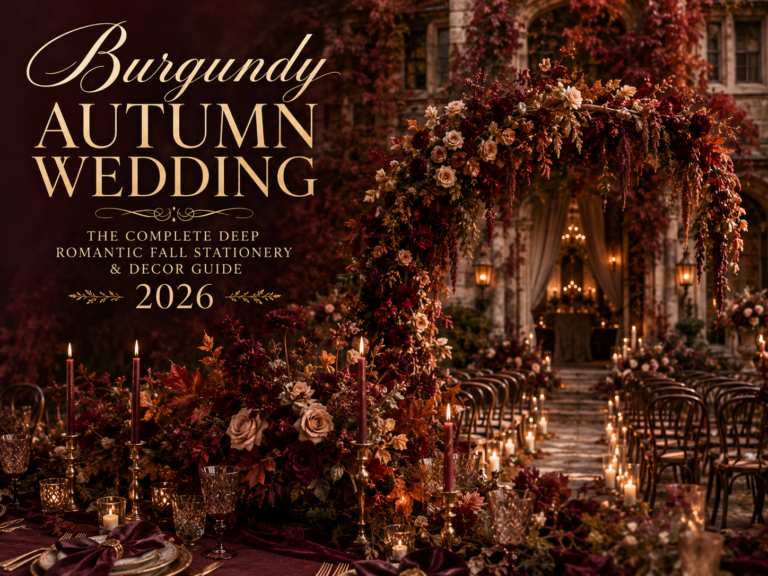
The most visually extraordinary autumn wedding flower installations are those that blur the boundary between the designed floral scheme and the natural world outside. A ceremony arch of oak branches loaded with turning foliage, rosehips, and scattered dahlias that appears to have grown from the venue floor. Reception centrepieces that spill across the table in a loose abundance of dark blooms, copper leaves, and trailing botanical material, lit by the flickering warmth of pillar candles. These arrangements do not decorate the venue — they transform it into a world.
🌿 The Ceremony Arch
An asymmetric arch of oak or willow branches laden with turning foliage, dahlias, and rosehips creates the most photographically powerful ceremony backdrop available in autumn. Frame the couple within the season itself — there is no more beautiful setting for an exchange of vows.
🕯️ Candlelit Centrepieces
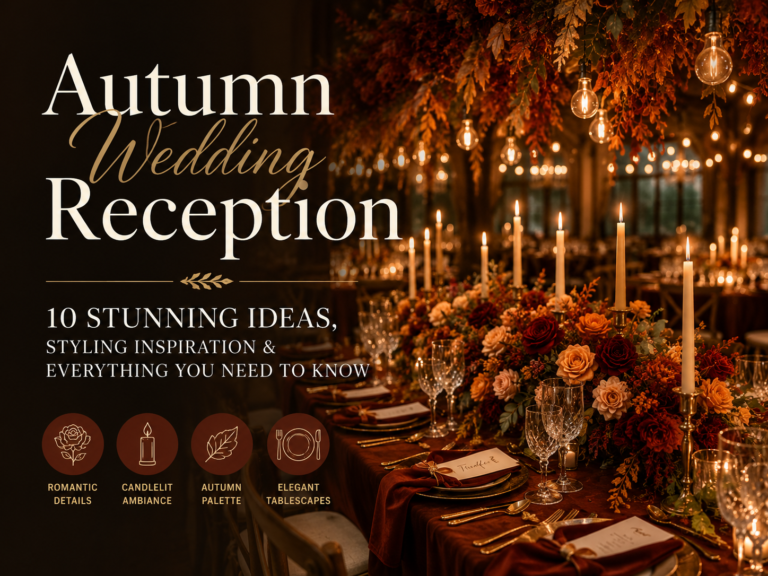
Low, spilling arrangements of dark dahlias, garden roses, and copper foliage surrounding clusters of varying-height pillar candles. The most atmospheric autumn reception table design — and the one that looks most extraordinary as the evening light fades and the candles come into their own.
🌾 Tall Statement Urns
Tall stone or antique bronze urns filled with architectural branches, pampas grass, and a cascade of seasonal blooms create vertical drama at venue entrances, beside ceremony aisles, and at the ends of reception tables. Scale and abundance are the governing principles.
🍁 Foliage Runners
A long table runner of loose, natural foliage — copper beech, olive branches, rosehip vine — interspersed with scattered blooms and pillar candles is one of the most beautiful and cost-effective autumn reception table designs available. It uses the season’s most abundant materials to magnificent effect.
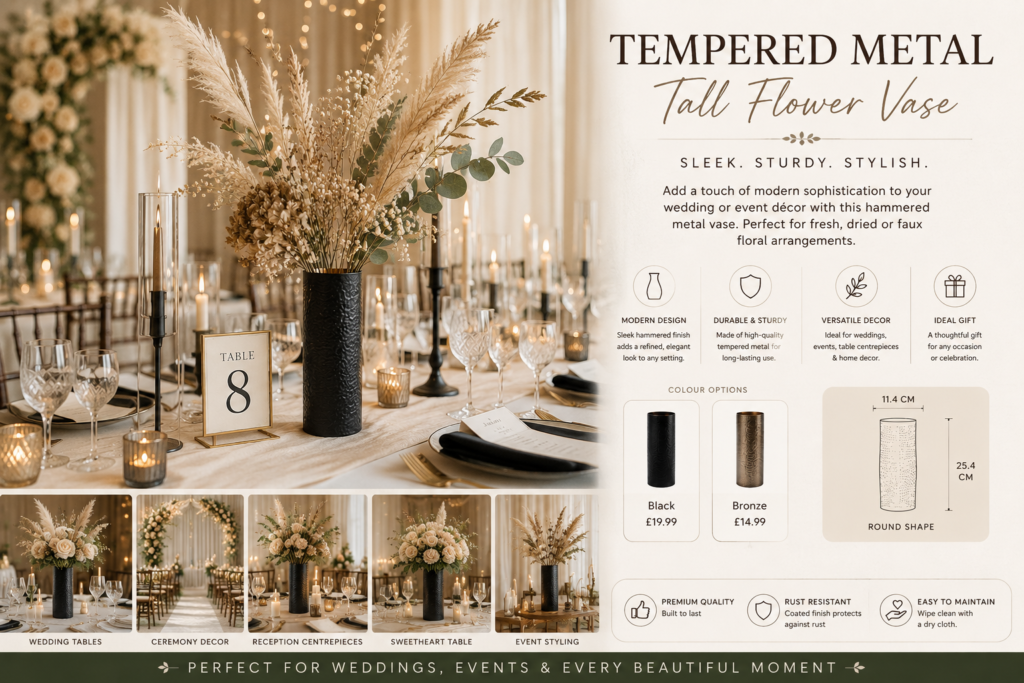
🏺 Create dramatic vertical installations with a tall copper floor vase: A tall copper vase filled with architectural branches, pampas grass and cascading autumn florals is the most impactful single statement piece available for an autumn wedding — at venue entrances, beside the ceremony aisle, or anchoring the reception space.
Dried & Preserved Botanicals
Dried and Preserved Botanicals: Autumn’s Most Enduring Gift
No other season integrates dried and preserved botanical materials into its wedding flower aesthetic as naturally or as beautifully as autumn. The dried grasses, seed heads, preserved foliage, and skeletal botanicals that complement autumn wedding flowers so perfectly are not a budget compromise or a practical workaround — they are design choices of genuine creative ambition that produce arrangements and installations of extraordinary beauty. In 2026, the dried botanical element is not an addition to the autumn wedding flower scheme. In the most sophisticated schemes, it is a defining character of it.
One of the most compelling advantages of dried botanicals in an autumn wedding flower scheme is their longevity: they can be installed days before the wedding without wilting, they look as beautiful at midnight as they did at noon, and — perhaps most importantly — they can be taken home by the couple after the wedding as a lasting reminder of the day. A dried botanical wreath or arrangement from an autumn wedding becomes a piece of art that lives in the home for months or years after the celebration, carrying the memory of the day in its textures and colours.
Dried Botanicals to Use
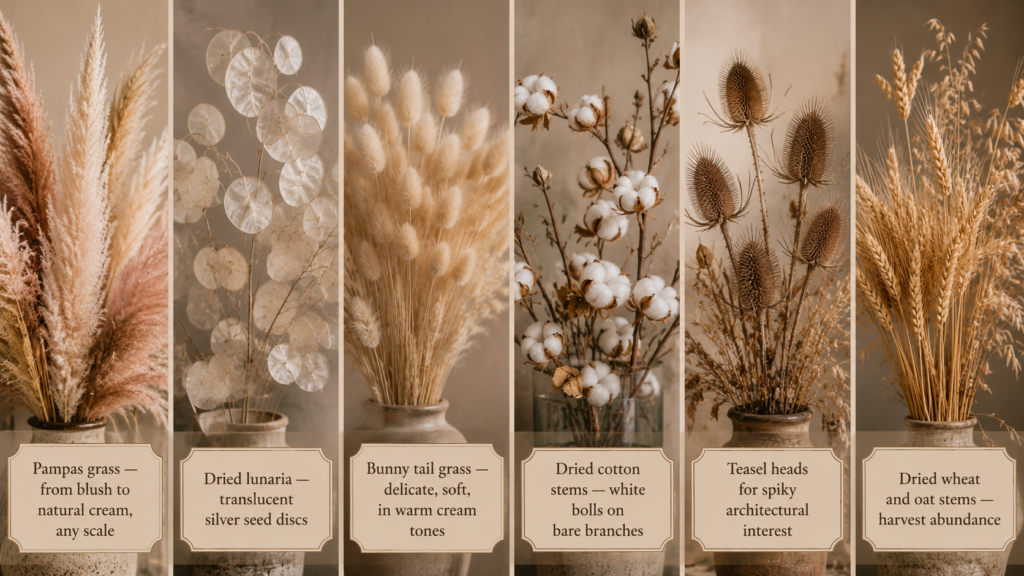
- Pampas grass — from blush to natural cream, any scale
- Dried lunaria — translucent silver seed discs
- Bunny tail grass — delicate, soft, in warm cream tones
- Dried cotton stems — white bolls on bare branches
- Teasel heads for spiky architectural interest
- Dried wheat and oat stems — harvest abundance
How to Use Them
- Woven through fresh arrangements for textural contrast
- As dominant material in bouquets with fresh bloom accents
- In large-scale ceremony and reception installations
- As hanging ceiling installations above the reception table
- In welcome wreaths at venue entrance doorways
- As take-home gifts or favours for wedding guests
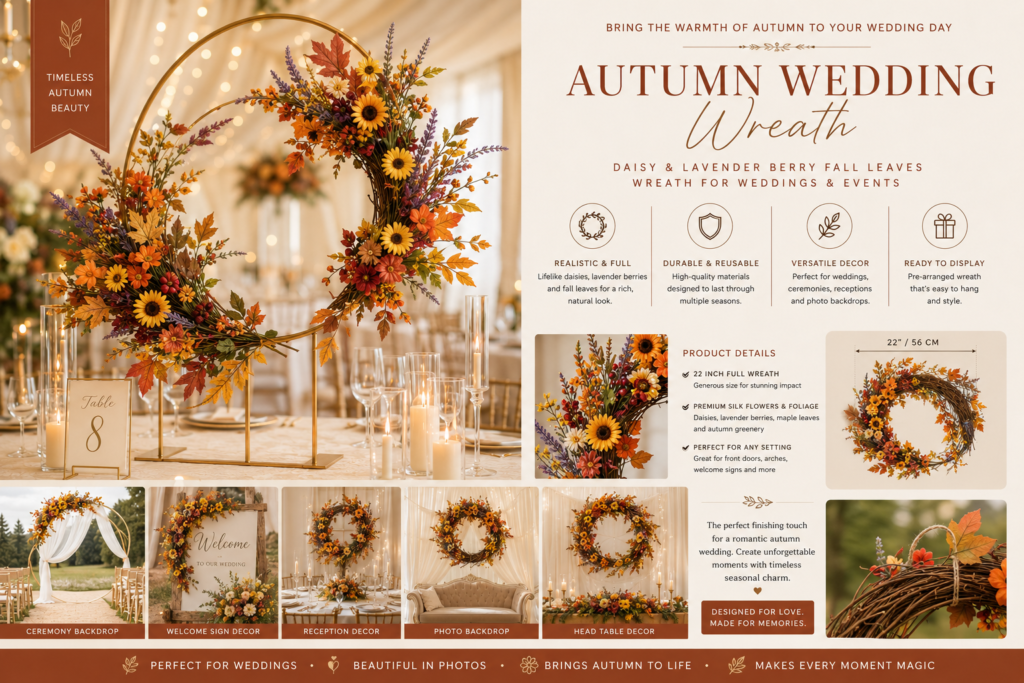
🌿 The most beautiful welcome detail for an autumn venue entrance: A large dried botanical wreath at the venue door creates an immediate and powerful first impression — it carries the full textural richness of the autumn aesthetic in a single piece that lasts indefinitely and becomes a cherished keepsake long after the wedding day.
“An autumn wedding flower scheme built with dried botanicals at its heart does something that a purely fresh arrangement cannot — it carries the texture and the memory of the whole season within it, and it will still be beautiful long after the last candle of the reception has been extinguished.”
— The Autumn Floral Edit
Colour Palette
Building Your Autumn Wedding Flower Palette
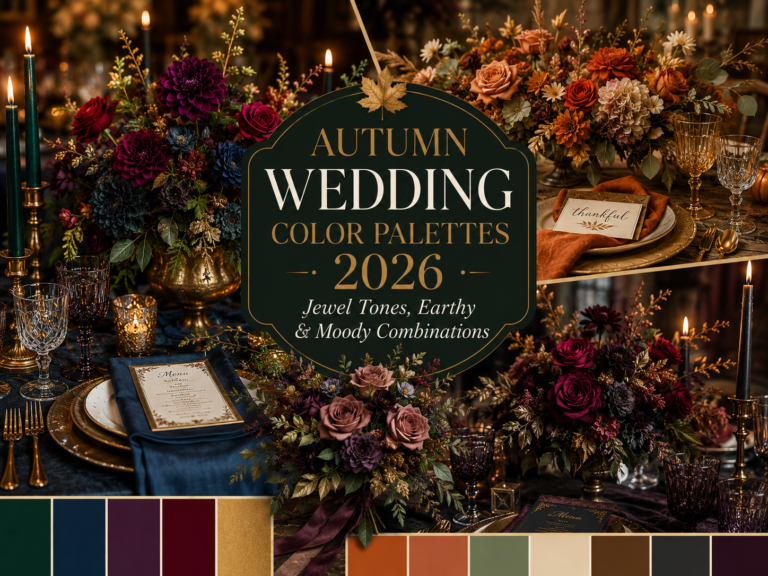
The autumn wedding flower palette works on the same principle as all great colour design — anchoring, layering, and contrasting. An anchor colour — the dominant tone of the scheme — provides visual coherence. Layering tones add depth and complexity within the same colour family. And contrast colours provide the moments of surprise and energy that prevent any palette from becoming monotonous. In autumn wedding flowers, this principle produces some of the richest and most visually satisfying colour schemes in all of wedding floristry.
Deep Burgundy
Burnt Terracotta
Amber Gold
Blush Peach
Warm Cream
Practical Planning
Ten Things Every Couple Should Know About Autumn Wedding Flowers
- Book a specialist autumn florist, not simply a good florist. Not every talented wedding florist has deep experience with the specific materials of the autumn season. Ask to see their autumn portfolio specifically — and look for evidence of real seasonal material: dahlias, turning foliage, rosehips, and dried botanicals rather than generic dark roses.
- Brief your florist with the venue, the palette, and the dress — in that order. The most successful autumn wedding flower schemes are those built in relationship with the physical space they will occupy and the overall aesthetic of the day. Show your florist the venue in autumn if at all possible, and bring photographs of your dress to every meeting from the first.
- Visit your venue in October before finalising the flower scheme. The natural colour of the venue’s surrounding landscape in October will either complement or compete with your chosen palette. A venue surrounded by copper beech trees calls for a very different flower scheme from one set in a stone estate with clipped yew hedges.
- Understand the dahlia season. The dahlia season in the UK runs from late July through to the first hard frost — typically late October or early November. For October weddings, dahlias will be in their absolute peak. For late November weddings, confirm availability with your florist and have alternatives planned in case an early frost ends the season prematurely.
- Embrace dried botanicals from the beginning of the planning process. The most beautiful autumn wedding flower schemes integrate dried and fresh materials as equals, not as alternatives. Introduce dried botanicals to your florist conversations from the first meeting and allow them to be a genuine creative element rather than a backup option.
- Consider the foliage window for peak colour. Autumn foliage colour peaks vary by location, year, and weather conditions. In the UK, mid-October typically offers the most vivid colour, but this shifts by region and can vary by several weeks. Discuss the likely foliage conditions for your specific date and location with your florist and plan the scheme with appropriate flexibility.
- Plan the flower budget to include installation time. Autumn wedding flower installations — ceremony arches, tall urns, ceiling installations, cascading centrepieces — require significantly more time to install than conventional arrangements. Ensure your florist’s quote includes their full installation fee and that you have confirmed a realistic setup schedule with the venue.
- Match the bouquet weight and scale to the dress. A heavily structured velvet ballgown calls for a generous, substantial bouquet. A sleek column gown in silk crepe is better served by a looser, lighter arrangement. The bouquet is photographed in conversation with the dress in every image — its scale and visual weight must be in balance.
- Consider longevity for all-day arrangements. Autumn temperatures are cooler than summer, which benefits cut flowers significantly — most autumn wedding flowers will hold beautifully throughout a full day and evening without the wilting risk that warm summer days present. However, very warm indoor venues can affect this. Discuss conditioning and water tube options with your florist for the bridal party’s flowers.
- The best autumn wedding flowers are the ones that make the season itself feel present in the room. Not dark flowers placed in front of a neutral backdrop. Not summer flowers in autumn colours. But the actual materials of the season — the dahlias, the rosehips, the copper foliage, the dried grasses — arranged with skill, intention, and a genuine love of what October and November have to offer. When you find a florist who understands this, you have found the right person for your day.
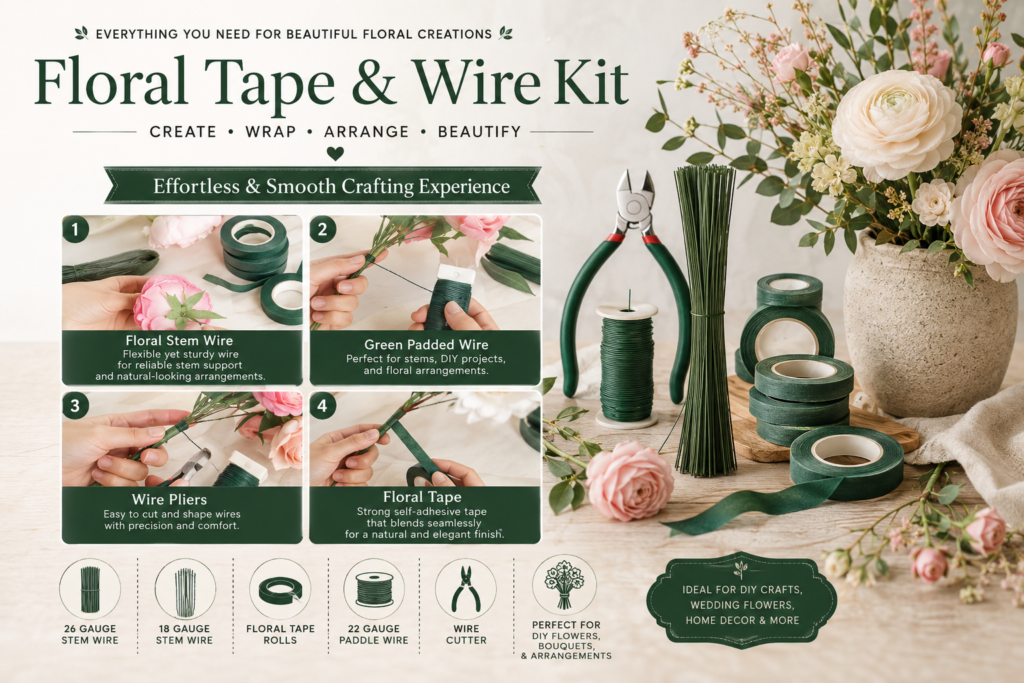
✂️ For brides creating their own autumn arrangements: A professional flower arranging kit gives you everything needed to build your own autumn wedding centrepieces, welcome displays or dried botanical installations — wire, tape, scissors and all the tools a professional florist relies on, in a single kit.
“The season does half the work for you. Autumn is already the most beautiful, most abundantly decorated landscape of the year. Your flowers do not need to compete with it — they need to belong to it.”
— Autumn Floral Planning Notes
Closing Thoughts
Autumn Wedding Flowers Are a Conversation With the Season Itself
There is a quality that the very best autumn wedding flowers share — a quality that has nothing to do with budget or scale or the technical skill of the florist, though all of these contribute to it. It is the quality of belonging. Of looking as though they could only ever have been gathered in this season, placed in this space, on this particular October day. The dahlias and rosehips and copper foliage and dried grasses do not merely decorate the venue. They bring the world outside it indoors — the hedgerows and the harvest fields and the woodland edges and the kitchen garden — and fill the space with the full, extraordinary abundance of the most beautiful season of the year.
Find the florist who understands the season and loves it as you do. Brief them with your venue, your dress, your palette, and your vision — and then give them the creative freedom to do what a great autumn florist does best: build something from the materials of October that is more beautiful, more layered, and more deeply evocative of the season than anything you could have imagined from a mood board alone. That is the autumn wedding flower scheme worth having.