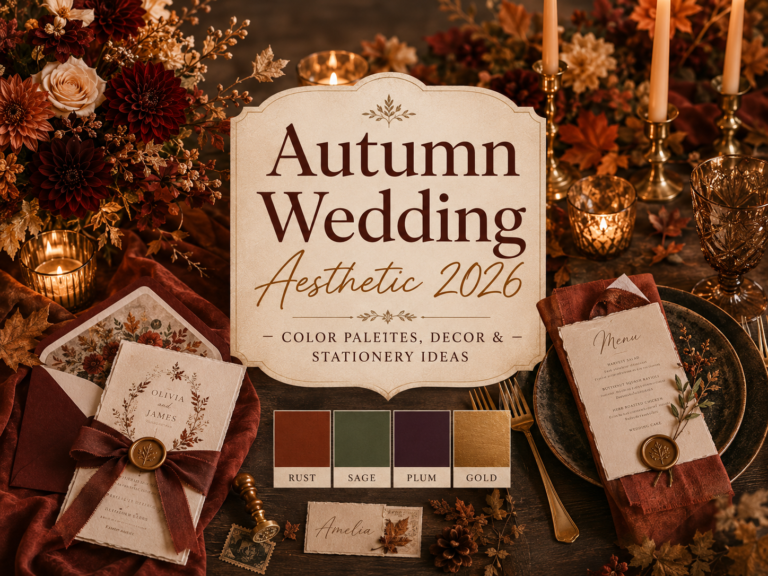
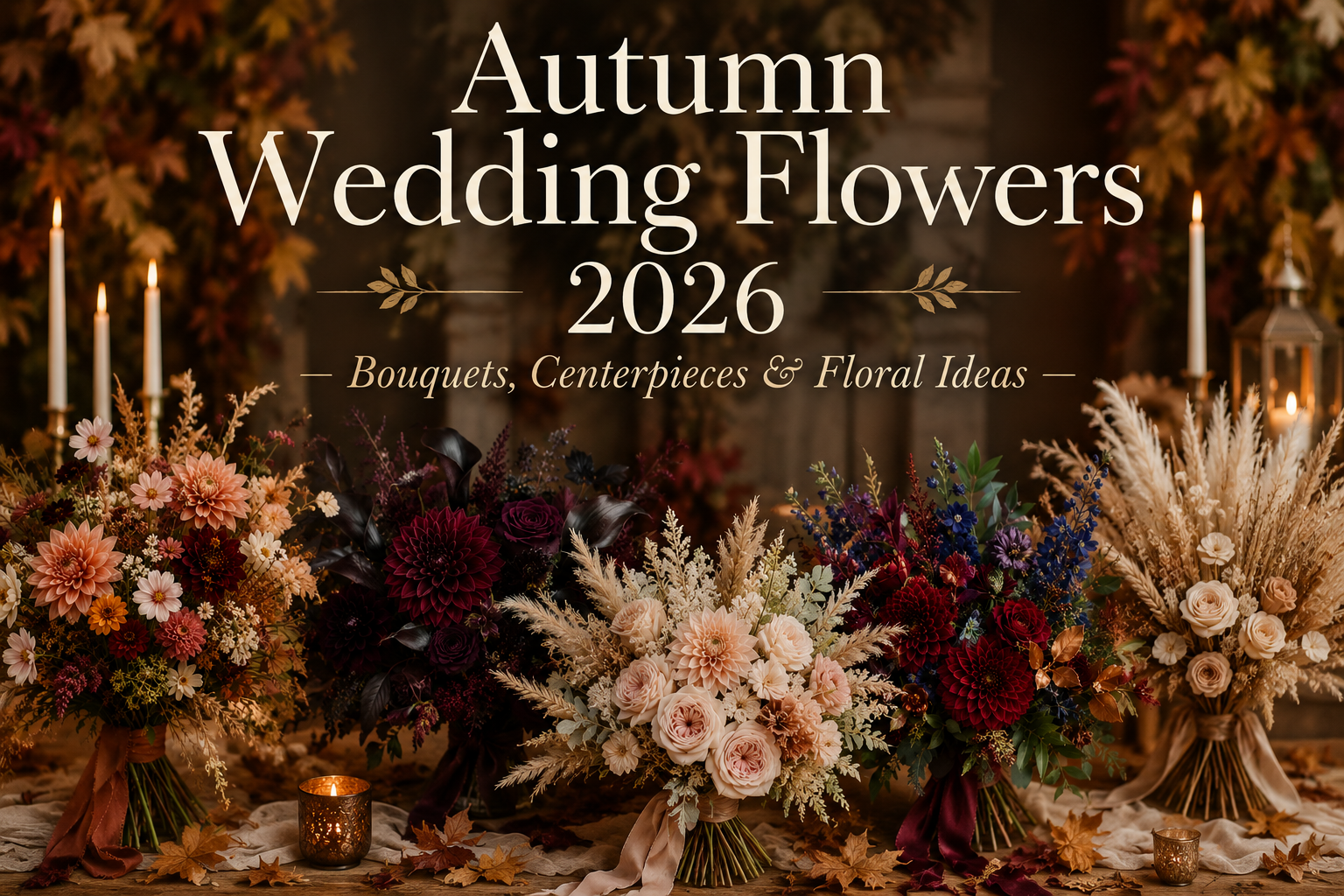
Autumn Wedding Flowers 2026 — Bouquets, Centerpieces & Floral Ideas
Autumn Wedding · 2026
Autumn Wedding Flowers 2026 — Bouquets, Centerpieces & Floral Ideas
From wildflower meadow bouquets and dramatic dark florals to dried pampas arrangements and jewel-toned centrepieces — the complete guide to autumn wedding flowers in 2026.
No season offers a florist — or a bride — what autumn does. The palette is already extraordinary before a single stem is chosen: deep rusts, burning ambers, the sharp green of late foliage, the dusky pinks and plums of dahlias at their peak. The flowers of autumn are not competing with the season for attention; they are participating in it. This guide covers every major autumn wedding flowers decision you will face — bouquet styles, centrepiece approaches, ceremony florals, and how to carry your floral vision through to the stationery that sets expectations before a single dahlia is arranged.
Autumn florals do not ask to be noticed. They demand it — with a quiet authority that no other season matches. The dahlia knows exactly what it is doing in October light.
Section 01
Autumn Wedding Bouquet Styles for 2026
The autumn bridal bouquet is the floral decision that matters most — the one held in every photograph, carried for the duration of the ceremony, and pressed or preserved as the most intimate floral keepsake of the day. In 2026, the most compelling autumn wedding bouquets are moving away from structured roundness and toward something more expressive, more specific, and more genuinely seasonal. Here are the five styles defining the year.
1.1 — The Wildflower Meadow Bouquet
Dahlias · Cosmos · Dried grasses · Late wildflowers

The fall wildflower bouquet is the most romantic expression of the autumn garden at its most unrestrained. It looks as though it was gathered rather than designed — a generous armful of dahlias in dusty peach and terracotta, cosmos in pale pink and white, trailing dried grasses catching the light, and the odd stem of late-season wildflower that has no right to be so beautiful in October. The effect is loose and abundant without being shapeless: there is structure beneath the wildness, a practiced hand behind the apparent spontaneity.
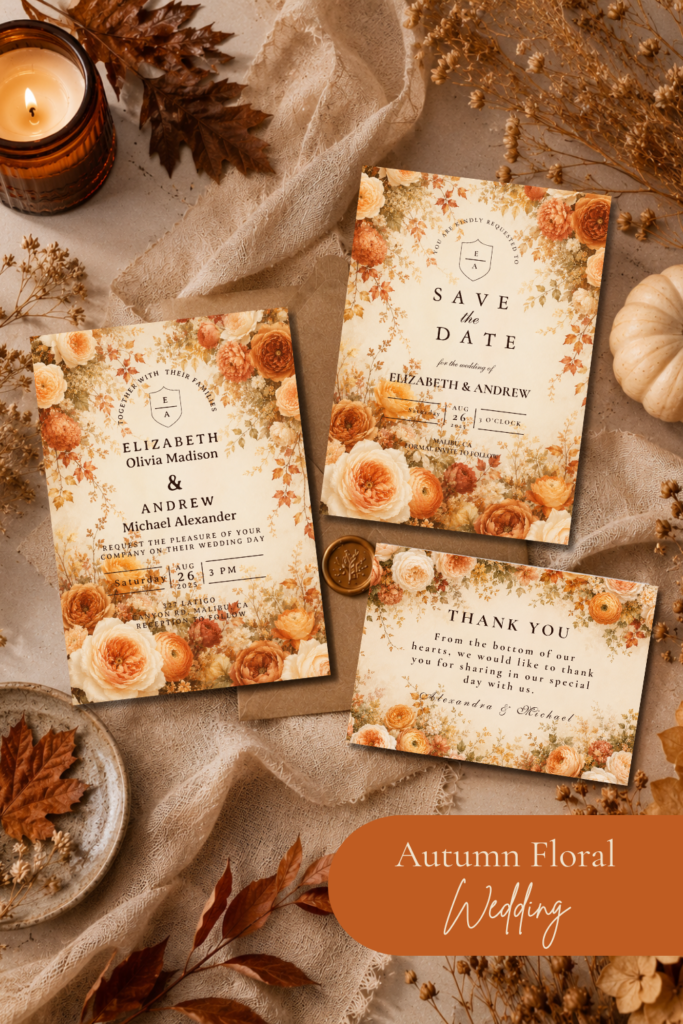
This bouquet is perfect for rustic barn weddings, outdoor woodland ceremonies, and any celebration where the natural setting is doing significant aesthetic work. It photographs magnificently in open air — a wildflower bouquet against autumn foliage, held in dappled October light, is one of the most enduringly beautiful wedding images possible. The palette tends to warm: rust, amber, dusty peach, pale gold, and the occasional deep burgundy dahlia for contrast. The wildflower aesthetic carries beautifully into your paper goods — botanical illustrations and hand-painted florals on your invitation suite create a cohesive visual story from the first envelope guests open.
Stationery for Wildflower Bouquet Brides
The Autumn Floral collection — lush botanical illustration in deep terracotta and warm gold — and the Autumn Rustic suite — organic, hand-crafted, and earthy in its botanical palette — are the natural stationery companions for the wildflower aesthetic.
1.2 — The Dark & Moody Bouquet
Deep burgundy dahlias · Black calla lilies · Dark plum roses · Deep foliage
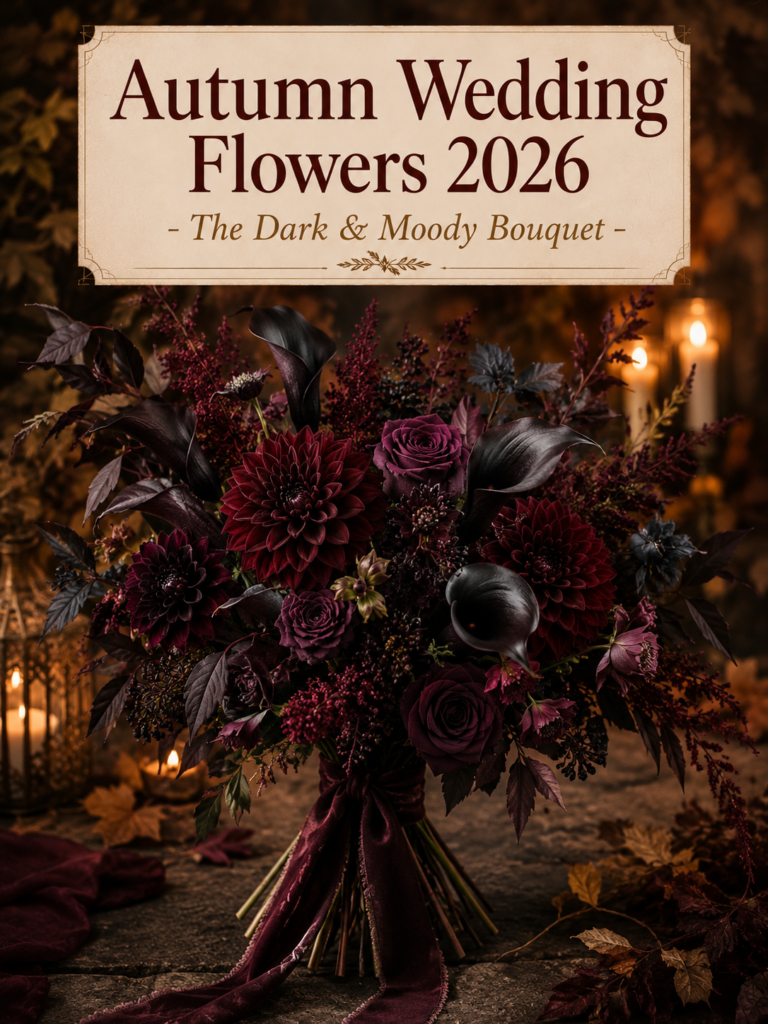
There is a particular kind of bouquet that exists only in autumn — one that could not be made in any other season without seeming affected. Deep burgundy dahlias, black calla lilies, dark plum roses, and brooding foliage in near-black tones: this is the bouquet that the season makes possible and that photographs in a way nothing else quite does. Against a white wedding gown it is dramatic. Against a dark or jewel-toned dress it is extraordinary. In candlelight it glows from within.
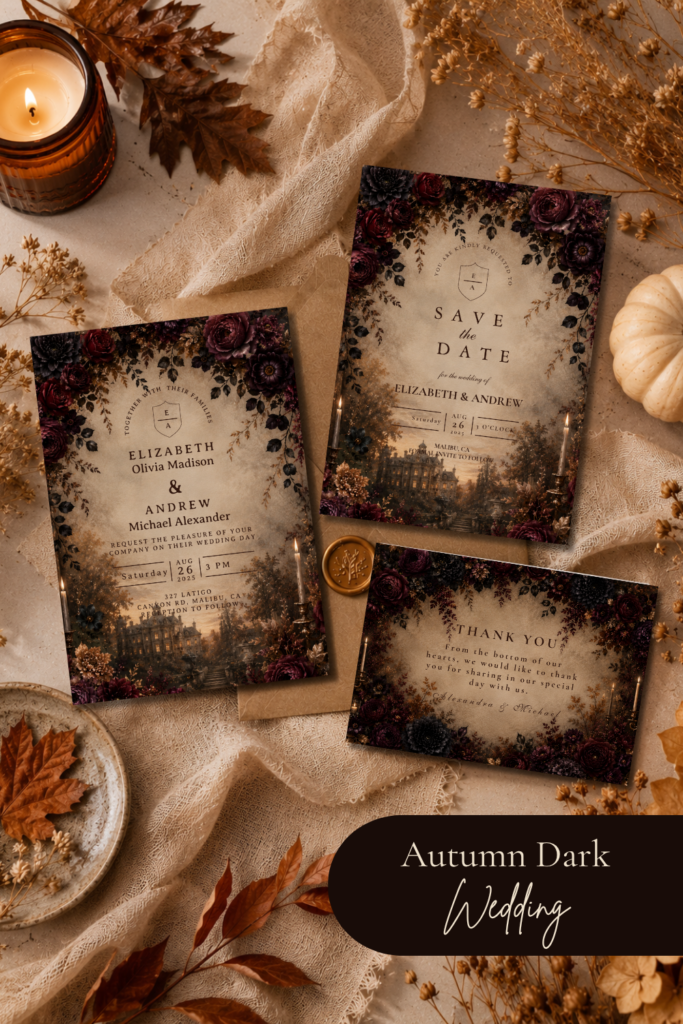
This bouquet belongs to candlelit manors, historic stone halls, intimate barn receptions with low amber lighting, and any venue where the atmosphere is as deliberate as the décor. The autumn wedding dark floral aesthetic has moved well beyond its gothic-adjacent beginnings — in 2026 it reads as sophisticated and deeply romantic rather than theatrical. A dark floral bouquet deserves stationery that matches its drama — deep charcoal and rich burgundy invitation suites that communicate, from the very first glimpse, that this is a wedding with real visual intention.
Stationery for Dark & Moody Floral Brides
The Autumn Dark Wedding collection — deep charcoal, rich burgundy, and atmospheric dark gold — is the definitive stationery match for a dark floral bouquet. It carries the same deliberate drama from the invitation envelope to the ceremony and beyond.
1.3 — The Dried & Pampas Bouquet
Pampas grass · Dried lunaria · Preserved roses · Wheat stems
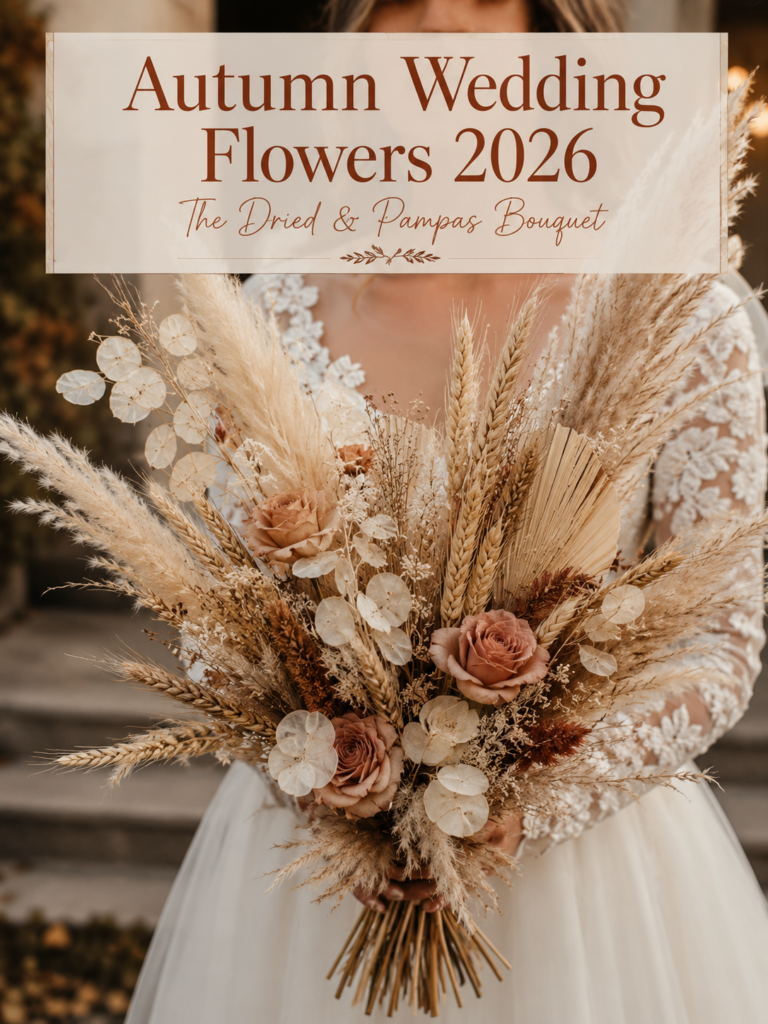
The dried flowers autumn wedding bouquet has moved well past its trend moment and into something more enduring — and for autumn, it makes complete sense. The season itself is in the process of drying: seed heads form, grasses fade to gold, foliage turns papery and extraordinary. A bouquet of pampas grass, dried lunaria with its silver translucent pods, preserved roses in dusty terracotta, and wheat stems is not fighting against the season’s direction but moving with it. The palette is warm and faded: honey, pale gold, dusty blush, warm ivory, and the occasional deep rust that anchors everything.
Beyond its aesthetic qualities, the dried bouquet is genuinely practical — it travels well, keeps its shape throughout a long day, and can be preserved permanently without the wilt anxiety that accompanies fresh arrangements. For boho, earthy, and minimalist celebrations, this is the bouquet that best honours the season’s natural inclination. It suits outdoor ceremonies, rustic venues, and any setting where the aesthetic leans organic and unforced. The clean architectural quality of dried stems also translates beautifully into stationery with geometric or structural design sensibility.
Stationery for Dried & Pampas Bouquet Brides
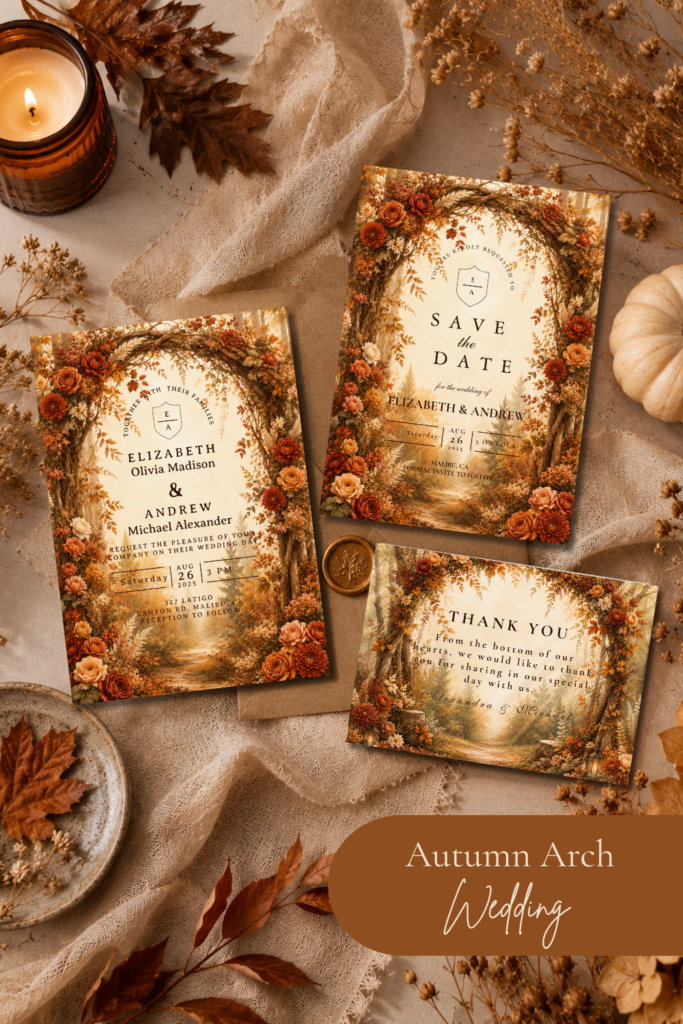
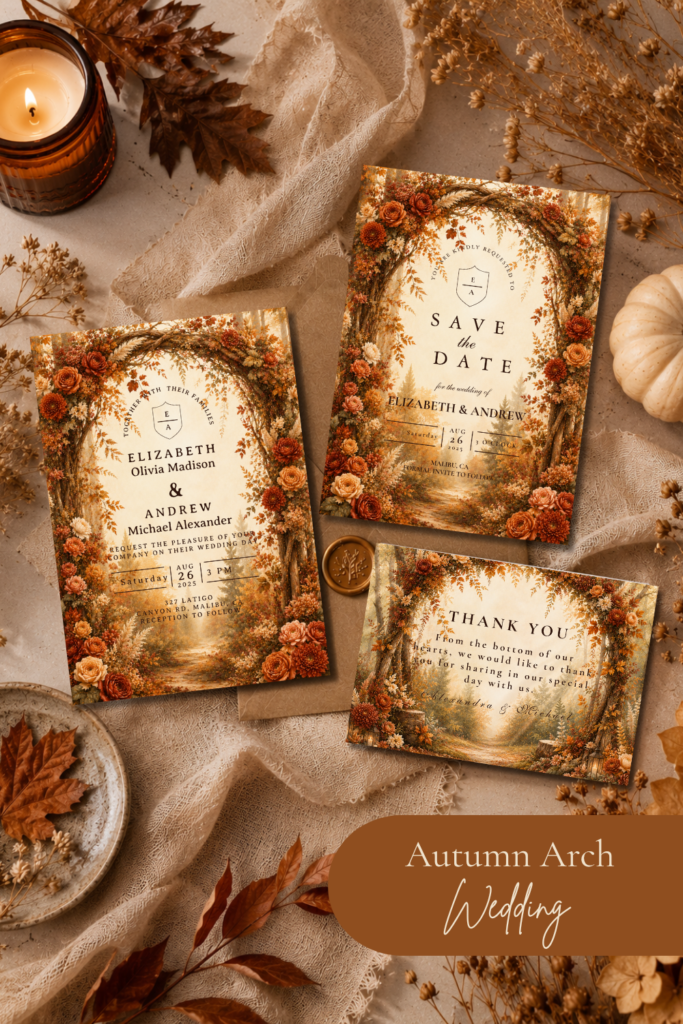
The Autumn Arch Wedding collection — elevated, architecturally intentional, in warm ivory and autumn gold — carries the clean structural beauty of a dried arrangement into its stationery design beautifully.
1.4 — The Jewel Tone Bouquet
Deep emerald foliage · Ruby dahlias · Sapphire delphiniums · Copper accents
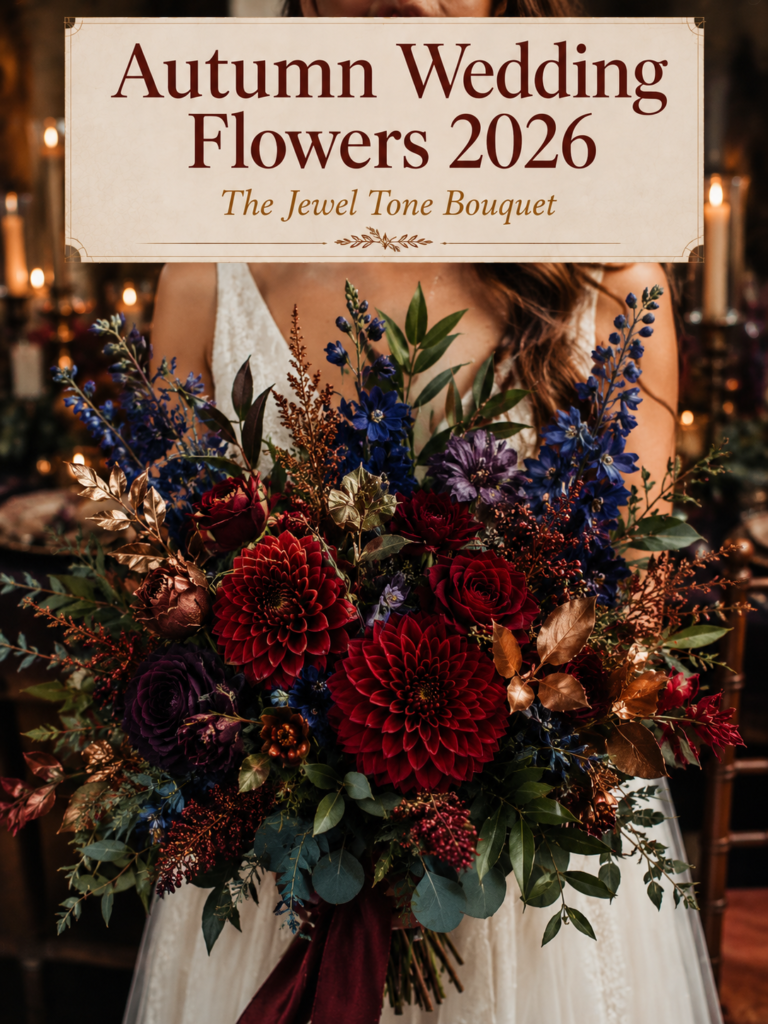
The jewel tone bouquet is autumn dressed for a grand occasion — maximalist in its intentions, regal in its execution, and absolutely magnificent in the right setting. Deep emerald foliage forms the structural base, a richly architectural frame for ruby dahlias in the fullest, most sumptuous bloom of the season. Sapphire delphiniums add an unexpected depth, and copper accents — in wired seed heads, metallic botanical elements, or the warm rust of a late dahlia — tie the whole arrangement back to the season’s palette. This is a bouquet that requires scale: a small intimate wedding would be overwhelmed by it, but in a grand hotel ballroom or a manor house with high ceilings, it reads as perfectly proportioned.
The fall wedding flowers that define this style — dahlias in ruby and garnet, deep emerald foliage, and the occasional electric pop of an unexpected colour — are all at peak availability in October, making this the most seasonally authentic of the five styles for mid-autumn weddings. Stationery for this aesthetic should be equally lush and considered: rich floral illustration in a palette that mirrors the bouquet.
Stationery for Jewel Tone Floral Brides
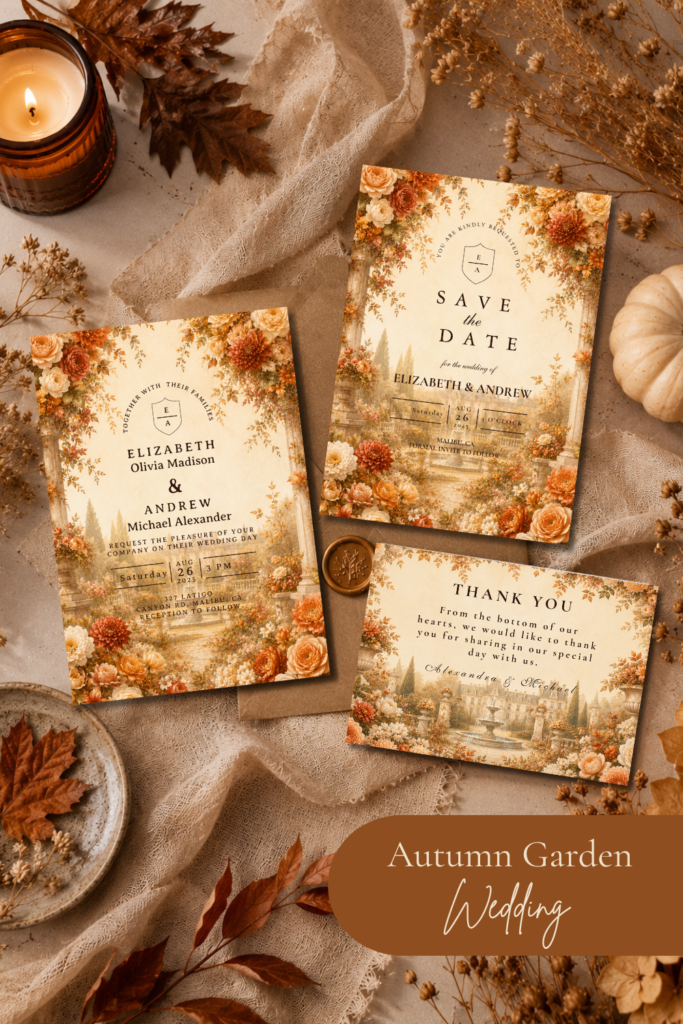
The Autumn Garden Wedding collection — with its deep rose and autumn gold palette, rich floral illustration, and garden-formal elegance — has the opulence and depth that the jewel tone floral aesthetic demands.
1.5 — The Soft & Romantic Bouquet
Blush garden roses · Dusty pink dahlias · Dried grasses · Soft sage
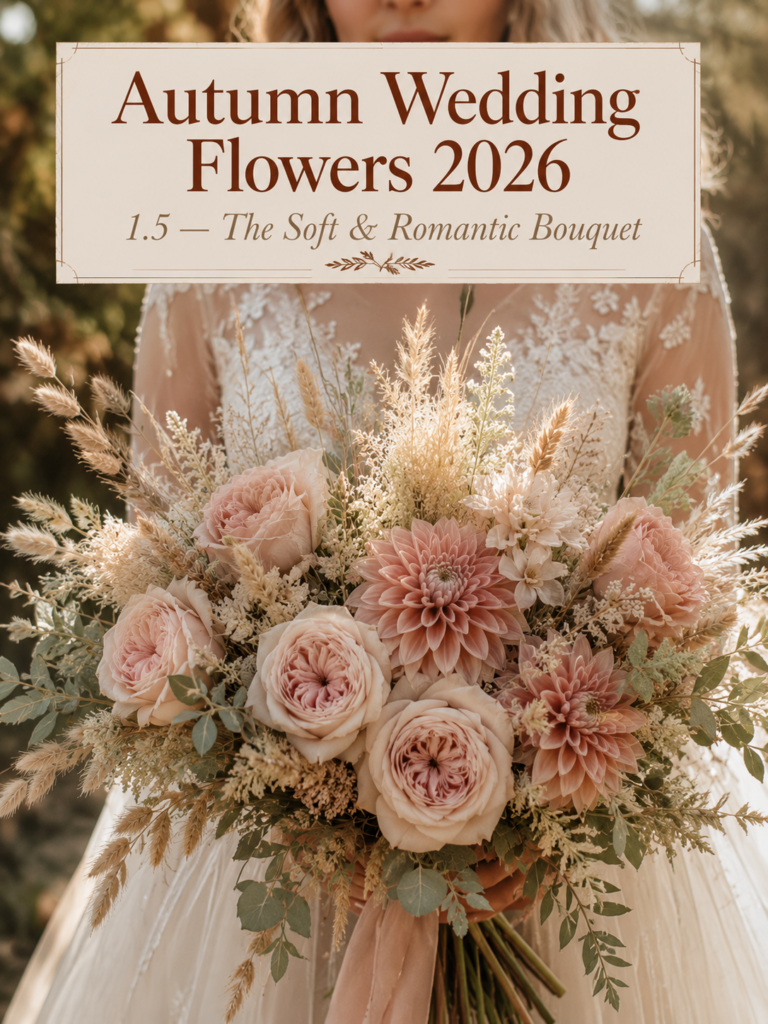
The softest and most romantic of the five styles — and the one that most gently subverts expectations of what autumn pink wedding flowers or white autumn wedding flowers can look like in the context of the season. Blush garden roses in the full, loose-headed variety that autumn produces so generously, dusty pink dahlias in that particular shade that sits between terracotta and rose, dried grasses in pale honey, and soft sage foliage that bridges the warm and cool tones create a bouquet of genuinely exceptional beauty.
This is not a pastel bouquet — the tones are warmed and slightly dusted by autumn, giving them depth and interest that a summer version of the same colours would lack. It works magnificently at outdoor ceremonies, walled garden venues, and vineyard settings, and is the most broadly flattering against a wide range of dress styles. The autumn bridal bouquet in this style is timeless in a way the more dramatic options are not — it will look as beautiful in photographs twenty years from now as it does on the day.
Stationery for Soft & Romantic Floral Brides
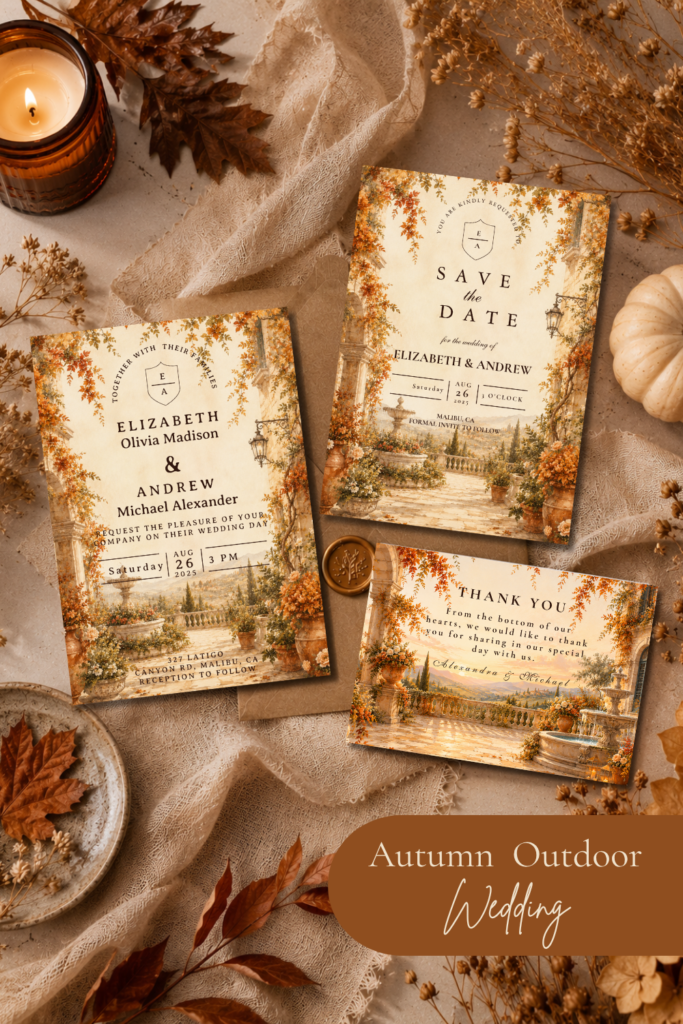
The Autumn Outdoor Wedding collection — clean, botanical, and seasonally warm without being rustic — mirrors the soft romantic floral palette beautifully: fresh, elegant, and genuinely autumnal in its warm ivory and rust tones.
Section 02
Autumn Wedding Centrepiece Ideas 2026
The autumn wedding centerpieces are where your floral vision scales up — from the intimate and personal language of the bouquet to the social, shared experience of the table. The centrepiece is the floral element your guests will be closest to for the longest period of the day, and it deserves as much intention as the arrangements that photograph more dramatically.
2.1 — Low & Lush
Low centrepieces — abundant, full, and spreading generously across the table surface — create the visual impression of a harvest feast rather than a formal occasion. The flowers are full-headed and densely packed: dahlias in rust and amber, garden roses in blush or cream, late-season chrysanthemums in gold and copper, with trailing foliage connecting the arrangement to the table surface. Wide, low vessels in terracotta, beaten copper, antique pewter, or raw ceramic work beautifully and feel genuinely seasonal. The principle is abundance with restraint: generous in flowers, edited in the vessels and other table elements so the arrangement remains the visual focus.
2.2 — Tall & Dramatic
Grand venues with high ceilings — manor houses, hotel ballrooms, and vaulted barn spaces — earn tall centrepieces. A candelabra or tall floral stand rising above the table with generous autumn blooms arranged at its crown creates a visual drama that feels proportionate to the architecture rather than dwarfed by it. The flowers at height should be the most spectacular in the room: large dahlias, open garden roses, and dramatic foliage branches that frame the arrangement from above. Below, at table level, smaller complementary elements continue the palette — tea light clusters, scattered petals, or small bud vases in the same tones. The contrast between dramatic height and intimate surface-level detail creates a table that is rewarding to experience from any seat.
2.3 — Wildflower & Organic
The wildflower centrepiece is the table equivalent of the meadow bouquet — loose, organic, and apparently spontaneous. A collection of simple glass bottles and vessels in different heights, each holding a few stems of the same palette, creates a table that looks gathered from the field rather than delivered from a florist. The power of this approach is its warmth: guests feel as though they are seated at something personal and genuine rather than something produced. For rustic venues, outdoor marquees, and intimate receptions, this style creates tables that photograph beautifully and feel immediately inviting.
2.4 — Dried Flower Centrepieces
Dried centrepieces have found their moment in autumn — and it is not a trend but a genuine alignment of aesthetic and season. Pampas grass in generous clusters, dried lunaria and poppy heads, preserved eucalyptus, wheat stems, and cotton flowers in warm ivory create arrangements of understated beauty that hold their shape and colour for the entire day. Styled in raw ceramic vessels, aged wood bases, or simple glass containers with visible stems, dried arrangements read as considered and intentional rather than lazy. They also offer a practical advantage for autumn weddings: they can be arranged in advance with no concerns about wilting, and many couples take them home as permanent installations after the celebration.
2.5 — The Detail That Ties Everything Together
The most photographed table detail at any autumn wedding is never just the centrepiece — it is the centrepiece alongside the place cards, the menu, and the invitation suite arranged as a flat lay. Your florist and your stationery designer are in conversation whether they know it or not: the colours in your invitation will echo the flowers on the table, or they will clash quietly in every close-up photograph. Getting this right requires only one decision made deliberately: choose your stationery and your florals from the same palette, the same mood board, the same seasonal vision.
Stationery That Photographs With Your Centrepieces
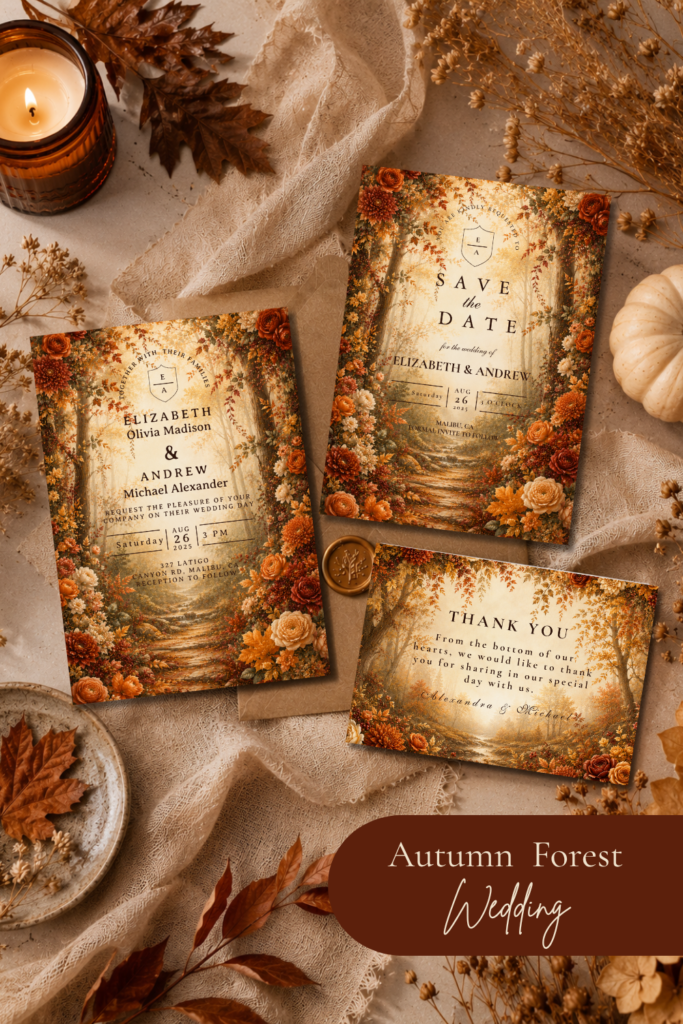
The Autumn Forest collection — for woodland and foliage-forward tables — and the Autumn Floral suite — for abundant botanical centrepiece arrangements — are both designed with the photography flat lay in mind: rich, detailed, and visually cohesive alongside fresh autumn blooms.
Section 03
Autumn Wedding Flower Arches & Ceremony Florals
3.1 — The Autumn Flower Arch
The autumn flower arch wedding is the single most-saved ceremony image on Pinterest — and it earns that status. An arch designed for an autumn ceremony is operating in one of the most visually rich contexts available to any floral installation: surrounded by turning foliage, bathed in low-angled golden light, and framing a moment that the season makes genuinely extraordinary. The 2026 approach to autumn arches is combining fresh and dried elements in a single installation — dahlias, late roses, and seasonal blooms alongside pampas, dried grasses, and preserved foliage that adds texture and the sense of the season at its most poetic.
The arch shape should complement the architecture of the ceremony space rather than fight it. A circular arch suits outdoor garden settings and creates a frame that is intimate and complete. A rectangular or asymmetric arch works better in venues with existing architectural framing — doorways, barn openings, stone arches — where it becomes an extension of the structure rather than a separate element. The most successful autumn arches are not symmetrical: one side heavier with bloom, the other trailing and lighter, creates a visual tension that feels genuinely seasonal and alive rather than formally arranged.
3.2 — Aisle Styling
Aisle styling in 2026 is moving away from the isolated pew-end arrangement toward continuous, immersive elements that create a pathway rather than punctuate one. For autumn ceremonies, this means trailing dried botanicals along the base of chairs, glass lanterns at regular intervals on the ground, scattered autumn petals in deep rust and amber, and the occasional larger botanical element — a generous bunch of dried pampas or a cluster of dahlias and foliage — that creates a rhythm as the eye moves down the aisle. The goal is that the walk from entrance to altar feels like a journey through the season itself: a moment of genuine sensory arrival before the ceremony begins.
3.3 — Altar & Backdrop Florals
Where the arch frames the couple from the front, the altar and backdrop florals create depth behind them — the layer that the ceremony photographs reveal when the arch itself is out of frame. Two substantial floral arrangements flanking the ceremony space, at different heights, create a sense of depth and drama that single central arrangements cannot achieve. For autumn ceremonies specifically, floor-standing arrangements in generous vessels with dahlias, foliage branches, and seasonal botanicals at multiple heights create the kind of backdrop that rewards every angle of photography and — critically — looks genuinely spectacular in the full-length ceremony shots that capture the scale of the space.
Section 04
Autumn Wedding Flowers by Month
The most practically useful thing any autumn bride can know about flowers is which ones are actually in season during her specific month. Seasonality is not merely an ethical preference — it is an aesthetic advantage. Flowers used in their natural season are at their finest: fully open, deeply coloured, and at their most fragrant. Out-of-season flowers, whatever their beauty, carry the slightly muted quality of something that has had to be coaxed.
September
September is the peak of the dahlia season — the flower is at its most abundant, most varied, and most spectacular. Late roses are generous and full-headed. Cosmos are still producing in pinks and whites. Sunflowers remain available and are at their most golden — autumn wedding sunflowers work beautifully in September arrangements, adding warmth and a slightly wild quality that more formal flowers lack. Late sweet peas, zinnias, and rudbeckia are all at their end-of-season finest. The September palette leans warmer and slightly brighter than October: more gold, more amber, more of the garden’s last generous gesture before the deeper autumn arrives.
October
October dahlias are darker and deeper than September’s — the season’s intensification shows in the flowers. Late-season varieties in deep burgundy, dark rust, and rich copper are at their most spectacular. Chrysanthemums come into their own this month: the large-headed, fully open varieties in bronze, amber, and deep wine are perfectly seasonal. Berry branches and fruiting elements — rosehip, hypericum berries, crab apple — add a textural and colour richness that no flower alone can provide. Foliage is turning, and incorporating real autumn foliage branches into arrangements gives an October wedding something genuinely irreplicable at any other time of year.
November
November florals require a different approach — and reward a different aesthetic entirely. Dried and preserved elements become the stars: pampas, architectural stems, dried seed heads, and preserved foliage all look magnificent and create arrangements with genuine staying power. For fresh flowers, the hothouse picks up the slack from the garden: ranunculus, lisianthus, and freesia are all beautiful in November. Evergreen foliage — eucalyptus, bay, and deep green ivy — provides rich structure. Hellebores begin their season in late November and are among the most hauntingly beautiful flowers available to a winter-threshold celebration. The November palette is the deepest of the three months: lean into it fully.
Section 05
How to Match Your Flowers to Your Wedding Stationery
The invitation is the first visual promise of the wedding day — the moment, weeks or months before the celebration, when a guest holds your aesthetic in their hands for the first time. Your florist creates the day itself; your stationery creates the anticipation. When the palette and mood of the invitation echoes the palette and mood of the florals, that echo creates a visual coherence that guests experience as something deeper than good taste. They feel, before they have arrived, that they are about to enter a world that has been entirely thought through.
The most practical approach: take your floral mood board — or simply the palette of your bouquet style — and look for stationery collections that echo rather than copy it. You are not trying to match a rust-coloured dahlia to an identical rust hex code on the invitation; you are trying to match the mood, the temperature, the character of the floral choice. A wildflower bouquet suggests stationery with loose botanical illustration, organic typography, and warm earthy tones. A jewel-tone dahlia arrangement suggests stationery with rich colour, elaborate floral detail, and an elevated formal quality. The conversation between the two should feel natural, not forced.
The flat lay photograph — bouquet alongside invitation suite, perhaps with dried botanicals and a wax seal — is consistently one of the most saved autumn wedding images on Pinterest, and for good reason. A beautifully designed invitation suite next to your bouquet becomes part of your wedding photography story. It is the image that tells the visual logic of the whole day in a single frame: the flowers, the paper, the palette, the intention. A coordinated suite makes this image possible; mismatched pieces undermine it before the camera is even raised.
Below are all seven autumn wedding stationery collections, each matched to the floral style it complements most naturally. Every collection is fully customizable with your names, date, and wedding details — and available as a complete suite from save-the-date to thank-you card, so the conversation between your flowers and your paper can run the full length of the day.
Complete Your Autumn Wedding Florals
Stationery Collections Matched to Your Floral Aesthetic
Seven coordinated autumn suites — each designed to photograph beautifully alongside your chosen floral palette.
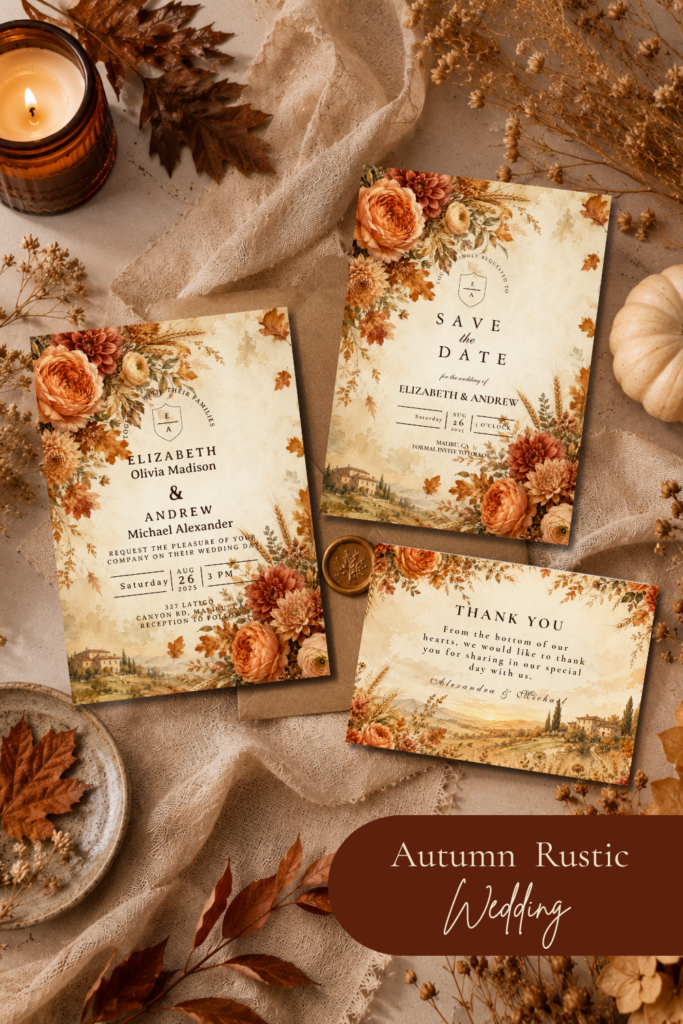
Autumn Rustic Wedding
For wildflower and botanical bouquet brides
Organic botanical illustration in warm ivory and earthy autumn tones — the natural companion to loose, gathered, wildflower-style florals.
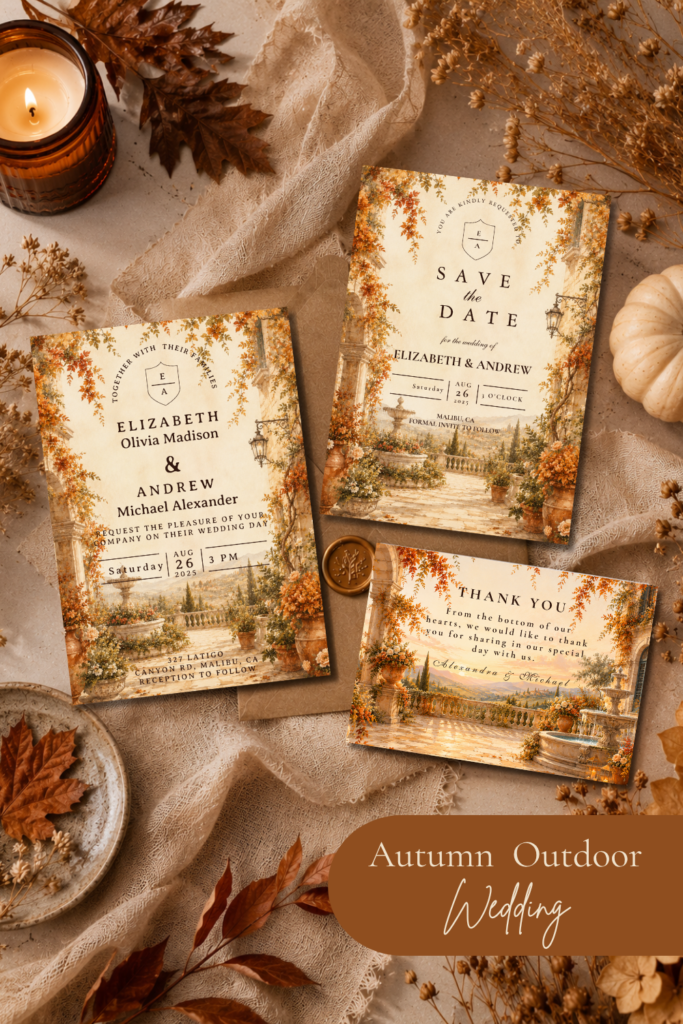
Autumn Outdoor Wedding
For soft romantic and garden rose arrangements
Clean, botanical, and seasonally warm — the ideal stationery match for blush garden rose and soft dusty pink floral palettes.
Autumn Garden Wedding
For jewel-toned and lush centrepiece weddings
Rich floral illustration in deep rose and autumn gold — opulent and abundantly beautiful, matched to the jewel-tone bouquet and grand centrepiece aesthetic.
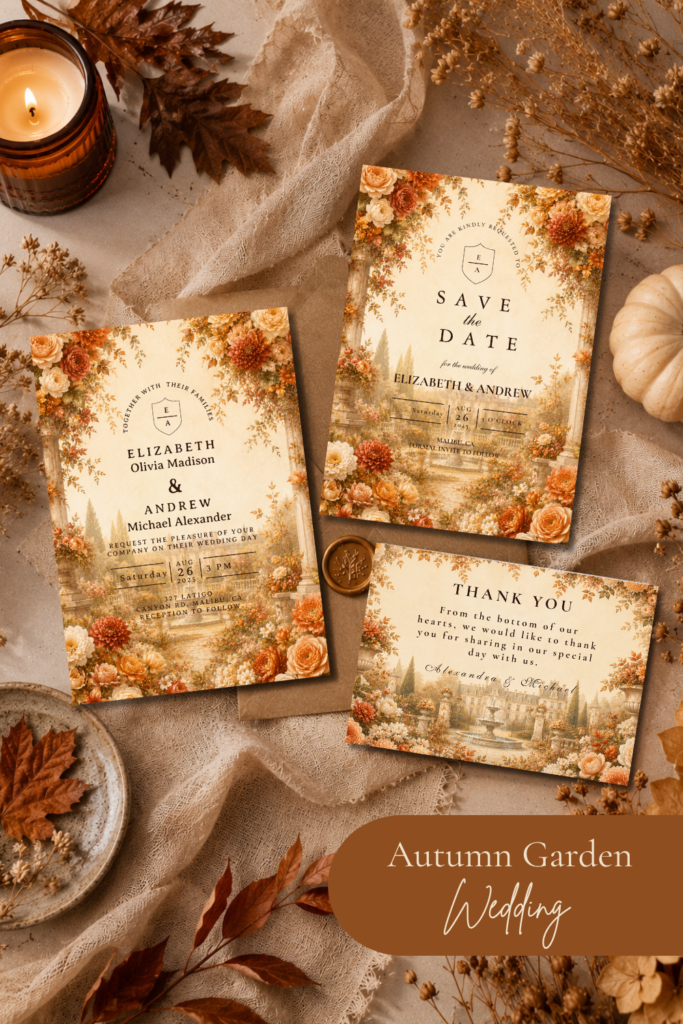
Autumn Forest Wedding
For enchanted woodland and foliage-forward florals
Forest green, deep brown, and organic botanical detail — designed for the foliage-heavy, woodland-rooted floral arrangements of autumn forest ceremonies.
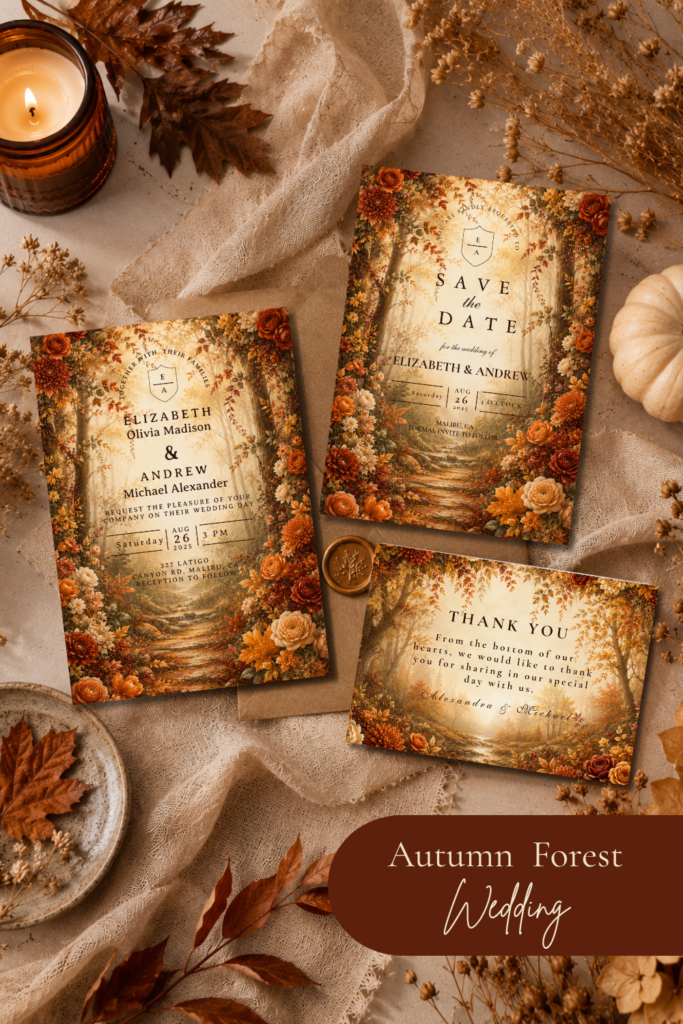
Autumn Floral Wedding
For full, painterly botanical illustration lovers
Lush dahlias and late-season blooms in deep terracotta and warm gold — for brides whose floral vision is abundant, romantic, and painterly in its richness.
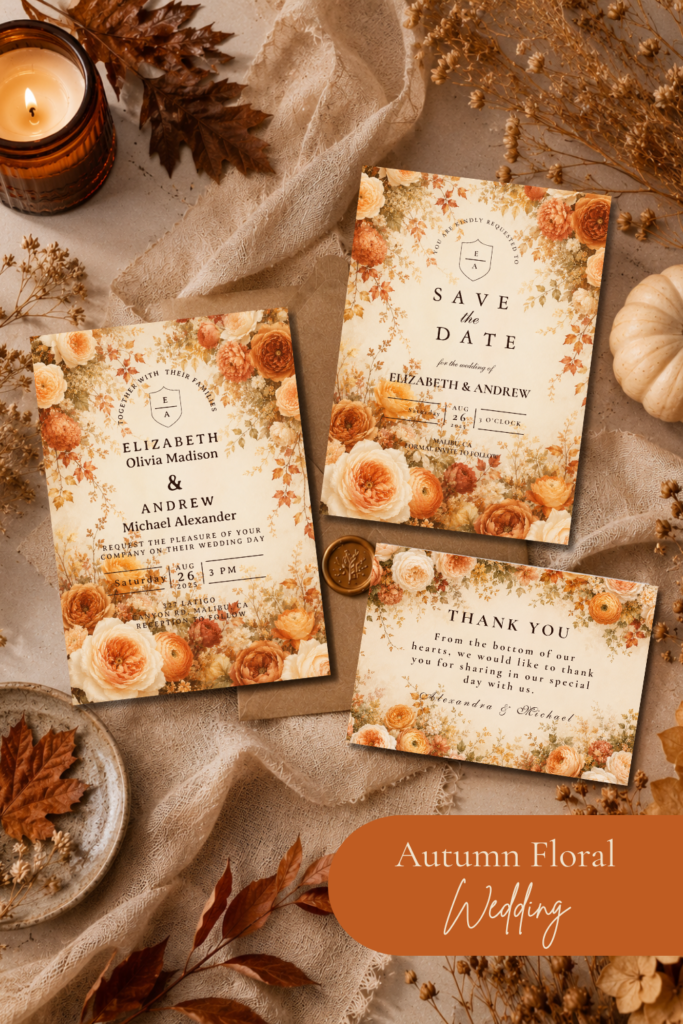
Autumn Dark Wedding
For dark dahlia, moody burgundy and dramatic floral brides
Deep charcoal, rich burgundy, and atmospheric dark gold — the definitive stationery companion for brides choosing dark dahlias, black calla lilies, and deep plum arrangements.
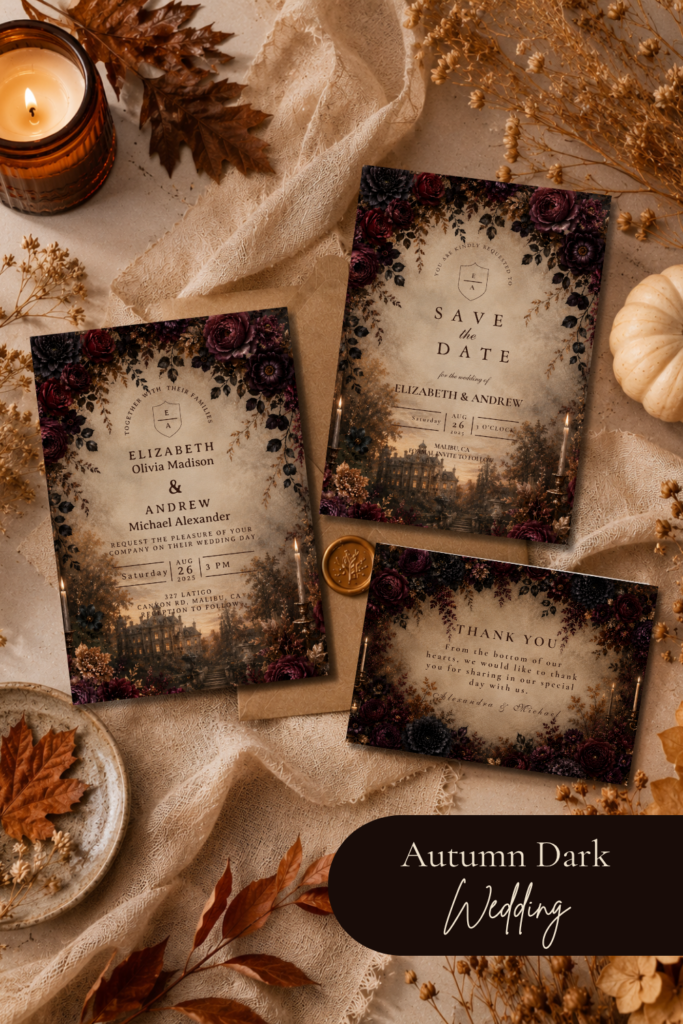
Autumn Arch Wedding
For dried, pampas and architectural arrangement aesthetics
Elevated and architecturally intentional in warm ivory and gold — designed for the clean, structural beauty of dried pampas and architectural botanical arrangements.
Frequently Asked Questions
Common Questions
What flowers are in season for an autumn wedding?
The dahlia is the defining autumn wedding flower — at its peak September through October in an extraordinary range of colours from pale blush to near-black. Late roses, cosmos, and sunflowers are at their generous best in September. Chrysanthemums, berry branches, and turning foliage are the signature October additions. November brings dried and preserved elements to the fore, alongside hothouse beauties like ranunculus, lisianthus, and the first hellebores of the season. The consistent principle: seasonal flowers are always more beautiful, more vibrant, and better value than out-of-season alternatives.
What is the most popular autumn wedding bouquet style for 2026?
The wildflower meadow bouquet and the dark and moody bouquet are the two styles with the strongest growth in 2026 bookings and Pinterest saves. The wildflower approach appeals for its organic, seasonal authenticity and its versatility across venue types. The dark moody bouquet is gaining ground as couples move toward more distinct and atmospheric aesthetics. The dried and pampas bouquet continues to grow as sustainable, practical, and genuinely beautiful alternatives to fresh-only arrangements. The soft romantic style remains the most broadly popular in terms of volume — it works across the widest range of venues, dress styles, and guest expectations.
How do I choose between fresh and dried flowers for an autumn wedding?
The choice is not binary — the most successful autumn arrangements in 2026 combine both. Fresh dahlias and seasonal blooms carry the vivid colour and scent that only living flowers provide; dried pampas, grasses, and preserved stems add texture, structure, and longevity. For bouquets, a mixed approach of fresh blooms with dried botanical elements gives you the best of both: the beauty of fresh flowers with the practical stability of dried stems that hold their shape throughout a long day. For centrepieces and arch installations, purely dried arrangements are increasingly popular because they can be prepared in advance and look magnificent with no wilting risk. The decision should be led by your aesthetic — if your vision is organic and earthy, dried elements feel natural; if your vision is lush and abundant, fresh dominates.
How should my wedding flowers match my stationery?
Look for mood and palette alignment rather than colour matching. For wildflower and botanical arrangements, the Autumn Floral and Autumn Rustic collections. For dark and moody florals, Autumn Dark. For jewel-tone and lush arrangements, Autumn Garden. For dried and pampas aesthetics, Autumn Arch. For woodland foliage-forward florals, Autumn Forest. Every collection is fully customizable and available as a complete suite for a cohesive floral-to-stationery visual story.
From Flowers to Stationery
Complete Your Autumn Wedding — From Flowers to Stationery
Customizable invitation suites designed to match every autumn floral aesthetic. Ships worldwide.