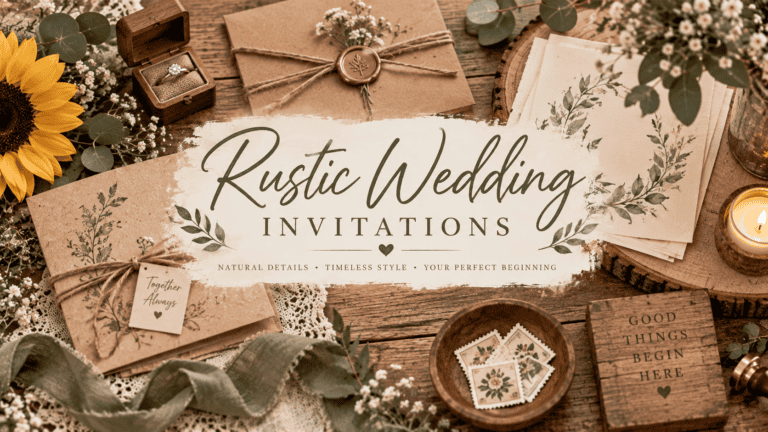
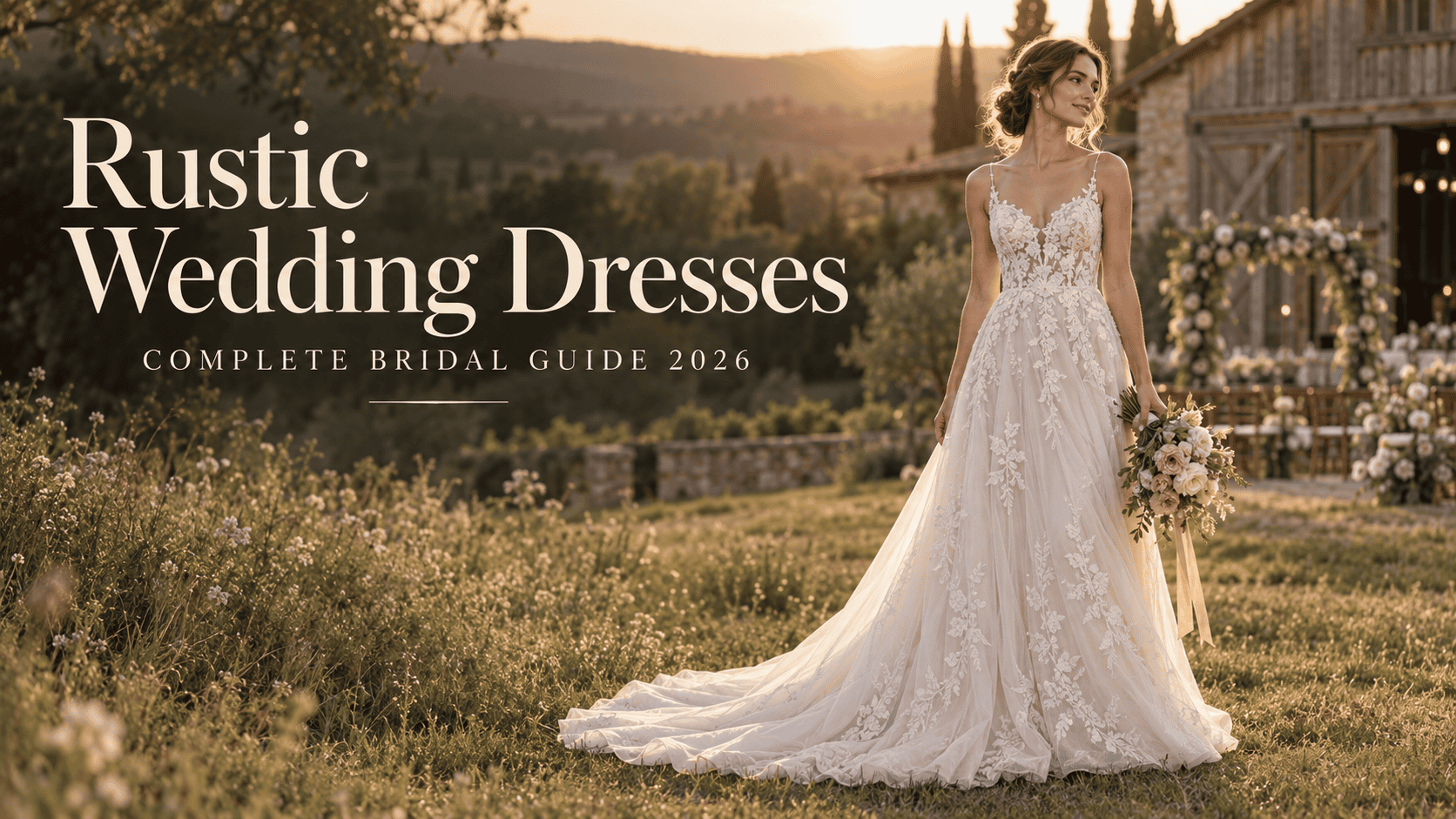
Rustic Wedding Dresses
Rustic Wedding · 2026
Rustic Wedding Dresses
Complete Bridal Guide 2026
Six rustic bridal dress directions, the fabrics and details that belong to each, accessories that complete the natural world, and the stationery that carries the same botanical language from invitation to walking down the aisle.
The rustic bridal dress is the most naturally beautiful fashion choice available to a bride who wants her appearance to belong to the landscape rather than contrast with it. Where a formal bridal gown is designed to announce itself — structured, precise, and clearly constructed — the rustic bridal dress is designed to feel found: as though it grew from the same natural world as the wildflowers in the bouquet and the exposed timber beams of the barn. The bride in a rustic dress photographs not as someone wearing a costume in a countryside setting, but as someone who belongs there.
“The most beautiful rustic bridal dress is the one that looks as though it was grown, not designed — where the fabric moves like the grass in the field, and the lace is as irregular and as alive as the wildflowers the bride is carrying.”
Section 01The Rustic Bridal Aesthetic
What defines the rustic bridal aesthetic is not a single silhouette or a single fabric but a consistent relationship to nature and to movement. The rustic bridal dress is organic rather than architectural: it flows rather than stands, it moves with the body rather than defining it from outside, and it reads as specifically beautiful in a natural setting rather than in a formal one. This is the quality that makes it so consistently the right choice for barn, countryside garden, woodland, and outdoor ceremonies — and so consistently wrong for a hotel ballroom or a city venue where the surrounding architecture has a different aesthetic logic.
The materials that belong to the rustic bridal world are the ones that share this organic quality: lace in its traditional handmade register (irregular, warm, slightly imperfect); chiffon and georgette that catch light and move with the wind; cotton lawn and cotton voile that read as specifically countryside and specifically cool; silk charmeuse that flows with a natural warmth rather than a formal sheen. What does not belong to the rustic bridal world: heavily structured bodices with rigid boning, overly architectural silhouettes, stiff fabrics that hold a fixed shape, and any detail that reads as formally constructed rather than naturally beautiful.
The difference between a formal bridal gown and a rustic bridal dress is the difference between a dress that looks as though it was made in a couture atelier and one that looks as though it was made by someone who loves the countryside. Both are beautiful; only one belongs in a barn. The rustic dress is always chosen with a specific landscape in mind — and the best test of whether a dress is the right choice is whether it reads as belonging to that landscape or as incongruous within it.
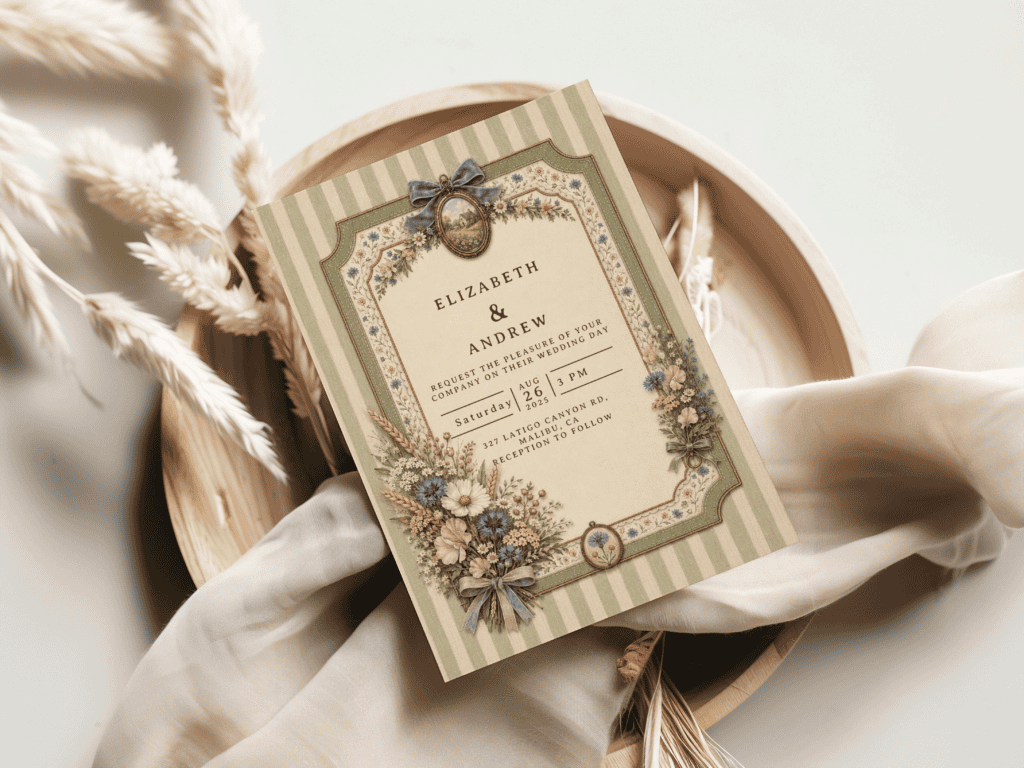
The rustic bridal dress and the rustic invitation suite should belong to the same natural botanical world — the first detail guests see and the most personal detail of the day.
Section 02Six Rustic Wedding Dress Styles
Six specific dress directions, each with a distinct character, silhouette, and venue pairing. Each belongs to a different corner of the rustic world.
2.1 — The Boho Lace Gown
The boho lace gown is the most free-spirited and the most widely photographed rustic bridal direction: a flowing lace dress with bell or flutter sleeves, a low or open back, and a silhouette that moves with maximum freedom. The lace in a boho gown is specifically not the formal Chantilly lace of a conventional bridal gown — it is looser, more textural, slightly more irregular, and belongs to the same organic world as the pampas grass and the dried botanicals in the surrounding decor. The boho lace gown is the dress that reads most beautifully at golden hour: the light comes through the lace, the sleeves catch the wind, and the silhouette becomes inseparable from the landscape.
The boho lace gown belongs to the outdoor, garden, and bohemian barn ceremony. It photographs most beautifully in full afternoon or evening light, where the movement of the fabric and the texture of the lace are both visible. Brief the florist with the same loose, free-spirited aesthetic as the dress — a wildflower and dried botanical bouquet in warm cream and blush tones completes the look without competing with it.
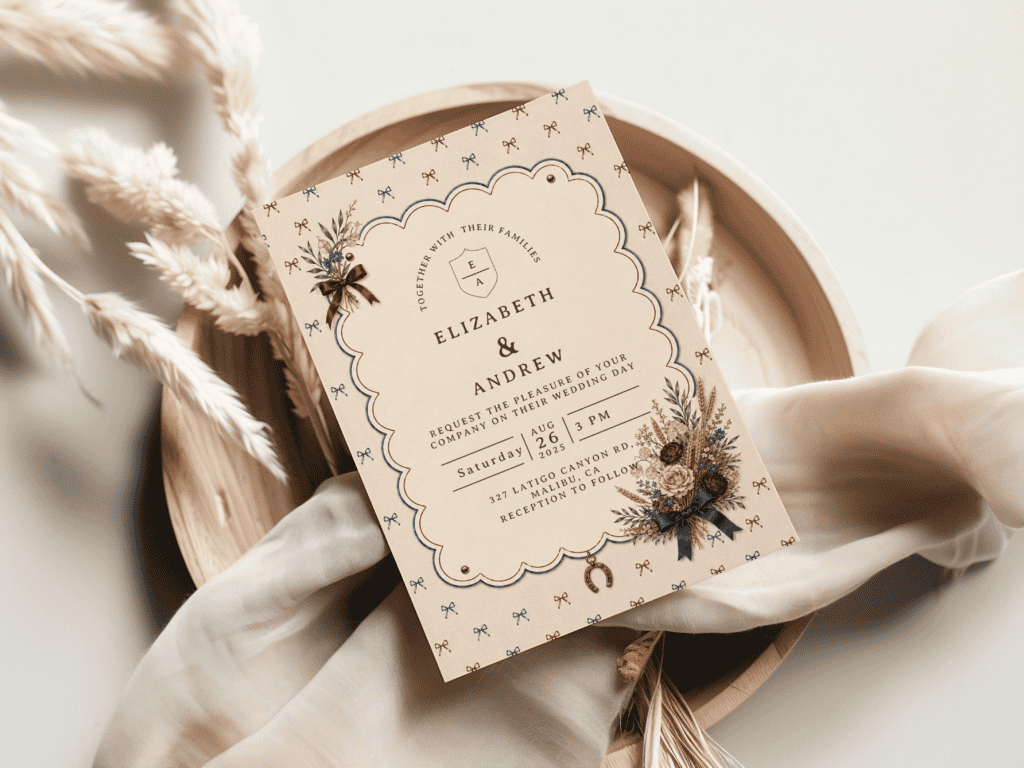
Rustic Boho Wedding stationery — boho botanical illustration in the most free-spirited rustic direction, the natural complement to the boho lace gown.
2.2 — The Prairie Dress
The prairie dress is the most countryside-specific rustic bridal direction: a high neck and long sleeves in delicate lace or cotton, a full or A-line skirt that reaches the ground, and occasionally a subtle wildflower print or embroidered botanical detail. The prairie silhouette references the specific romantic quality of nineteenth-century countryside life — warm, modest, and deeply connected to the land — in a way that no other contemporary bridal style quite replicates. It is the most distinctly literary rustic bridal choice: the dress of a bride who has been reading Hardy or Brontë and wants her wedding to belong to the same world.
The prairie dress requires the most specifically rustic setting to read correctly. In a wildflower meadow, a country garden, or a farmstead with open fields beyond the ceremony space, it is simply and completely perfect. In any other setting, it may read as costume rather than choice. The bouquet: a loose wildflower posy in the simplest possible form, perhaps tied with jute twine rather than ribbon, held low.
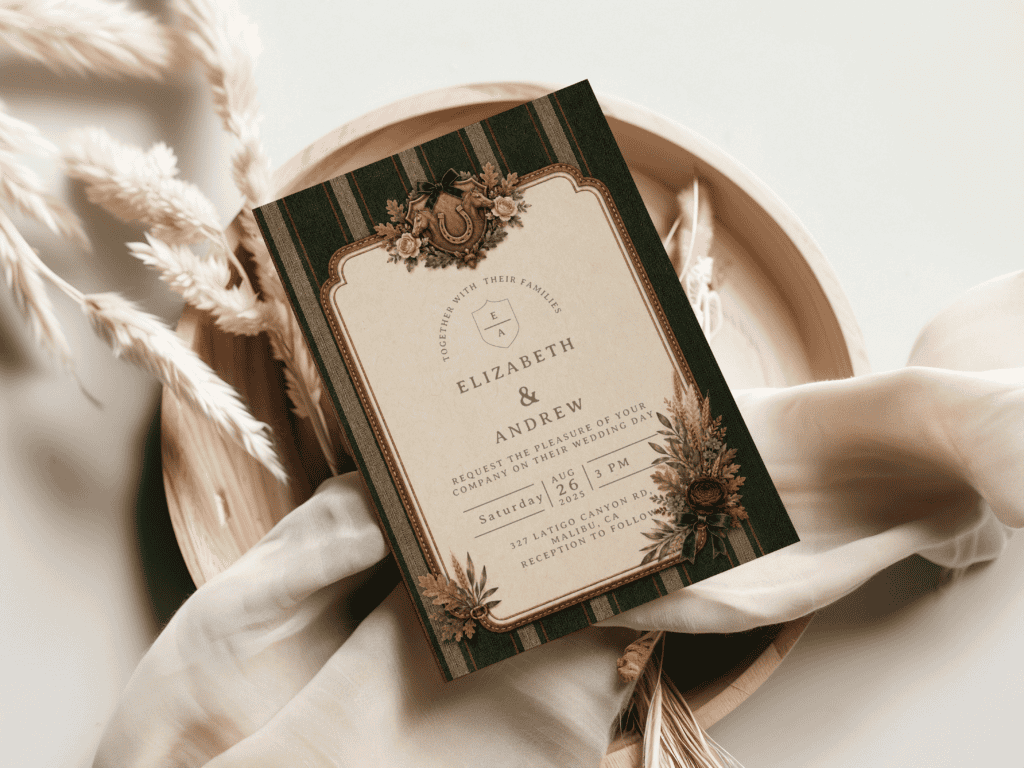
Rustic Country Wedding stationery — warm country botanical illustration in the most countryside-specific rustic direction.
2.3 — The Simple Flowing Gown
The simple flowing gown is the quiet luxury direction within the rustic bridal world: a clean silhouette in a quality fabric — silk charmeuse, silk georgette, or a high-quality matte crepe — with minimal surface detail and all the beauty placed in the fabric’s movement and drape. This is the anti-maximalist rustic bridal choice: no lace overlay, no embroidery, no floral appliqué, just the specific beauty of a beautiful fabric falling naturally on a body that moves through a natural landscape.
The simple flowing gown photographs most beautifully from behind: the clean line of the back, the way the skirt pools or trails behind the bride as she walks through a field or stands at a barn door. It belongs to the rustic floral aesthetic — the direction where the celebration is warm and botanical without being maximally decorated, where the quality of materials rather than the volume of decoration creates the beauty.
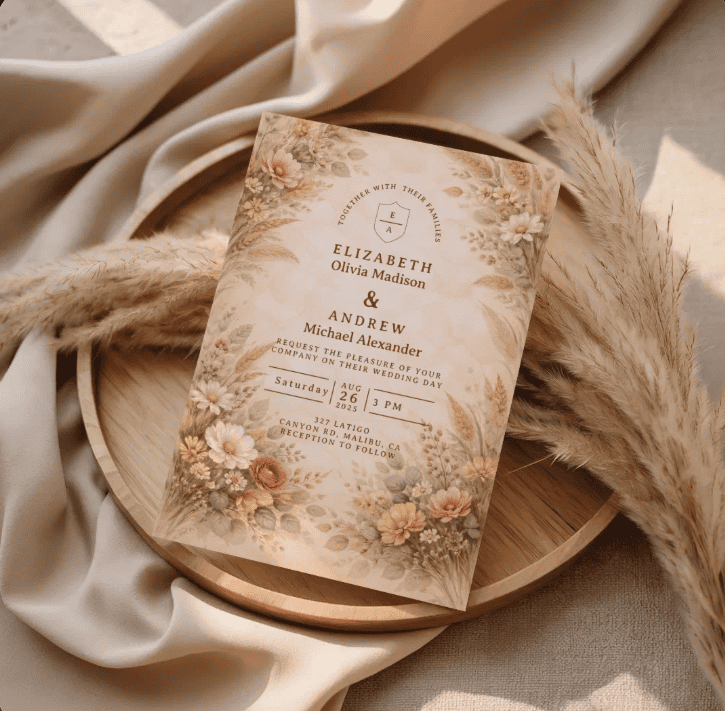
Rustic Floral Wedding stationery — soft botanical floral illustration that belongs to the same quietly beautiful world as the simple flowing gown.
2.4 — The Lace A-Line
The lace A-line is the most universally flattering rustic bridal silhouette and the one that occupies the most comfortable middle ground between the formal bridal tradition and the specifically rustic aesthetic. The A-line silhouette — fitted at the bodice, flaring gently to the hem — creates natural movement without the volume of a full skirt or the restriction of a fitted column. The lace overlay adds warmth and texture without requiring the full commitment of a lace-only gown.
The lace A-line is the most versatile rustic bridal choice: it belongs to barn weddings and garden ceremonies equally, it photographs beautifully in both full daylight and warm evening light, and it pairs naturally with every rustic accessory direction from flower crown to ankle boots. The wildflower wedding palette — loose blooms in warm cream and blush, trailing greenery — is the natural bouquet companion for this silhouette.
Rustic Wildflower Wedding stationery — loose botanical wildflower illustration, the most natural companion to the lace A-line’s warm, universally beautiful aesthetic.
2.5 — The Woodland Dress
The woodland dress is the most nature-immersed and the most dramatically rustic of the six directions: a gown that references the forest interior directly in its palette, its fabric, and its botanical detail. Where most rustic bridal directions work with warm cream and blush tones, the woodland dress may incorporate deeper ivory, warm champagne, or even a subtle green or sage tone in its lace or embroidery. Botanical embroidery — leaves, ferns, trailing botanical motifs worked into the fabric — is the most specifically woodland bridal detail available.
The woodland dress belongs to woodland and forest venues, to antler and darkly rustic barn aesthetics, and to autumn and winter ceremonies where the landscape is at its most dramatically beautiful. It photographs most powerfully in dappled forest light or in the warm, low light of an autumn afternoon — the shadows and the light together activate the botanical details in the fabric in a way that flat daylight cannot.
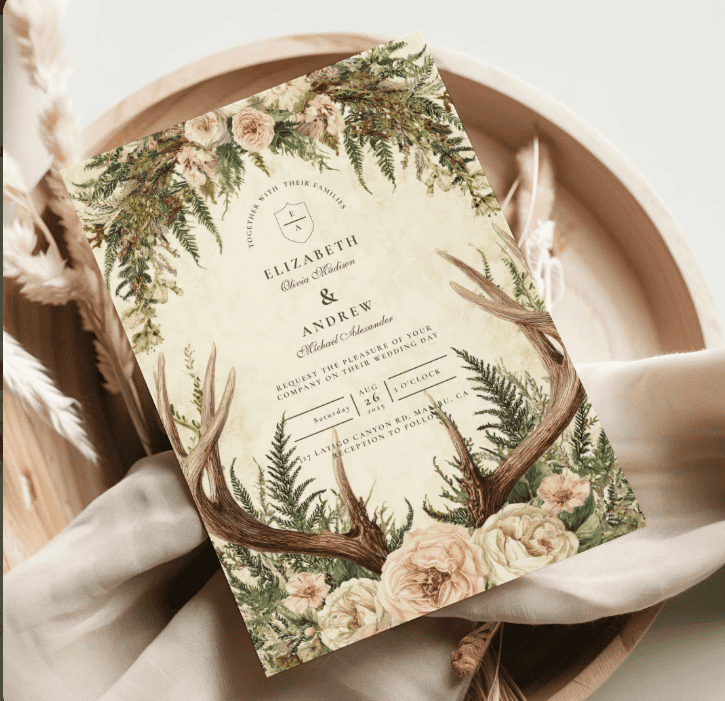
Rustic Antler Woodland stationery — deep woodland illustration in the most dramatically rustic direction, the natural companion for the woodland dress.
2.6 — The Short Rustic Dress
The short rustic dress — midi or tea-length — is the most practical and the most joyfully unserious rustic bridal choice. Where every other direction in this list reaches the ground, the short rustic dress stops at the calf or the knee, which means the bride can walk through a field, dance in a barn, and move through a garden without a second thought about the hem. Lace, cotton, or chiffon in warm cream or ivory, with a silhouette that allows free movement — A-line, wrap, or fit-and-flare — and the specific quality of a dress that was chosen to be worn in, not preserved.
The short rustic dress is particularly beautiful for outdoor daytime ceremonies where the venue’s practical demands — grass, gravel, uneven ground — make a full-length gown impractical. Ankle boots, with or without socks, are the natural footwear companion. The bouquet: small, loose, and held casually at the side rather than formally at the centre.
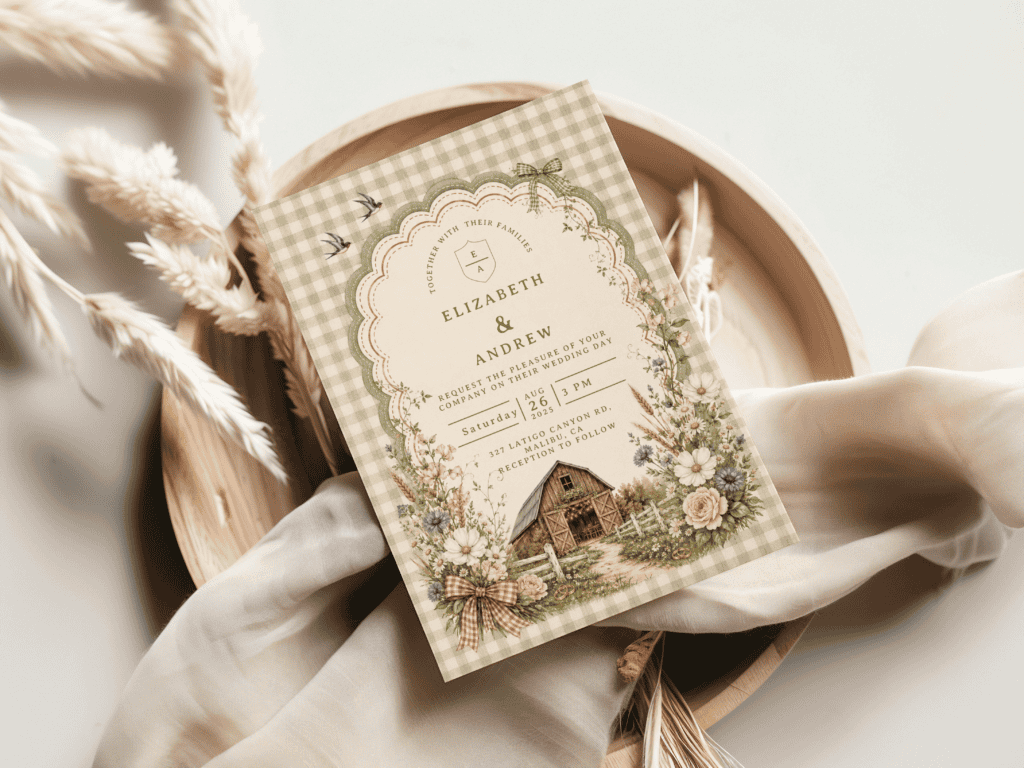
Rustic Wedding stationery — the full rustic wedding collection for the most joyfully complete rustic celebration.
Section 03Rustic Dress Fabrics & Details
The fabric choice is the single most important decision in a rustic bridal dress — more important than the silhouette, because the fabric determines how the dress moves, how it photographs, and how naturally it belongs to the outdoor or barn setting.
Chiffon and georgette. The most movement-responsive and the most photographically beautiful fabrics for a rustic bridal dress. Both are lightweight, both catch and diffuse light rather than reflecting it, and both move with a naturalness that heavier fabrics cannot replicate. Chiffon is slightly more transparent and more delicately textured; georgette is slightly heavier and more structured. Both belong to every rustic direction from boho to simple flowing gown.
Lace. Traditional lace in a rustic context is the irregular, handmade-quality variety rather than the precisely machine-made Chantilly of formal bridal. Broderie anglaise, crochet lace, and vintage-quality needle lace all read as specifically rustic. The most beautiful rustic lace is the kind that looks as though it was made by someone’s grandmother rather than produced in a factory — irregular, warm, and genuinely handmade.
Cotton and cotton voile. The most countryside-specific and the most practically comfortable rustic bridal fabric. Cotton reads as honest and natural in the same register as linen tablecloths and wooden cake stands — it belongs to the countryside world without requiring any additional justification. Cotton voile, in particular, has a light, slightly transparent quality that works beautifully in afternoon light and belongs most specifically to the prairie and simple flowing gown directions.
Silk charmeuse. The quiet luxury rustic fabric: a warm, slightly liquid drape that flows naturally and photographs with a specific warmth that synthetic alternatives cannot replicate. Silk charmeuse belongs to the simple flowing gown direction most specifically — its beauty is entirely in how it moves and falls, and a flowing silk charmeuse gown in a countryside setting at golden hour is one of the most consistently beautiful bridal photographs available.
Section 04Rustic Bridal Accessories
The accessories complete the rustic bridal world by carrying the same natural materials and the same organic aesthetic from the dress into every other visible detail of the bride’s appearance. Each accessory choice should ask the same question as the dress: does this belong to the landscape?
Flower crown. The most iconic rustic bridal accessory — a crown of fresh wildflowers or dried botanicals woven into a natural base. The most beautiful flower crowns for rustic weddings are the ones that read as gathered rather than arranged: a few small wildflower heads, some trailing greenery, and the same loose quality as the bouquet. Avoid: overly formal, heavily structured flower crowns that look designed rather than gathered.
Wildflower bouquet. A loose posy of the same wildflowers used in the centrepieces, held naturally at the side or in both hands rather than formally at the waist. The most beautiful rustic bridal bouquets are the ones that look as though they were picked from the field that morning — imperfect in arrangement, abundant in flower, and trailing some greenery below the hand.
Simple jewellery. Rustic bridal jewellery is minimal and warm-toned: a simple gold or rose gold chain, small stud earrings in pearl or warm stone, a thin bracelet. The principle: the jewellery should be noticeable only when the bride is close up, and should read as personal rather than as accessorising. Avoid: heavy statement pieces that compete with the natural beauty of the dress and the setting.
Footwear. Ankle boots in tan or warm brown leather are the most specifically rustic bridal footwear choice — and the most practical for outdoor ceremonies on grass or gravel. Barefoot sandals — minimal leather or macramé sandals — belong to the boho rustic direction specifically. For indoor barn ceremonies, a simple low-heeled leather shoe in cream or ivory reads as rustic without the practicality compromise of outdoor footwear.
The rustic stationery suite belongs to the same natural world as every accessory decision above — warm botanical illustration that carries the wildflower language from invitation to the bouquet in the bride’s hands.
Section 05Rustic Wedding Stationery
The rustic wedding dress and the rustic wedding stationery are the two most personally visible details of any countryside celebration — the dress worn by the bride and the invitation held by every guest. When they belong to the same botanical world, the celebration reads as designed all the way through: the wildflower illustration on the invitation anticipates the wildflower bouquet, the warm cream palette of the stationery ground matches the warm cream of the lace, and the loose botanical quality of the illustration matches the organic quality of the dress itself.
Wedding Avenue Studio’s rustic collections are available across every format within each collection — invitation, RSVP, menu, table number, place card, programme, and thank-you card — so the stationery suite is consistent from the first piece guests receive to the last one they keep. Each collection is designed to match a specific rustic aesthetic direction: boho botanical for the boho lace gown, wildflower for the lace A-line and the prairie dress, antler woodland for the woodland dress.
Six rustic stationery collections are available below, each matched to the dress direction it pairs with most naturally.
Rustic Wedding
Rustic Wedding Collection
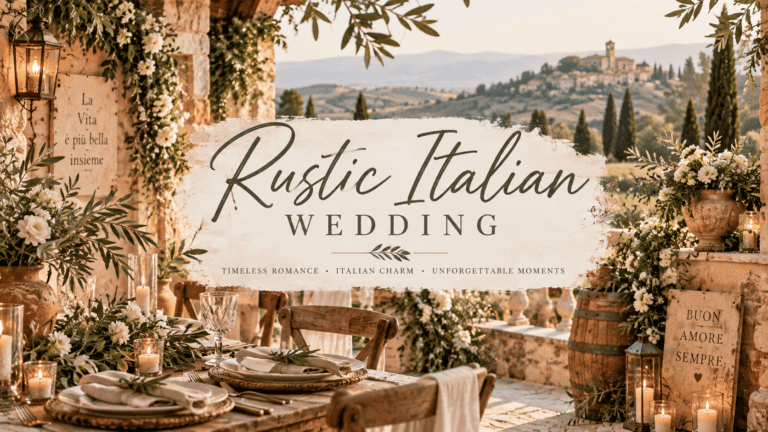
The full rustic wedding stationery range — warm botanical illustration across every rustic palette direction.
Rustic Wildflower
Rustic Wildflower Wedding Collection
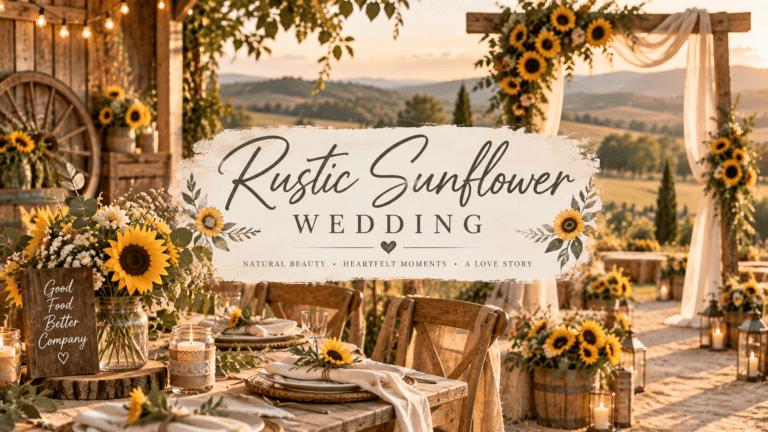
Loose wildflower botanical illustration — the natural pairing for the lace A-line and prairie dress directions.
Rustic Boho
Rustic Boho Wedding Collection
Boho botanical illustration with dried botanical elements — the natural companion for the boho lace gown.
Rustic Floral
Rustic Floral Wedding Collection
Soft botanical floral illustration — the natural pairing for the simple flowing gown direction.
Rustic Country
Rustic Country Wedding Collection
Warm country botanical illustration — the most countryside-specific rustic stationery direction.
Rustic Antler Woodland
Rustic Antler Woodland Collection
Deep woodland antler illustration — the natural companion for the woodland dress direction.
Frequently Asked Questions
What makes a wedding dress rustic rather than simply casual?
Material quality and the relationship to the natural world rather than formality level. A rustic bridal dress can be as carefully made as a formal bridal gown — the difference is not in the quality of construction but in the aesthetic it belongs to. A rustic dress is made from fabrics that move naturally (lace, chiffon, silk charmeuse, cotton voile) rather than fabrics that hold a fixed shape (taffeta, duchess satin, heavily structured tulle). Its silhouette flows rather than stands. Its decoration reads as botanical and organic rather than formal and geometric. The test: does the dress look more beautiful in a field or a barn than in a hotel ballroom? If yes, it is rustic.
What is the most versatile rustic wedding dress silhouette?
The lace A-line is the most universally flattering and the most broadly versatile rustic bridal silhouette. The A-line shape — fitted at the bodice, flaring gently to the hem — creates natural movement and flatters most body types. The lace overlay adds warmth and texture without requiring the full commitment of a lace-only gown. The lace A-line belongs equally to barn weddings, garden ceremonies, outdoor countryside celebrations, and woodland venues — it is the dress that reads as naturally rustic in any of these settings without requiring the specific landscape conditions that some other directions (the prairie dress, the woodland gown) need to read correctly.
What footwear works with a rustic wedding dress?
The footwear choice should match the venue’s practical demands as well as its aesthetic. For outdoor ceremonies on grass, gravel, or uneven ground: ankle boots in tan or warm brown leather are the most specifically rustic and the most practically sound choice. For barn ceremonies with wooden or stone floors: a simple low-heeled leather shoe in cream or ivory reads as rustic without the outdoor footwear compromise. For the boho rustic direction specifically: barefoot sandals — minimal leather or macramé — belong to the same free-spirited world as the dress itself. Avoid: heavily heeled formal shoes, strappy metallic sandals, or any footwear that reads as belonging to a formal urban aesthetic rather than a natural countryside one.
How should the rustic bridal dress match the stationery?
Through the same botanical language rather than through matching colours. The invitation’s wildflower illustration and the dress’s lace detail belong to the same natural world without needing to share a specific shade. The principle: both the dress and the stationery should read as belonging to the same organic, botanical, outdoor world — warm cream, wildflower tones, natural textures — rather than needing to match precisely in the way that a colour palette might be matched in a formally styled wedding. Wedding Avenue Studio’s rustic collections are designed with this botanical language throughout, so the invitation and the celebration’s visual world share the same natural register without requiring any additional coordination.
Wedding Avenue Studio · Rustic Wedding Stationery
Shop Rustic Wedding Stationery
The same botanical world as the dress — wildflower illustration across every format, every rustic palette direction.