Rustic Italian Wedding
Wedding Avenue Studio · Wedding Style Guide 2026
Rustic Italian Wedding
Complete Mediterranean Guide 2026
Four Italian rustic aesthetics, the Mediterranean colour palettes that define the look, ceremony and venue guidance, the Italian approach to celebration and hospitality, and the stationery that carries the whole world from the first invitation to the last toast.
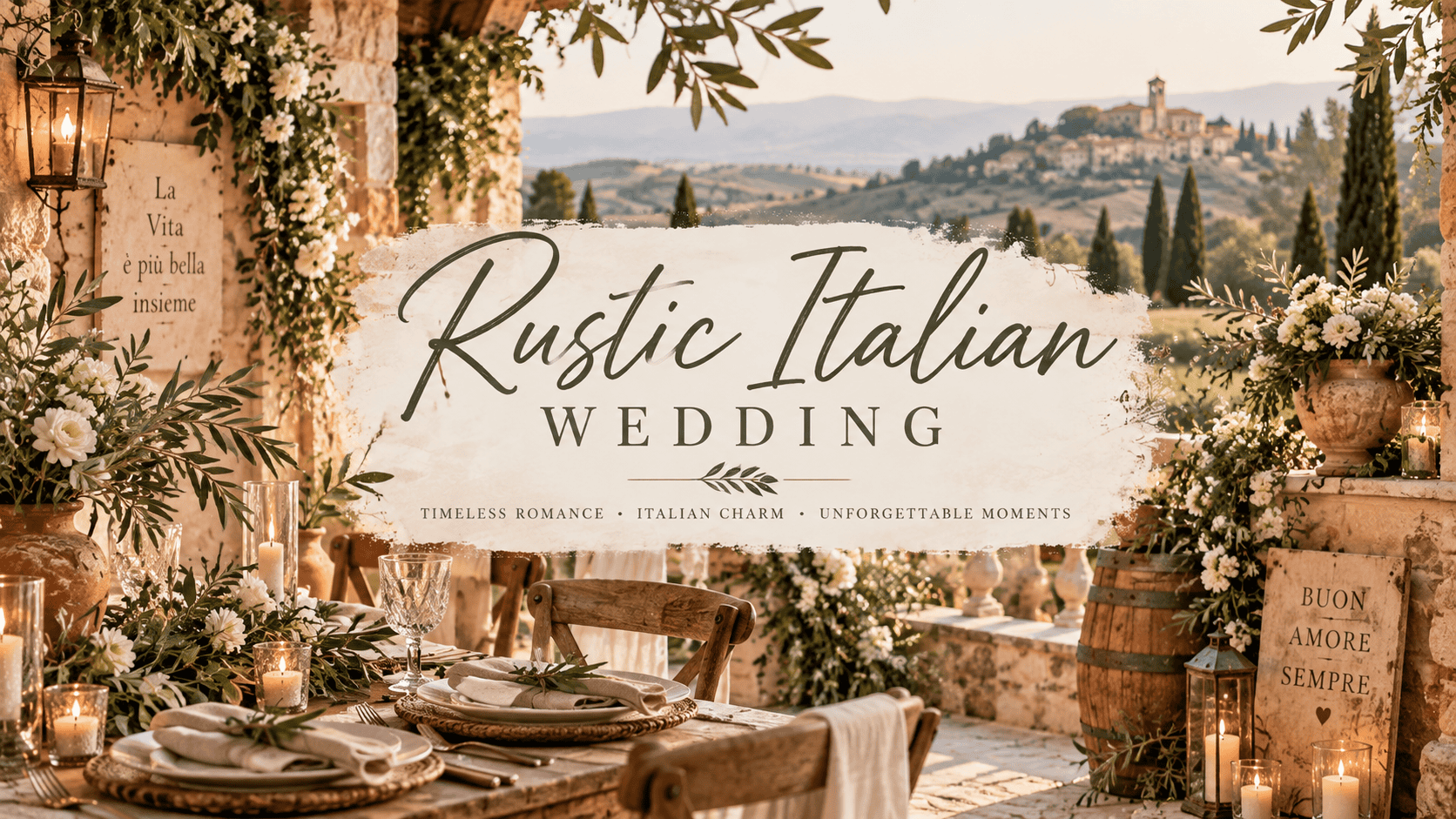
The rustic Italian wedding is the most photographed and most Pinterest-saved destination wedding aesthetic of 2026 — and the reason is not difficult to identify. The Italian rustic aesthetic produces photographs that look like the best possible version of themselves in every condition: golden afternoon light through an olive grove, ancient stone walls dressed with climbing wildflowers, long linen-dressed tables under a pergola heavy with wisteria. The aesthetic is not manufactured or styled into existence — it is genuinely present in the specific quality of Italian countryside architecture, landscape, and the culture of abundance and warmth that defines how Italy has celebrated for centuries. The challenge in 2026 is that the aesthetic is also entirely achievable outside Italy, for couples who understand what specifically makes it work.
Section 01What Is a Rustic Italian Wedding?
The rustic Italian wedding is defined by four qualities that exist independently of geography: abundance, warmth, ancient material, and the specific generosity of spirit that treats a wedding as a gift given to guests rather than a performance given for them. These qualities are available anywhere that a couple chooses to create them — in a Tuscan vineyard or in a walled garden in Shropshire, in a stone farmhouse in Umbria or in a converted barn in Burgundy. The Italian quality is not the passport stamp on the venue; it is the decision to make the celebration abundant, warm, ancient-feeling, and genuinely generous.
What abundance looks like in practice: wildflowers spilling from terracotta pots rather than arranged in precise formal centrepieces. Climbing roses and jasmine trained across stone or brick rather than cut and placed in vessels. Olive branches trailing along table runners. Long tables rather than round ones, because the long table seats more people together and allows the abundance of the table to build across its full length. A feast rather than a service: shared plates of antipasti and bread arriving before any formal course begins. More wine than is strictly required, served in the specific casual generosity of a family rather than the precise formality of a restaurant.
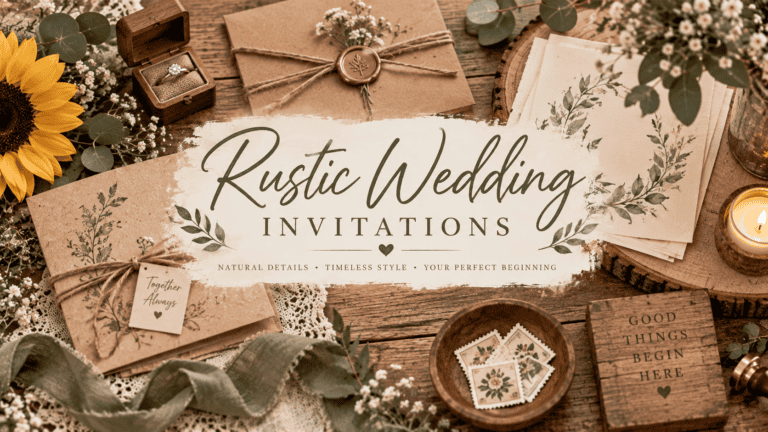
What warmth looks like: terracotta tones in the palette — the specific warm orange-red of sun-baked Italian roof tiles — alongside olive green, warm ivory, and the dusty gold of afternoon sun on stone. Candlelight as the primary light source for the reception, because no lighting system has yet produced the specific warmth of two hundred candles in an ancient stone room. And stationery that communicates the same warmth from the moment the invitation arrives: botanical illustration, warm natural paper stock, and a design that feels as though it belongs to the same world as the celebration it introduces.
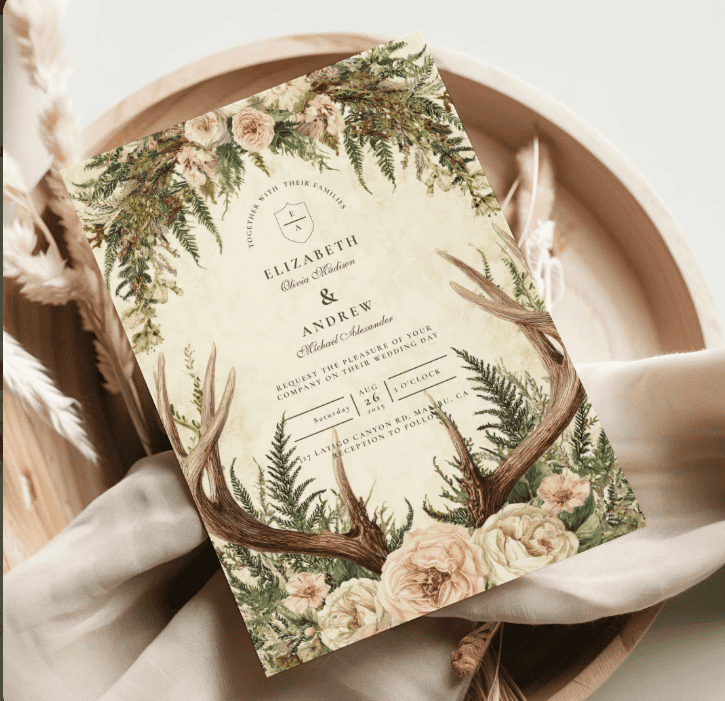
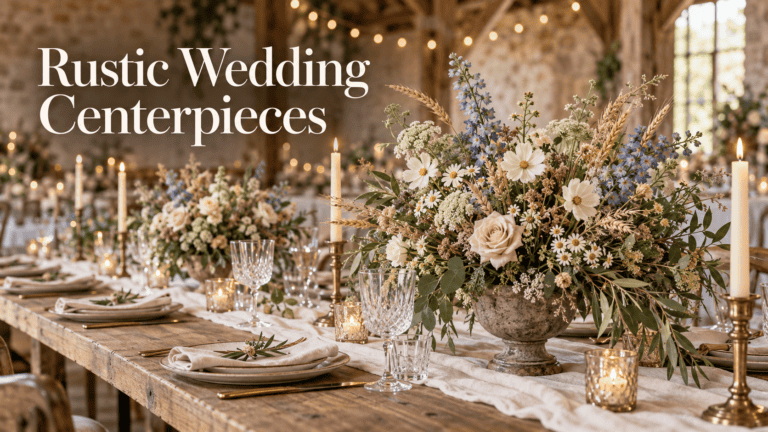
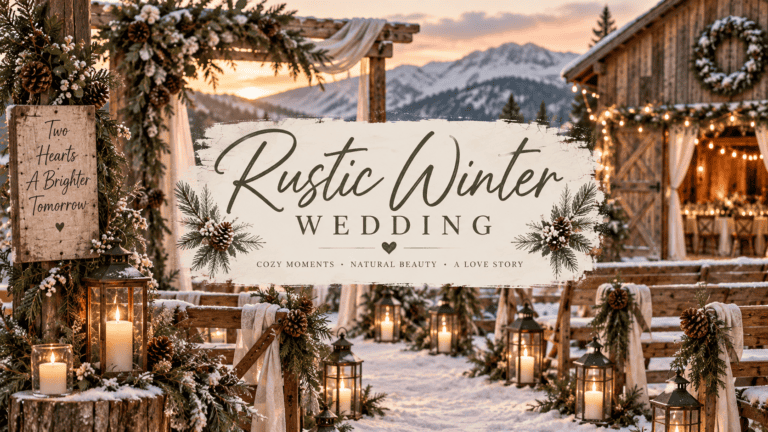
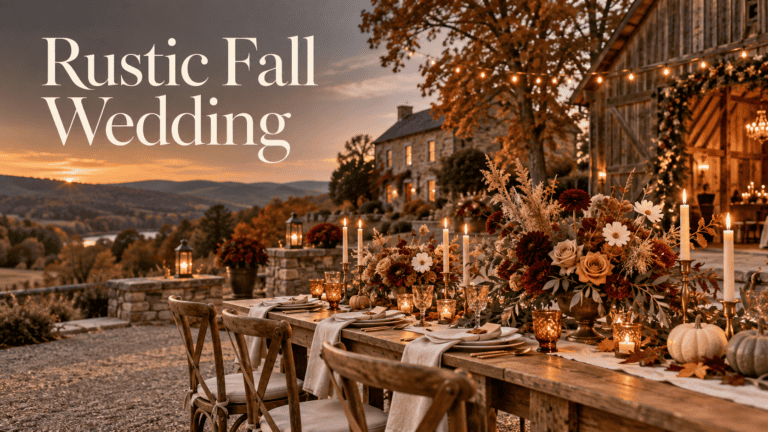
Rustic Wedding stationery from Wedding Avenue Studio — the full rustic collection across every format in warm natural tones.
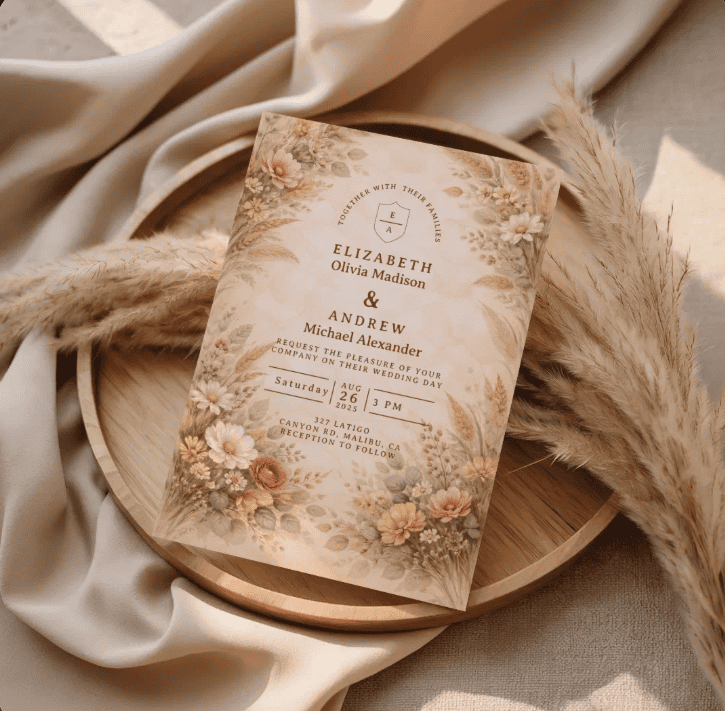
Rustic Floral stationery from Wedding Avenue Studio — botanical floral illustration in the warm register of the Italian rustic aesthetic.
Section 02Four Rustic Italian Wedding Aesthetics
The Italian rustic aesthetic encompasses four distinct regional directions, each with its own palette, material register, and ceremony context. Choosing one direction and building the whole celebration within it is the single most important decision in planning a rustic Italian wedding.
2.1 — The Tuscan Countryside Aesthetic
Terracotta and olive green as the palette anchors, warm stone as the architectural material, and wildflower abundance as the floral language. The Tuscan rustic wedding aesthetic is the most widely recognised of the four Italian rustic directions and the one that most directly references the specific visual quality of the Tuscan countryside: terracotta pots overflowing with sunflowers and wildflowers, long cypress avenues leading to ancient stone farmhouses, the warm amber gold of late afternoon Tuscan sun on old tile roofs. The stationery in this direction uses botanical wildflower illustration — loose, warm, generous with colour and detail — as the visual anchor for the whole aesthetic.
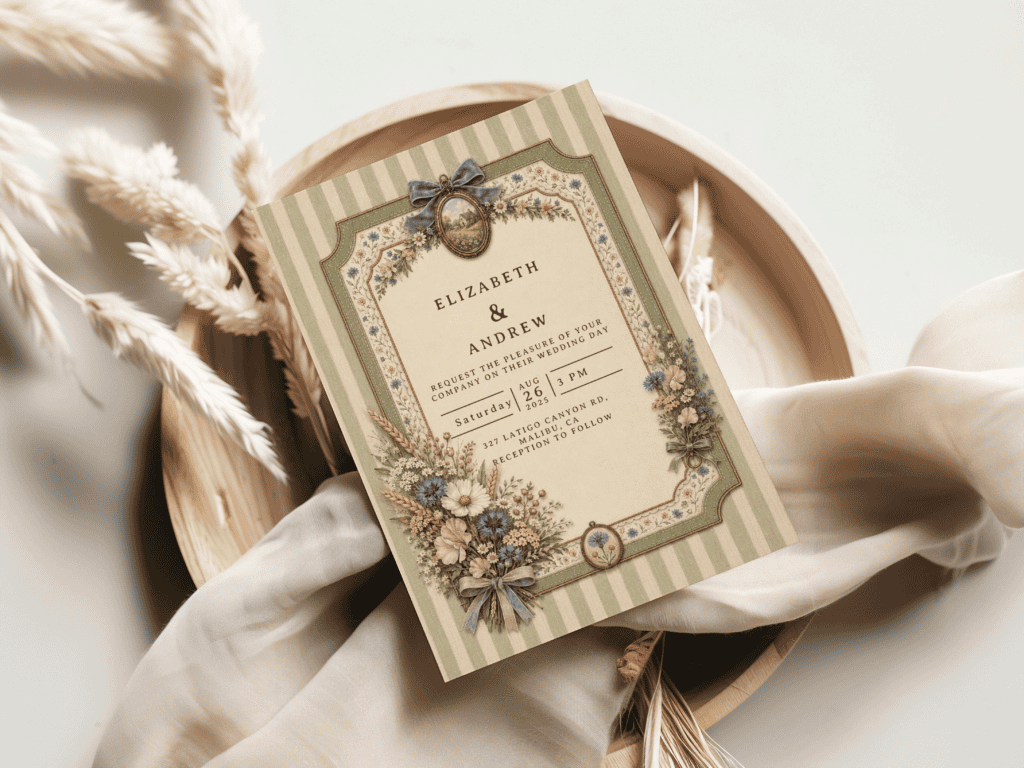
Rustic Wildflower stationery from Wedding Avenue Studio — botanical wildflower illustration in the warm terracotta and olive palette of the Tuscan countryside.
2.2 — The Amalfi Coast Aesthetic
Mediterranean blue, lemon yellow, and the warm white of Amalfi architecture: the coastal Italian rustic direction is the most vibrant and the most immediately recognisable as Italian. Bougainvillea in deep magenta-pink trailing over white-rendered walls. Lemons in terracotta pots as centrepiece elements. A blue and white ceramic tile aesthetic in the table setting detail. The Amalfi coast rustic wedding belongs to warm, light-filled venues with access to the outdoors — a walled courtyard, a rooftop terrace, a garden with a view. The stationery in this direction uses botanical floral illustration in a warm Mediterranean palette, with the specific quality of colour and warmth that belongs to the Italian coastal light.

Rustic Floral stationery from Wedding Avenue Studio — warm botanical floral illustration in the Mediterranean palette of the Amalfi coast aesthetic.
2.3 — The Umbrian Farmhouse Aesthetic
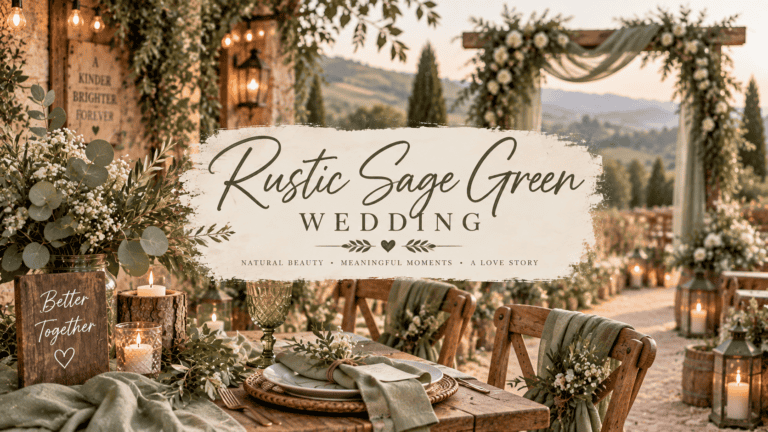
The most intimate of the four Italian rustic directions: sage green and warm ivory rather than terracotta and vibrant colour, ancient stone as the primary architectural material, and a quality of quiet warmth rather than abundant celebration. Umbrian rustic weddings belong to smaller, more intimate gatherings — fewer guests, longer at the table, deeper into conversation — in farmhouses and stone outbuildings where the building itself does the decorative work. The sage and warm ivory palette of the Umbrian farmhouse aesthetic is the most broadly applicable and the most timeless of the four Italian rustic directions: it reads as specifically Italian and specifically beautiful in any season and any light condition.
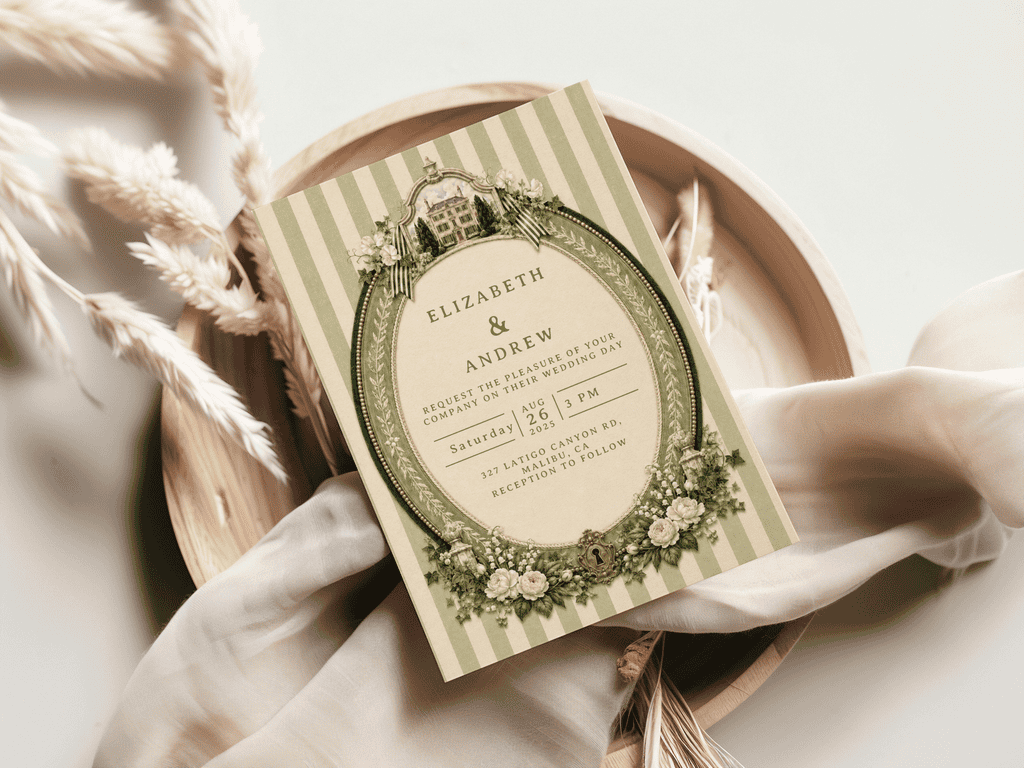
Rustic Sage Green stationery from Wedding Avenue Studio — sage and warm ivory in the quiet, refined palette of the Umbrian farmhouse aesthetic.
2.4 — The Italian Boho Aesthetic
The most relaxed and free-spirited of the four Italian rustic directions: pampas grass and dried wildflowers layered with fresh botanical greenery, macramé ceremony backdrops, terracotta accents, and the warm earthy palette of the Italian countryside in late summer brought into a boho material register. The Italian boho rustic wedding is the least formally Italian of the four directions — it references Italy through palette and warmth rather than through architectural or ceremonial specificity — and it is the most accessible for couples who want the warm Italian rustic feeling without the constraints of a formally Italian venue. The boho rustic aesthetic creates its own warmth and abundance through the layering of natural dried and fresh botanical materials, and the result photographs as warmly Italian as any stone-walled farmhouse, in any venue with sufficient outdoor access.
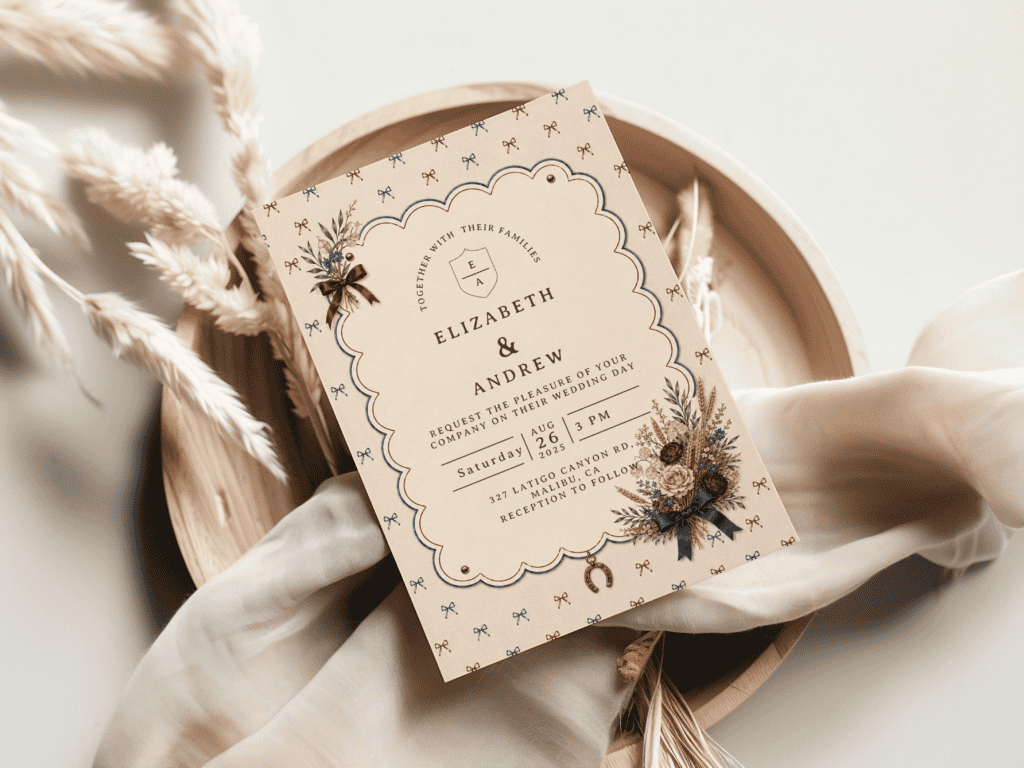
Rustic Boho stationery from Wedding Avenue Studio — warm earthy tones and botanical detail in the Italian boho rustic direction.
Section 03Rustic Italian Wedding Colour Palettes 2026
Four Italian rustic palettes, each anchored in a specific regional aesthetic. The palette decision is made before the first decoration item is ordered and held consistently throughout every element of the day.
Terracotta and Olive — The most specifically and immediately Italian of the four palettes. Warm terracotta in every vessel and surface accent, olive green in every botanical element, and warm ivory as the base tone. The palette that reads as Tuscany anywhere in the world and that photographs most warmly in afternoon sun.
Mediterranean Blue and Warm White — The coastal palette: the specific deep, slightly dusty blue of Mediterranean sea and tile, alongside warm white and a lemon-gold accent. Works at its most beautiful in bright natural light, outdoors or in a light-filled courtyard. The palette for a summer rustic Italian wedding with coastal or garden access.
Sage and Warm Ivory — The Umbrian palette: soft sage and warm ivory with one antique gold or warm amber accent. The most quiet and most broadly timeless of the four Italian rustic palettes. Works in every season, every venue, and every light condition. The palette for a smaller, more intimate rustic Italian gathering.
Dusty Rose and Antique Gold — The most romantically Italian of the four palettes: dusty rose — the specific warm grey-pink of bougainvillea in the late afternoon — alongside antique gold and warm ivory. Belongs to spring or early summer Italian rustic weddings with garden or courtyard ceremony space.
Section 04Rustic Italian Venue and Ceremony
The rustic Italian wedding ceremony draws its power from the specific quality of being held in or among ancient material. Stone, old brick, terracotta tile, aged timber: these are the materials that communicate the Italian rustic aesthetic most immediately, and the ceremony should be designed to let the venue’s existing quality do the decorative work rather than to impose decoration over it.
Ancient stone and historic architecture. An ancient stone church, a walled monastery garden, a vineyard estate, or a stone farmhouse courtyard: the quality that unites these spaces is the visible presence of time in the material. Stone that has been warmed by centuries of Italian sun reads differently from newly cut stone, and the rustic Italian ceremony belongs in spaces where the architecture has that quality. For couples celebrating outside Italy, any venue with exposed stone, aged brick, or genuinely old architectural character belongs to the same aesthetic world as an Italian venue — the Italian quality is in the material character of the space, not in its geographical location.
Olive grove and open-air ceremony. The open-air rustic Italian ceremony — under the canopy of an ancient olive grove, in a meadow overlooking a vineyard, or in a walled garden with climbing roses — is the most distinctly Italian ceremony format and the one that produces the most photographically compelling results. The ceremony arch in this context is a simple frame — natural wood or wrought iron — dressed with olive branches and seasonal wildflowers in the palette direction rather than an elaborate full-coverage floral installation. The landscape is the decoration; the arch is the frame within which the couple stands.
The Italian rustic ceremony outside Italy. A courtyard, walled garden, or garden with a stone or brick building as the backdrop is the most reliable way to achieve the Italian rustic ceremony aesthetic outside Italy. The terracotta pot of wildflowers at the end of each aisle row, the linen or natural hemp runner along the aisle, and the simple olive-branch arch all travel perfectly well. The stationery that guests carry into the ceremony — a printed order of service in the same botanical rustic direction as the invitation — extends the Italian rustic world into the guests’ hands throughout the ceremony.
✨ Creating the Italian Aesthetic
The rustic Italian ceremony does not require Italy. It requires ancient material, natural botanical abundance, and the specific warmth of candlelight and good linen. Any venue with exposed stone or brick, outdoor access, and the willingness to let the building’s existing quality do the decorative work belongs to the Italian rustic aesthetic regardless of its location.
Section 05Italian Rustic Food and Celebration Style
The Italian approach to wedding celebration is one of the most precisely defined and most influential in the world — and it rests on one principle that underpins every decision: the wedding is a gift. It is not a performance, not an aesthetic installation, not a statement. It is a gift given by two people to the people they love most, and the measure of its success is whether the guests feel genuinely cared for and genuinely celebrated throughout.
The long table feast. Long tables rather than round ones: the Italian rustic wedding reception seats guests in the format of a family dinner rather than a formal event. The long table allows conversation to flow between neighbours without the formality of a round-table arrangement, and it allows the abundance of the table — the flowers, the candles, the food — to build across its full length in a way that a round table never quite achieves. Three long tables of forty guests each reads as more specifically Italian rustic than ten round tables of twelve.
Antipasti and abundance. The Italian rustic wedding feast begins before the seated courses: antipasti and bread on the table as guests arrive, shared plates of cured meats, cheeses, olives, and seasonal vegetables before any formal course is presented. This approach is not just culinary — it is a declaration of hospitality. Guests who sit down to find food already waiting for them feel welcomed rather than processed through a service sequence. The Italian rustic celebration treats the feast as something that was already in progress when the guests arrived, rather than something that begins once everyone is seated and the formalities are observed.
The celebration as generous and unhurried. The Italian rustic wedding does not hurry. There is no schedule that pushes guests from the ceremony to the cocktail hour to the speeches to the first dance to the departure on a precisely timed sequence. The celebration expands into whatever time is available and contracts naturally when the guests are ready to leave. Long speeches, long meals, long evenings: these are not failures of time management but expressions of the specific Italian understanding that a celebration is worth taking the time to complete properly.
Section 06Rustic Italian Wedding Stationery
The rustic Italian wedding stationery suite is the guest’s first encounter with the aesthetic of the celebration — the invitation arrives weeks or months before the wedding and establishes the visual world that the guest will enter on the day. A suite that belongs to the same warm botanical world as the terracotta pots, the olive grove ceremony, and the long linen-dressed table reads as specifically designed when the guest arrives and encounters the celebration it introduced. A suite that belongs to a different aesthetic entirely creates the specific slight dissonance of a guest who received one invitation and arrived at a different party.
Six rustic wedding stationery collections at Wedding Avenue Studio cover the full range of the Italian rustic aesthetic, from the most Tuscan and wildflower-abundant to the most Umbrian and sage-refined, the Amalfi coastal floral direction, the Italian boho, and the broader rustic country and rustic wedding ranges that work across every Italian rustic direction. Every collection is available across the full suite of formats — invitation, RSVP, details card, place card, menu, and ceremony order of service — within the same design and the same palette.
The most coherent rustic Italian weddings are those where the stationery and the physical celebration exist in the same designed world. Order the place card and menu in the same collection as the invitation, and the guest who received the invitation in their post-box and the guest who sits down to the long linen-dressed table encounter the same visual world at both moments — which is the specific quality of a fully considered celebration rather than a beautifully decorated one.
Rustic Wedding
Rustic Wedding Collection
The complete rustic wedding stationery range across every format — warm natural tones for every Italian rustic direction.
Rustic Floral
Rustic Floral Collection
Botanical floral illustration in warm Mediterranean tones — the stationery for the Amalfi coast and floral Italian rustic aesthetic.
Rustic Wildflower
Rustic Wildflower Collection
Botanical wildflower illustration in terracotta and olive tones — the stationery for the Tuscan countryside aesthetic.
Rustic Boho
Rustic Boho Collection
Warm earthy botanical detail for the Italian boho rustic wedding direction — the most relaxed and free-spirited Italian rustic stationery.
Rustic Sage Green
Rustic Sage Green Collection
Sage and warm ivory in the quiet refined palette of the Umbrian farmhouse aesthetic — the most timeless Italian rustic stationery direction.
Rustic Country
Rustic Country Collection
Classic typography and warm natural palette across every format — the Italian rustic country estate direction.
Section 07Frequently Asked Questions
What makes a wedding rustic Italian rather than just rustic?
Four specific qualities: abundance rather than restraint in the floral and table decoration, warmth in the palette (terracotta, olive, warm ivory, and candlelight rather than cool greys and whites), ancient material in the venue or ceremony space (stone, old brick, terracotta tile, aged timber), and generosity in the approach to hospitality (shared plates before seated courses, long tables rather than round ones, a celebration that does not hurry to its conclusion). A wedding that has these four qualities reads as Italian rustic regardless of its geographical location. A Tuscan vineyard ceremony with poor lighting, cold palette, and formal service reads less Italian rustic than a walled garden with terracotta pots, candlelight, and long linen tables.
Can I have a rustic Italian wedding outside Italy?
Yes — and the four qualities that define the rustic Italian aesthetic travel perfectly. Ancient stone or old brick as the venue’s architectural material, terracotta and olive as the palette anchors, wildflowers in abundance, and the long table feast approach to the reception: none of these require Italian geography. A walled kitchen garden, a stone farmhouse, a converted barn with original features, or any venue where the building itself has age and character will provide the architectural quality that Italian rustic weddings draw on. The terracotta pots, the linen, the candlelight, and the stationery do the rest.
What colour palette works best for a rustic Italian wedding?
The most immediately Italian of the four palette directions is terracotta and olive: the specific warm orange-red of sun-baked Italian roof tiles alongside the dusty botanical green of the Tuscan landscape, against a warm ivory base. For a more refined and intimate register, sage and warm ivory in the Umbrian palette direction. For a coastal wedding with vibrant outdoor light, Mediterranean blue and warm white. For a spring or early summer celebration with garden ceremony space, dusty rose and antique gold. All four work best when the chosen palette is applied consistently across every element — the stationery, the table linen, the florals, and the venue accent details — rather than mixed across directions.
How far in advance should rustic Italian wedding stationery be ordered?
The invitation suite should be ordered at least twelve weeks before the planned send date — ideally sixteen weeks for summer weddings when print schedules are at their busiest. For destination celebrations where invitations are being sent internationally, allow an additional two to four weeks for postal delivery in the send date calculation. Day-of stationery — place cards, menus, ceremony order of service, and signage — should be ordered six to eight weeks before the wedding date to allow for proofing, any revisions, and delivery with enough lead time to check every piece before the day.
Wedding Avenue Studio · Rustic Italian Wedding Stationery 2026
Shop Rustic Italian Wedding Collections
Six Italian rustic stationery directions — Tuscan wildflower, Umbrian sage, Amalfi floral, Italian boho, and more — all at Wedding Avenue Studio.