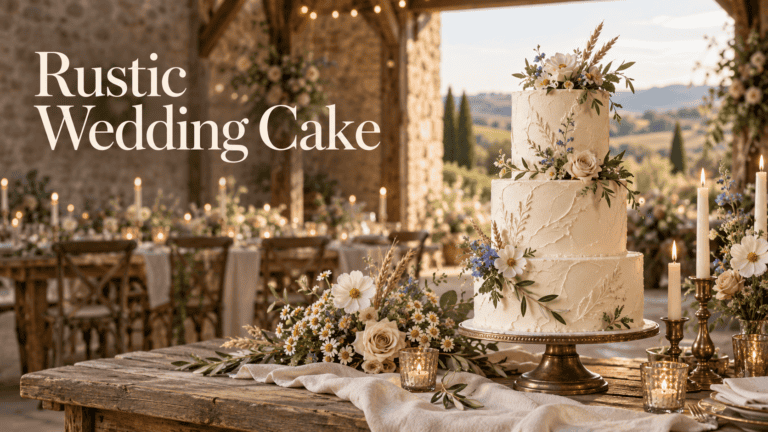
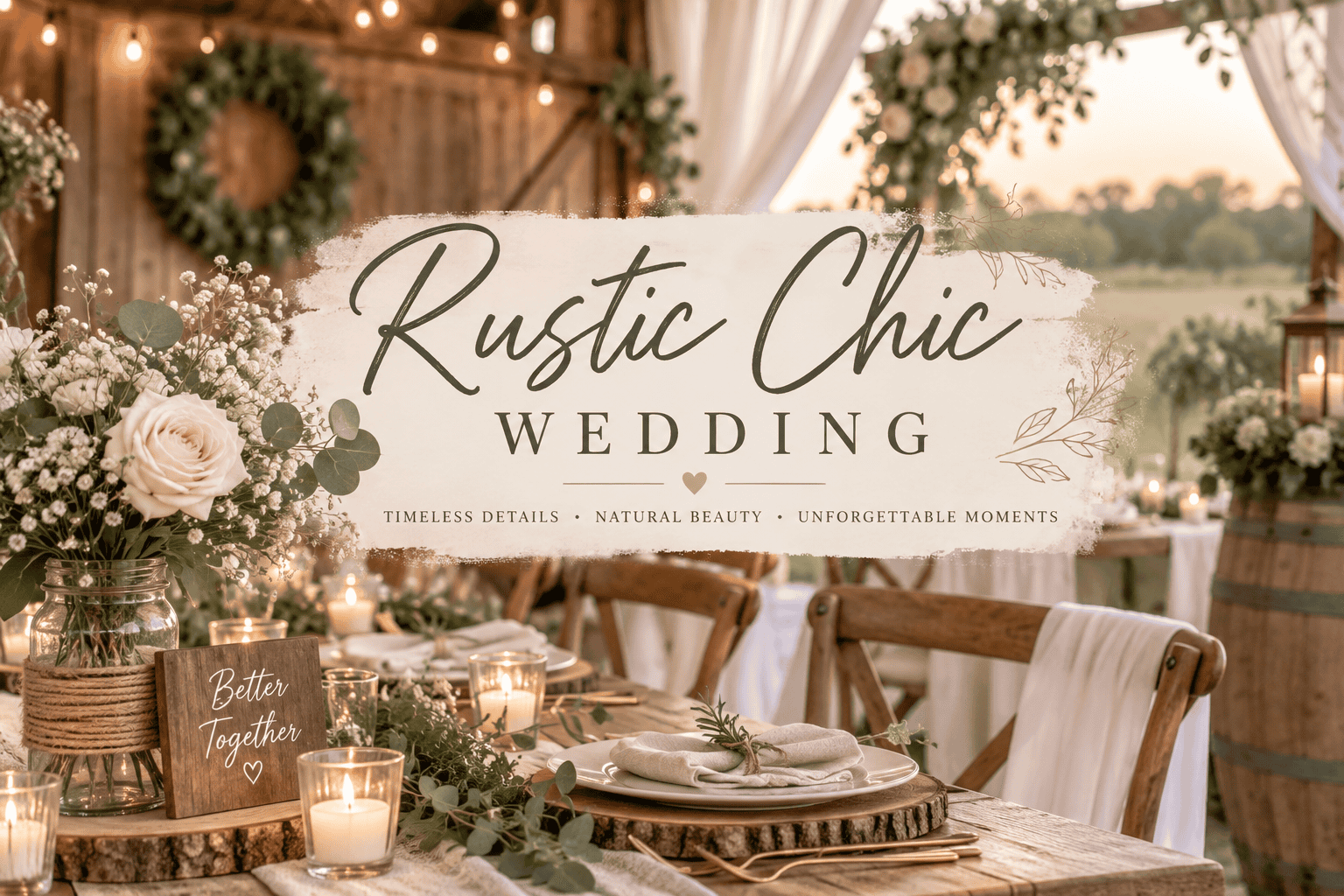
Rustic Chic Wedding
Wedding Avenue Studio · Wedding Style Guide 2026
Rustic Chic Wedding
Elegant Country Style Guide 2026
Four rustic chic aesthetics, the colour palettes that define the look, venue and ceremony guidance, table styling that reads elevated rather than styled, and the stationery that carries the whole world from the invitation to the day itself.
A rustic chic wedding sits at the most considered point on the spectrum between rustic and elegant. It borrows from both worlds — the warmth and natural texture of a country celebration and the restraint, quality materials, and editorial eye of a genuinely elegant one — without fully belonging to either. The result is a wedding that feels warm enough to be a celebration and refined enough to be beautiful in photographs for decades. Getting it right in 2026 means understanding which elements carry the rustic chic aesthetic and which move it too far in either direction.
Section 01What Is a Rustic Chic Wedding?
The rustic chic wedding is defined by a single distinguishing principle: quality of execution rather than category of element. A conventional rustic wedding uses natural materials because they are available and affordable. A rustic chic wedding uses the same natural materials — linen, wildflowers, weathered wood, warm candlelight — because they are genuinely beautiful when chosen with intention and executed with care. The difference is not what is used but how it is used, and that distinction is visible in every element of the day from the first envelope to the last table detail.
Three things separate rustic chic from plain rustic. First: restraint. A rustic wedding can accommodate abundant decoration, mixed patterns, and multiple visual themes simultaneously. A rustic chic wedding chooses one aesthetic direction and holds it consistently from the invitation through to the reception table. Second: material quality. The linen napkin in a rustic chic wedding is a good linen napkin — washed, pressed, and chosen in a specific tone that belongs to the palette. Third: the editorial eye. Every element of a rustic chic wedding has been looked at as a photograph before it was placed. Not in a contrived way, but in the sense that the couple or their stylist has considered what the room looks like as a whole, not just whether each individual element is attractive.
Wildflowers are perhaps the most precise illustration of the distinction. Wildflowers in a plain rustic wedding are gathered loosely and placed in whatever vessels are available. Wildflowers in a rustic chic wedding are in a specific limited palette — two or three colours from the overall palette, not every colour simultaneously — in vessels that were chosen rather than repurposed, at heights that vary intentionally rather than accidentally. The flowers are the same. The approach is entirely different.
✨ Styling Note
The most reliable test for whether a rustic chic element is working: remove it from the table or the room in your imagination and see whether the space looks simpler or just emptier. An element that belongs to the rustic chic aesthetic makes the space look more designed when present; an element that belongs to plain rustic decoration just adds to the visual count.
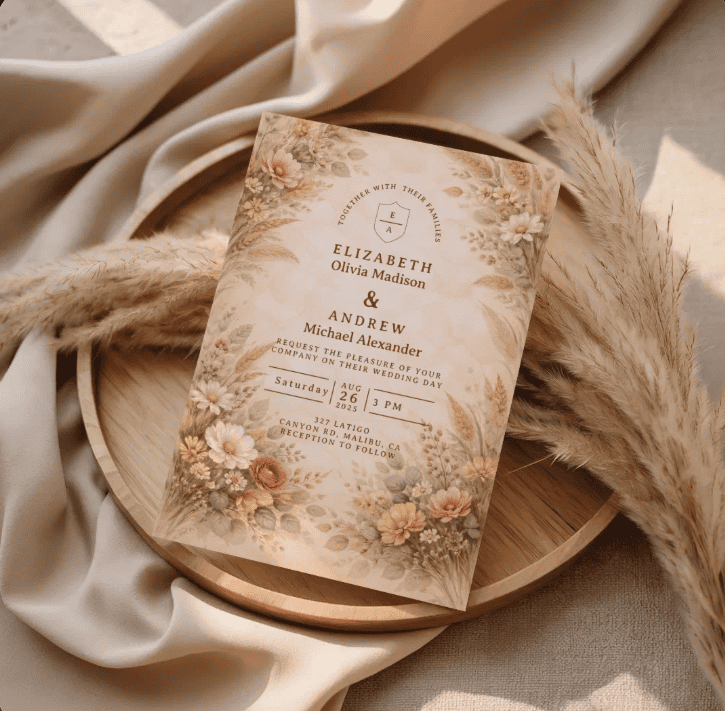
Rustic Wedding stationery from Wedding Avenue Studio — the full rustic collection across invitations, place cards, and day-of details in warm natural tones.

Rustic Floral stationery from Wedding Avenue Studio — botanical floral illustration in the warm, editorial register of the rustic chic aesthetic.
Section 02Four Rustic Chic Aesthetics for 2026
The rustic chic wedding encompasses four distinct aesthetic directions in 2026, each with a specific palette, a specific material register, and a specific venue type it belongs to most naturally. Choosing one direction and building everything within it is the single most important decision in planning a rustic chic wedding.
2.1 — The Elegant Wildflower Aesthetic
The most widely photographed and most consistently beautiful rustic chic direction: wildflowers as the primary floral element, in a restrained palette of cream, sage, dusty blue, and warm ivory rather than the full-spectrum wildflower mix of a conventional rustic celebration. The stationery in this direction uses botanical wildflower illustration — fine linework, a warm natural quality — as the visual anchor for the whole aesthetic. The elegant wildflower rustic chic wedding works in almost any venue with outdoor access: a walled garden, a meadow with a marquee, a barn with large doors opening onto a field.
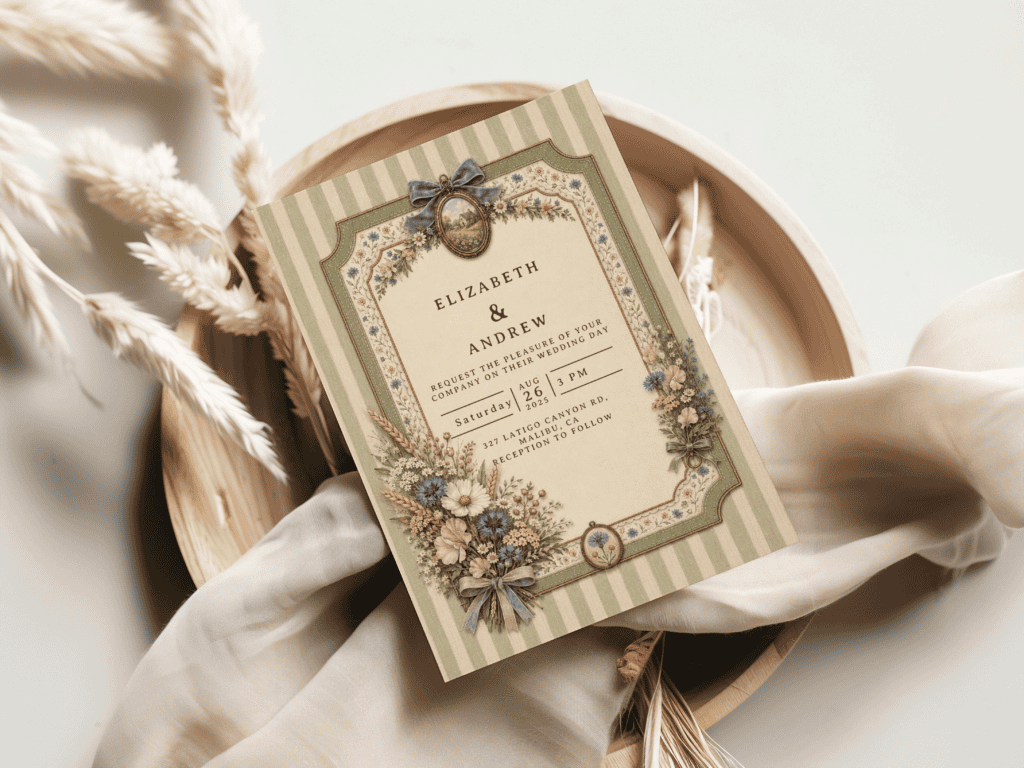
Rustic Wildflower stationery from Wedding Avenue Studio — botanical wildflower illustration in the warm, editorial register of the rustic chic aesthetic.
2.2 — The Sage Green Refined Aesthetic
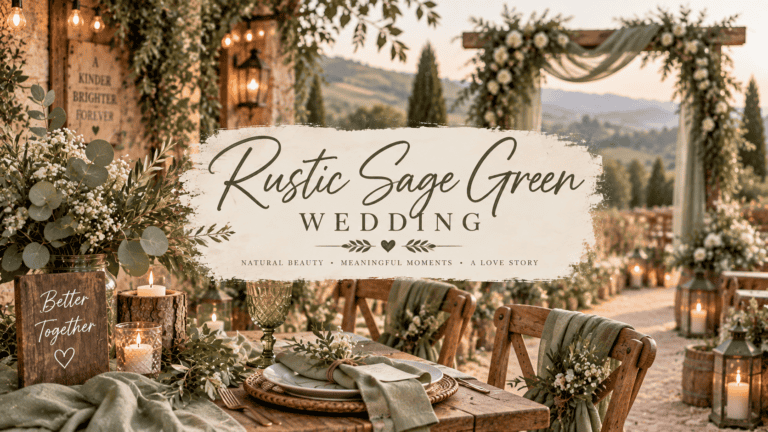
Sage green entered the rustic chic wedding conversation several seasons ago and has settled into permanence rather than fading as a trend — because it is genuinely one of the most flattering and most photographically beautiful backdrop and accent colours available at any time of year. The sage green rustic chic wedding uses a palette of soft sage, warm ivory, and antique gold or warm cream, with natural botanical greenery as the primary decorative element and sage-toned linen as the table base. The stationery in this direction uses sage green as the primary accent colour — a botanical illustration or clean typographic design in sage and warm cream — and the result is one of the most cohesive and most consistently well-executed rustic chic wedding aesthetics available.
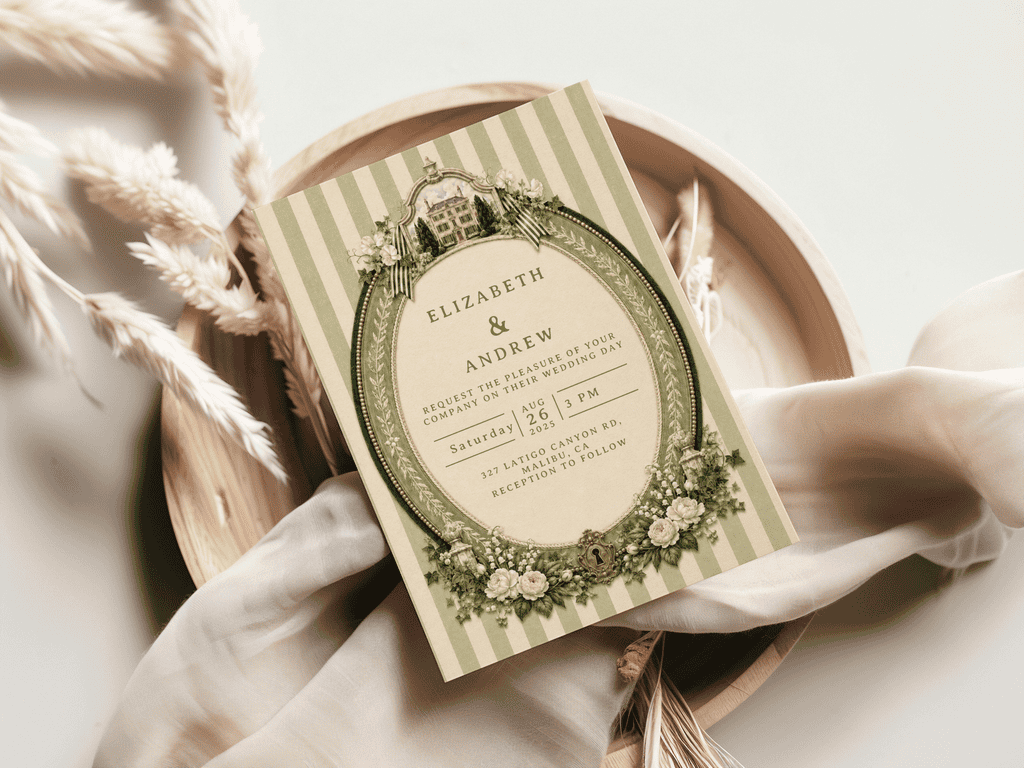
Rustic Sage Green stationery from Wedding Avenue Studio — sage and warm ivory in the most refined and most timeless rustic chic palette direction.
2.3 — The Country Estate Aesthetic
The country estate rustic chic wedding is the most formally elegant of the four directions — it leans further toward chic than toward rustic and it requires a venue that matches. A manor house with grounds, a walled kitchen garden, or a converted estate outbuilding: the building itself does the rustic work, and the styling does the chic work. Long linen-dressed tables under a pergola or within a glass orangery, tall taper candles in warm gold holders, a single large botanical arrangement as the centrepiece rather than multiple smaller ones, and stationery that matches the venue’s register — classic typography, warm natural palette, the quality of something that was specifically designed for this day and this place.
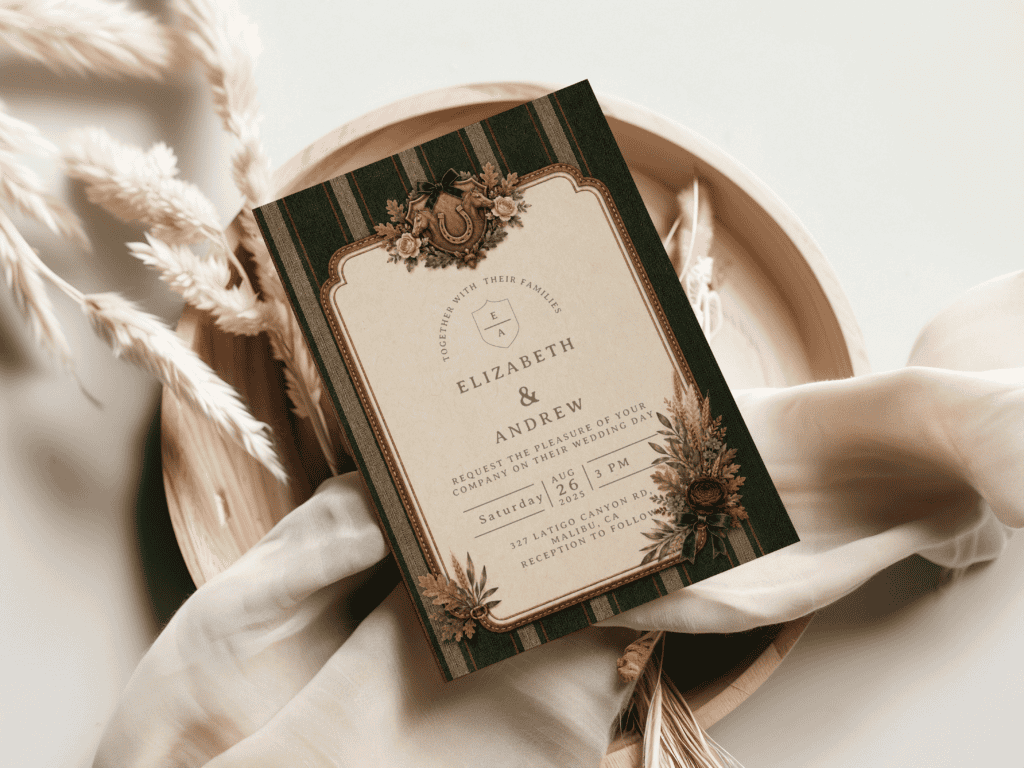
Rustic Country stationery from Wedding Avenue Studio — the country estate rustic chic register in warm natural tones across every format.
2.4 — The Boho Chic Aesthetic
The boho chic direction occupies the softer, more layered end of the rustic chic spectrum: dried pampas grass, dried wildflowers, macramé details, terracotta accents, and the warm earthy palette of the bohemian world brought into disciplined enough execution that it reads as chic rather than simply eclectic. The key to the boho chic rustic wedding is the same as for every rustic chic direction — restraint applied to a maximalist instinct. One pampas grass and dried wildflower installation reads as designed. Pampas grass at every table, on every chair, woven into every available surface reads as a pampas grass party. The boho chic direction concentrates the maximalist instinct into specific zones and keeps everything else clean and considered.
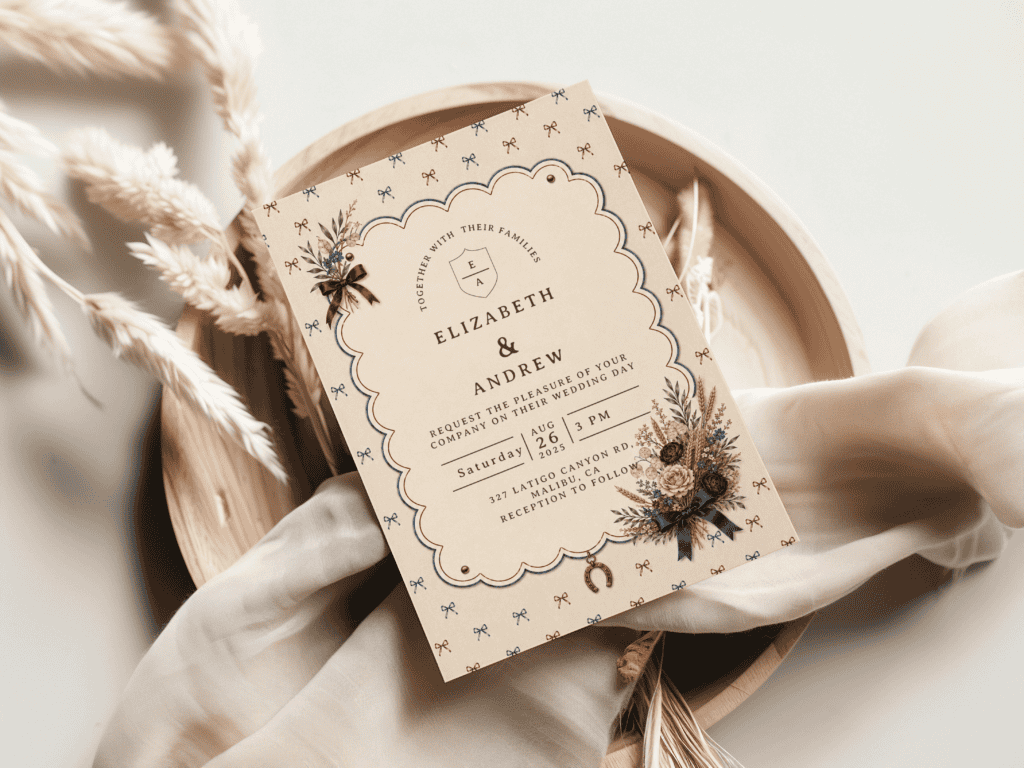
Rustic Boho stationery from Wedding Avenue Studio — the boho chic rustic direction in warm earthy tones with botanical detail.
Section 03Rustic Chic Wedding Colour Palettes 2026
Four palette directions, each with a specific mood and a specific season it belongs to most naturally. The palette decision is made before the first decoration item is ordered — everything else follows from it.
Sage and Ivory — The most consistently well-executed rustic chic palette of the decade. Sage green in every surface material — linen, ribbon, botanical accent — against warm ivory and one warm gold metallic. Works in every season, every venue, and every light condition. The palette that photographs most warmly in the low natural light of an autumn afternoon.
Warm Linen and Gold — The warmest and most textural of the four palettes: natural linen tones across every fabric surface, warm antique gold as the metallic, and the specific amber warmth of candlelight as the primary light source. The palette for a barn venue in late afternoon or a marquee in the evening.
Dusty Rose and Garden Green — The most romantically feminine of the four rustic chic palettes, and the one that requires the most discipline to keep within the chic register rather than drifting toward a conventional wedding pink. The dusty rose must be muted — a grey-rose rather than a warm pink — and the garden green must be botanical and natural rather than a bright party green. Works most beautifully at a spring or early summer garden venue.
Cream and Wildflower — The most neutral and most broadly applicable rustic chic palette: warm cream as the dominant base, natural wildflower colour as the accent (limited to two or three specific tones, not the full wildflower spectrum), and natural botanical green as the structural element. The palette that works in any venue and any light condition and that reads most naturally as genuinely rustic chic rather than as a styled version of a rustic party.
Section 04Rustic Chic Venue and Ceremony
The rustic chic wedding ceremony benefits from two things that a conventional rustic ceremony often lacks: a venue whose architecture does some of the decorative work, and a ceremony space that is considered as a visual whole rather than as a series of individual decorated elements.
Venue selection. The most successful rustic chic venues are those with an existing quality of material — old stone, weathered timber, walled brick, or the specific aged warmth of a Victorian glasshouse — that provides the rustic element without requiring decoration. A manor house with grounds, a walled kitchen garden, a converted farm building with original features, or a glass orangery surrounded by working garden: these are venues where the rustic chic aesthetic happens naturally. A blank industrial space or a hotel ballroom requires too much decoration to achieve the same effect and rarely fully arrives there.
The ceremony arch. A restrained floral arch — botanical greenery as the structural element, one or two specific bloom varieties in the palette rather than a full mixed installation, and natural twine or ribbon rather than artificial backing — reads as rustic chic in a way that an elaborate full-coverage flower arch does not. The restraint is what makes it chic. The natural materials are what make it rustic. Both qualities together produce the specific quality of a rustic chic ceremony backdrop.
The aisle. A quality linen or hessian aisle runner — pressed and unadorned, or with a single central pattern element — with simple botanical aisle markers rather than elaborate chair-tied arrangements. The aisle in a rustic chic ceremony should look as though the natural quality of the materials is the decoration, rather than as though a great deal of additional decoration has been applied to make the materials look beautiful.
✨ Editorial Note
Never recommend specific florists, venues, caterers, or other vendors. The styling principles in this guide apply to any provider who can execute them — the couple’s relationship with their own vendors is the determining factor in how these principles are realised.
Section 05Rustic Chic Table Styling
The rustic chic reception table is where the distinction between rustic and rustic chic is most visibly decided. The same natural materials — linen, botanical greenery, wildflowers, warm wood — read as rustic on an undressed trestle table and as rustic chic on a table where every element has been chosen and placed with the specific intention of making the whole more beautiful than the sum of its parts.
Quality linen as the foundation. The table linen in a rustic chic wedding is not a tablecloth that happens to be linen-textured — it is a specific linen in a specific tone from the palette, washed to the correct degree of softness and pressed without being stiff. The colour belongs to the palette: warm ivory, soft sage, warm natural linen, or dusty rose. The linen sets the aesthetic register of the entire table; a cheap or wrong-toned linen cloth undermines every other element placed on it.
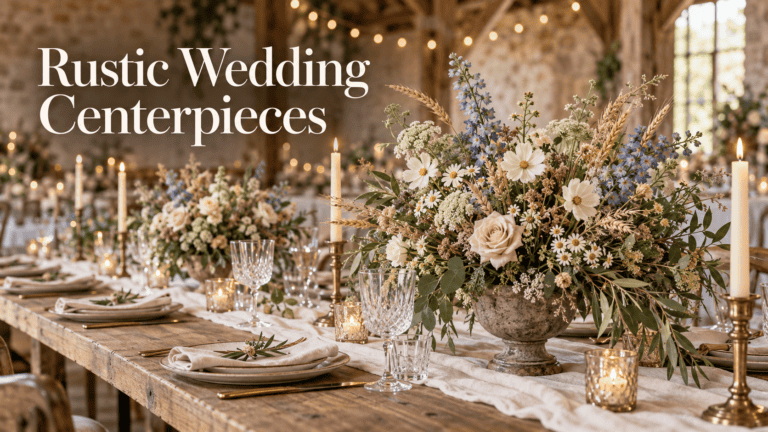
Single stem or loose botanical centrepiece. The rustic chic table centrepiece is either a single large, loose botanical arrangement — tall enough to draw the eye without blocking the sightlines — or a grouping of smaller vessels at varying heights that together create one visual focal point. Single-stem bud vases in simple glass or ceramic, spaced at intervals along the table centre, read as more chic than a conventional floral arrangement and require less floristry skill to execute beautifully.
Antique gold flatware and warm candlelight. Antique or satin-finish gold flatware — not bright modern gold, not silver — belongs to the rustic chic table in a way that no other cutlery finish does. The warm metal reads as specifically chosen rather than generically available, which is the defining quality of a rustic chic element. Warm candlelight from grouped taper candles in simple gold or glass holders provides the light quality that makes the table read as specifically designed rather than generally decorated.
Section 06Rustic Chic Wedding Stationery
The rustic chic wedding stationery suite is the first element of the day that guests experience — the invitation arrives weeks before the wedding and sets every aesthetic expectation the guest brings to the celebration. A stationery suite that belongs to the same rustic chic world as the venue, the table, and the ceremony reads as designed when the guest arrives. A suite that belongs to a different aesthetic world than the wedding it introduces creates a specific kind of visual dissonance that registers as something slightly off even when the guest cannot articulate exactly what it is.
Every rustic chic stationery direction at Wedding Avenue Studio is available across the full suite of formats — invitation, RSVP card, details card, place card, menu, and day-of signage — within the same design and the same palette. Ordering across formats from one collection means the guest who receives the invitation and the guest who sits down to a place card and menu at the reception table encounter the same designed world at both moments. That consistency is the stationery decision that most reliably produces the feeling of a fully considered and fully designed wedding day.
Six rustic chic collections cover the full range of the aesthetic from the most botanical and wildflower-forward to the most sage-refined, country-estate, and boho-chic directions. Browse all six below to find the stationery direction that belongs to your specific rustic chic wedding world.
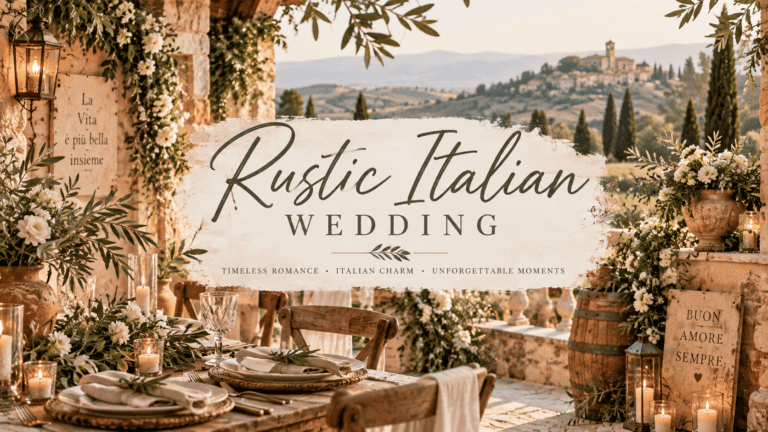
Rustic Wedding
Rustic Wedding Collection
The complete rustic wedding stationery range — warm natural tones across every format and every rustic direction.
Rustic Floral
Rustic Floral Collection
Botanical floral illustration in the warm editorial register of the rustic chic aesthetic — wildflowers with restraint.
Rustic Sage Green
Rustic Sage Green Collection
Sage and warm ivory in the most refined and most timeless rustic chic palette direction — the collection that photographs beautifully in any light.
Rustic Wildflower
Rustic Wildflower Collection
Fine botanical wildflower illustration in a restrained palette — the elegant wildflower rustic chic direction at its most beautifully specific.
Rustic Country
Rustic Country Collection
The country estate rustic chic register — classic typography and warm natural palette for a manor or walled garden venue.
Rustic Boho
Rustic Boho Collection
Warm earthy tones and botanical detail for the boho chic rustic wedding direction — natural, layered, and specifically considered.
Section 07Frequently Asked Questions
What is the difference between a rustic wedding and a rustic chic wedding?
The difference is intentionality rather than category of element. A rustic wedding uses natural materials because they are appropriate and available. A rustic chic wedding uses the same natural materials — linen, wildflowers, weathered wood, warm candlelight — because they are genuinely beautiful when chosen with care and executed with quality. Three specific things mark the shift from rustic to rustic chic: restraint in the number and type of decorative elements, quality in the material choices (a good linen rather than a linen-look synthetic), and an editorial eye applied to the space as a whole before any individual element is placed. The rustic chic wedding looks as though someone stood in the room and edited it; the rustic wedding looks as though someone filled it.
What are the best colours for a rustic chic wedding in 2026?
Four palettes define the rustic chic aesthetic in 2026. Sage and ivory: the most consistently beautiful and most photographically reliable, works in any season. Warm linen and antique gold: the warmest and most textural, belongs to evening barn or marquee weddings. Dusty rose and garden green: the most romantically feminine, requires discipline to stay within the chic rather than the conventional-pink register. Cream and wildflower: the most neutral and most broadly applicable, built from warm cream as the base and two or three specific wildflower tones as accents rather than the full wildflower colour spectrum. All four work best when one palette is chosen and held consistently throughout every element of the day.
What kind of venue suits a rustic chic wedding?
The most successful rustic chic venues have existing architectural quality — old stone, weathered timber, walled brick, or the aged warmth of a Victorian glasshouse — that provides the rustic register without requiring extensive decoration. Manor houses with grounds, walled kitchen gardens, converted farm buildings with original features, and glass orangeries surrounded by gardens all belong naturally to the rustic chic aesthetic. The venue should do some of the rustic work so that the styling can do the chic work: when the building itself is sufficiently characterful, the couple’s styling can concentrate on restraint and quality of materials rather than on decoration volume.
How early should rustic chic wedding stationery be ordered?
The invitation suite should be ordered at a minimum of twelve weeks before the send date, and ideally sixteen weeks for summer weddings where print schedules are typically busier. The full day-of stationery — place cards, menus, signage — should be ordered six to eight weeks before the wedding date to allow for proofing, any adjustments, and delivery with time to spare. The most common stationery mistake in rustic chic weddings is ordering too late and accepting the first available option rather than the right one: the stationery is the first guest-facing element of the whole aesthetic and it should be given the same lead time as the venue and the flowers.
Wedding Avenue Studio · Rustic Chic Wedding Stationery 2026
Shop Rustic Chic Wedding Collections
Six rustic chic stationery directions — wildflower, sage green, country estate, boho chic, and more — all at Wedding Avenue Studio.