Rustic Wedding Centerpieces
Rustic Wedding · 2026
Rustic Wedding Centerpieces
Complete Styling Guide 2026
Six centrepiece directions, the vessels and materials that read as genuinely rustic, and the stationery that belongs to the same natural table world as the flowers.
The rustic wedding centrepiece is the decoration guests sit with for the longest. Every other element of the celebration is encountered briefly — the ceremony arch as the couple walks through it, the entrance wreath as guests arrive, the signage as they find their seats. The centrepiece is the detail that is present for the entire reception, examined from arm’s reach, touched, photographed from a dozen angles, and eventually taken home by a guest who asks if she can have it. It is worth getting right.
“The best rustic centrepiece looks as though someone went out into the garden that morning and came back with their arms full — not as though someone spent three hours arranging it.”
Section 01The Rustic Centrepiece Philosophy
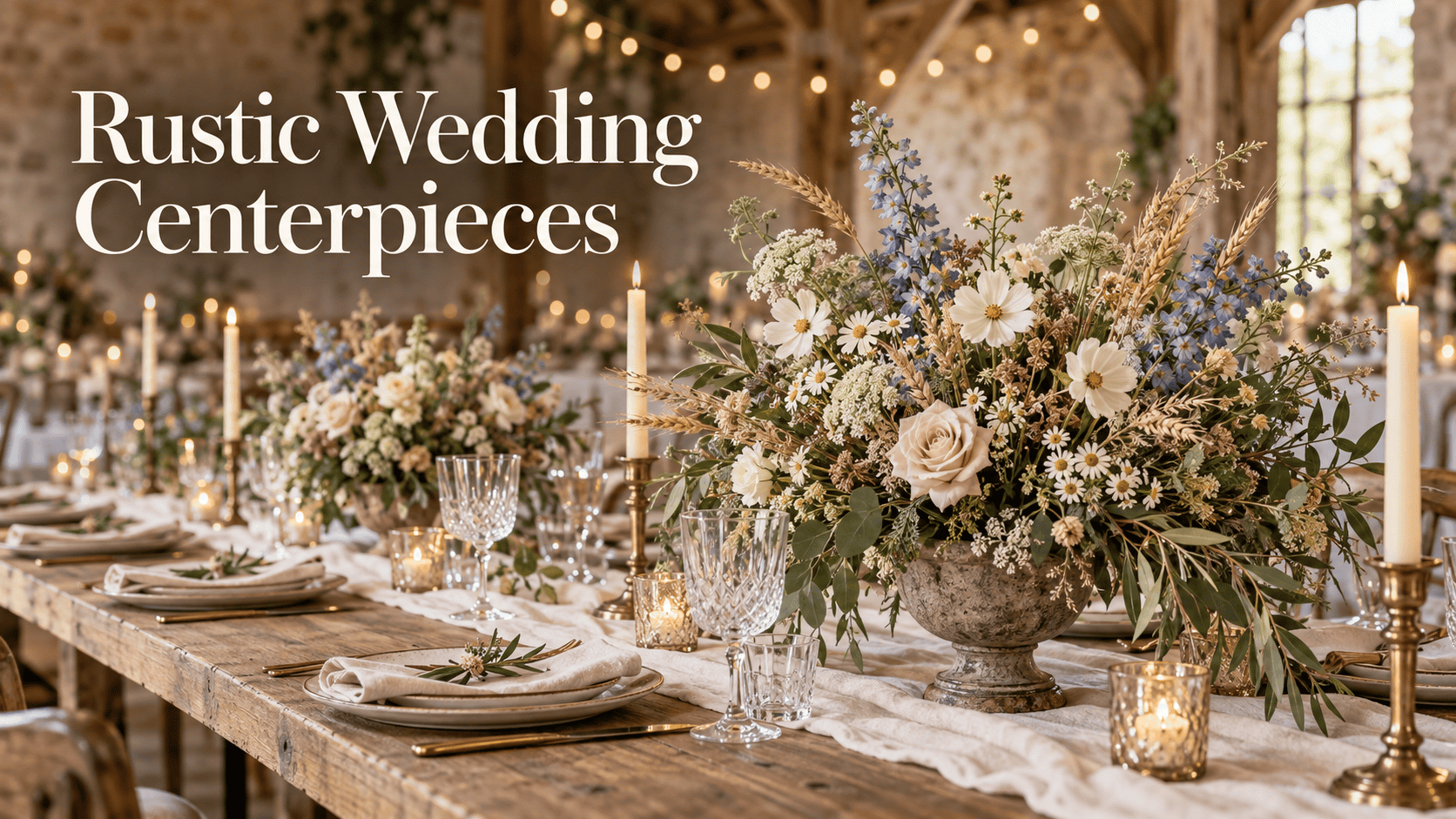
The principle that separates a genuinely beautiful rustic centrepiece from a conventionally styled table arrangement is the found-not-arranged quality. A conventionally styled centrepiece is assembled: flowers chosen for colour compatibility, cut to a consistent height, placed in a symmetrical arrangement in a vessel that reads as specifically decorative. A rustic centrepiece is gathered: wildflowers and botanicals that look as though they came from the surrounding landscape, placed in a vessel that looks as though it was already there — a mason jar, an earthenware pot, a section of tree trunk — with an arrangement that reads as natural abundance rather than designer composition.
This distinction has practical implications. The rustic centrepiece does not need expensive flowers. It does not need a professional florist’s arrangement skill. What it needs is the right vessel, the right botanical material, and the confidence to leave it looking slightly imperfect rather than correcting it toward symmetry. The slight imperfection — a stem that reaches higher than the others, a wildflower head that faces a different direction, a trailing piece of greenery that falls across the table surface — is what makes it read as natural rather than constructed.
The vessel is often the most important element of a rustic centrepiece. The right vessel communicates the entire aesthetic before a single flower is placed in it. The wrong vessel communicates a different aesthetic that the flowers then have to work against rather than with. Mason jars, earthenware and terracotta pots, rattan baskets, copper vessels, and sections of natural wood: these are the vessel materials that read as rustic without requiring any additional styling work. Glass cylinders, metallic vases with mirror finishes, and ceramic with a high gloss: these are the vessel materials that shift the register away from the rustic world regardless of what grows in them.

The centrepiece and the stationery share the same table surface — when they belong to the same botanical world, the table reads as designed rather than assembled.
Section 02Six Rustic Centrepiece Styles
Six specific centrepiece directions, each with a vessel brief, a botanical brief, and the stationery collection it pairs with most naturally.
2.1 — Mason Jar Wildflower Clusters
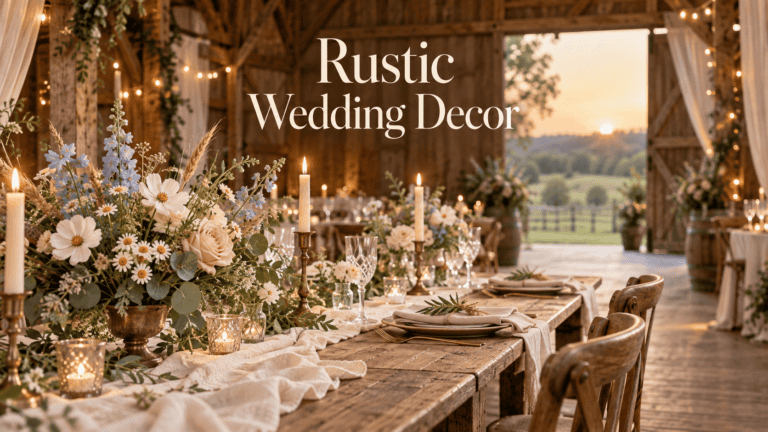
The most iconic and the most broadly applicable rustic centrepiece: three to five mason jars of different sizes grouped together on the table, each holding a different small wildflower arrangement in the same palette. The grouping of multiple small jars rather than one large arrangement is the key decision — it reads as gathered, allows for slight variation between jars that reinforces the natural quality, and creates height variation without requiring risers or structural elements. Cosmos, cornflowers, sweet peas, and small daisy varieties in warm cream, blush, and soft lavender; eucalyptus and trailing greenery between the jars on the table surface. A single tea light in a fourth jar adds candlelight warmth to the cluster.
The mason jar cluster scales effortlessly — the same format works for a table of four and a table of twelve, simply by adjusting the number of jars and the abundance of the botanical material. It is also the most budget-efficient rustic centrepiece available, because wildflowers are among the least expensive fresh flowers and mason jars are among the least expensive vessels.
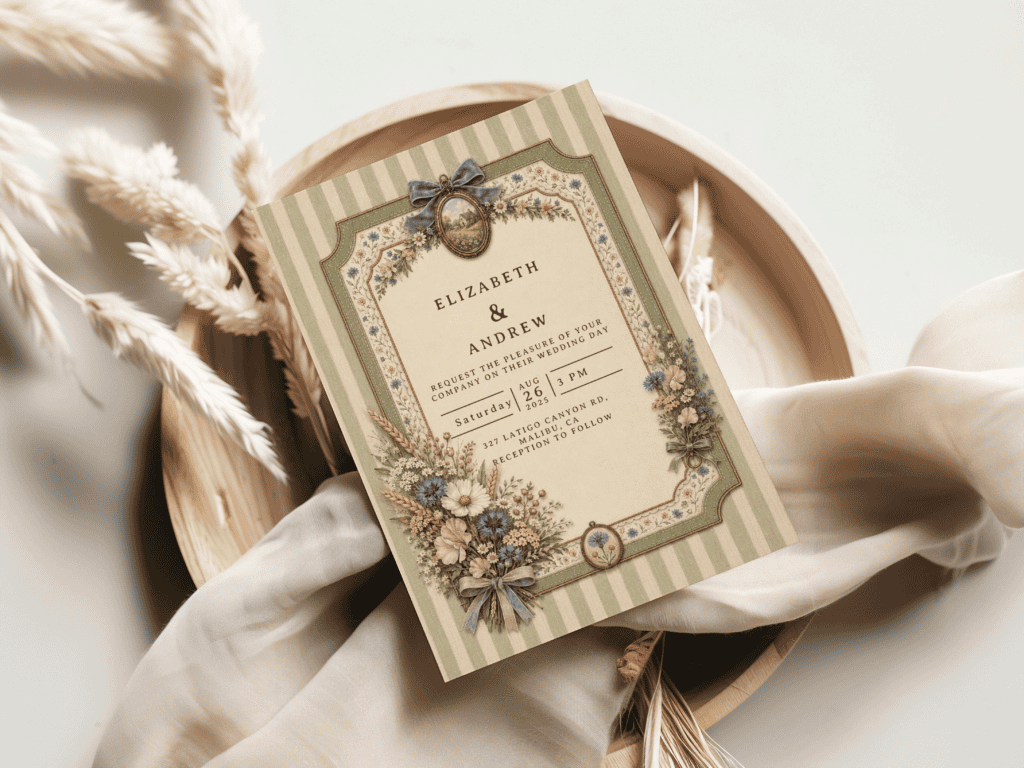
Rustic Wildflower Wedding stationery — loose botanical wildflower illustration in the same warm meadow palette as the mason jar arrangement.
2.2 — Sunflower Statement
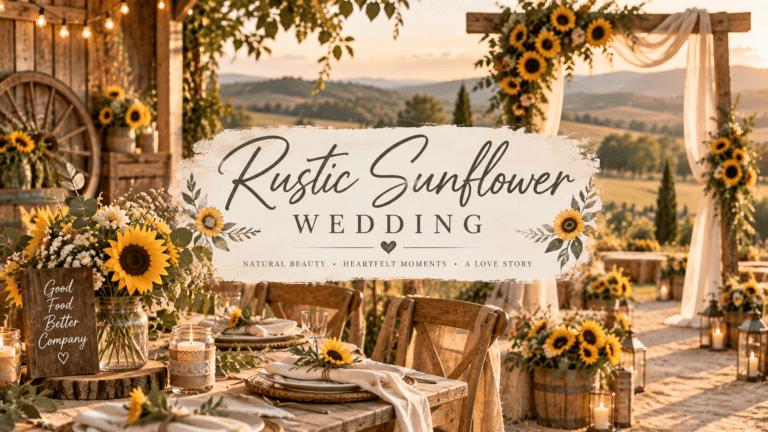
Large-headed sunflowers as the primary centrepiece element — three to five full-open sunflower heads in a low rattan vessel or a wide earthenware pot, with pampas tufts and sage greenery as the surrounding texture. The sunflower centrepiece reads as abundance and warmth simultaneously: the warm golden yellow, the warm brown centre, and the generous size of the flower head communicate summer at its most specifically joyful. At a long trestle table, sunflower centrepieces spaced at regular intervals with trailing greenery between them create one of the most beautifully warm and most consistently photographed rustic table arrangements available.
The practical brief for a sunflower centrepiece: source sunflowers at full open rather than in bud. A sunflower in bud reads as a yellow-tipped green stem; a fully open sunflower reads as the entire summer landscape compressed into a single flower head. The difference in visual impact is significant.
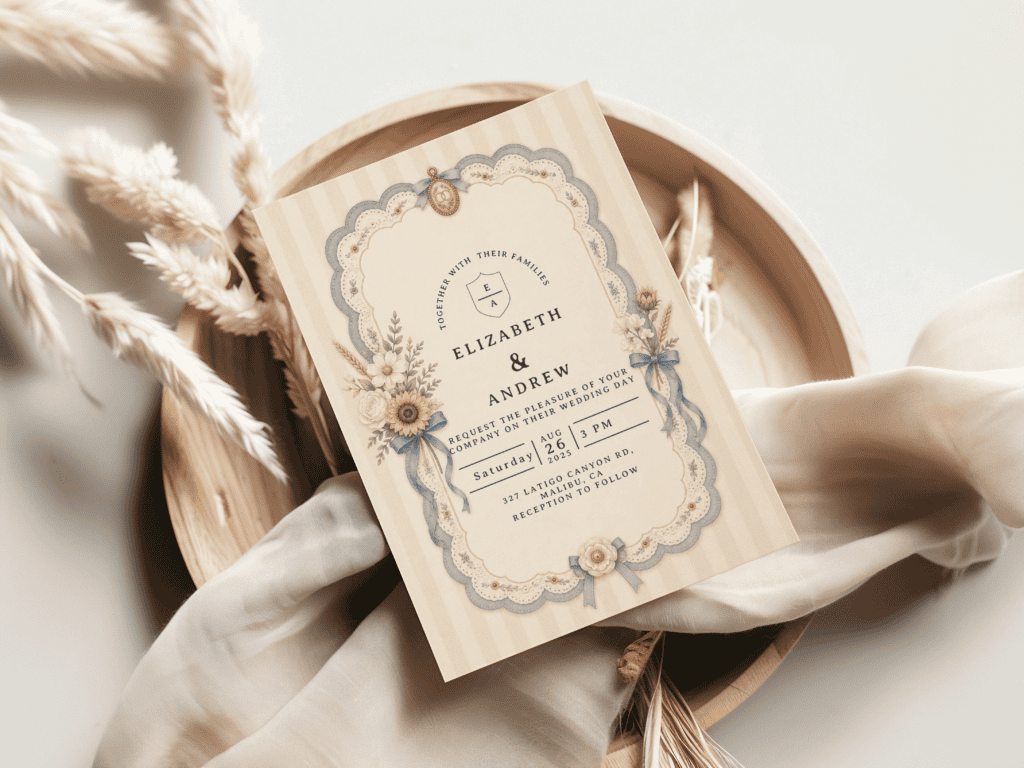
Rustic Sunflower Wedding stationery — warm sunflower botanical illustration in the most golden rustic palette direction.
2.3 — Sage Green Botanical
The most refined and most quietly beautiful rustic centrepiece direction: soft sage green and eucalyptus as the dominant botanical element, with warm cream and ivory flowers as accents and a warm stone or unglazed ceramic vessel. The sage green centrepiece reads as considered and botanical rather than abundantly warm — it is the centrepiece for a couple whose aesthetic runs toward the elegantly natural rather than the maximally rustic. A low, wide arrangement of sage greenery, eucalyptus, dried grasses, and a few open roses or ranunculus in warm cream; everything at a similar height so the arrangement reads as a botanical garden rather than a formal floral composition.
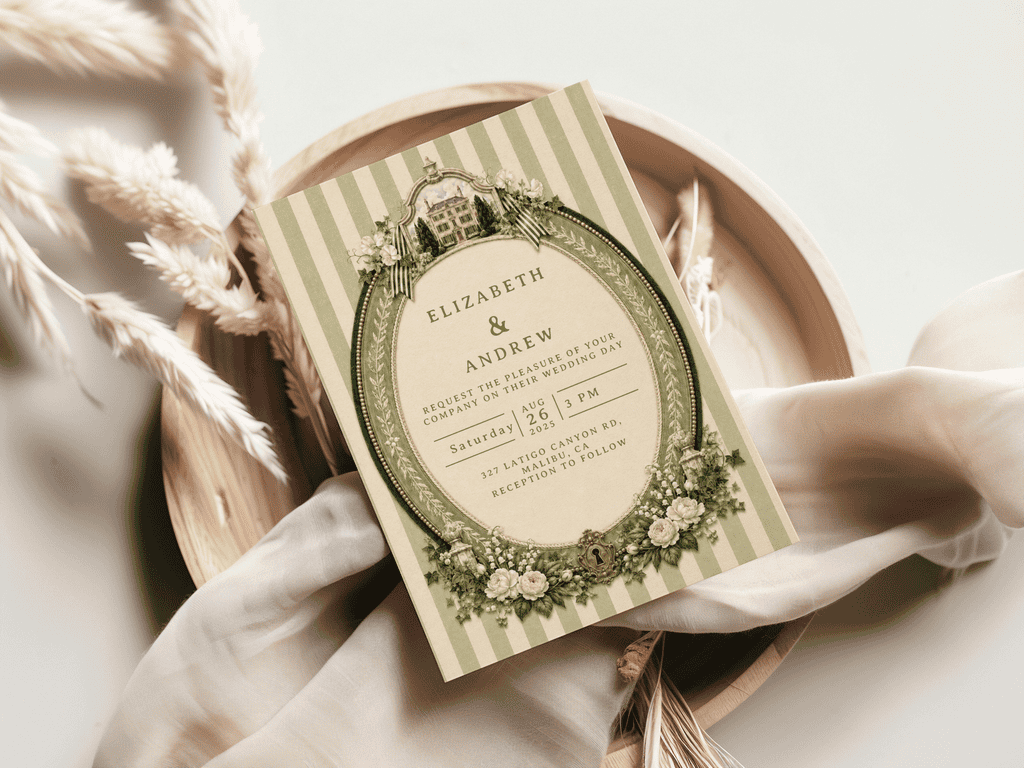
Rustic Sage Green Wedding stationery — soft sage botanical illustration in the most gently elegant rustic direction.
2.4 — Pumpkin Harvest
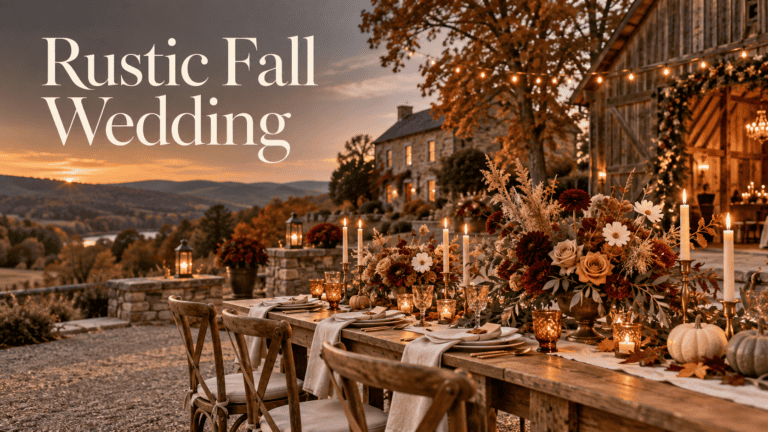
The most season-specific and the most dramatically warm rustic centrepiece: small decorative pumpkins and gourds at the centre of the table, surrounded by dried wheat stems, rosehips, dark berry foliage, and warm rust and amber dried flowers. Pillar candles at different heights on log slice stands within the arrangement; deep burnt sienna and warm amber botanical elements throughout. The pumpkin harvest centrepiece does not need fresh flowers — it is built entirely from seasonal botanical and decorative elements that are available in autumn at very low cost, and it reads as the most dramatically and most specifically seasonal of all six centrepiece directions.
The practical brief: use decorative pumpkins in different sizes grouped at the table centre, with the tallest candles placed behind them and the smallest botanical elements scattered between them at the table surface. The arrangement should read as a harvest table rather than a Halloween display — warm amber and rust tones, not orange and black.
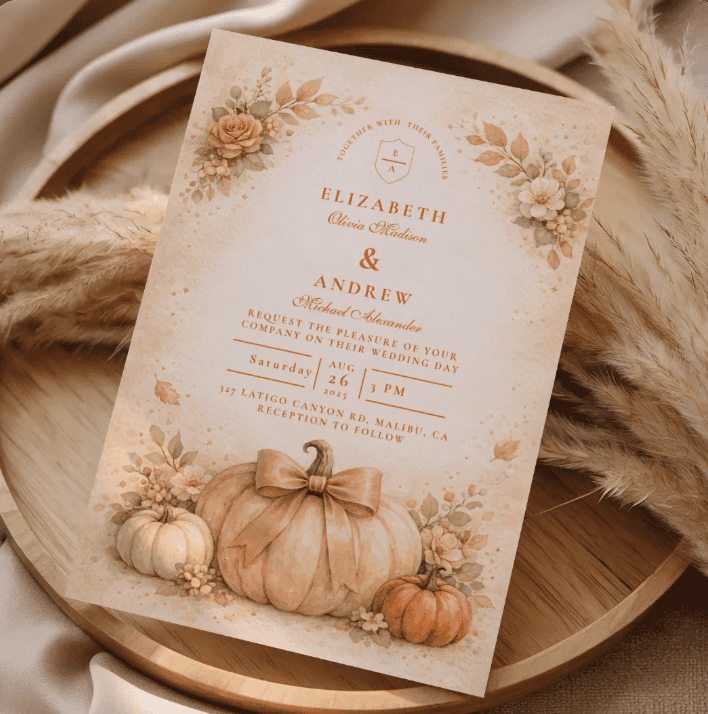
Rustic Pumpkin Wedding stationery — warm autumn pumpkin botanical illustration in the richest harvest earth tones.
2.5 — Boho Pampas
Tall pampas grass plumes in wide earthenware vessels as the primary centrepiece element, alongside dried botanicals, bleached branches, and warm earthy botanical texture throughout. The boho pampas centrepiece is the most architecturally interesting of the six directions — the height of the pampas plumes creates a vertical element that other rustic centrepiece formats lack, and the soft, feathery texture of the pampas reads as specifically beautiful in warm, low light. The vessel: tall, wide, and with a rough terracotta or unglazed finish that belongs to the same earthy material world as the pampas itself.
The boho pampas centrepiece works particularly well at long trestle tables where the height variation between the tall pampas arrangements and the lower botanical elements creates a visually interesting table landscape rather than a flat surface. Group three pampas arrangements together at the table centre and let the plumes overlap slightly at the top — the crowded, abundant quality reads as more natural than three perfectly spaced identical arrangements.
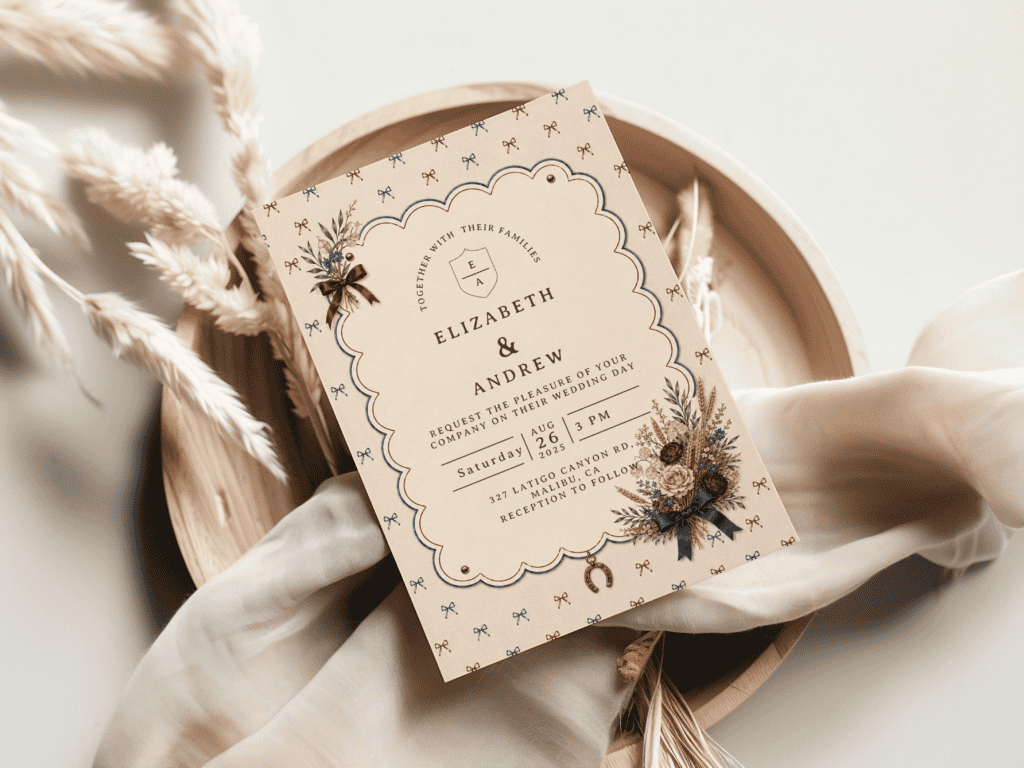
Rustic Boho Wedding stationery — boho botanical illustration with dried botanical elements in the most free-spirited rustic direction.
2.6 — Antler & Forest
The most dramatically rustic and the most specifically woodland centrepiece direction: antler or branch structures as the centrepiece anchor, surrounded by deep forest greenery — pine branches, ferns, dark berry foliage — and warm candlelight. Pillar candles at different heights on log slice stands; small lanterns with tea lights placed among the botanical elements. The antler and forest centrepiece reads as the deepest and most specifically nature-immersed of all six directions — the one that belongs most naturally to a woodland or forest venue in autumn or winter, where the surrounding landscape is already providing the same dark green and warm amber tones.
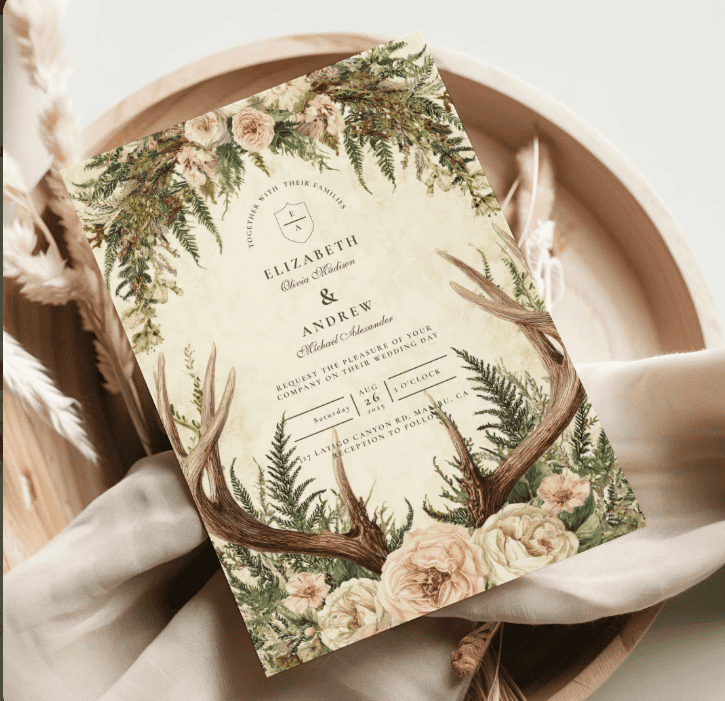
Rustic Antler Woodland stationery — deep woodland and antler illustration in the most dramatically rustic palette.
Section 03Vessels & Materials
The vessel communicates the centrepiece’s aesthetic before a single botanical element is placed in it. Five material categories cover the full range of rustic vessel choices.
Mason jars. The most iconic and the most widely available rustic vessel. Standard wide-mouth mason jars in their natural clear glass belong to the mason jar wildflower cluster direction most specifically, but also work as candle holders and small arrangement vessels across every rustic direction. Avoid: decorated or coloured mason jars, which shift the register toward craft rather than natural. Clear glass, standard form, used in groups of three to five: this is the only brief the mason jar centrepiece needs.
Wooden log slices and tree stumps. Cross-sections of tree trunks — from wide centrepiece bases to narrow taper candle holders — are the most versatile rustic surface material available. A log slice as the centrepiece base, with mason jars, candles, and small botanical elements arranged on its surface, does more visual work than almost any other single material choice. The visible grain and bark edge communicate the natural world immediately and without ambiguity.
Copper and warm metals. Copper vessels — buckets, jugs, and low bowls in warm copper or bronze — belong to the rustic world when their finish is warm and slightly patinated rather than mirror-bright. A copper jug with a loose wildflower arrangement reads as rustic and warm; the same jug with a mirror finish reads as contemporary. The warm, slightly aged quality of real copper is the material detail that places it in the rustic world.
Stone and terracotta. Unglazed terracotta pots and rough stone vessels are the most specifically earthy and most immediately rustic vessel material available. The unglazed surface texture reads as natural and honest in the same register as exposed timber and undyed linen. Terracotta belongs to the sunflower, sage green, and boho rustic directions most naturally.
Rattan and wicker. Rattan and wicker baskets and vessels add the specific warm texture of natural woven materials to the centrepiece arrangement. A shallow rattan tray lined with moss and holding a low wildflower arrangement reads as specifically garden-gathered. A tall rattan vessel with pampas grass plumes reads as specifically boho. Rattan belongs to every rustic direction and is one of the most versatile vessel materials available.
Section 04Rustic Wedding Stationery
The centrepiece and the stationery share the same table surface. A menu card propped against a mason jar, a table number on a log slice beside the wildflower arrangement, a place card tucked into a greenery stem: every piece of stationery that appears on the reception table is part of the centrepiece’s visual world. When the stationery’s botanical illustration style and warm palette match the centrepiece’s botanical material and earthy vessel, the table reads as a single designed moment rather than a collection of separately sourced elements.
Wedding Avenue Studio’s rustic stationery collections are each designed to match a specific centrepiece direction. The Rustic Wildflower collection belongs on the table with the mason jar wildflower cluster. The Rustic Sunflower collection belongs with the sunflower statement centrepiece. The Rustic Antler Woodland collection belongs with the antler and forest arrangement. Each collection is available across every table format — menu card, table number, place card, and escort card — within the same botanical illustration style, so the stationery suite is consistent across every surface it touches.
Eight rustic stationery collections are available below, each matched to the centrepiece direction it pairs with most naturally.
Rustic Wedding
Rustic Wedding Collection
The complete rustic range — warm botanical illustration across every rustic palette and centrepiece direction.
Rustic Wildflower
Rustic Wildflower Wedding Collection
Loose wildflower botanical illustration — the natural table companion for the mason jar wildflower cluster.
Rustic Floral
Rustic Floral Wedding Collection
Soft botanical floral illustration in warm rustic tones — the most broadly beautiful rustic table stationery.
Rustic Sunflower
Rustic Sunflower Wedding Collection
Warm sunflower botanical illustration — the natural companion for the sunflower statement centrepiece.
Rustic Boho
Rustic Boho Wedding Collection
Boho botanical illustration with dried elements — the natural table companion for the pampas centrepiece.
Rustic Sage Green
Rustic Sage Green Wedding Collection
Soft sage botanical illustration — the natural companion for the sage green botanical centrepiece.
Rustic Pumpkin
Rustic Pumpkin Wedding Collection
Warm autumn botanical illustration — the natural table companion for the pumpkin harvest centrepiece.
Rustic Antler Woodland
Rustic Antler Woodland Collection
Deep woodland antler illustration — the natural companion for the antler and forest centrepiece direction.
Frequently Asked Questions
What makes a centrepiece look rustic rather than simply casual?
The vessel material and the arrangement quality. A casually assembled bunch of flowers in a glass vase reads as casual; the same flowers in a mason jar or an earthenware pot with a few trailing greenery stems read as rustic. The vessel communicates the aesthetic before the flowers do. Beyond the vessel, the found-not-arranged quality of the arrangement is what reads as specifically rustic: slight height variation, a stem that faces a different direction than the others, trailing botanical elements that fall naturally across the table surface. The slight imperfection is the quality that distinguishes a rustic centrepiece from a casually styled one — it looks deliberately natural rather than accidentally unfinished.
How many flowers do I need for a rustic centrepiece?
Less than most brides expect. A mason jar cluster of three to five jars requires seven to fifteen stems per jar — twenty to seventy-five stems total for one table, depending on the jar sizes. Wildflowers are typically sold in bunches of ten to twenty stems, so two or three bunches per table is usually sufficient. The rustic centrepiece looks most beautiful when it reads as abundant rather than sparse, which requires enough material to fill the vessel and allow a few stems to trail naturally, but not so much that the arrangement reads as packed and forced. The trailing greenery between jars adds visual volume without adding significant cost.
What is the most budget-friendly rustic centrepiece?
The mason jar wildflower cluster is the most cost-efficient rustic centrepiece available. Mason jars are inexpensive and reusable. Wildflowers — cosmos, cornflowers, sweet peas, daisies — are among the least expensive fresh flowers available and are often available from farm shops, market stalls, and pick-your-own flower farms at significantly lower prices than florist-sourced flowers. Tea lights in a fourth or fifth mason jar add candlelight warmth at minimal additional cost. The pumpkin harvest centrepiece is equally budget-efficient in autumn, when decorative pumpkins and gourds are widely available at very low cost from farm shops and market stalls.
How does stationery fit into the rustic centrepiece table?
As a designed element of the table rather than a separate printed category. A menu card in the Rustic Wildflower illustration style propped against a mason jar becomes part of the centrepiece’s visual world. A table number card on a log slice beside the flower arrangement belongs to the same botanical palette as the flowers. A place card tucked into a sprig of eucalyptus is a floral element and a stationery element simultaneously. The most cohesive rustic reception tables are those where the stationery suite and the centrepiece share the same illustration style and the same warm botanical palette — so every element on the table surface reads as part of the same natural world.
Wedding Avenue Studio · Rustic Wedding Stationery · 2026
Shop Rustic Wedding Stationery
The same botanical world as the centrepiece — eight collections, every rustic palette, every table format.