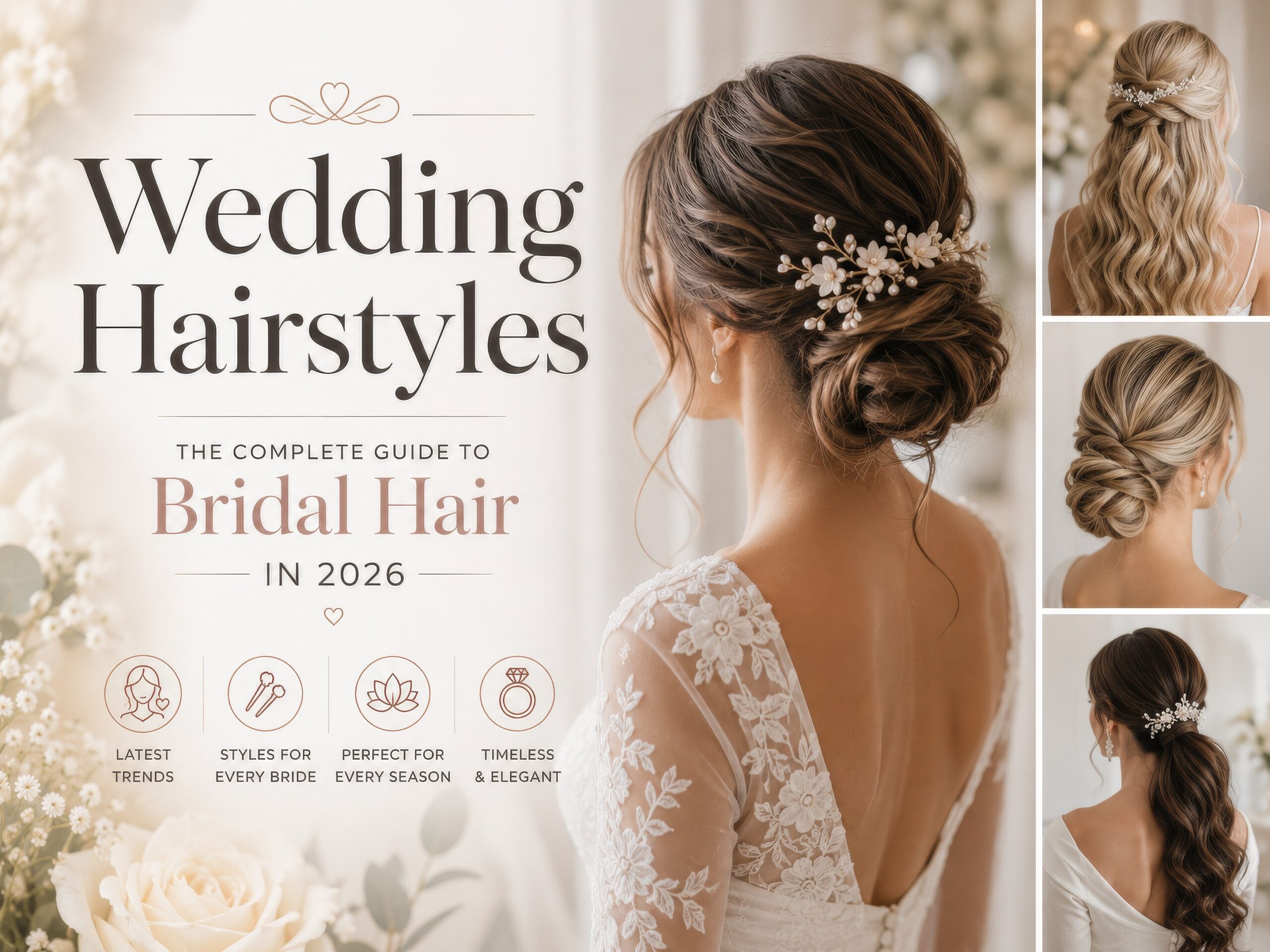
Wedding Hairstyles – The Complete Guide to Bridal Hair in 2026
Wedding Hairstyles
The Complete Guide to Bridal Hair in 2026
From romantic updos and loose waves to sleek chignons, braided crowns, and effortless half-up styles — your definitive guide to choosing the perfect wedding hairstyle for your face, your dress, and your day.
Your wedding hairstyle is one of the first things every guest will see and one of the last things you will think about as you walk down the aisle. It deserves the same depth of planning as every other element of your bridal look.
Introduction
Why Your Wedding Hairstyle Is One of the Most Important Decisions You Will Make
The wedding hairstyle sits at a curious intersection in bridal planning. It is simultaneously one of the most personal decisions a bride makes — shaped by her hair type, her face shape, her personal style, and her relationship with her own reflection — and one of the most visible, appearing prominently in almost every photograph taken throughout the day. The ceremony portraits, the first dance, the candid moments during the reception: in all of them, the hair is there, framing the face, completing the look, and contributing either to a sense of considered elegance or, when poorly chosen or poorly executed, to a nagging feeling that something is not quite right.
Wedding hairstyles in 2026 exist within one of the most creatively liberated periods in bridal beauty history. The old hierarchy — the updo as the only truly formal option, the down style as somehow less occasion-appropriate — has been comprehensively dismantled. Today the most celebrated bridal hair looks span the full spectrum from the intricately structured updo to the deliberately undone wave, from the sleek architectural chignon to the wildflower-scattered braid, and every point in between. What unites them is not style but intention — the quality of being chosen and executed with purpose.
This guide takes you through everything: the most beautiful wedding hairstyle trends of 2026, how to match your hair to your dress neckline and veil, how to choose for your face shape and hair type, what to discuss with your stylist, and the full timeline for preparing your hair from the moment you get engaged to the morning of the wedding itself.

2026Trends
The Most Beautiful Wedding Hairstyle Trends of 2026
The defining direction of wedding hairstyles in 2026is one of textured, organic elegance. The perfectly smooth, lacquered bridal styles of previous decades have given way to something more alive, more personal, and more genuinely beautiful in motion — hair that looks like it was arranged by someone with extraordinary taste rather than assembled by a machine. Softness, movement, and the appearance of effortlessness are the hallmarks of the most admired bridal hair of this year, even when — especially when — that effortlessness has taken considerable skill and time to achieve.
01
The Textured Updo
Not the stiff, shellacked bun of the past but something altogether more interesting — a gathered, loosely structured updo with visible texture, soft pieces framing the face, and the kind of lived-in elegance that photographs magnificently from every angle throughout a long day.
02
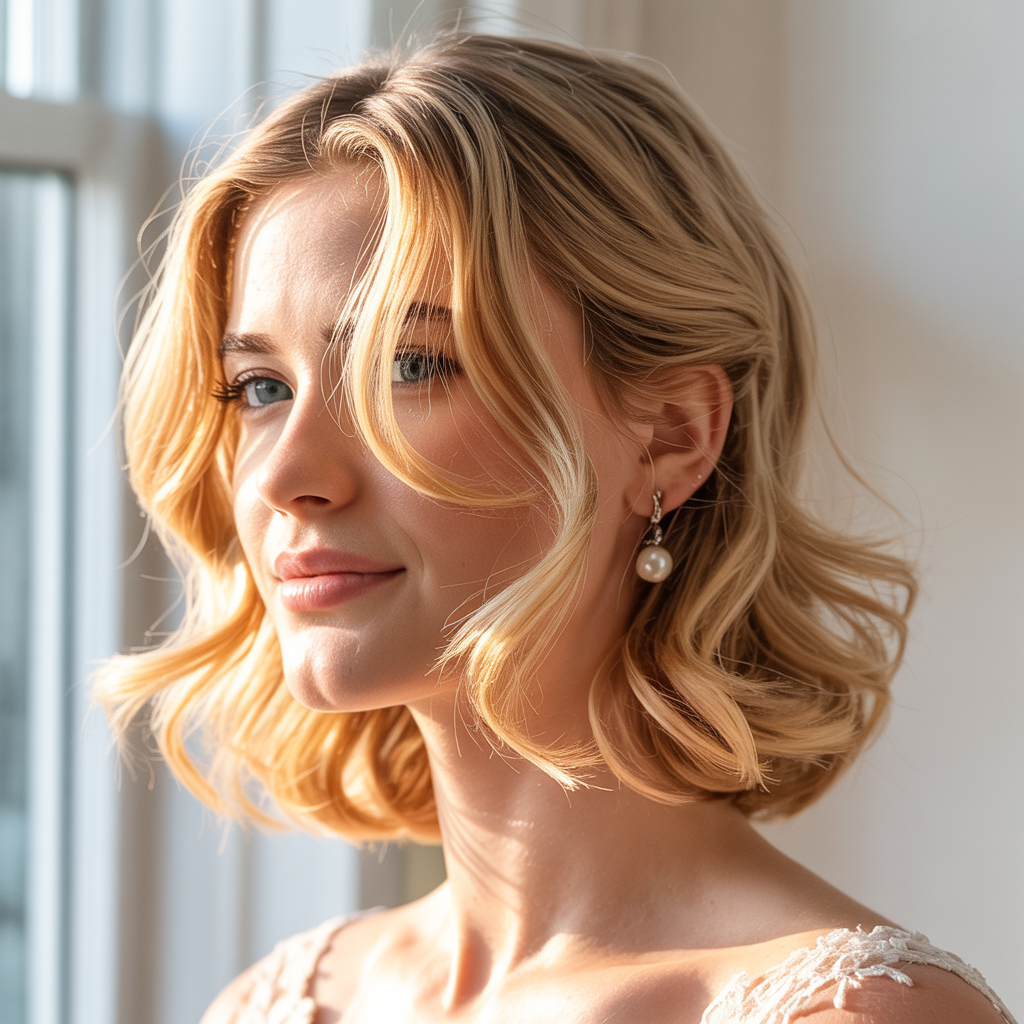
Effortless Loose Waves
Soft, touchable waves that move beautifully in outdoor light and create an effect of natural, confident glamour. The most requested wedding hairstyle for brides who want to wear their hair down — romantic without being fussy, polished without being rigid.
03
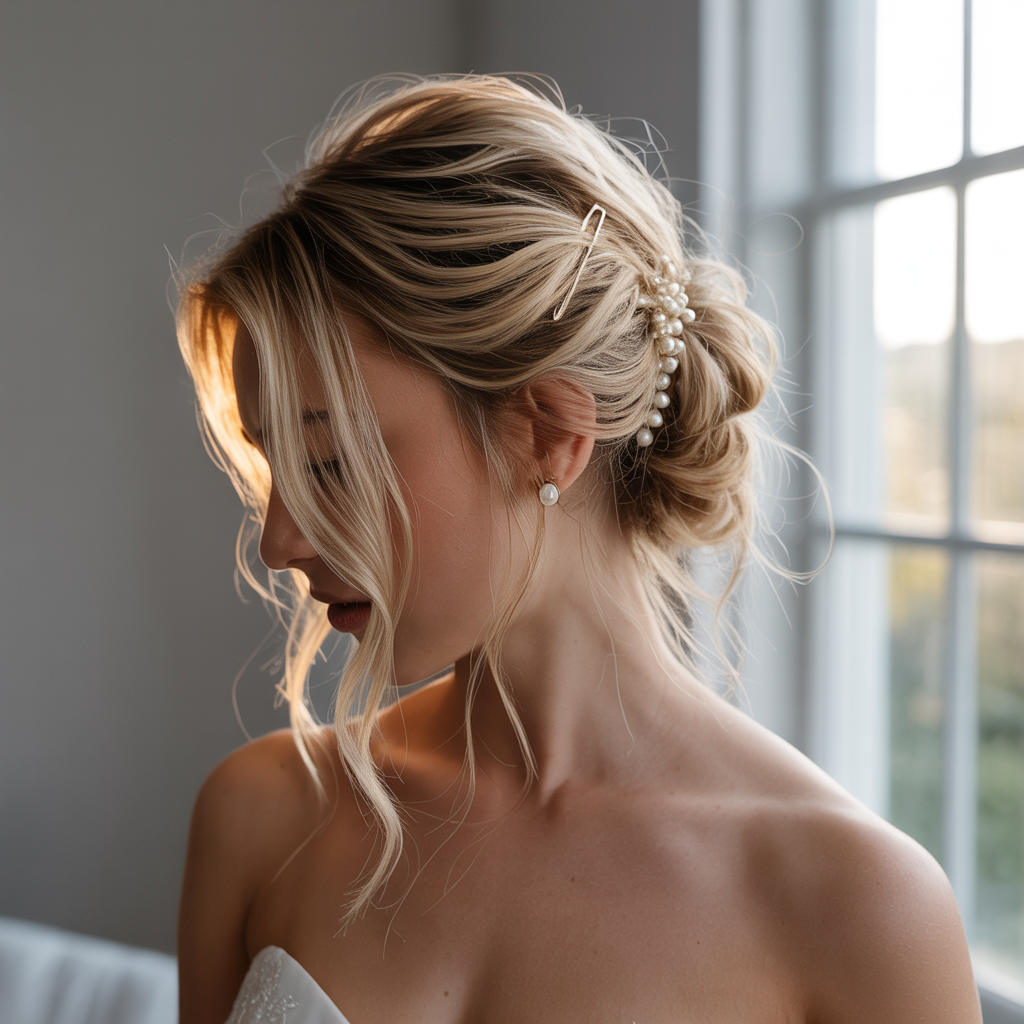
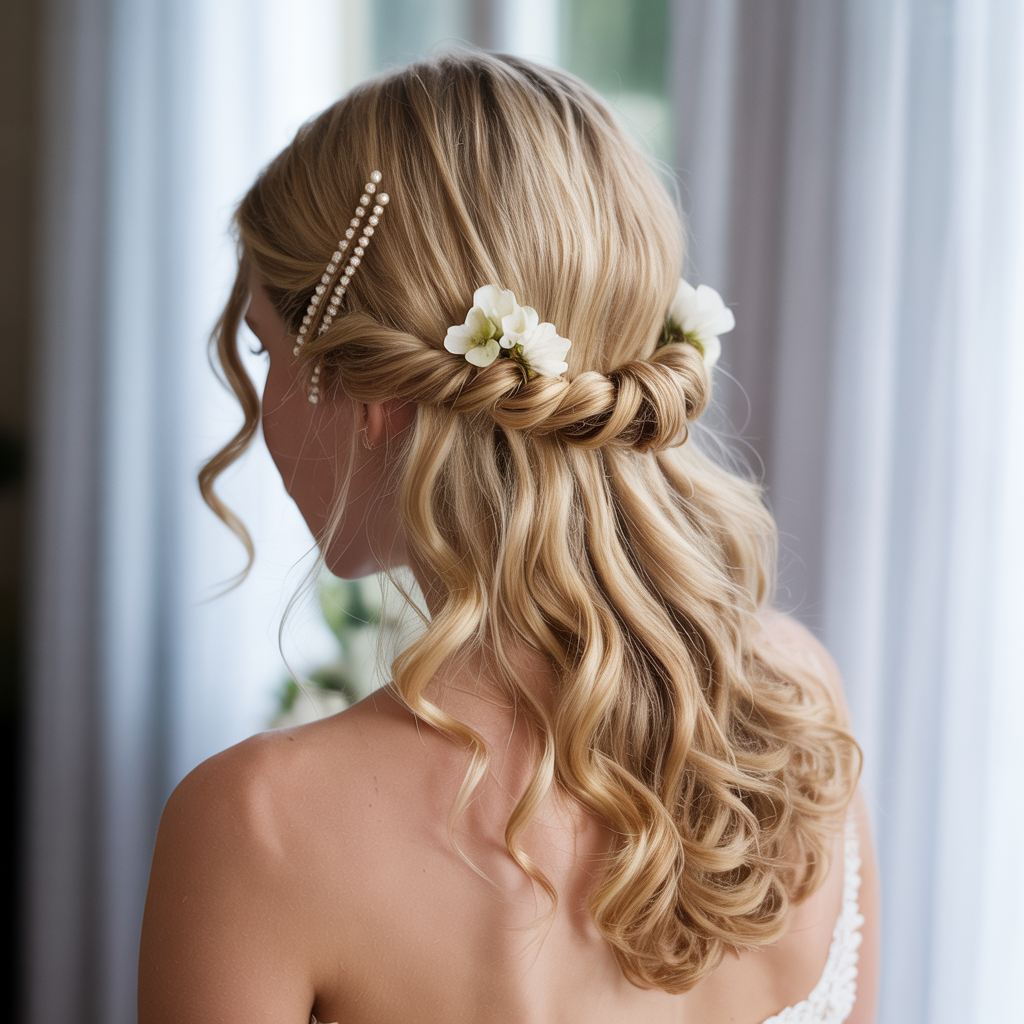
The Romantic Half-Up
The most versatile wedding hairstyle of the decade. A softly gathered half-up style keeps hair off the face for photographs while preserving length and movement — and accommodates a veil, floral pins, and accessories with equal ease.
04
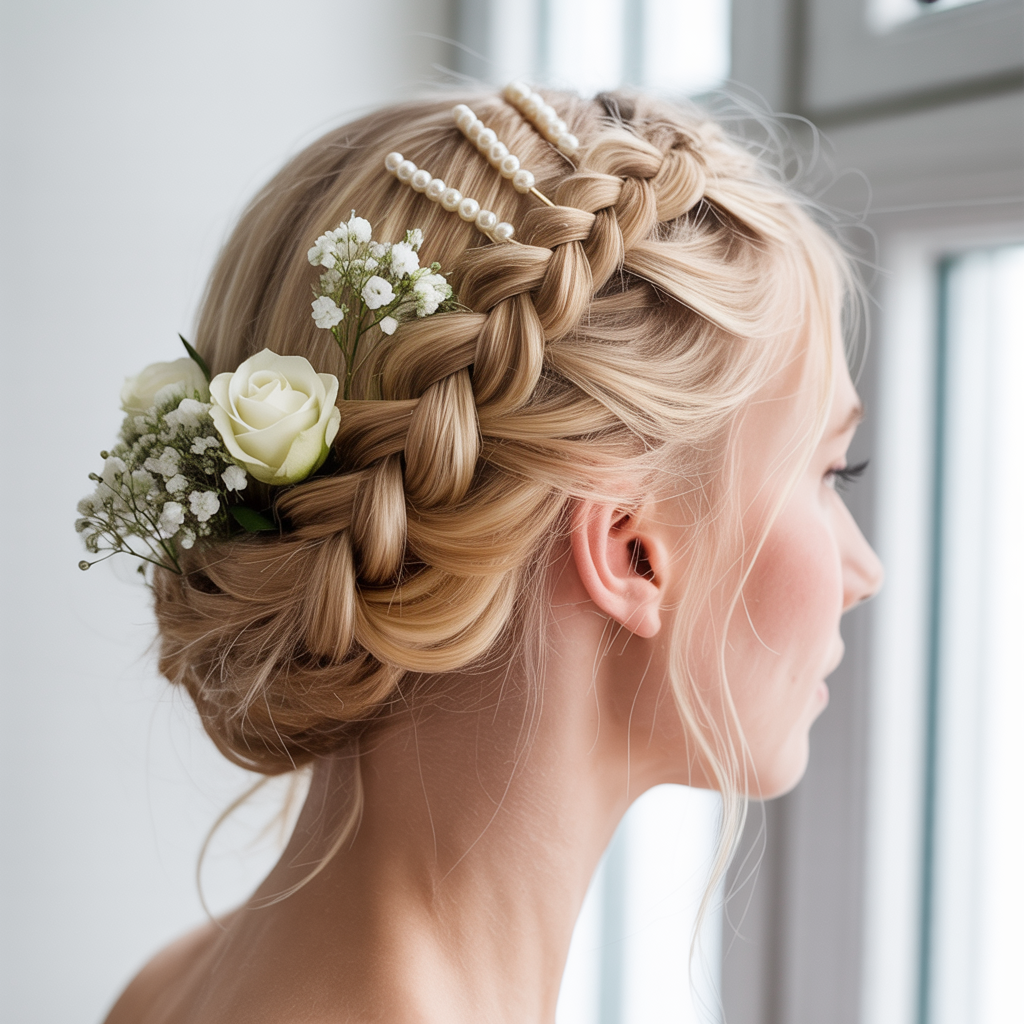
The Floral-Woven Braid
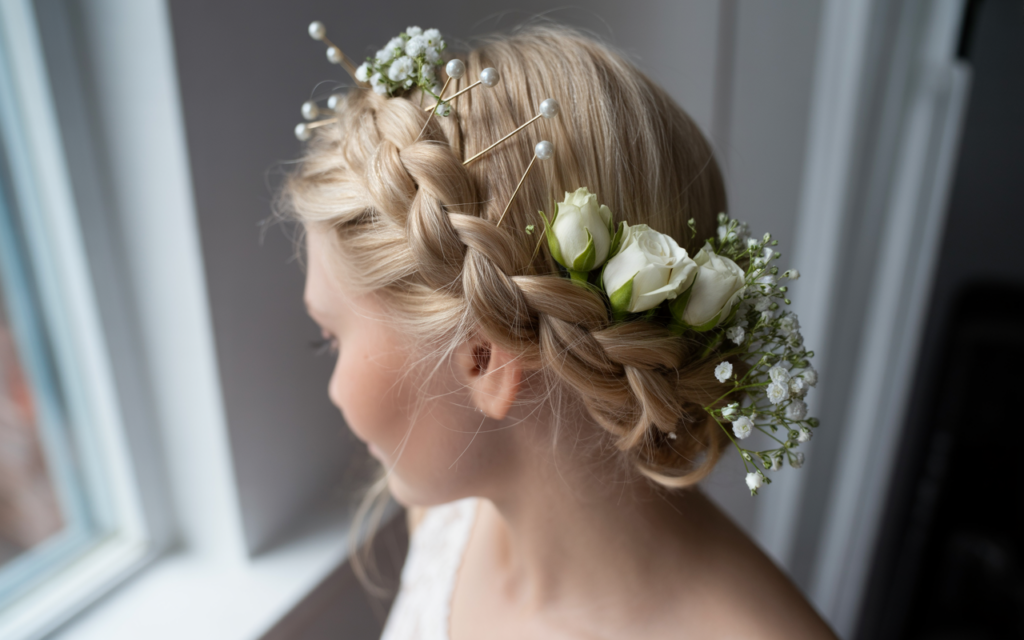
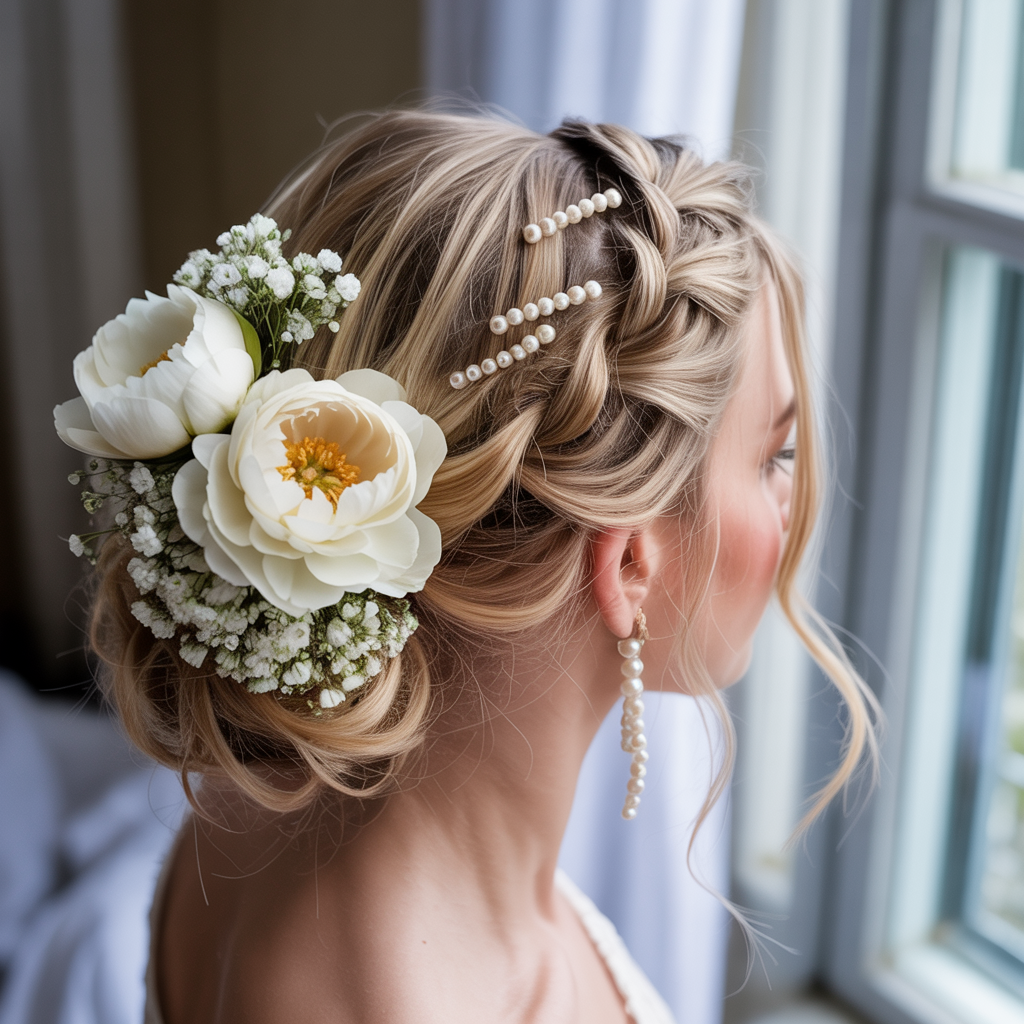
Fresh flowers woven through a soft braid — a crown, a side plait, or a gathered updo — is one of the most photographed wedding hairstyle choices of 2026. Deeply romantic, intensely personal, and gloriously in conversation with the bouquet and the florals throughout the venue.
“The most beautiful wedding hairstyle is not the most elaborate one. It is the one that makes you look so completely like yourself — at your most radiant — that every photograph feels inevitable.”
— The Bridal Beauty Edit
Dress & Neckline
Matching Your Wedding Hairstyle to Your Dress Neckline
The relationship between your wedding hairstyle and your dress neckline is one of the most consequential aesthetic decisions in bridal planning — and one of the most frequently overlooked. The neckline of your gown determines what should and should not be visible above it. An off-shoulder gown needs a different hair approach than a high Victorian neck. A deep V-front requires different framing from a bateau or boat neck. Getting this relationship right is the single most impactful styling decision you can make, because when it is wrong, both the dress and the hair are diminished simultaneously.
✦
Off-Shoulder & Bardot
Sweep hair up — the exposed collarbone and shoulder line is the feature. An updo or half-up style frames it beautifully. Loose down styles can obscure the neckline entirely.
✦
Deep V-Back or Open Back
The back of the gown is the statement — keep hair up or softly gathered away from it. A low chignon placed just above the back detail is the most elegant solution.
✦
High Victorian or Halter Neck
The structured neckline calls for a structured updo. Hair worn up echoes the formality of the dress. Loose waves can work beautifully here if kept softly controlled.
✦
Sweetheart or Strapless
The most flexible neckline for wedding hairstyles — works equally well up or down. A classic updo adds formality; loose waves or a half-up creates romantic balance with the soft neckline shape.
The Veil Rule
If you are wearing a veil, always trial your wedding hairstyle with it in place — not separately. The veil changes the weight, the balance, and the overall silhouette of the hair entirely. A style that looks perfect without a veil may sit awkwardly once one is added, and a style that seems underwhelming alone can become breathtaking with a cathedral-length veil trailing behind it. The two are inseparable decisions and must be made as one.
Face Shape
Wedding Hairstyles by Face Shape: What Actually Flatters
Face shape is the most reliable guide to choosing a wedding hairstyle that will flatter consistently — in every lighting condition, at every angle, and across the many hours of a wedding day during which your hair will be photographed from directions you cannot predict or control. Understanding your face shape and what it responds well to is not about following rigid rules. It is about giving your stylist the information they need to make choices that will genuinely serve your features rather than compete with them.
Oval Face
The most adaptable face shape for wedding hairstyles — virtually any style works well. The oval face can carry a sleek updo, loose waves, or a structured chignon with equal success. The only consideration is avoiding styles that add excessive volume at the sides, which can broaden the face unnecessarily.
Round Face
Height at the crown is the key principle. Updos with volume at the top of the head create the illusion of length in the face. Loose waves worn asymmetrically or a side-parted style also elongates beautifully. Avoid very full, wide styles that mirror the roundness of the face.
Square Face
Soft, romantic styles that introduce curves and movement work best — loose waves, soft curls, or a gathered updo with face-framing tendrils. Avoid very blunt, geometric styles that echo the angular jawline. Asymmetry is your friend.
Heart or Diamond Face
Styles that add width at the jawline and chin are flattering — loose waves that fall below the chin, a low side bun, or a half-up that retains length. Avoid styles that add volume primarily at the forehead or temples, which emphasises the widest part of the face.
Hair Type & Texture
Wedding Hairstyles by Hair Type: Working With What You Have
The most important principle in choosing a wedding hairstyle for your specific hair type is this: work with your hair’s natural tendencies rather than against them. A wedding day is not the moment to attempt a dramatic transformation of your hair’s fundamental texture. Forcing naturally fine hair into a voluminous updo that requires excessive padding and product will result in a style that looks laboured and begins to fail by mid-afternoon. Equally, asking naturally thick, coarse hair to behave like a sleek, smooth chignon for twelve hours is a battle that no amount of product will reliably win.
Fine & Straight Hair
- Sleek chignons and low buns — fine hair excels at smooth, polished styles
- Braided half-up styles that use texture to create the illusion of thickness
- Soft waves created and set with light-hold product for all-day wear
- Use a volumising mousse and root-lifting technique before styling
- Avoid overly volumised or heavily backcombed updos — they collapse
Thick & Curly Hair
- Embrace the natural curl — defined curls worn down are breathtaking
- Gathered updos with intentional volume work magnificently with thick hair
- Braided styles that showcase texture and natural movement
- Discuss humidity control products with your stylist early
- Schedule a dry run on a day with similar weather to your wedding date
“The best bridal hair stylist is not the one with the most elaborate portfolio. It is the one who listens to you, understands your hair, and tells you honestly — with kindness — what will and will not work on your wedding day.”
— Bridal Hair Planning Notes
Hair Accessories
Bridal Hair Accessories: The Details That Define the Look
Bridal hair accessories in 2026 have entered a golden age of considered restraint and extraordinary craftsmanship. The era of the heavily embellished, rhinestone-encrusted tiara as the default bridal accessory is behind us — replaced by something far more interesting and far more personal. Today’s bridal hair accessories are chosen the way all the best jewellery is chosen: to enhance without overwhelming, to add a single note of something beautiful without competing with the face, the dress, or the overall aesthetic of the day.
🌿
Fresh Flowers
The most romantic and photogenic accessory for wedding hairstyles. Coordinate with your florist to use blooms from your bouquet — it creates a visual through-line across all your photographs.
✨
Pearl & Crystal Pins
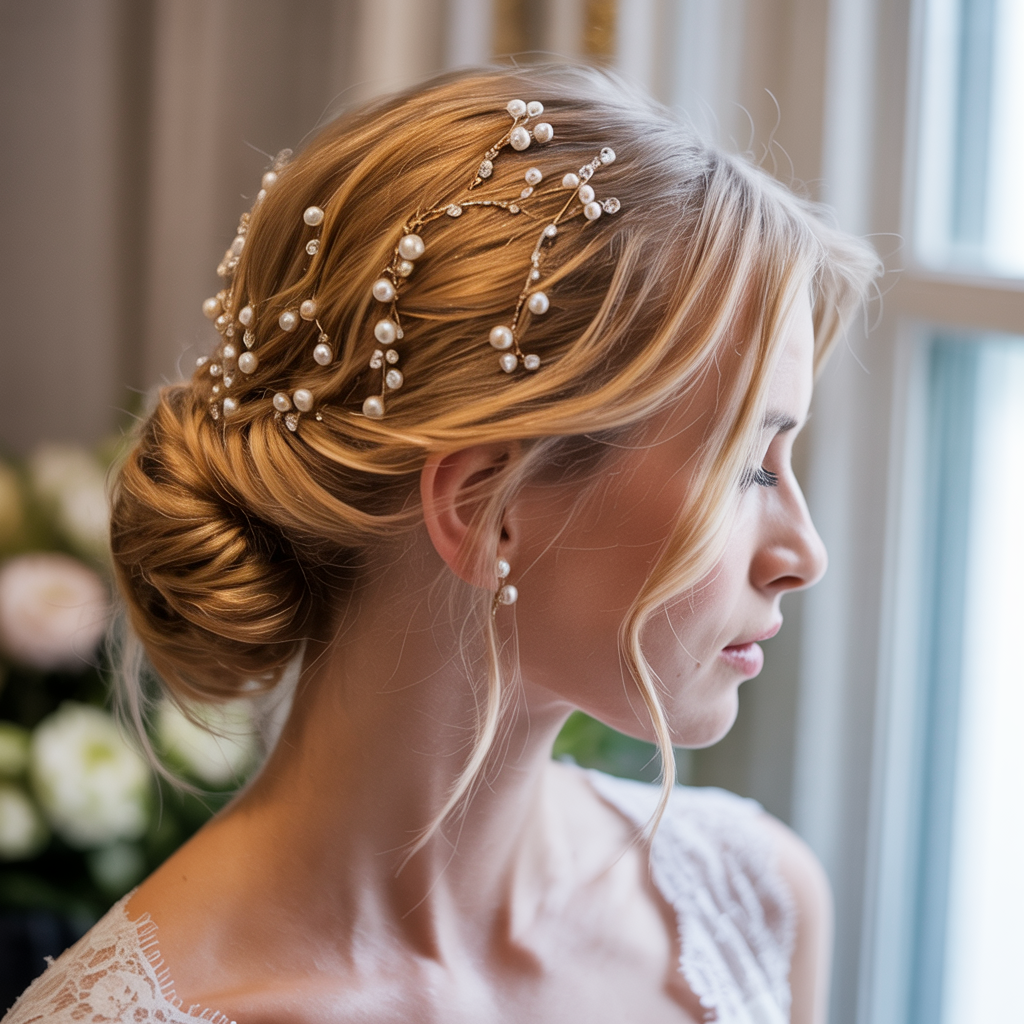
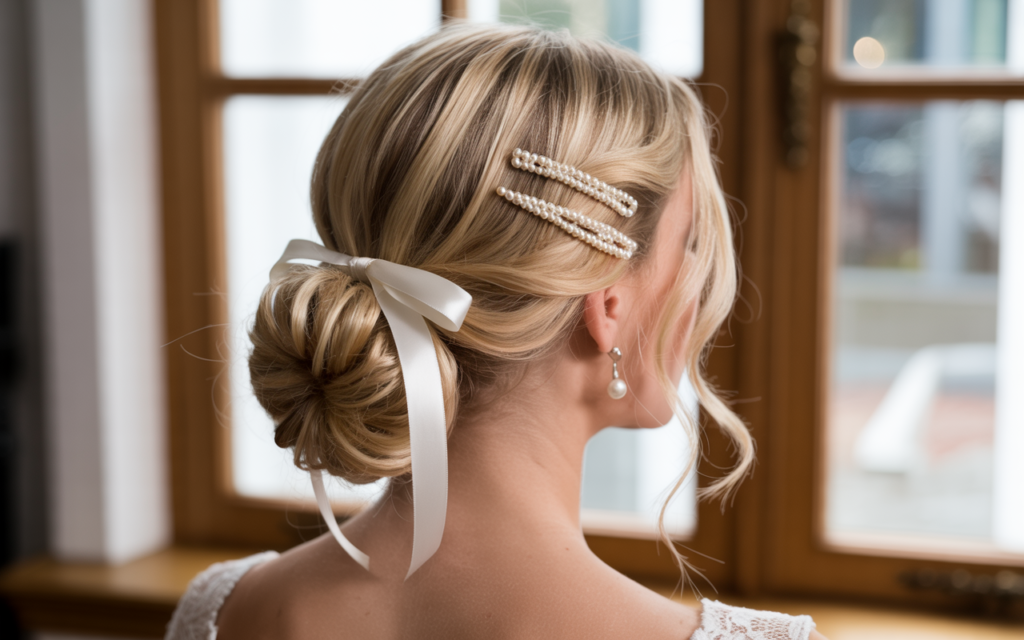
Scattered pearl or crystal pins catch light beautifully throughout the day and evening. Subtle, versatile, and appropriate at every formality level from garden party to black tie.
👑
The Delicate Tiara
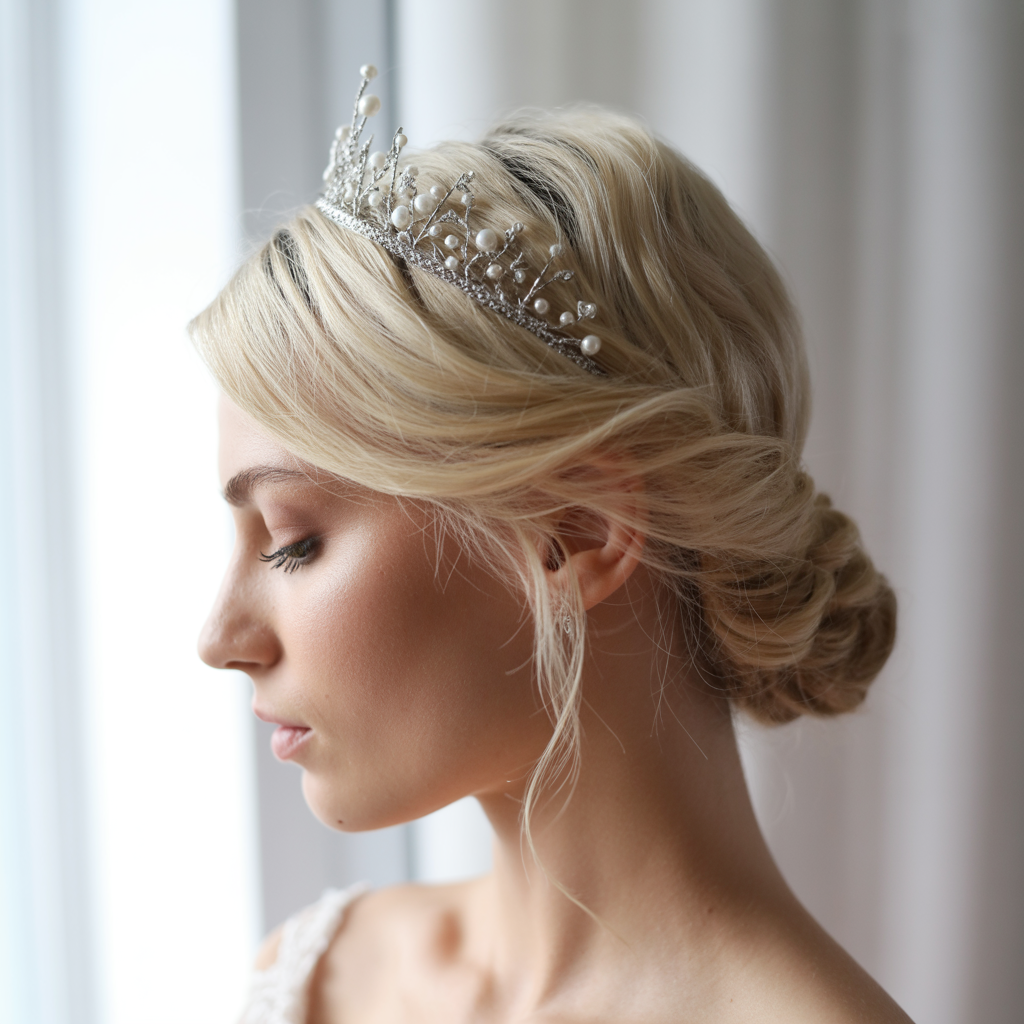
The tiara has returned — refined, slim, and architectural rather than heavily embellished. A fine gold or platinum band tiara sits beautifully in both updos and loose styles without overpowering.
🎀
Ribbon & Bow Details
Silk ribbon threaded through a braid or tied around a low bun is one of 2026’s most charming bridal hair details. Soft, personal, and extraordinarily photogenic against any hair colour.
The Planning Timeline
The Bridal Hair Planning Timeline: From Engagement to Wedding Morning
Planning your wedding hairstyle is not a single appointment — it is a process that begins months before the wedding day and unfolds in distinct, purposeful stages. Each stage builds on the last and ensures that by the time your stylist arrives on the morning of your wedding, every variable has been accounted for and every decision made. The brides who arrive at their wedding morning with the most beautiful, stress-free hair are invariably the ones who began that journey earliest and planned it most thoroughly.
Your Hair Planning Calendar
- 12 months out: Book your hair stylist. The best bridal hair artists fill their diaries a full year in advance for peak season Saturdays.
- 9 months out: Begin your hair health routine — regular trims, deep conditioning treatments, and targeted supplements if needed.
- 6 months out: Have your first consultation with your stylist. Bring dress photographs, inspiration images, and any accessories you plan to wear.
- 3 months out: Schedule your hair trial. This is the most important appointment in the entire process — treat it as such.
- 6 weeks out: A second trial if the first raised any questions. Also the ideal time for any colour or toning treatments.
- 1 week out: A final trim to remove any split ends and ensure the hair is in peak condition for styling.
- Wedding morning: Arrive with clean, second-day hair — freshly washed hair is often too slippery to hold a style. Discuss this with your stylist in advance.
Hair Health Essentials
- Regular trims every 6–8 weeks to maintain condition and shape
- A weekly deep conditioning or hair mask treatment
- Reduce heat styling in the months before the wedding
- Use a silk or satin pillowcase to reduce overnight breakage
- Stay hydrated — hair condition reflects overall hydration directly
- Discuss any colour changes with your stylist at least three months before
Practical Planning
Ten Things Every Bride Should Know About Wedding Hairstyles
- Book your stylist before your venue. The most sought-after bridal hair artists fill their calendars faster than almost any other wedding supplier. Treat this booking with the same urgency as your photographer and your dress appointment.
- The hair trial is non-negotiable. It is not a luxury or an optional extra — it is the appointment at which your wedding hairstyle is actually created and tested. Skipping it is one of the most significant risks you can take with your bridal look.
- Arrive at your trial with the same hair condition you plan to have on the wedding morning. If your stylist recommends second-day hair for the best hold, replicate that exactly for the trial so the results are directly comparable.
- Bring every accessory to every appointment. Your veil, your headpiece, your pins, your tiara — all of them. The way they interact with your chosen style can only be assessed when they are physically present in the room.
- Photograph your trial from every angle. Not just the front. Not just for Instagram. Every angle that will appear in your wedding photographs — the three-quarter, the back, the profile — documented in the same lighting conditions as your venue if possible.
- Discuss longevity explicitly with your stylist. A style that looks beautiful at 11am must still look intentional at 11pm. Ask your stylist how the style will evolve throughout the day and what you can do to maintain it.
- Tell your stylist about the weather forecast as early as possible. Humidity, wind, rain, and extreme heat all affect hair differently — and a skilled stylist will adjust their product choices and techniques based on the conditions your hair will face.
- Plan the wedding morning timeline backwards from the ceremony. Your hair appointment will take longer than you expect. Build in a generous buffer and share a realistic schedule with your entire getting-ready party well in advance.
- Do not make a significant change to your hair colour within six weeks of the wedding. Colour changes alter the texture, porosity, and behaviour of hair in ways that affect how it holds a style. Give your hair time to settle before the wedding morning.
- Trust your stylist — but brief them completely. The best wedding hairstyle outcomes come from brides who share everything with their stylist: the dress, the venue, the aesthetic, the accessories, and their own honest relationship with their hair. The more context your stylist has, the more precisely they can create something that is genuinely and unmistakably right for you.
“There is a moment in every bridal hair trial when the style is finished and the bride sees herself — really sees herself — and something shifts. That is the style. That is the one. Trust that moment completely.”
— The Bridal Beauty Edit
Closing Thoughts
Your Wedding Hairstyle Is the Crown You Choose to Wear
Of all the decisions in bridal planning, your wedding hairstyle is perhaps the one that most rewards genuine self-knowledge. It asks you to understand your face, to know your hair, to be honest about your lifestyle and comfort, and to resist the pull of a trend or a Pinterest image that belongs to someone else’s head and someone else’s day. The most extraordinary wedding hairstyles are not the most technically complex or the most dramatically fashionable. They are the ones that look as though they could never have belonged to anyone but the bride wearing them.
Find the stylist who listens. Begin the care routine early. Have the trial with full attention and without rushing. Photograph every angle. Sleep on it. And then, when you are standing on the morning of your wedding with your hair exactly as you planned it and your dress on and your flowers in your hands, know that this particular decision — made thoughtfully, made personally, made well in advance — is one you will never have cause to reconsider.
Walk out. Let the photographs begin. Your hair is perfect.