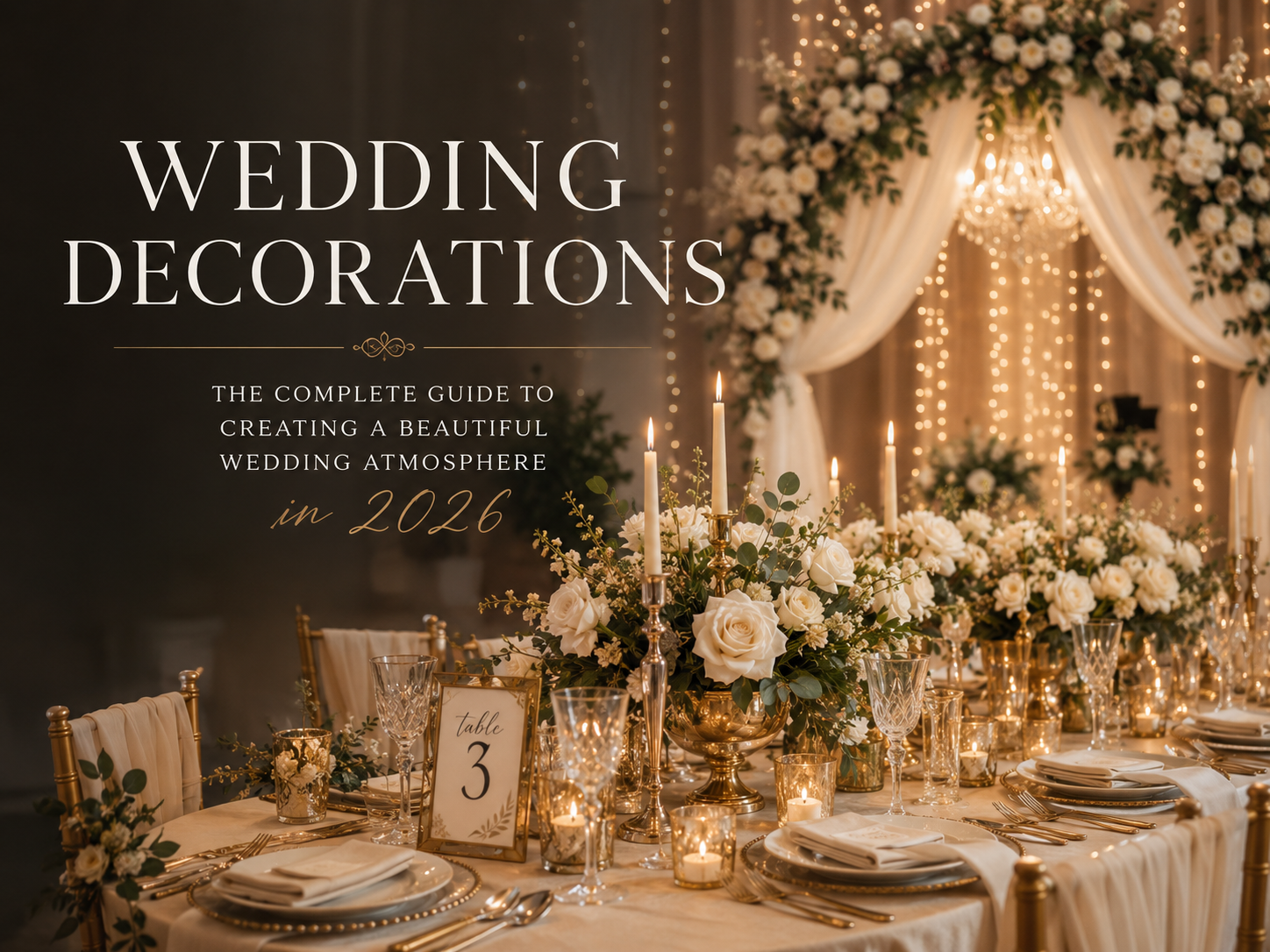
Wedding Decorations – The Complete Guide to Creating a Beautiful Wedding Atmosphere in 2026
Wedding Decorations
The Complete Guide to Creating a Beautiful Wedding Atmosphere in 2026
From ceremony arches and candlelit tablescapes to florals, lighting, signage, drapery, and reception styling — your definitive guide to designing wedding decorations that feel intentional, elegant, immersive, and unforgettable.
Wedding decorations are not simply visual details. They are atmosphere translated into flowers, candlelight, texture, scale, color, and emotion — the invisible language that transforms a venue into an experience guests remember for years.
Introduction
Why Wedding Decorations Define the Entire Wedding Experience
Wedding decorations sit at the center of how a celebration is remembered. Guests may not recall the exact flower varieties in your centerpieces or the precise shade of linen on the tables, but they will remember how the room felt when they walked in. They will remember the glow of candlelight, the softness of the flowers, the drama of the ceremony backdrop, and the sense that every detail belonged to the same beautiful story.
The strongest wedding decorations are not necessarily the most expensive or the most elaborate. They are the most intentional. A beautifully decorated wedding does not look like every Pinterest idea was thrown into one room and asked to behave. It has rhythm, restraint, and a clear visual direction that begins at the ceremony and continues through the reception, cake table, signage, stationery, florals, lighting, and guest experience.
In 2026, wedding decorations are moving toward immersive atmosphere rather than isolated decor moments. Couples are choosing layered candlelight, sculptural florals, draped fabrics, editorial tablescapes, and personal details that make the celebration feel curated without feeling cold. The emphasis has shifted away from excessive decoration and toward emotional impact — the kind of styling that changes the mood of a room the moment guests enter it.
Wedding decorations also influence photography more than almost any other design element. The flowers framing the ceremony, the warm glow of reception candles, the texture of linens beneath dinner plates, the hanging installation above the dance floor — all of these details become part of the visual memory of the wedding itself. They shape how photographs feel emotionally, which is why the most successful weddings are designed not only for the guests in the room but also for the images that will remain long after the day ends.
This guide explores the biggest wedding decoration trends of 2026, how to style each major part of the wedding day, which color palettes feel elevated rather than trendy, how to make decorations look expensive without drowning the venue in flowers, and the common mistakes couples regret once the wedding is over.

2026 Trends
The Most Beautiful Wedding Decoration Trends of 2026
The defining direction of wedding decorations in 2026 is atmosphere over abundance. The most stylish weddings are not trying to decorate every surface. Instead, they create a few unforgettable focal points and allow the rest of the design to breathe. Texture, lighting, scale, and repetition matter more than clutter. The result is a celebration that feels cinematic, elegant, and deeply personal.
01
Layered Candlelight
Taper candles, floating candles, lantern groupings, and low glowing votives create warmth that no floral budget can fake. Candlelight softens the room and instantly transforms a reception into something romantic and cinematic.
02
Sculptural Florals
Floral meadows, asymmetrical arches, suspended flowers, and oversized installations are replacing rigid traditional arrangements. The goal is movement and softness rather than stiff perfection.
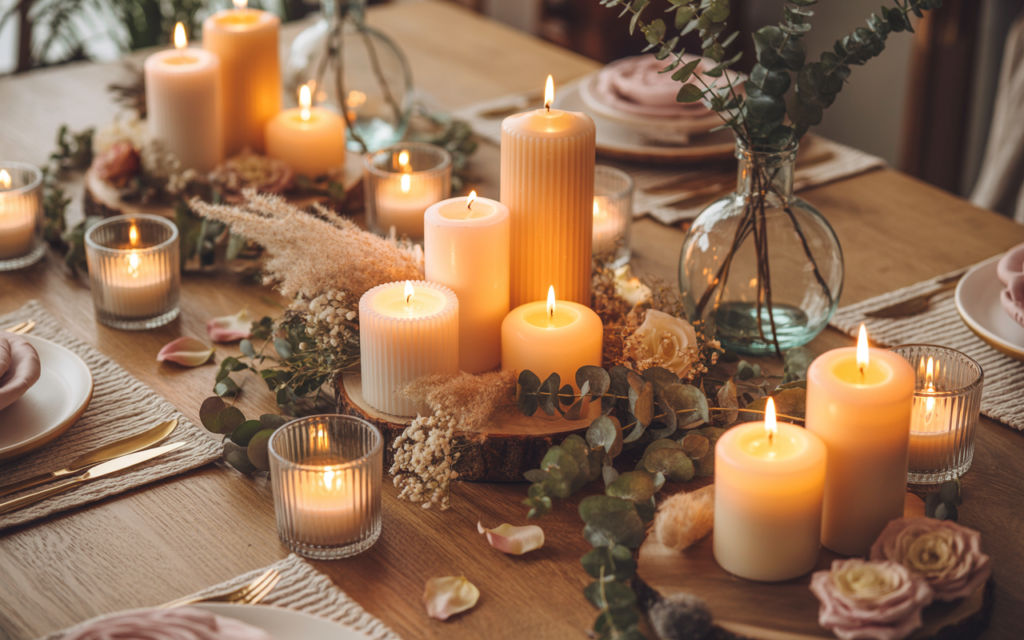
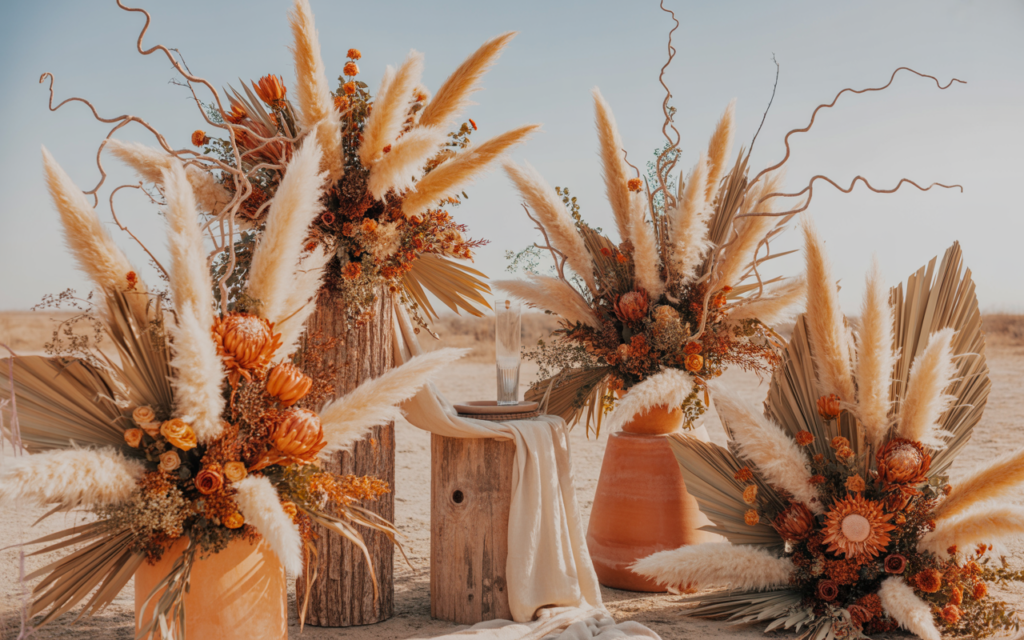
Another defining feature of 2026 wedding decorations is the return of mood. Weddings are becoming more atmospheric, more immersive, and more emotionally cinematic. Instead of harsh overhead lighting and generic centerpieces, couples are designing environments that feel transportive. Candlelit aisles, hanging floral clouds, softly layered drapery, and warm pools of light across reception tables create the sense that guests have stepped into a world intentionally built for this specific celebration.
There is also a growing rejection of overly “perfect” styling. The most admired wedding decorations now contain softness, asymmetry, movement, and natural texture. Florals spill rather than stand stiffly upright. Linens wrinkle gently. Candles vary in height. Tables feel layered rather than mechanically arranged. The effect is more romantic, more luxurious, and infinitely more photogenic.
Wedding Decorations by Wedding Style
Before choosing flowers, candles, signage, or table decor, define the style of the wedding itself. A romantic garden wedding needs a different decorative language from a modern minimalist celebration, a black-tie ballroom, or a countryside reception. The clearer the visual identity becomes, the easier every decorative decision feels afterward.
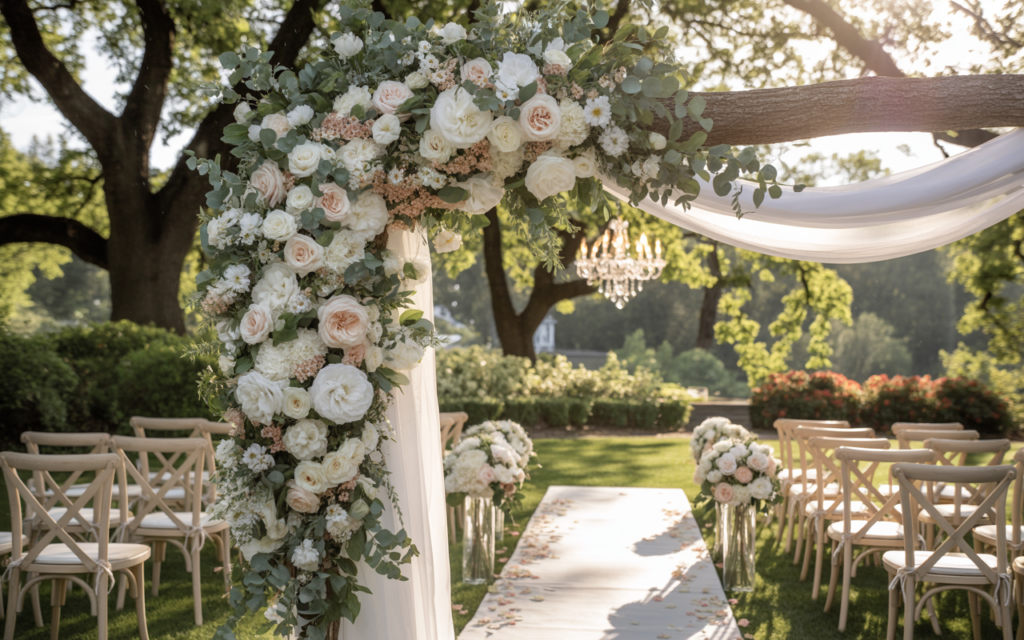
A romantic garden wedding often relies on soft florals, layered candlelight, climbing greenery, delicate fabrics, and an airy palette that feels organic rather than structured. These weddings benefit from natural movement — flowers that appear freshly gathered, linen that catches the breeze, and tables that feel relaxed instead of rigidly formal.
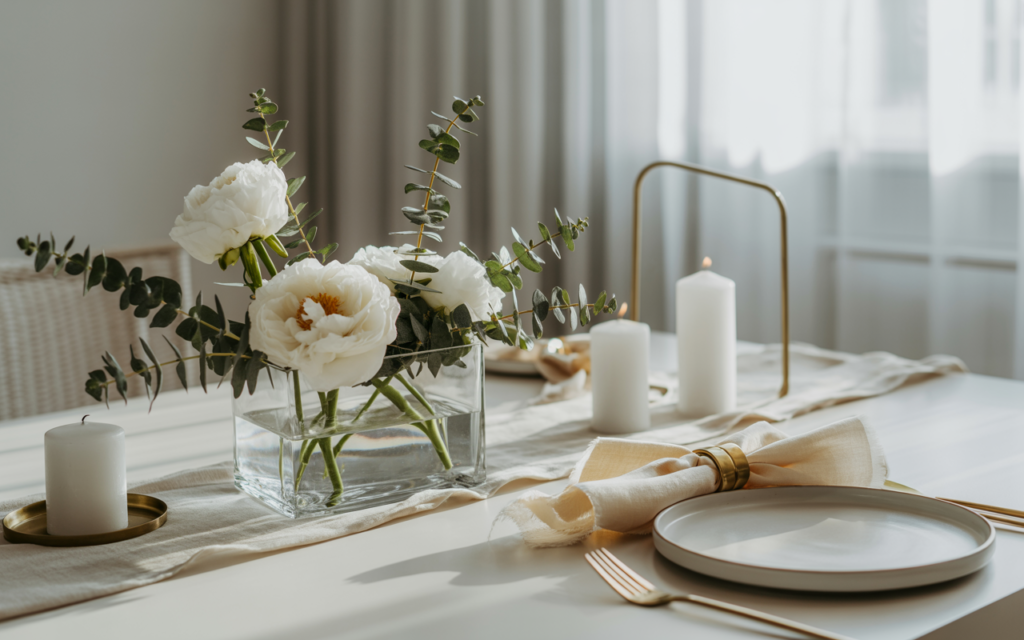
A modern minimalist wedding moves in the opposite direction. The emphasis shifts toward sculptural forms, monochrome palettes, clean typography, and intentional negative space. In minimalist wedding decorations, fewer objects create stronger impact. One dramatic floral installation often feels more luxurious than twenty smaller arrangements competing for attention.
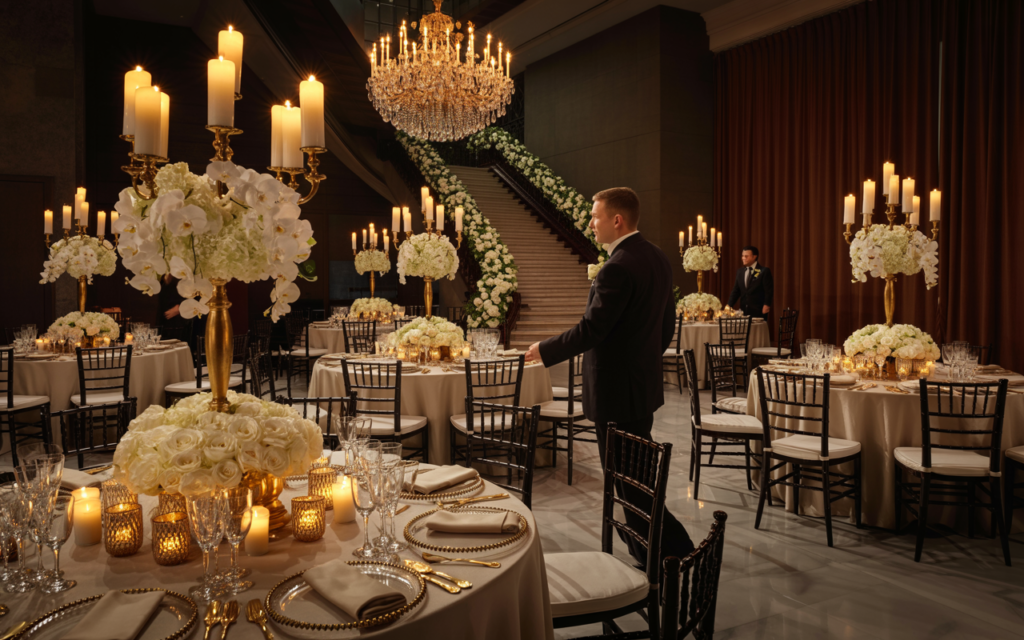
Luxury black-tie weddings continue to dominate high-end wedding design in 2026. These celebrations rely heavily on lighting, texture, and scale. Tall centerpieces, glowing candles, layered tablescapes, champagne and ivory palettes, mirror accents, velvet linens, and dramatic floral ceilings all contribute to an atmosphere that feels formal without becoming cold.
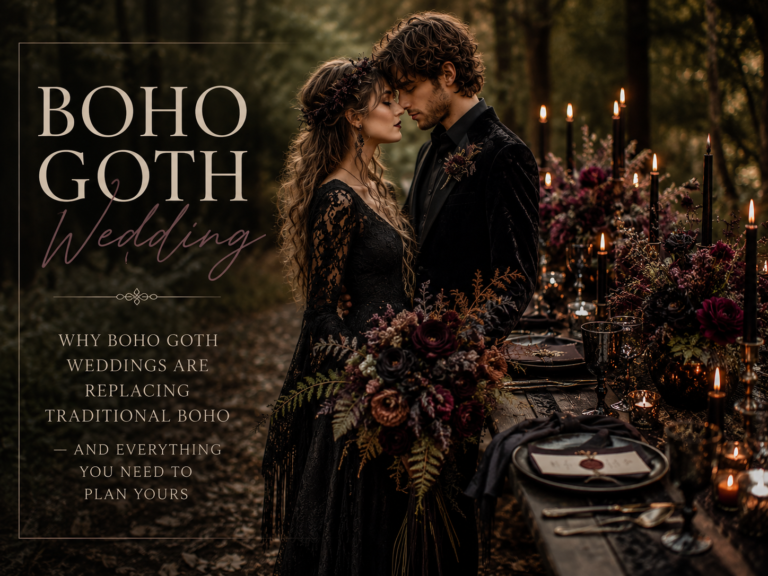
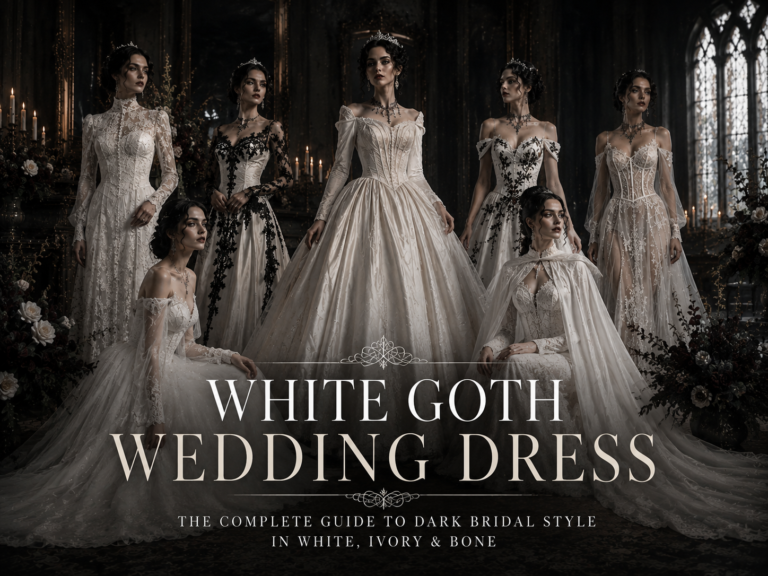
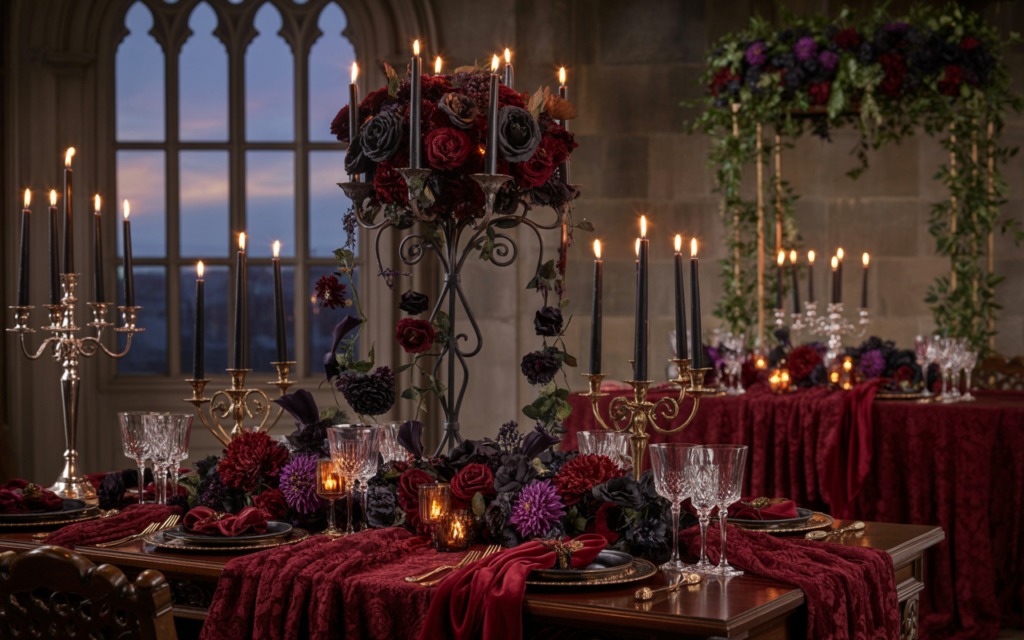
Victorian gothic weddings remain one of the fastest-growing aesthetic trends online. Black taper candles, antique gold, dark florals, velvet textures, cathedral-inspired arches, aged paper stationery, and moody lighting create celebrations that feel cinematic and deeply romantic. When styled carefully, gothic wedding decorations feel editorial and elegant rather than theatrical.
The Most Important Areas to Decorate at a Wedding
Not every corner of a wedding needs decoration. In fact, attempting to style every surface is one of the fastest ways to make a wedding feel visually overwhelming. The smartest approach is to focus the budget on the areas guests will notice most: the ceremony backdrop, the reception tables, the entrance, the cake table, and the dance floor.
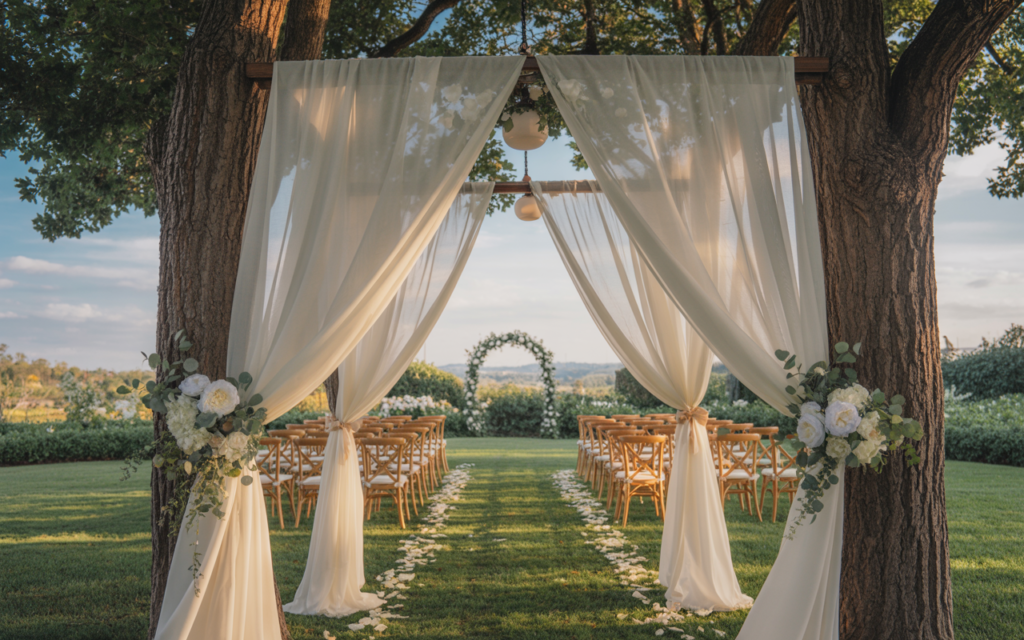
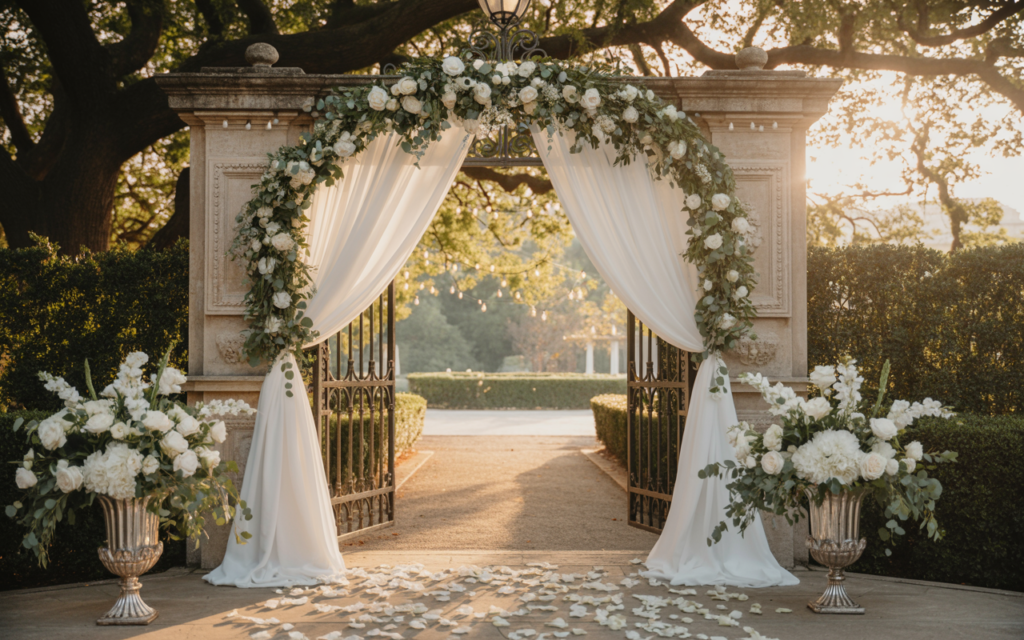
The ceremony backdrop is the visual anchor of the entire day. It frames the vows, appears in the most important photographs, and sets the emotional tone for everything that follows. Whether the backdrop is floral, architectural, fabric-based, or intentionally minimal, it should feel connected to the overall design language of the wedding.
Reception tables deserve extraordinary attention because guests spend the majority of the evening there. Linens, candles, menus, place cards, floral arrangements, chargers, glassware, and textures all work together to create the atmosphere guests physically experience during dinner.
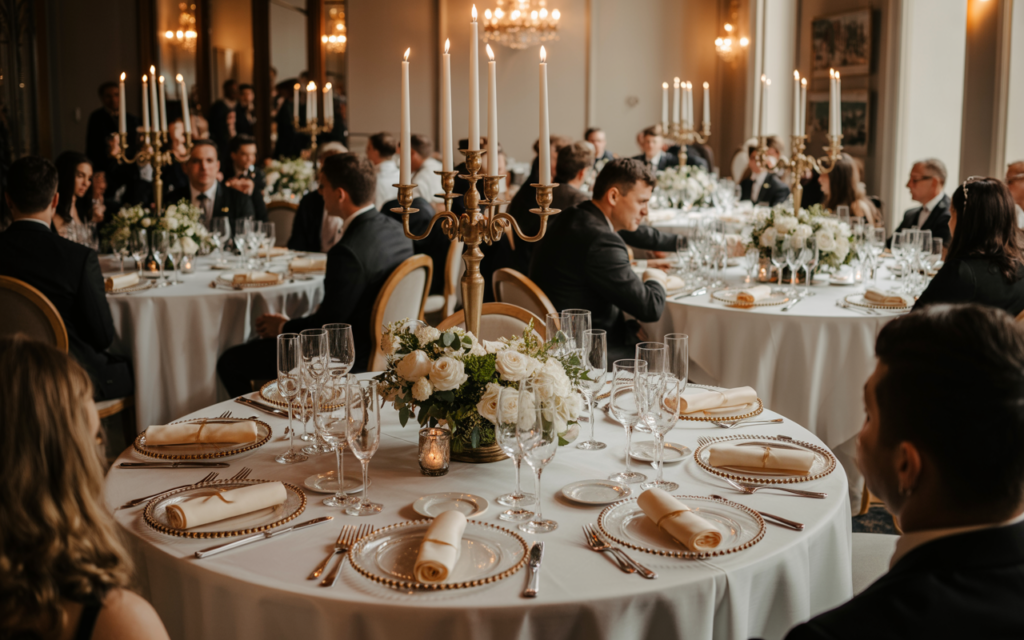
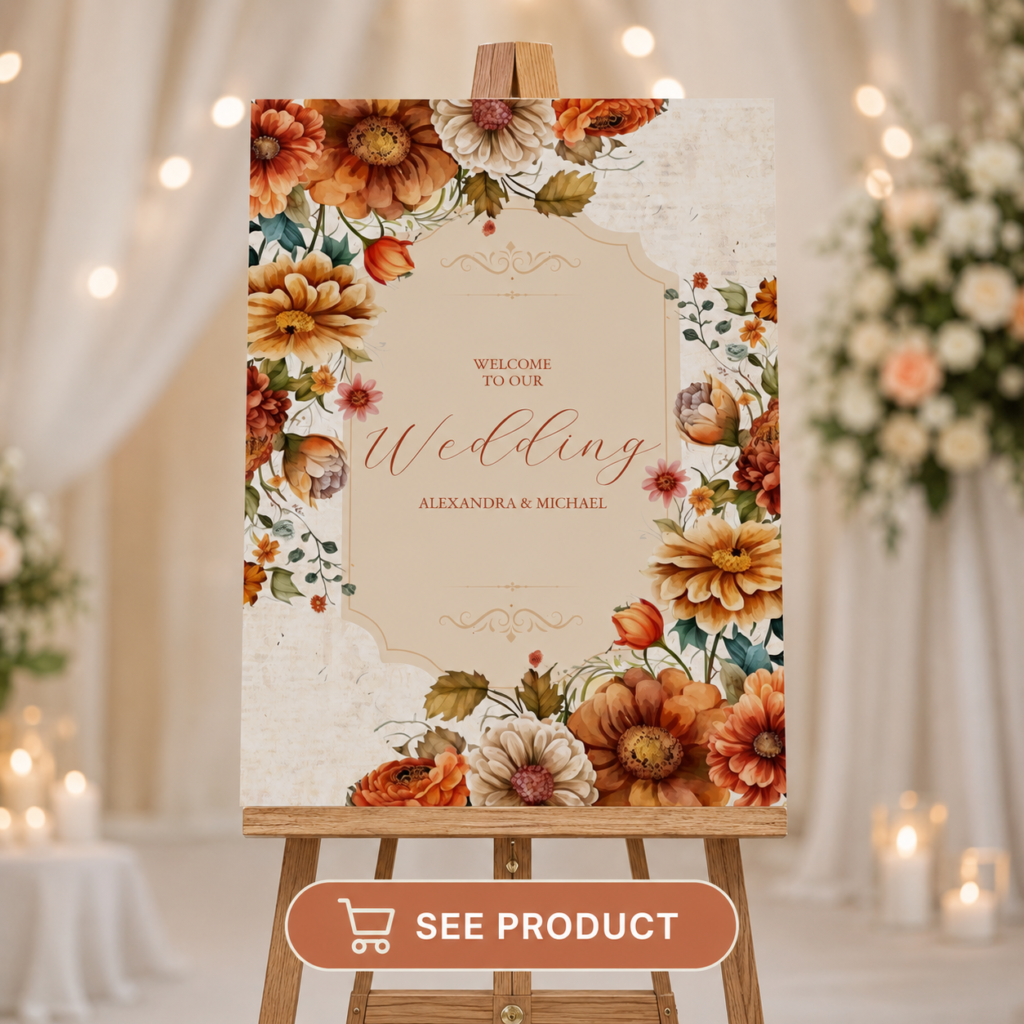
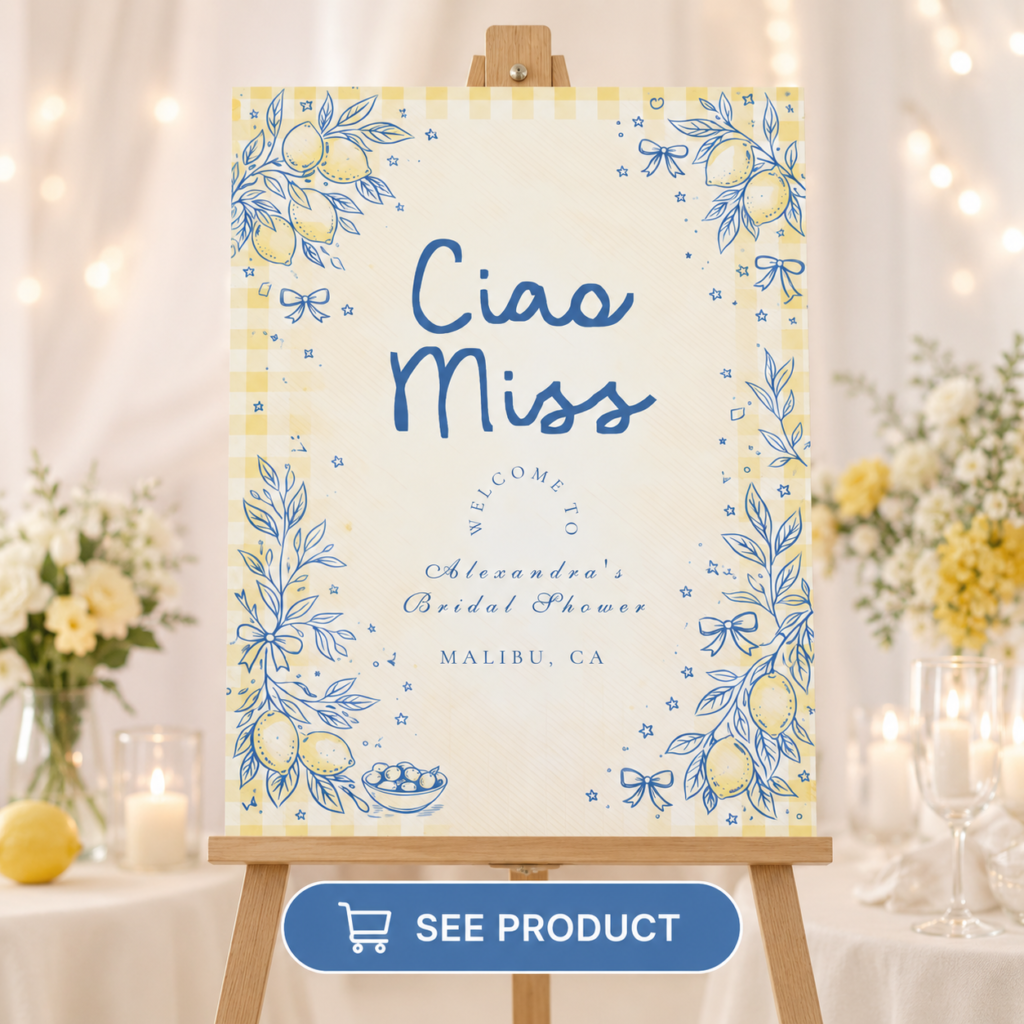
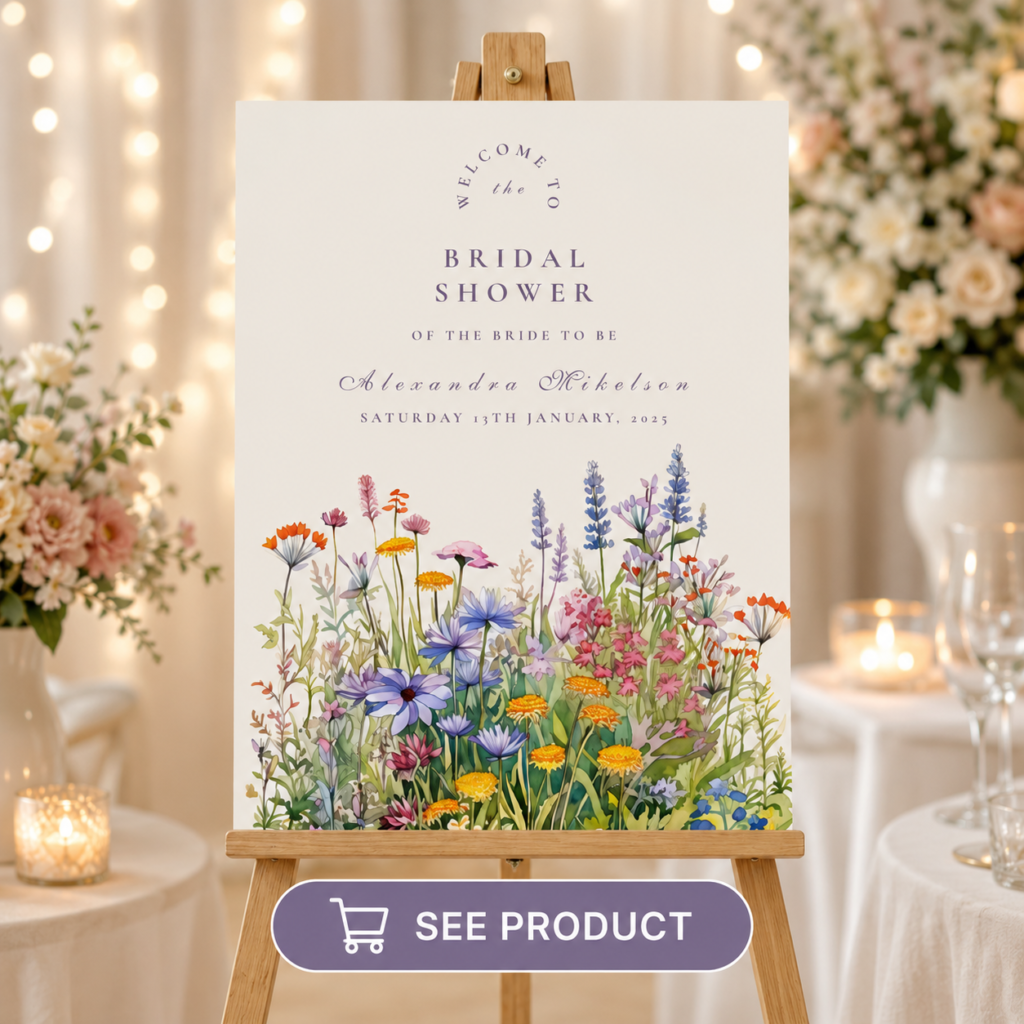
The wedding entrance also matters far more than many couples realize. A welcome sign framed by flowers, a candlelit pathway, draped fabric, or a beautifully styled escort display immediately tells guests that they are entering a thoughtfully designed celebration rather than a generic rented venue.
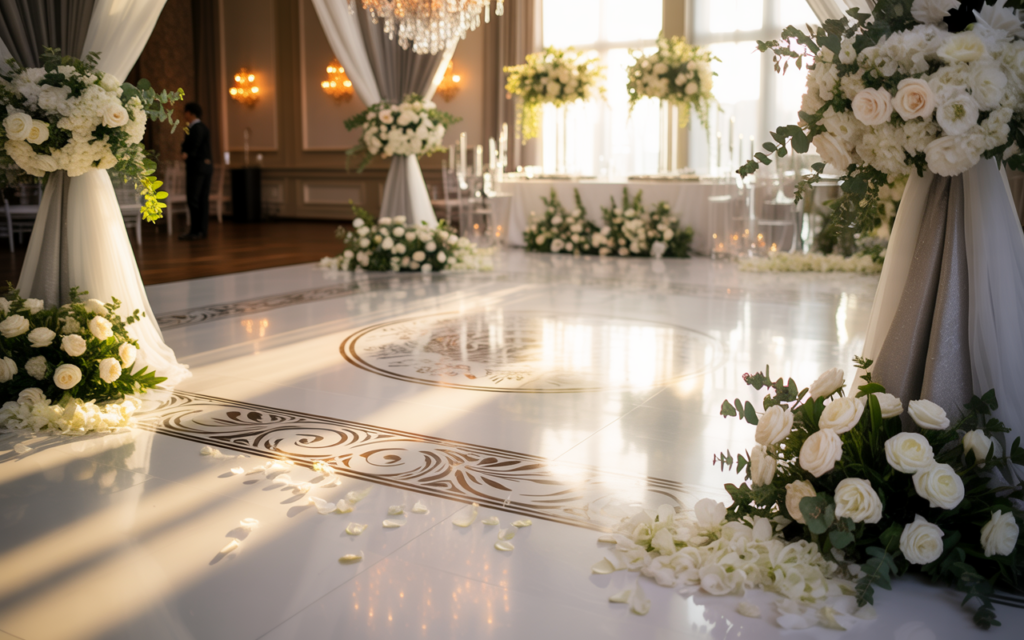
Finally, the dance floor and cake table become natural photography zones once the evening begins. They do not necessarily require excessive decoration, but they do require intentional styling. Lighting, florals, candles, and scale matter enormously in these areas because they continue appearing in photographs throughout the entire reception.
Wedding Color Palettes That Feel Elegant in 2026
Wedding color palettes in 2026 are becoming softer, moodier, and more layered. Instead of relying on one dominant color, the most elegant weddings now use tonal variation — a primary tone, a soft neutral, a darker grounding accent, and one metallic or textured element that ties everything together.
Champagne and ivory remain timeless because they flatter nearly every venue and lighting condition. They photograph beautifully in candlelight and naturally create an atmosphere of softness and luxury.
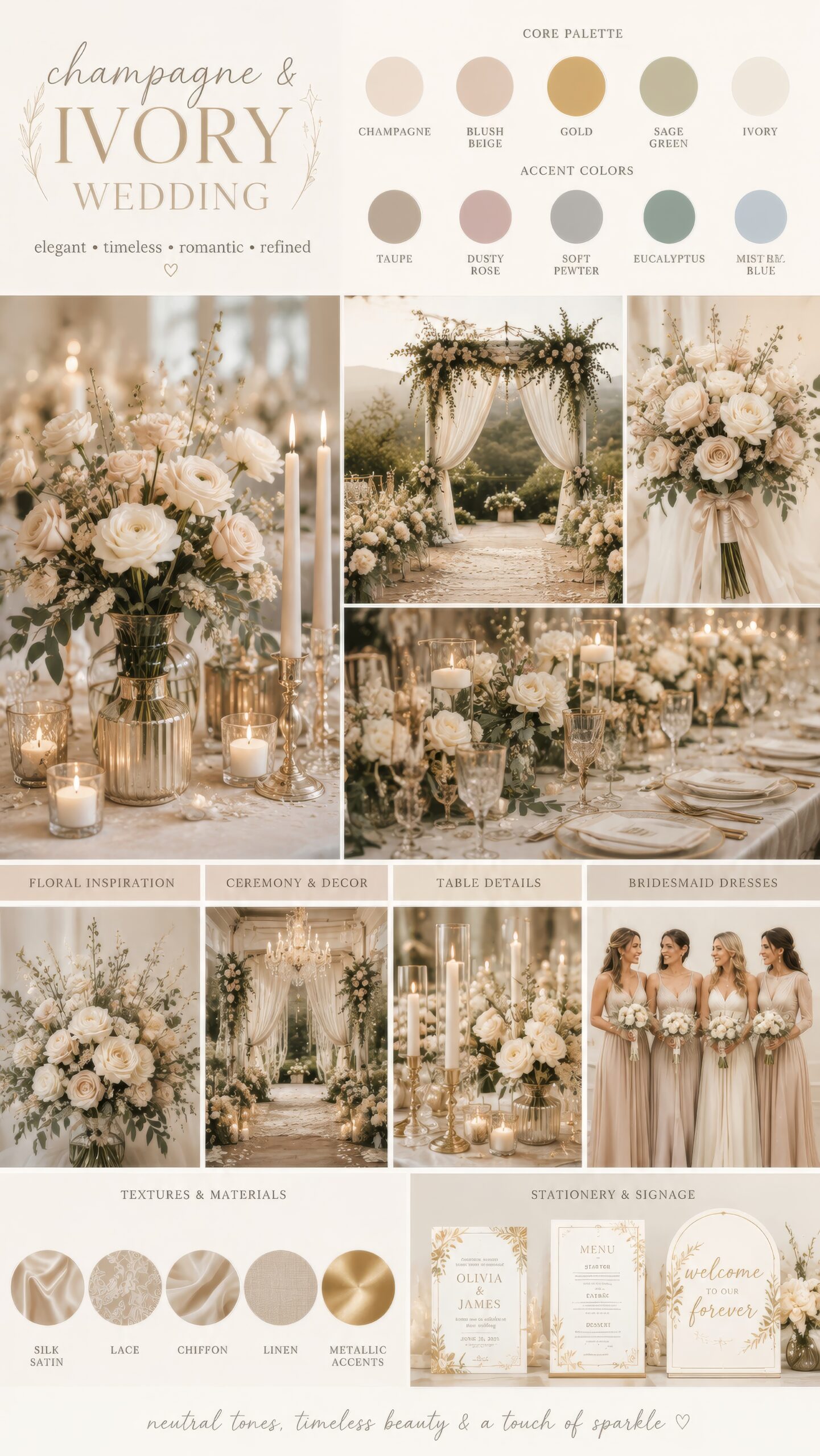
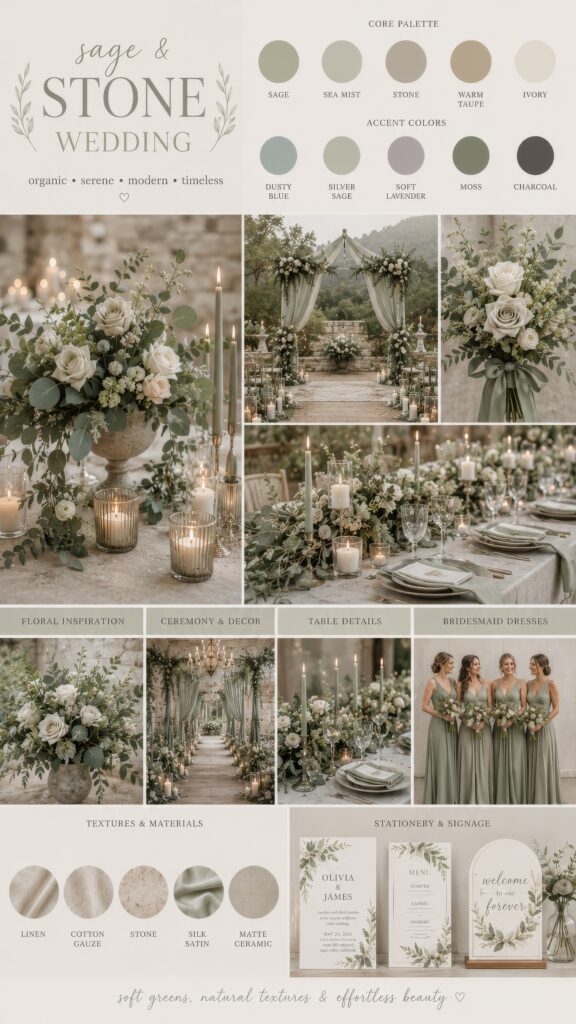
Sage and stone continue dominating garden weddings and countryside celebrations because they feel calm, natural, and elevated without becoming trendy in an obvious way. Chocolate brown paired with cream has also emerged as one of the strongest luxury wedding color trends of 2026, bringing warmth and editorial sophistication to receptions.
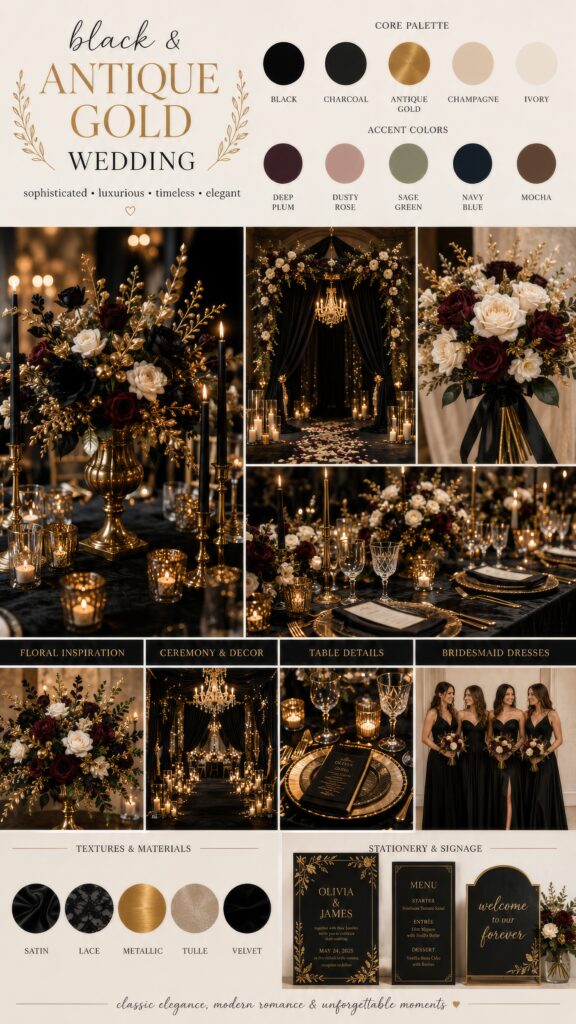
Meanwhile, black paired with antique gold continues to define dramatic evening weddings. Used carefully, this palette creates extraordinary atmosphere — especially when combined with candlelight, velvet textures, aged paper, and architectural floral arrangements.
How to Make Wedding Decorations Look Expensive
Expensive-looking wedding decorations are rarely about quantity. In fact, overdecorating is often what makes a wedding feel cheaper. The strongest approach is to choose fewer elements, repeat them intentionally, and allow them enough visual space to matter.
- Prioritize lighting before adding more objects.
- Use one dramatic floral moment instead of many tiny arrangements.
- Repeat materials consistently across the wedding.
- Keep signage clean, elegant, and visually cohesive.
- Use texture — linen, velvet, silk ribbon, handmade paper, glass, brass.
Texture is what separates flat decoration from elevated styling. Velvet absorbs light beautifully. Linen softens a table. Handmade paper creates depth. Brass candleholders glow warmly in evening receptions. Fresh flowers move naturally in photographs. These details matter because luxury is often perceived through texture long before guests consciously notice individual decorative objects.
Another important principle is scale. Tiny centerpieces disappear in large venues. Undersized ceremony arches feel visually weak in photographs. A wedding should always be styled proportionally to the space around it. One oversized floral installation usually creates more impact than dozens of smaller decorative elements scattered across the venue.
Wedding Decoration Mistakes Couples Regret
The most common wedding decoration mistake is trying to make every idea happen simultaneously. Beautiful weddings require editing. Without it, the design becomes visually noisy, expensive, and strangely less memorable.
- Decorating every surface instead of creating focal points.
- Ignoring lighting and relying only on flowers.
- Using too many colors without a cohesive palette.
- Choosing trends that do not suit the venue.
- Forgetting guest comfort and table space.
Another mistake is focusing entirely on Pinterest inspiration without considering how weddings feel in real life. Many highly styled images online are photographed in controlled environments with no guests present. Real weddings involve movement, dinner service, conversation, lighting changes, and practical logistics. Decorations need to function beautifully in real space, not only in staged photographs.
The strongest test is surprisingly simple: remove one decorative element from the plan. If the wedding still feels complete, you probably did not need it. If removing it weakens the atmosphere significantly, keep it. Ruthless? Yes. Effective? Absolutely.
Final Thoughts on Wedding Decorations
Wedding decorations are ultimately about emotion. They are the flowers surrounding your vows, the candles glowing during dinner, the table details guests touch, the entrance that welcomes everyone in, and the atmosphere that makes the entire day feel like yours.
The most beautiful wedding decorations do not simply fill a space. They transform it. They make the venue feel warmer, the photographs feel richer, the dinner feel more intimate, and the celebration feel more personal. When chosen with intention, wedding decorations become the invisible thread tying the entire wedding together.
Long after the flowers fade and the candles burn out, guests remember atmosphere. They remember how the wedding felt. And ultimately, that feeling is what great wedding decorations are truly designed to create.