Baroque Wedding Dress – The Bride’s Complete Guide to Dramatic Bridal Gowns, Opulent Details & Romantic Old-World Wedding Style
Baroque Wedding Dress
The Bride’s Complete Guide to Dramatic Bridal Gowns, Opulent Details & Romantic Old-World Wedding Style
From corset bodices and sculptural skirts to lace sleeves, pearl embroidery, cathedral veils, regal accessories, venue matching, florals, photography, and styling mistakes — this is the bride’s complete guide to choosing a baroque wedding dress that feels luxurious, romantic, and unforgettable.
A baroque wedding dress is not for the bride who wants to disappear quietly into the background. It is for the bride who wants romance with architecture, drama with elegance, and a gown that feels like it belongs in a candlelit palace, a historic chapel, or an old-world editorial dream.
Introduction
Why a Baroque Wedding Dress Feels So Dramatic and Romantic
A baroque wedding dress is one of the most powerful bridal style choices a bride can make. It carries history, ornament, romance, and visual drama in a way that feels completely different from minimalist bridal fashion. Where a simple silk gown whispers, a baroque wedding dress enters the room with carved ceilings, candlelight, and a full orchestral soundtrack. Subtle? Not exactly. Memorable? Absolutely.
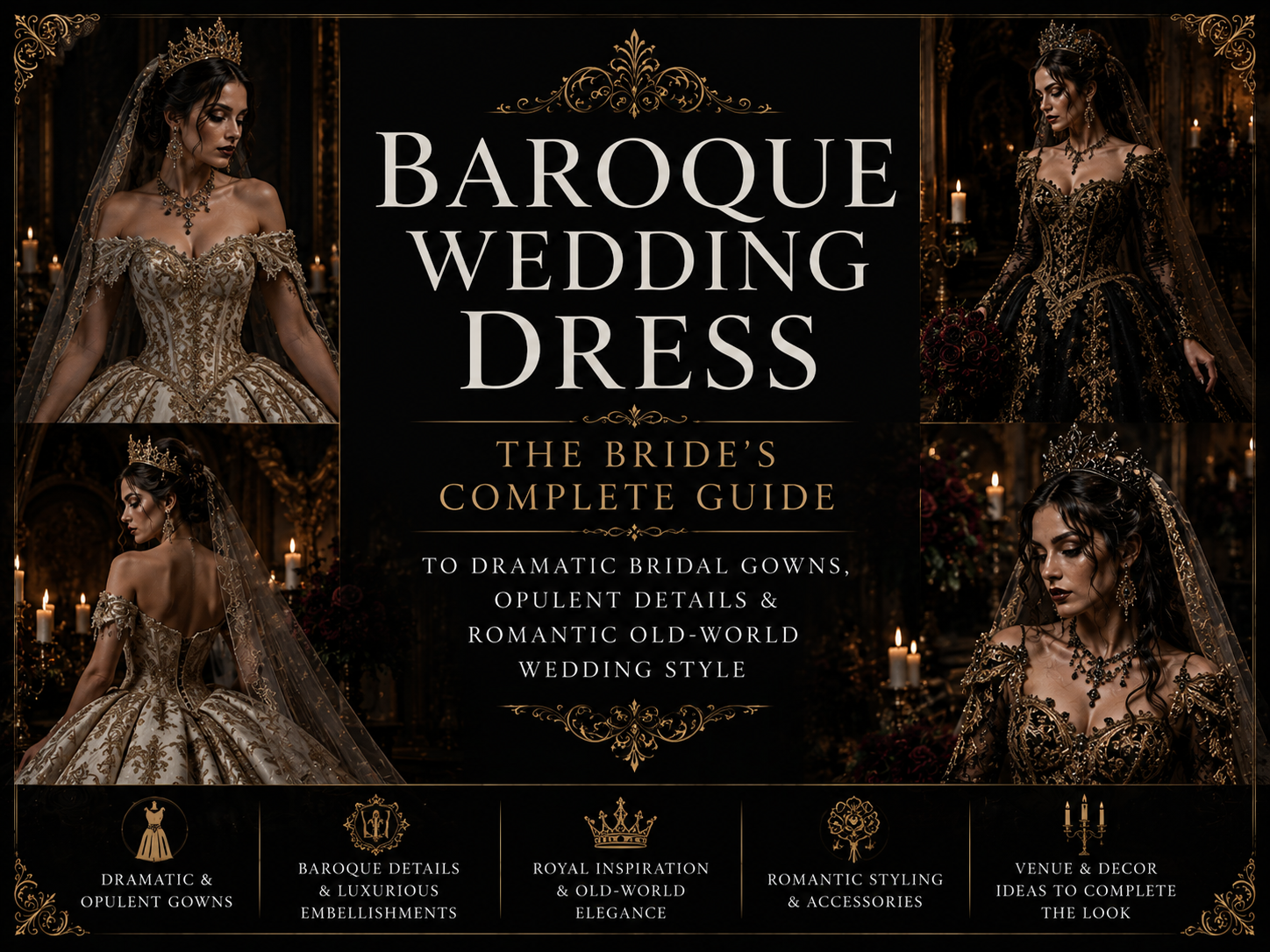
For the bride, choosing a baroque wedding dress is not just about selecting a gown with lace or embroidery. It is about choosing an entire visual direction. Baroque bridal style is rich, sculptural, ornate, and emotional. It often includes corset bodices, dramatic skirts, cathedral veils, lace sleeves, pearl embellishments, brocade textures, gold accents, structured silhouettes, and details that feel inspired by historic interiors, European palaces, antique paintings, and old-world romance.
The challenge is balance. A baroque wedding dress should feel opulent, not costume-like. It should feel regal, not theatrical in the wrong direction. The bride should look like the center of a romantic editorial, not like she wandered out of a museum storage room wearing everything beautiful at once. The most successful baroque bridal looks are edited carefully, even when they are dramatic.
This guide is written from the bride’s perspective: how to choose the right baroque wedding dress, how to match the gown to the venue, how to style accessories, how to choose hair and makeup, how to coordinate flowers and decor, how to think about photography, and how to avoid the styling mistakes that can turn dramatic bridal fashion into visual overload.
Bridal Trends
The Biggest Baroque Wedding Dress Trends
Modern baroque wedding dress trends are less about literal historical costume and more about old-world influence translated into wearable bridal fashion. Brides are choosing gowns with structure, ornament, texture, and a sense of grandeur, but the best designs still feel refined. The drama is intentional, not chaotic.
01
Corset Bodices
Structured corset bodices create the architectural foundation of a baroque bridal look. They shape the waist, support dramatic skirts, and bring a regal, old-world feeling to the gown.
02
Ornate Lace Sleeves
Lace sleeves add romance, formality, and softness to a dramatic baroque wedding dress. They are especially beautiful for church ceremonies, estate weddings, and autumn or winter celebrations.
03
Pearl & Gold Embellishment
Pearls, metallic embroidery, subtle beading, and antique gold accents bring richness to baroque bridal fashion without needing excessive sparkle.
04
Sculptural Skirts
Full skirts, dramatic trains, structured satin, brocade-inspired fabrics, and layered volume create the grandeur that defines a true baroque bridal silhouette.

The bride should choose which baroque element matters most. A gown with a corset bodice, lace sleeves, pearl embroidery, metallic brocade, cathedral train, high neckline, dramatic skirt, and ornate veil may sound dreamy in theory, but in reality it can become very loud, very fast. The strongest baroque wedding dresses usually have one or two dominant features supported by quieter details.
For example, if the gown has a heavily embellished bodice, the skirt can be cleaner and more architectural. If the dress has dramatic sleeves, the neckline may need restraint. If the fabric itself is ornate, the accessories should not compete. Baroque style loves drama, but even drama needs a seating chart.
“A baroque wedding dress should feel richly composed, not overloaded. Opulence is most powerful when it knows exactly where to stop.”
— The Baroque Bridal Edit
Practical Guide
How to Choose the Right Baroque Wedding Dress
Choosing the right baroque wedding dress begins with the bride’s overall wedding vision. This gown style works best when the venue, flowers, decor, stationery, photography, and beauty direction support the same sense of romance and grandeur. A baroque gown can look breathtaking in a historic estate, cathedral, museum, castle venue, candlelit ballroom, or old-world garden. It may feel more difficult in a very minimal beach setting, unless the contrast is extremely intentional.
Start With the Venue
- Historic estates suit corset gowns, lace sleeves, cathedral veils, and ornate accessories.
- Cathedral ceremonies can carry dramatic trains, covered shoulders, and regal silhouettes.
- Ballroom weddings suit sculptural skirts, satin structure, pearls, and gold accents.
- Garden venues need softer baroque details, lighter fabrics, and more romantic movement.
Choose the Main Statement
- A corset bodice creates structure and old-world drama.
- A cathedral train creates ceremony impact and grand photography.
- Ornate sleeves create romance and historic softness.
- Embellished fabric creates luxury without requiring excessive accessories.
The bride should also think about body comfort and movement. Many baroque-inspired gowns are structured, layered, or heavy. That can be wonderful for photos and ceremony drama, but the bride still needs to sit, walk, dance, hug people, climb stairs, and breathe like a human person with ribs. During fittings, she should test movement rather than simply standing beautifully in front of a mirror.
A baroque wedding dress also needs excellent tailoring. Structure is unforgiving when it fits poorly. A corset that pulls, sleeves that restrict movement, a hem that drags awkwardly, or a bodice that does not sit cleanly can quickly make an expensive gown look uncomfortable. The more dramatic the dress, the more important the fit becomes. Baroque does not forgive lazy alterations. It has standards.
The Baroque Bridal Rule
Choose one dominant source of drama: structure, fabric, sleeves, train, or embellishment. Let the rest of the bridal look support that statement instead of competing with it.
Color & Fabric
Baroque Wedding Dress Fabrics, Colors & Textures
Fabric is where a baroque wedding dress becomes truly powerful. Satin, mikado, brocade, lace, tulle, organza, jacquard, embroidered mesh, and pearl-beaded fabrics can all create a baroque feeling, but each one gives a different mood. Structured satin feels regal and architectural. Lace feels romantic and historic. Brocade feels opulent and old-world. Tulle adds softness. Pearl details bring quiet richness.
Ivory
Champagne
Antique Gold
Burgundy
Black Accent
Most brides will choose ivory, cream, or champagne for a baroque wedding dress, but subtle warm undertones often work beautifully with the style. Antique ivory, soft gold, pearl, and champagne can make ornate fabrics feel richer and less stark. Pure white can still work, especially in a cathedral or very formal venue, but warmer tones usually connect more naturally with baroque interiors, candlelight, and old-world floral palettes.
For a more dramatic bride, black accents, burgundy embroidery, antique gold thread, or pearl-heavy detailing can create a gothic baroque feeling. This works especially well for autumn or winter weddings, candlelit venues, and dramatic floral palettes. The key is making sure the color accents feel intentional. One elegant black bow? Beautiful. Random black lace, red roses, gold appliqué, and a crown? That may be a haunted opera, which is fabulous only if fully intentional.
Venue Matching
Best Venues for a Baroque Wedding Dress
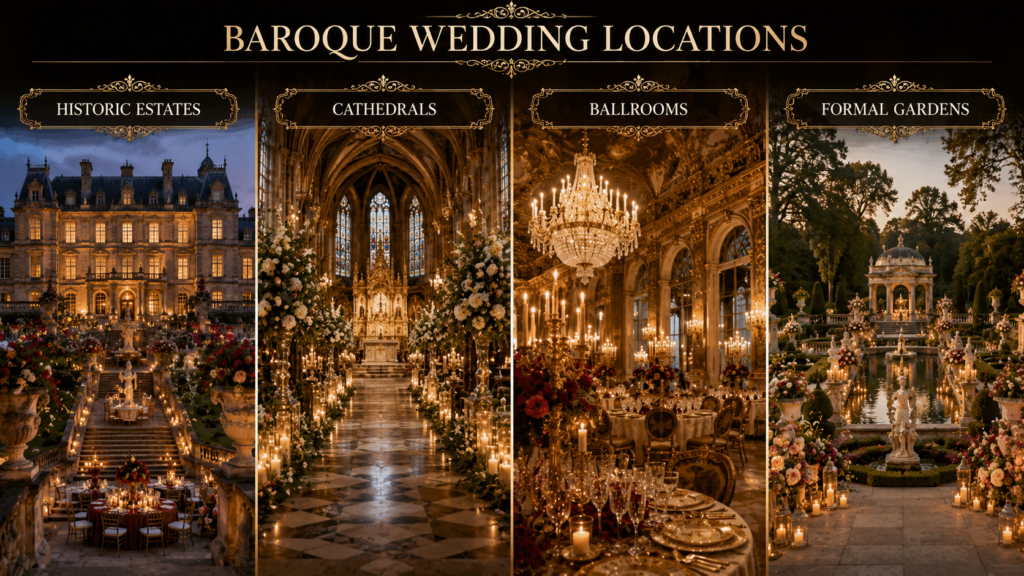
A baroque wedding dress needs a setting with enough visual strength to support it. This does not mean the venue must be a literal palace, though nobody is complaining if one happens to be available. It does mean the space should have atmosphere: history, architecture, texture, height, candlelight, carved details, dramatic gardens, or a sense of formality.
🏛️
Historic Estates
Perfect for corset gowns, pearl details, antique portraits, sweeping staircases, and candlelit reception styling.
⛪
Cathedrals
Ideal for long sleeves, dramatic veils, covered shoulders, formal trains, and a regal ceremony entrance.
🕯️
Ballrooms
A strong choice for sculptural skirts, satin gowns, ornate tablescapes, chandeliers, and formal photography.
🌹
Formal Gardens
Best for softer baroque gowns with lace, floral embroidery, romantic veils, and old-world garden styling.
The bride should also think about scale. A baroque wedding dress with a huge train may look breathtaking in a cathedral aisle or grand staircase, but it may be difficult in a small restaurant, narrow garden path, or crowded reception space. The dress should feel grand in relation to the venue, not trapped by it. If the gown needs its own traffic management plan, the venue may need reconsidering.
Accessories & Beauty
How to Style Accessories, Hair & Makeup
Accessories can make or break a baroque wedding dress. Because the gown itself is often detailed, the accessories need to support the look rather than compete with it. The bride should choose pieces that feel connected to the dress: pearl earrings, antique gold hair pins, a cathedral veil, lace gloves, a sculptural headband, a delicate tiara, or a dramatic pair of shoes.
Veils
Cathedral veils, lace-edged veils, pearl veils, and dramatic mantilla-inspired styles pair beautifully with baroque gowns.
Jewelry
Pearls, antique gold, small drop earrings, vintage-inspired rings, and refined hair pieces work better than overly modern sparkle.
Beauty
Soft sculpted makeup, luminous skin, defined eyes, romantic lips, and polished hair keep the bride dramatic but elegant.
Hair should support the neckline and details of the dress. High necklines and ornate sleeves often look beautiful with updos or low buns. Strapless corset gowns can handle loose waves, romantic half-up styles, or a more dramatic veil moment. Makeup should bring definition without turning the bride into a separate historical reenactment. Soft glam, warm eyes, polished skin, and a romantic lip are usually more elegant than an overly theatrical face.
Flowers & Decor
Florals, Decor & Wedding Styling for a Baroque Dress
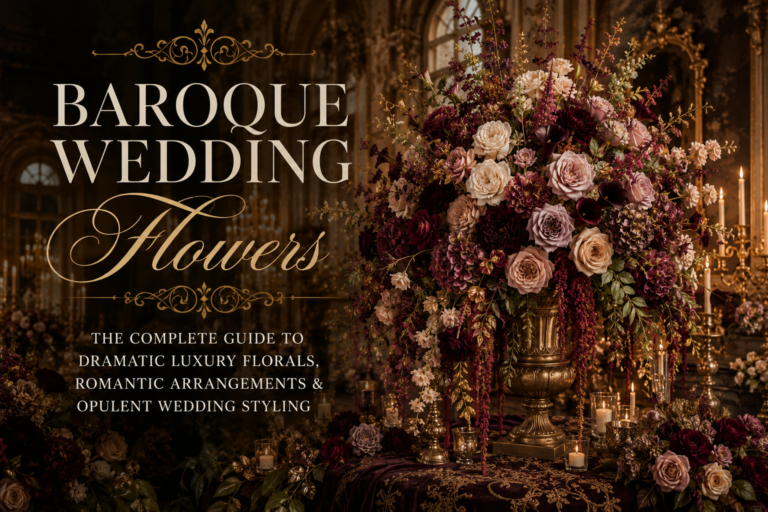
The flowers and decor should support the baroque wedding dress without competing with it. This style works beautifully with lush florals, candlelight, antique gold details, velvet ribbons, dramatic tablescapes, and old-world stationery. The mood can be romantic, gothic, regal, or softly European depending on the bride’s palette and venue.
✦ Bridal Bouquet
Use garden roses, ranunculus, orchids, anemones, hellebores, dark foliage, pearl pins, or silk ribbons for a romantic old-world bouquet.
✦ Ceremony Decor
Candlelit aisles, urn arrangements, dramatic arches, antique stands, and floral meadows can frame the gown beautifully.
✦ Reception Styling
Layer taper candles, velvet linens, gold flatware, ornate menus, dark florals, and textured paper for a rich reception atmosphere.
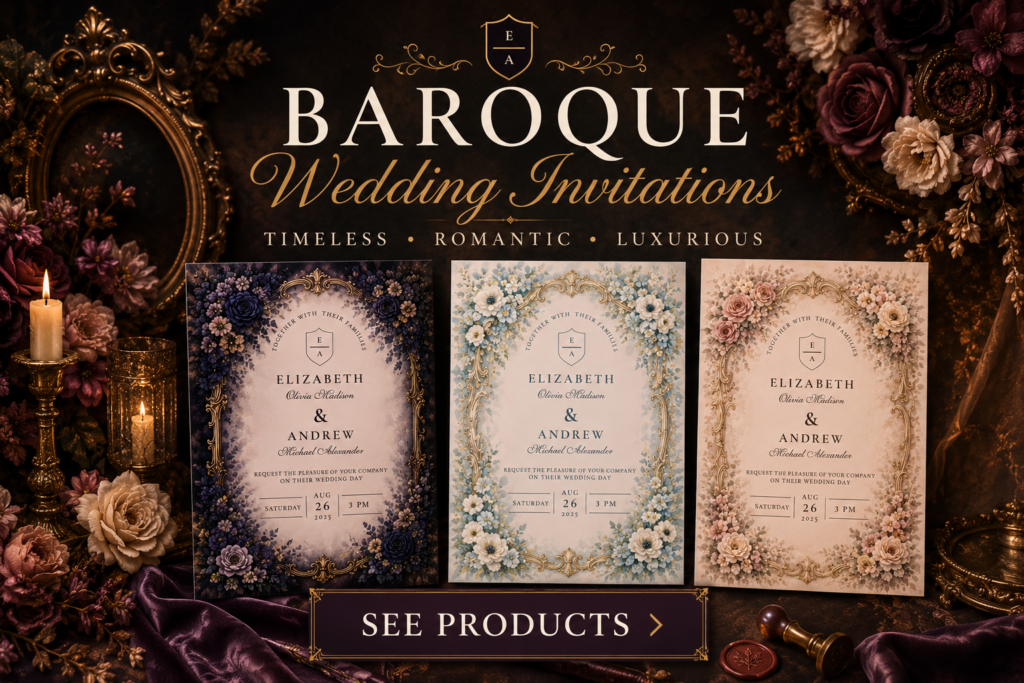
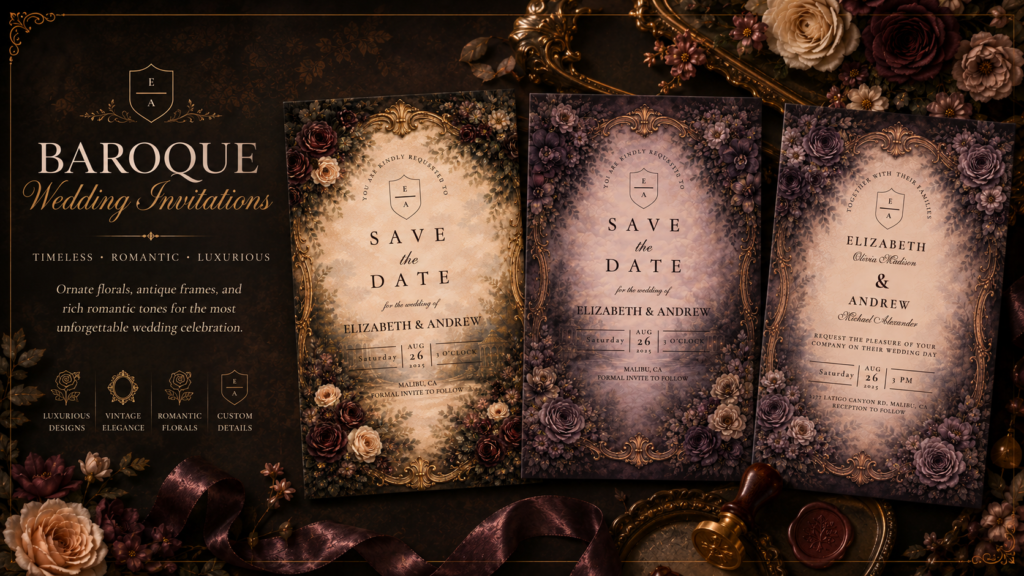
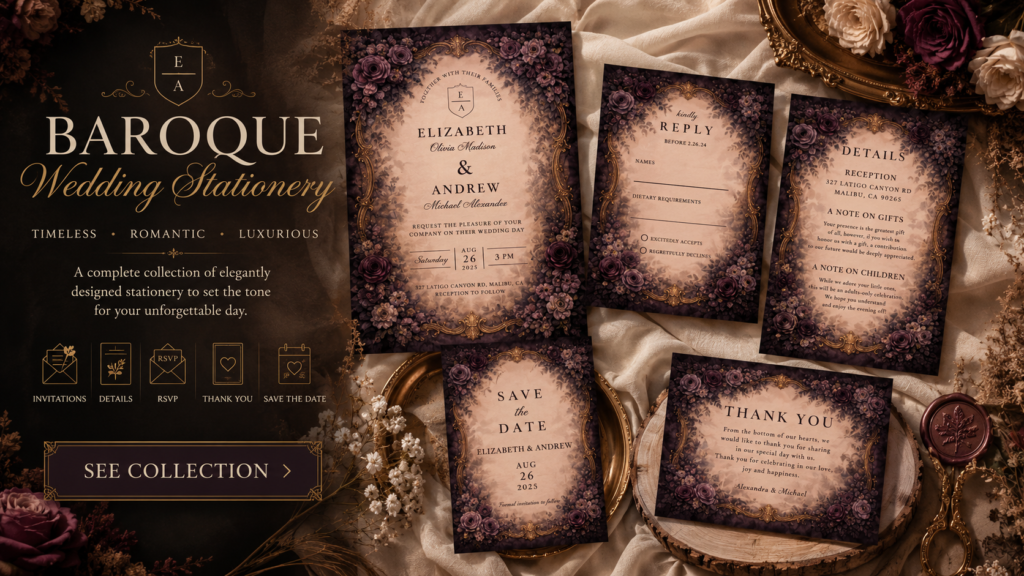
Stationery should also support the gown’s visual world. Handmade paper, wax seals, ornate borders, calligraphy, antique gold details, and deep romantic colors can create a cohesive experience from the invitation suite to the wedding day. The stationery does not need to be overly decorative, but it should feel intentional. A baroque wedding dress paired with ultra-minimal modern stationery can work, but only if contrast is part of the concept.
“A baroque bridal look works best when the gown, flowers, venue, stationery, and candlelight feel like they belong to the same romantic world.”
Photography
How to Photograph a Baroque Wedding Dress Beautifully
A baroque wedding dress deserves intentional photography. The bride should speak with her photographer about capturing the gown’s structure, texture, movement, and details. These dresses often look best in spaces with architecture: staircases, windows, carved doors, stone halls, gardens, candlelit rooms, and long aisles. The setting should help the gown tell its story.
- Plan full-length portraits that show the entire silhouette and train.
- Capture close-up details of lace, pearls, embroidery, buttons, and fabric texture.
- Use architectural backdrops to support the gown’s old-world mood.
- Allow time for veil movement, staircase portraits, and dramatic walking shots.
- Photograph the dress in natural light and candlelit evening settings if possible.
The bride should also allow enough time in the timeline. Dramatic gowns are not always quick to arrange. Trains need smoothing, veils need placement, sleeves need adjusting, and skirts need space. Rushing a baroque wedding dress is a crime against fabric. Give the gown time to perform.
Mistakes To Avoid
Baroque Wedding Dress Mistakes Brides Should Avoid
The biggest mistake brides make with a baroque wedding dress is choosing too many statement elements at once. A dramatic gown does not need every possible detail. When the dress has heavy lace, pearls, gold embroidery, a corset, a crown, gloves, a cathedral veil, a giant bouquet, and a heavily decorated venue, the bride can become lost inside the styling. The point is for the bride to look unforgettable, not for the dress to start its own monarchy.
- Choosing a gown that overpowers the bride’s frame or personality.
- Adding too many accessories to an already ornate dress.
- Ignoring comfort, movement, sitting, stairs, or dancing.
- Choosing a venue that does not support the gown’s level of drama.
- Using florals and decor that compete with the dress instead of framing it.
- Leaving alterations too late for a structured gown.
Another mistake is confusing baroque with simply “more.” Baroque style is ornate, but it is also composed. It has rhythm, symmetry, contrast, and intention. A bride can wear a baroque wedding dress with clean hair, simple pearl earrings, and a restrained bouquet and still look incredibly dramatic. Sometimes the most powerful styling choice is knowing when not to add another thing.
Finally, brides should avoid buying a gown only for a photo. The dress must feel incredible in real life too. It should support the bride emotionally and physically throughout the ceremony, portraits, dinner, and dancing. If the gown looks stunning but makes the bride miserable, that is not luxury. That is expensive imprisonment with lace.
Final Thoughts on the Baroque Wedding Dress
A baroque wedding dress is one of the most romantic and visually powerful bridal choices. It brings structure, ornament, history, and drama into the wedding day in a way that feels deeply memorable. When chosen thoughtfully, it can make the bride look regal, artistic, and completely unforgettable.
The most beautiful baroque bridal looks are not the ones with the most embellishment. They are the ones with the clearest vision. The gown, venue, flowers, accessories, beauty styling, stationery, and photography should all feel connected to the same old-world story.
When the balance is right, a baroque wedding dress does more than dress the bride. It creates a bridal moment with presence, romance, and architectural beauty — the kind of look guests remember long after the candles have burned down.