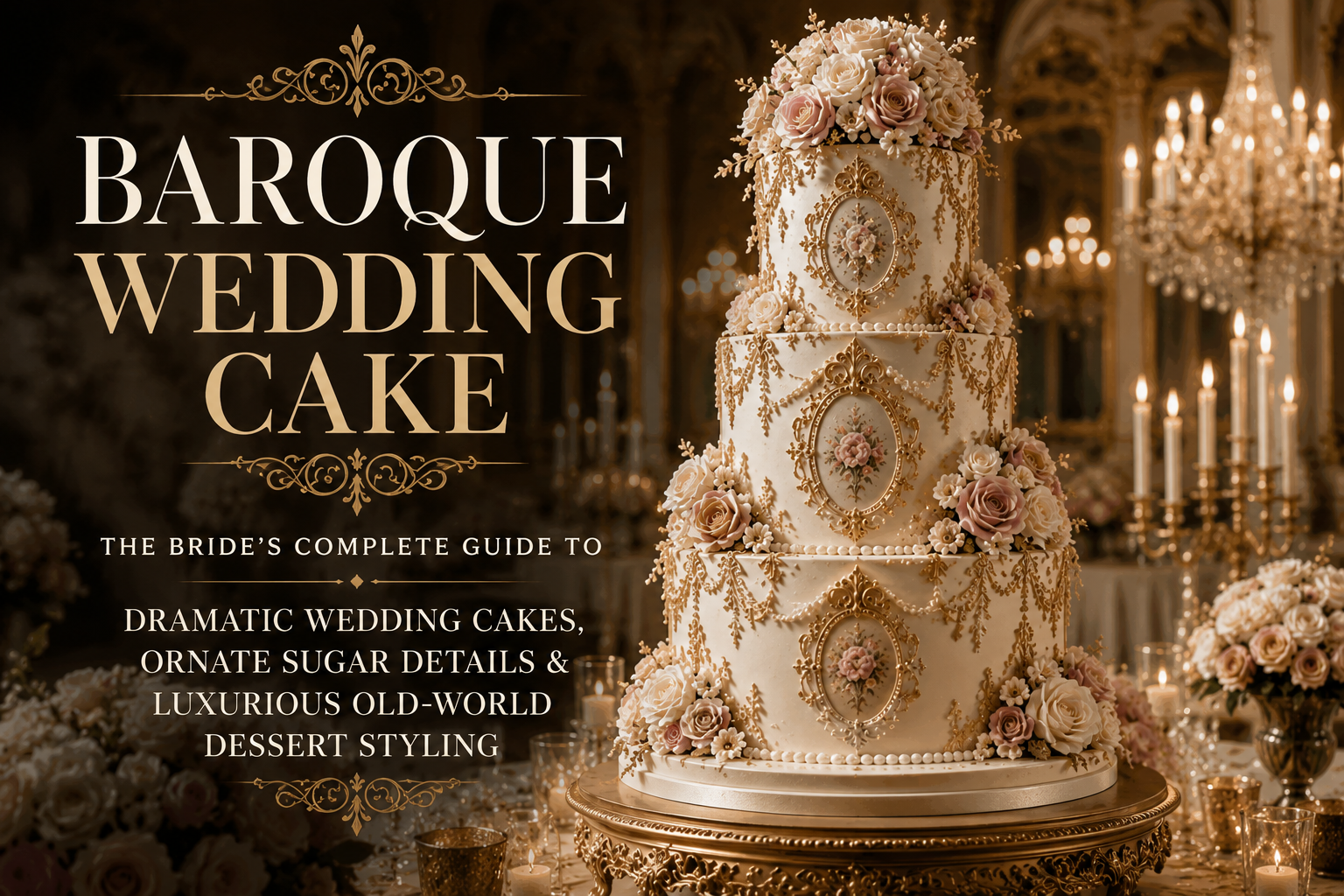
Baroque Wedding Cake – The Bride’s Complete Guide to Dramatic Wedding Cakes, Ornate Sugar Details & Luxurious Old-World Dessert Styling
Baroque Wedding Cake
The Bride’s Complete Guide to Dramatic Wedding Cakes, Ornate Sugar Details & Luxurious Old-World Dessert Styling
From ornate piping and antique gold accents to sugar flowers, candlelit cake tables, dramatic flavors, venue styling, photography, and mistakes to avoid — this is the bride’s complete guide to choosing a baroque wedding cake that feels luxurious, romantic, and unforgettable.
A baroque wedding cake is not just a dessert table detail. It is edible architecture, a reception focal point, and one of the most romantic ways to bring old-world luxury, candlelit drama, and sculptural beauty into the wedding day.
Introduction
Why a Baroque Wedding Cake Feels So Dramatic and Romantic
A baroque wedding cake is one of the most powerful reception design choices a bride can make. It carries drama, ornament, artistry, and romance in a way that feels completely different from a simple modern wedding cake. Where a minimalist cake whispers, a baroque wedding cake enters the room with candlelight, carved ceilings, antique gold, and a full orchestra quietly preparing itself in the corner. Subtle? Not especially. Memorable? Absolutely.
For the bride, choosing a baroque wedding cake is not simply about asking for a cake with more decoration. It is about choosing a visual direction. Baroque cake styling is rich, sculptural, ornate, and deeply atmospheric. It often includes royal icing piping, sugar flowers, pearl details, antique gold accents, hand-painted motifs, carved textures, dramatic tiers, romantic ribbons, and display styling that feels inspired by European palaces, old-world interiors, historic portraits, formal gardens, and candlelit receptions.
The challenge is balance. A baroque wedding cake should feel opulent, not chaotic. It should feel regal, not heavy. The bride should want guests to pause, admire the cake, and feel the atmosphere of the reception — not wonder whether the cake designer was paid by the embellishment. The most successful baroque cake designs are edited carefully, even when they are dramatic.
This guide is written from the bride’s perspective: how to choose the right baroque wedding cake, how to match the cake to the venue, how to select the best color palette and textures, how to style the cake table, how to coordinate flowers and desserts, how to think about lighting and photography, and how to avoid the mistakes that can turn dramatic cake design into visual overload.
Cake Trends
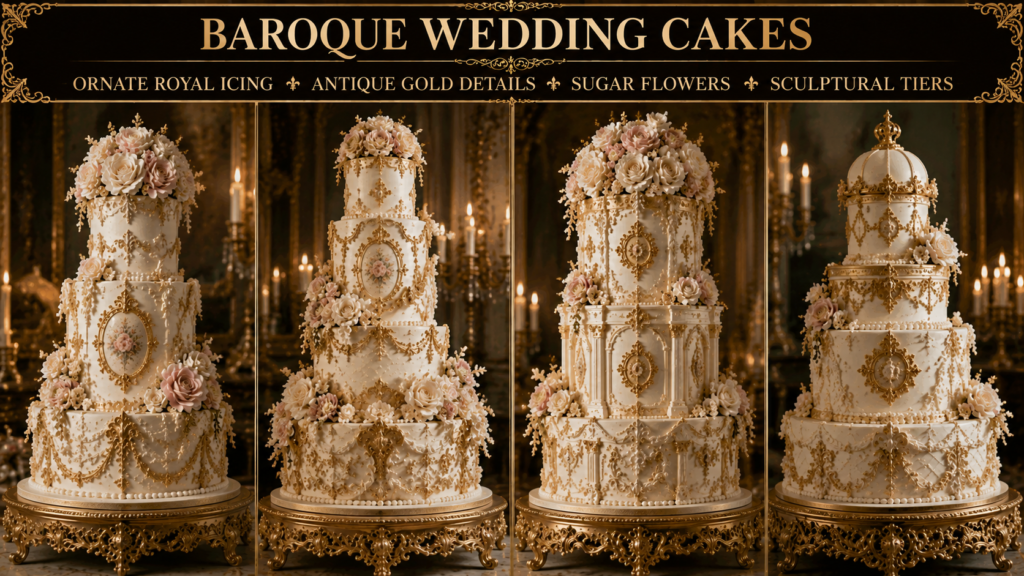
The Biggest Baroque Wedding Cake Trends
Modern baroque wedding cake trends are less about copying historical cakes exactly and more about translating old-world ornament into beautiful, wearable reception design. Brides are choosing cakes with texture, height, romance, metallic warmth, floral movement, and artistic detail, but the best versions still feel refined. The drama is intentional, not random.
01
Ornate Royal Icing
Detailed piping, scalloped borders, pearl drops, lace-like patterns, and architectural icing work create the old-world foundation of a baroque cake.
02
Antique Gold Details
Soft gold leaf, brushed metallic trim, gilded edges, and antique gold flourishes add warmth, richness, and candlelit luxury.
03
Sugar Flowers
Garden roses, orchids, peonies, ranunculus, and tulips soften the drama and bring romance to even the most architectural cake.
04
Sculptural Tiers
Tall tiers, pedestal displays, carved textures, and dramatic silhouettes create the grandeur that defines a true baroque wedding cake.
The bride should choose which baroque element matters most. A cake with heavy piping, sugar flowers, pearls, gold leaf, dark florals, sculptural height, painted details, ribbons, fruit, and an elaborate cake table may sound dreamy in theory, but in reality it can become very loud, very fast. The strongest baroque wedding cakes usually have one or two dominant features supported by quieter details.
For example, if the cake has ornate piping, the flowers can be softer and more minimal. If the cake uses dramatic burgundy sugar flowers, the base icing may need restraint. If the cake table is surrounded by candles and velvet fabric, the cake itself does not need to scream for attention. Baroque style loves drama, but even drama needs a seating chart.
“A baroque wedding cake should feel richly composed, not overcrowded. Opulence is most powerful when it knows exactly where to stop.”
— The Baroque Cake Edit
Practical Guide
How to Choose the Right Baroque Wedding Cake
Choosing the right baroque wedding cake begins with the bride’s overall wedding vision. This cake style works best when the venue, dress, flowers, stationery, table design, lighting, and reception mood support the same sense of romance and grandeur. A baroque cake can look breathtaking in a historic estate, candlelit ballroom, castle venue, museum reception, cathedral-inspired space, or formal garden. It may feel more difficult in a very casual beach setting, unless the contrast is extremely intentional.
Start With the Venue
- Historic estates suit ornate piping, antique gold accents, pearls, and pedestal displays.
- Ballrooms can carry tall tiers, sculptural silhouettes, dramatic florals, and formal cake tables.
- Cathedral-inspired receptions suit ivory cakes, covered textures, gold details, and candlelit styling.
- Garden venues need softer baroque details, lighter florals, and more romantic movement.
Choose the Main Statement
- Ornate piping creates the clearest old-world baroque effect.
- Sugar flowers create a softer, more romantic cake.
- Metallic accents create luxury and warmth.
- Height and structure create ceremony-level reception impact.
The bride should also think about proportion. A small two-tier cake may look delicate and beautiful at an intimate dinner, but it can disappear in a grand ballroom. A towering six-tier cake may look spectacular in photographs, but it can overpower a small reception space. The cake should feel grand in relation to the room, not trapped by it.
Practical details matter too. A baroque wedding cake often includes delicate sugar work, structured tiers, metallic finishes, or fresh flowers. The bride should ask the baker about temperature, transport, assembly, venue access, cake table stability, and how long the cake can safely sit before cutting. Luxury is not just how the cake looks. It is also whether it survives the evening without developing a personality crisis.
The Baroque Cake Rule
Choose one dominant source of drama: piping, florals, color, height, or metallic detail. Let the rest of the cake support that statement instead of competing with it.
Color & Texture
Baroque Wedding Cake Colors, Textures & Finishes
Color and texture are where a baroque wedding cake becomes truly powerful. Ivory, cream, champagne, pearl, antique gold, burgundy, blush, black, mocha, and soft stone tones can all work beautifully. The right palette depends on the venue, wedding season, floral design, table styling, and how dramatic the bride wants the reception to feel.
Ivory
Champagne
Antique Gold
Burgundy
Black Accent
An ivory baroque wedding cake with antique gold piping feels classic and regal. A champagne cake with pearl texture feels soft, luxurious, and romantic. A burgundy floral cake with ivory tiers feels dramatic and perfect for autumn or winter weddings. A black-and-gold accent cake can feel gothic, formal, and editorial, but it must be handled carefully so the design remains elegant rather than theatrical in the wrong way.
Texture matters just as much as color. Smooth fondant can create a polished architectural effect, while buttercream can feel softer and more romantic. Royal icing piping creates historic detail, pearl textures add quiet richness, and sugar flowers bring movement. The bride should also think about how the cake will look under reception lighting. Antique gold glows beautifully in candlelight, but very dark flowers can lose detail in a dim room. Moody is gorgeous. Invisible is less useful.
Venue Matching
Best Venues for a Baroque Wedding Cake
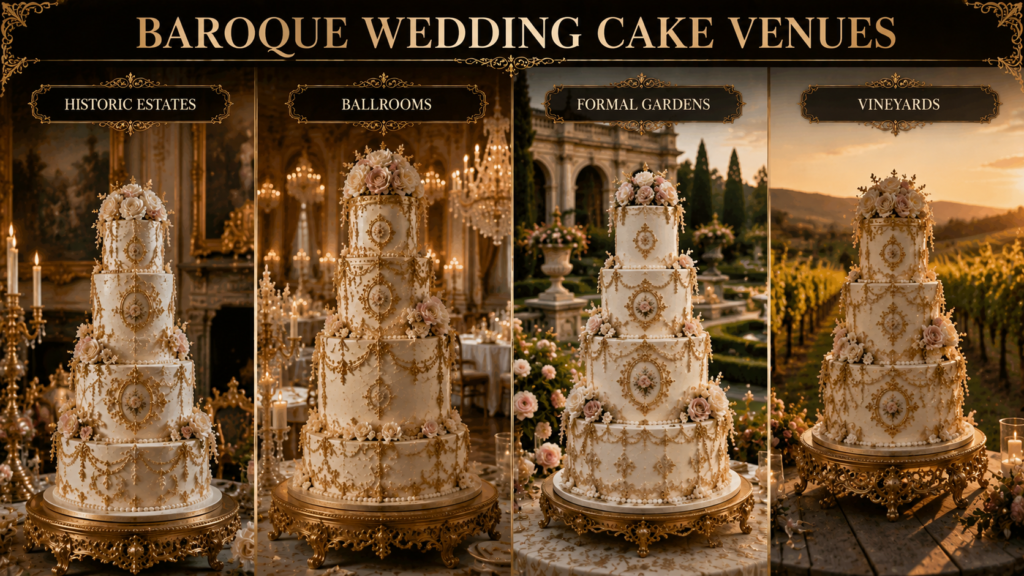
A baroque wedding cake needs a setting with enough visual strength to support it. This does not mean the wedding must happen inside a literal palace, though nobody is complaining if one is available. It does mean the reception space should have atmosphere: history, architecture, texture, height, candlelight, carved details, dramatic gardens, or a sense of formality.
🏛️
Historic Estates
Perfect for ornate piping, gold details, antique stands, dramatic florals, and candlelit cake styling.
🕯️
Ballrooms
Ideal for tall tiers, sculptural cake tables, chandeliers, velvet linens, and formal photography.
🌹
Formal Gardens
Best for softer baroque cakes with sugar flowers, ivory texture, pearl details, and romantic floral styling.
🍷
Vineyards
Beautiful with champagne tones, soft gold details, seasonal fruit, textured buttercream, and warm florals.
The bride should also think about placement. A baroque wedding cake hidden in a corner loses its power. It deserves a considered location: beneath a chandelier, against a textured wall, beside a floral installation, near the head table, or in a softly lit area where guests can admire it before it is cut. The cake table is a design moment, not a storage solution for dessert.
Cake Table Styling
How to Style a Baroque Wedding Cake Table
The cake table matters almost as much as the cake itself. A baroque wedding cake displayed on a plain table in harsh light can lose half its magic. The display should make the cake feel like a centerpiece: framed, lit, elevated, and connected to the reception design. This does not mean the table needs to be crowded. It means every element should be chosen with intention.
Pedestal Display
Use an antique pedestal, gold stand, stone plinth, or fabric-draped base to give the cake height and presence.
Candlelight
Layer taper candles, votives, or lanterns around the cake table to create warmth and old-world drama.
Floral Framing
Use florals around the base, behind the cake, or as a soft installation rather than covering the cake table completely.
A baroque cake table can also include velvet fabric, a lace overlay, antique trays, framed signage, fruit, florals, pearls, or gold-rimmed dessert plates, but the bride should avoid turning the table into a prop warehouse. The cake should remain the star. Everything else is the supporting cast, not an uprising.
“The cake table should feel like a quiet stage: beautifully lit, carefully framed, and designed so the cake can hold the room.”
Flowers & Decor
Florals, Sugar Flowers & Romantic Cake Decor
Flowers are one of the easiest ways to make a baroque wedding cake feel romantic rather than purely architectural. Sugar flowers can create an incredibly refined effect, especially when they are sculpted to resemble garden roses, orchids, ranunculus, peonies, sweet peas, or tulips. Fresh flowers can also be beautiful, but they need to be selected carefully for food safety, scale, and visual harmony.
The cake florals should connect to the bride’s bouquet and reception flowers without copying them exactly. If the wedding flowers include burgundy roses, cream ranunculus, blush orchids, and dark greenery, the cake can echo those tones through sugar flowers or a base arrangement. This creates cohesion without making the cake look like someone placed a centerpiece on top and hoped for the best.
Romantic Sugar Flowers
Sugar roses, orchids, peonies, tulips, and ranunculus create a refined, painterly floral effect.
Fresh Floral Base
A floral arrangement around the cake base can frame the design without hiding the icing details.
Dark Botanical Drama
Burgundy flowers, plum accents, and dark foliage create a gothic baroque mood for formal weddings.
The bride should avoid using flowers that are too large for the cake. Oversized blooms can hide the piping, flatten the silhouette, and make the cake look smaller. Baroque cake flowers should feel placed with precision. They can cascade, cluster, or frame the tiers, but they should not swallow the design whole like a very elegant botanical monster.
Menu & Flavor
Baroque Wedding Cake Flavors & Dessert Pairings
The flavor of a baroque wedding cake should feel just as luxurious as the design. A cake this dramatic does not need to be strange for the sake of being memorable, but it should feel thoughtful. Vanilla and almond can be elegant when paired with raspberry, champagne, or white chocolate. Chocolate can feel rich and formal with espresso, cherry, or hazelnut. For autumn or winter weddings, spiced pear, caramel, fig, citrus, chestnut, and dark chocolate can feel especially beautiful.
Classic Luxury
Vanilla bean, almond, champagne, raspberry, white chocolate, and lemon curd keep the flavor elegant and bridal.
Autumn Romance
Pear, caramel, fig, brown butter, cinnamon, hazelnut, and spiced vanilla feel warm and seasonal.
Dark & Dramatic
Dark chocolate, espresso, cherry, blackberry, red wine, and hazelnut suit moody baroque weddings beautifully.
If the wedding includes a dessert table, the bride can echo the baroque cake style with small pastries, macarons, mini tarts, chocolate truffles, fruit, or cream desserts displayed on antique trays. The key is coordination, not excess. A dessert table should support the cake, not look like the cake accidentally triggered a pastry rebellion.
Lighting & Photography
How to Photograph a Baroque Wedding Cake Beautifully
A baroque wedding cake deserves intentional photography. The bride should speak with the photographer about capturing the cake before the reception begins, before guests move through the room, before candles burn too low, and before anyone places a random purse, napkin, or champagne glass beside it. The cake is a design moment, and it should be documented while the display is still pristine.
- Capture a full-length photo showing the entire cake silhouette.
- Photograph close-up details of piping, sugar flowers, pearls, and gold texture.
- Take wide reception images showing the cake within the room design.
- Use candlelight and warm room lighting to create atmosphere.
- Schedule cake-cutting photos before the couple is exhausted or the table is messy.
Lighting is especially important. A baroque wedding cake with gold details, textured icing, or dramatic flowers needs soft light that reveals dimension. Harsh overhead lighting can flatten the design. Total darkness can hide the details. Warm directional lighting, candlelight, or a softly lit cake corner can make the cake feel truly editorial.
Mistakes To Avoid
Baroque Wedding Cake Mistakes Brides Should Avoid
The biggest mistake brides make with a baroque wedding cake is confusing ornate with overloaded. A cake can be detailed without being chaotic. It can be dramatic without needing every possible decorative feature. If the cake includes ornate piping, sugar flowers, metallic accents, dark colors, pearls, painted details, ribbons, fruit, and heavy table decor all at once, the eye has nowhere to rest.
- Choosing too many ornate details at once.
- Displaying the cake in a poorly lit or hidden corner.
- Using flowers that clash with the cake color or reception florals.
- Choosing a cake size that feels too small for the room.
- Overdecorating the cake table until the cake disappears.
- Forgetting to schedule clean detail photos before guests enter.
Another mistake is designing the cake separately from the rest of the wedding. The cake should feel connected to the gown, flowers, stationery, table design, and venue atmosphere. It does not need to match everything literally, but it should belong. A highly ornate gold cake may feel strange in a relaxed rustic barn unless the entire reception design supports that contrast.
Finally, brides should avoid choosing a cake purely for the photo without considering flavor, service, temperature, and guest experience. A beautiful cake still needs to be stable, delicious, well-timed, and practical for the venue. Drama is wonderful. A collapsing cake is memorable for the wrong reasons, and unfortunately very hard to rebrand as editorial.
Final Thoughts on the Baroque Wedding Cake
A baroque wedding cake is one of the most powerful ways to transform a reception into a fully immersive visual experience. It brings romance, artistry, texture, and atmosphere into the celebration in a way that feels unforgettable for both guests and photography.
The most beautiful baroque wedding cakes are not simply elaborate. They are intentional. Every texture, flower, ribbon, metallic accent, candle, and display detail should feel connected to the larger wedding atmosphere.
When the design is balanced correctly, a baroque wedding cake becomes far more than dessert. It becomes part of the romance, part of the storytelling, and one of the defining visual moments of the wedding day itself.