Baroque Wedding Flowers – The Complete Guide to Dramatic Luxury Florals
Luxury Wedding Editorial
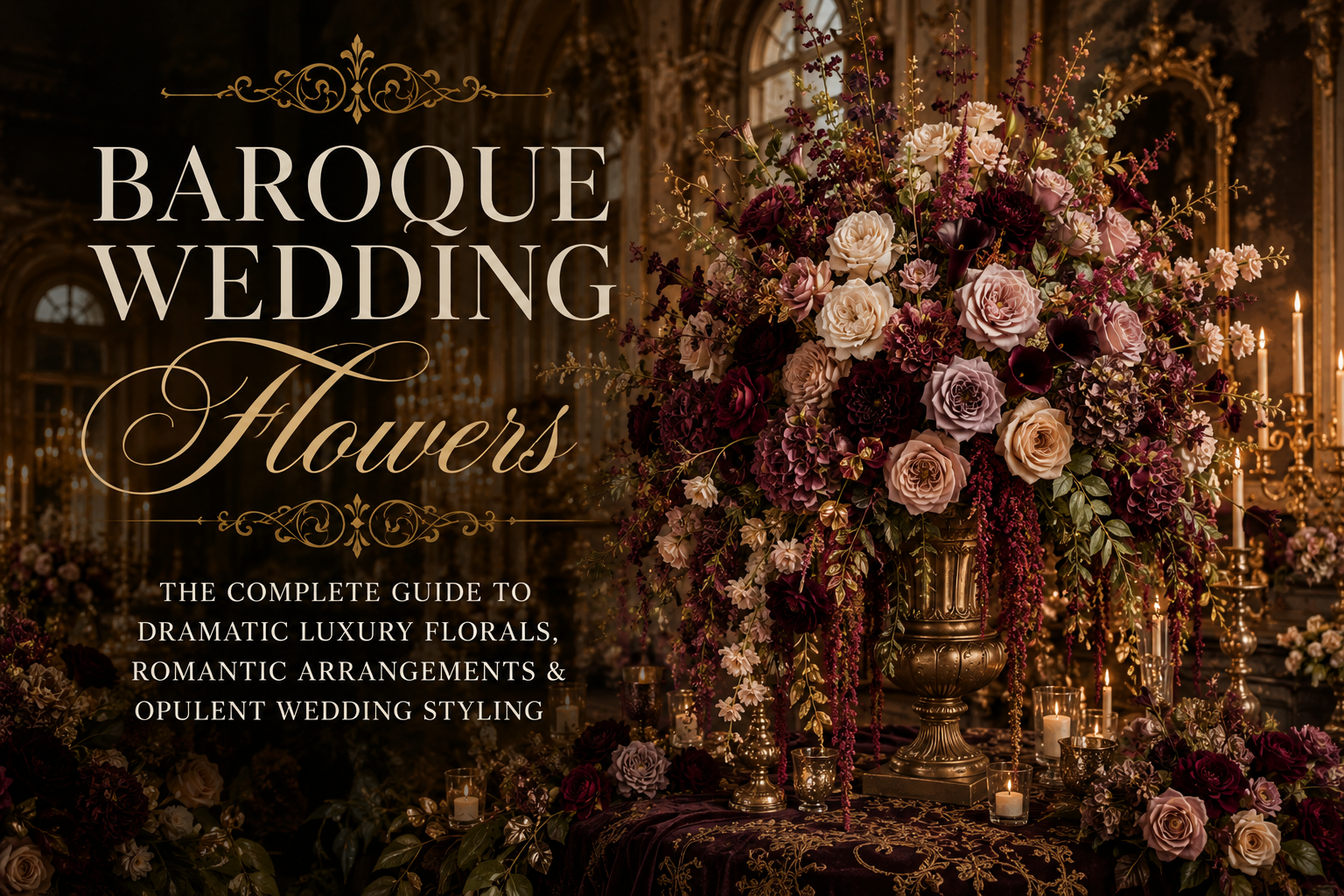
Baroque Wedding Flowers – The Complete Guide to Dramatic Luxury Florals, Romantic Arrangements & Opulent Wedding Styling
Where sculptural roses, cascading ribbons, candlelight, and antique romance create one of the most unforgettable floral aesthetics in modern weddings.
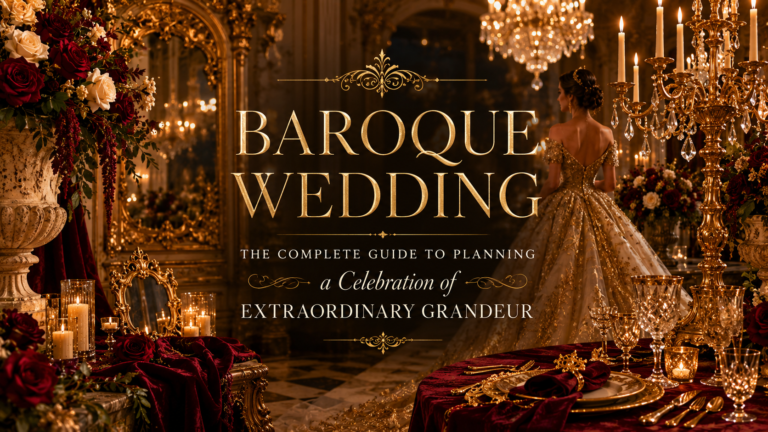
Baroque wedding flowers combine theatrical elegance with deeply romantic detail. From oversized garden roses and trailing amaranthus to antique-inspired bouquets filled with movement, texture, and rich color palettes, this floral style transforms weddings into immersive editorial experiences inspired by European palaces, oil paintings, velvet rooms, candlelit tables, and timeless luxury.
“Baroque wedding flowers are not minimal. They are emotional, dramatic, layered, candlelit, and unapologetically romantic — designed to feel like a painting guests can walk through.”
Introduction
Why Baroque Wedding Flowers Feel So Seductive, Romantic & Timeless
Baroque wedding flowers are for couples who want more than pretty arrangements. They are for couples who want atmosphere. This floral style is rich, layered, painterly, and deeply expressive, drawing inspiration from European palaces, dramatic still-life paintings, antique interiors, candlelit salons, and gardens that feel slightly untamed but impossibly elegant. Instead of asking flowers to sit politely in the background, the baroque approach allows them to become one of the strongest storytelling elements of the wedding day.
What makes this aesthetic so memorable is the contrast between grandeur and softness. Baroque wedding flowers can be dramatic, but they should never feel harsh. They can be abundant, but they should not look chaotic. The most beautiful designs combine sculptural arrangements with romantic imperfection: roses opening at different stages, orchids curving naturally, silk ribbons falling loosely, fruit tucked into reception tables, and greenery that moves like it has grown into the space rather than been placed there five minutes before cocktail hour.
In luxury wedding design, baroque florals are especially powerful because they photograph with depth. Minimal florals may look clean, but baroque arrangements create shadows, dimension, texture, and visual emotion. Candlelight catches the edge of a burgundy rose. A cream garden rose softens the weight of a dark table linen. A trailing stem gives movement to a bouquet. A gold compote makes the flowers feel connected to history. These are the details that turn a wedding gallery into something cinematic rather than simply decorative.
The appeal of baroque wedding flowers also lies in their flexibility. They can feel dark and moody, soft and ivory, golden and palatial, or garden-inspired and romantic. The common thread is not one single color palette, but a sense of richness. Every element should feel considered: the flowers, the vessels, the ribbons, the linens, the lighting, the stationery, the venue, and even the way the tables are composed. Done well, the look feels expensive without screaming for attention. Done poorly, it can look like a costume party in a flower shop. A tiny line, but a mighty one.
Signature Floral Styles
The Most Beautiful Baroque Wedding Flower Styles
Although the word baroque immediately suggests opulence, there are several ways to interpret the look. Some couples choose dark romance with burgundy roses and antique gold vessels, while others prefer a softer palace-inspired palette of ivory, champagne, and warm candlelight. The best direction depends on the venue, season, dress code, and the emotional atmosphere you want the wedding to have.
Dark Romantic Florals
Deep burgundy roses, black scabiosa, chocolate cosmos, plum ranunculus, and trailing amaranthus create one of the most iconic baroque wedding flower palettes. This style pairs beautifully with candlelit receptions, historic venues, velvet linens, and antique gold accents.
Ivory Palace Florals
Cream garden roses, orchids, champagne carnations, white delphinium, and soft greenery create a lighter interpretation of baroque wedding flowers. This version feels luxurious, airy, and especially beautiful for formal ballroom weddings.
Dutch Master Inspired Arrangements
Inspired by classical oil paintings, these arrangements feature asymmetry, abundant fruit details, layered textures, and rich floral movement. Expect dramatic color contrast, trailing ribbons, and lush compositions that feel painterly and artistic.
Garden Baroque Florals
This softer interpretation combines romantic garden florals with baroque styling details. Think overflowing centerpieces, climbing roses, antique urns, and silk ribbon bouquets placed inside elegant outdoor settings filled with candlelight and greenery.
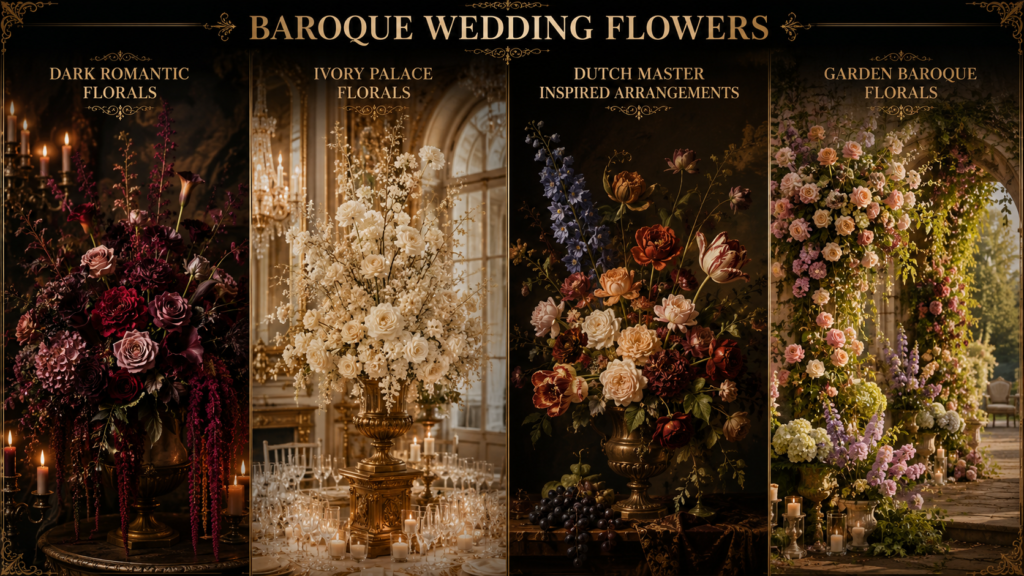
One of the reasons baroque wedding flowers remain so visually compelling is that they never feel flat. Every arrangement contains layers: movement, shadow, texture, ribbon, candlelight, and varying bloom sizes that create depth. Even the color palettes themselves often feel dimensional, combining warm neutrals with rich jewel tones or soft creams with dark accents.
Unlike ultra-trendy floral aesthetics that can quickly date wedding photography, baroque-inspired florals feel timeless because they are rooted in historical beauty and artistic references. They can be adapted for modern weddings, but they do not rely on novelty. The result is a wedding atmosphere that still feels breathtaking years later.
The magic of baroque wedding flowers lies in atmosphere. Guests may not remember every stem variety, but they will remember how the room felt.
Practical Floral Guide
How to Build a Cohesive Baroque Wedding Flower Design
Choose Statement Flowers
- Garden roses
- Ranunculus
- Orchids
- Peonies
- Tulips with movement
- Amaranthus
- Delphinium
- Scabiosa
Incorporate Texture
- Velvet ribbons
- Fruit accents
- Trailing greenery
- Antique vessels
- Layered candlelight
- Stone compotes
- Silk draping
- Gold accents
One of the biggest misconceptions about baroque wedding flowers is that bigger automatically means better. In reality, successful baroque floral styling depends on balance and intentional layering. Oversized centerpieces work best when paired with quieter moments throughout the space: delicate bud vases, soft candle groupings, or floral details repeated subtly across the venue. The goal is not to cover every possible surface in flowers. The goal is to create a rhythm that feels luxurious, immersive, and breathable.
The floral palette should also connect naturally to the venue. A heavily gilded ballroom can support dramatic jewel-toned florals and ornate arrangements, while a European garden estate may feel more beautiful with softer cream roses, olive branches, and airy movement. The best baroque wedding flowers always feel connected to the architecture and atmosphere around them. They should look like they belong in the room, not like they were imported from a completely different wedding mood board.
A cohesive baroque flower plan usually begins with one major visual statement, then repeats supporting details throughout the event. For example, a dramatic ceremony arch might introduce burgundy roses, cream orchids, and trailing greenery. Those same elements can then appear in the bridal bouquet, reception centerpieces, cake table florals, and stationery styling. Repetition is what makes the wedding feel designed rather than decorated.
Golden Rule
If your florals feel too perfect, symmetrical, or tightly controlled, they may lose the emotional richness that makes baroque wedding flowers feel luxurious. Movement and softness are essential.
Color Palettes
Elegant Color Palettes for Baroque Wedding Flowers
Burgundy & Antique Gold
Rich, dramatic, and especially beautiful for candlelit evening receptions, historic estates, velvet linens, and black-tie dress codes.
Champagne & Ivory
Soft and regal with timeless European elegance, ideal for palace-inspired weddings, formal ballrooms, and romantic spring celebrations.
Mocha & Dusty Rose
Romantic and editorial with softer femininity while still feeling richly layered, elegant, and quietly luxurious.
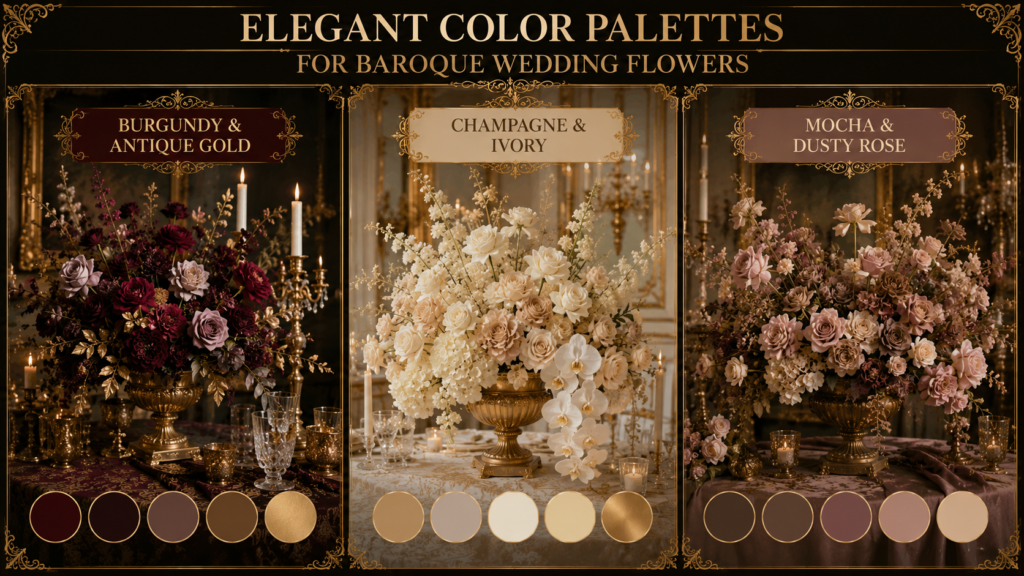
Color is where baroque wedding flowers become especially expressive. A dark palette feels sensual and theatrical, while an ivory palette feels refined and palace-like. Earthy rose, mocha, and copper shades create a warmer editorial mood, especially for autumn or winter weddings. The most important thing is avoiding palettes that feel too flat. Baroque floral design thrives on tonal variation: cream beside champagne, burgundy beside plum, rose beside taupe, gold beside aged brass.
For a sophisticated result, choose one dominant color family, one softening neutral, and one accent shade. This keeps the palette layered without becoming messy. For example, burgundy can be softened with ivory and elevated with antique gold. Dusty rose can be grounded with mocha and warmed with champagne. White florals can feel more baroque when paired with aged brass, heavy candlelight, and sculptural greenery.
Venue Styling
The Best Venues for Baroque Wedding Flowers
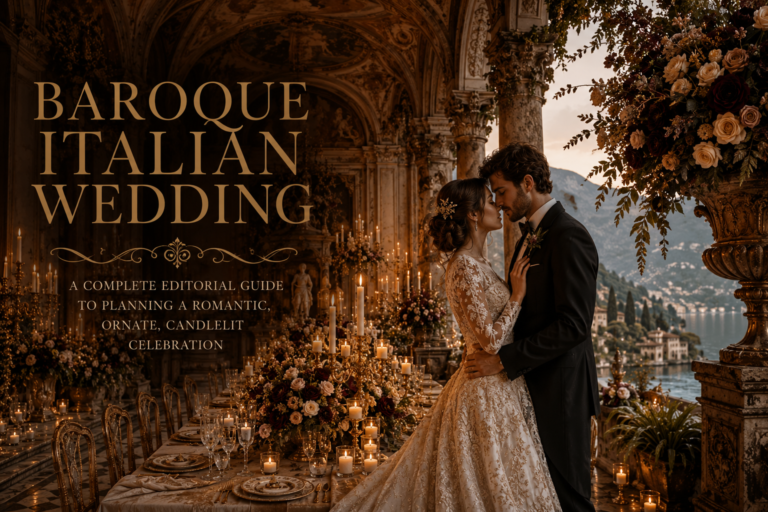
Baroque floral styling becomes most impactful when the venue itself supports the atmosphere. Historic mansions, European-inspired estates, gilded ballrooms, museums, castles, private clubs, and candlelit chapels naturally enhance the richness of the arrangements. These spaces usually already contain architectural detail, which means the flowers do not need to invent the entire mood from nothing. Instead, they amplify what is already there.
Garden venues are particularly stunning for softer baroque wedding flowers because nature itself becomes part of the layered visual story. Floral arches spilling with climbing roses, long reception tables under trees, and stone fountains surrounded by candlelight create a wedding atmosphere that feels almost cinematic. The key is to keep the arrangements romantic and slightly wild, rather than overly manicured.
If your venue is more contemporary, incorporating antique-inspired styling details becomes especially important. Velvet linens, gold candelabras, textured stationery, patterned china, and layered floral installations help bridge the gap between modern architecture and romantic baroque design. A clean white space can absolutely carry the look, but it needs depth, warmth, and softness so the florals do not appear overly theatrical against a blank background.
Ceremony & Reception
Bouquets, Ceremony Installations & Reception Florals
A true baroque bridal bouquet should feel lush, layered, and full of movement. Tight symmetrical bouquets often feel too controlled for this aesthetic. Instead, the most beautiful bouquets feature trailing silk ribbons, slightly asymmetrical silhouettes, layered textures, and romantic movement that looks almost effortless in photographs. The bouquet should feel substantial, but not heavy; dramatic, but still graceful enough to complement the bride rather than compete with her.
Ceremony florals can become incredibly dramatic within this style. Oversized floral meadows, sculptural arches, arrangements spilling down church steps, or urns placed at the entrance of an aisle create a sense of grandeur without requiring excessive décor elsewhere. In many luxury weddings, florals become the architecture of the event itself. They frame vows, guide the eye, and make the ceremony feel like a complete visual world rather than a simple setup.
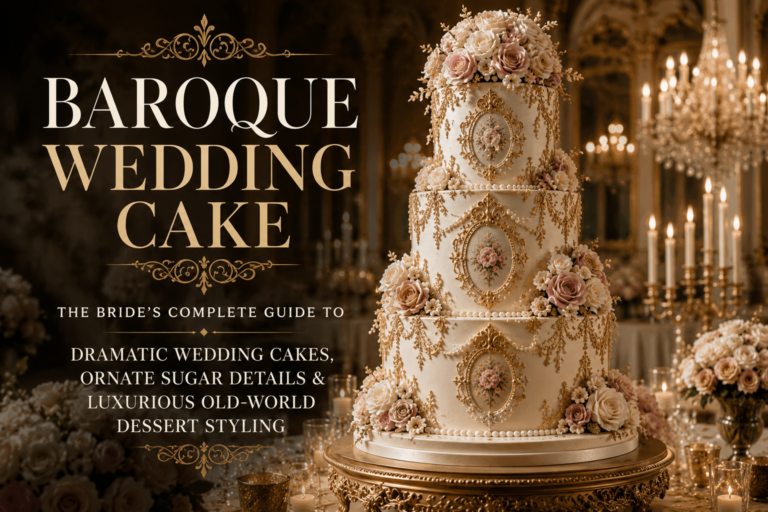
Reception styling is where baroque wedding flowers truly shine. Long candlelit tables overflowing with roses and greenery, layered fruit arrangements, antique vessels, and dramatic floral runners instantly transform a space into something immersive and emotionally rich. The atmosphere feels intimate, warm, and visually unforgettable. Low compotes work beautifully for guest conversation, while taller arrangements can be used strategically on welcome tables, bars, fireplace mantels, staircases, and statement corners.
Do not overlook secondary floral moments. A baroque wedding flower story becomes stronger when guests encounter details throughout the day: a floral-framed seating chart, a cake surrounded by roses and candles, small arrangements in powder rooms, trailing greenery on a bar, or a dramatic installation behind the sweetheart table. These details make the wedding feel immersive without relying only on one expensive centerpiece moment.
Baroque Floral Styling Checklist
- Start with one strong floral direction before choosing every detail.
- Repeat key blooms across the bouquet, ceremony, reception, and stationery styling.
- Use candlelight to bring out depth, shadow, and romance.
- Choose vessels that feel antique, sculptural, or textural.
- Balance large arrangements with quieter floral moments.
- Use ribbon, fruit, linens, and paper details to support the floral story.
Decor & Stationery
How to Pair Baroque Wedding Flowers With Decor, Fashion & Stationery
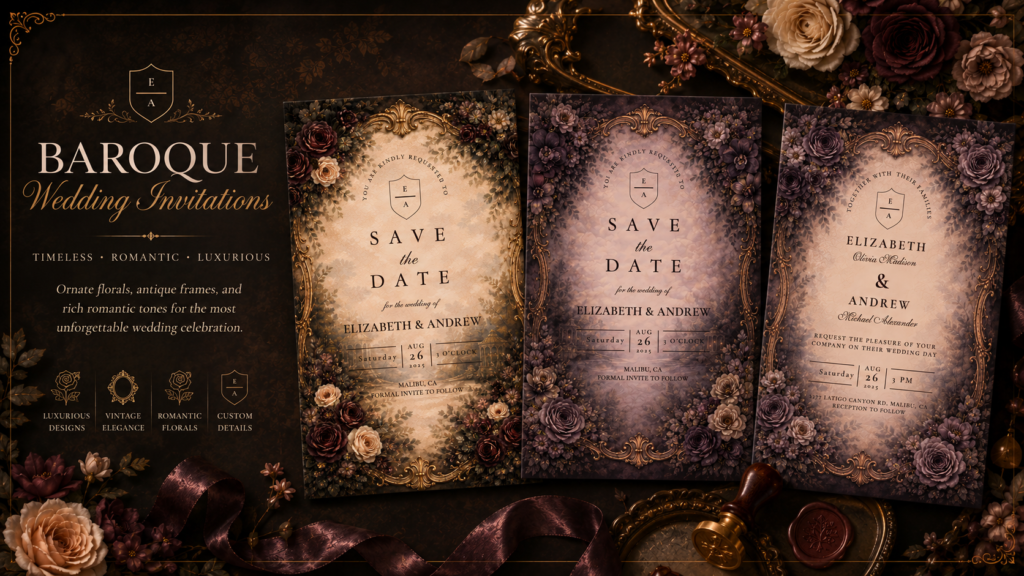
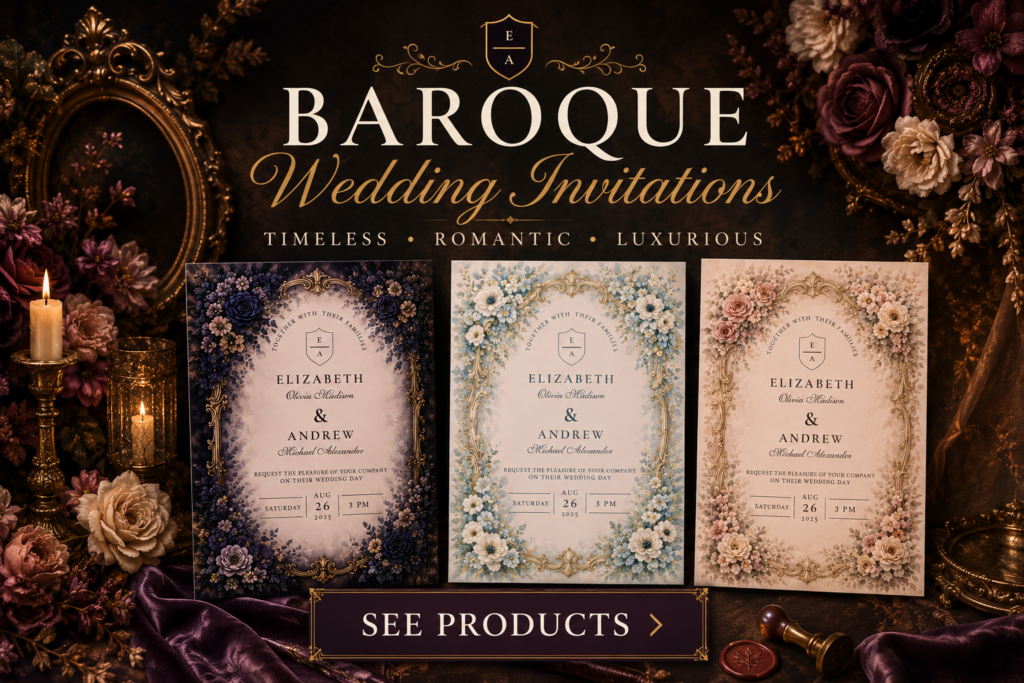
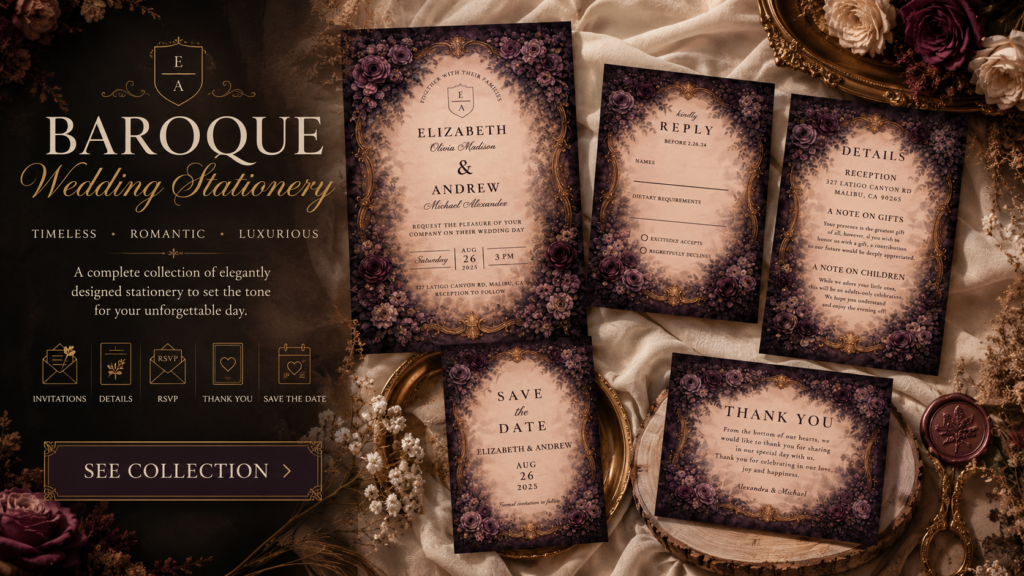
Baroque wedding flowers should never feel isolated from the rest of the wedding design. They are most successful when they are supported by stationery, fashion, tablescapes, and decorative details that carry the same sense of romance. Invitations might feature ornate typography, antique floral illustrations, deckled edges, wax seals, or gold accents. Menus can echo the floral palette through soft paper tones, burgundy ink, or delicate botanical borders.
Fashion also plays an important role. Structured gowns, lace sleeves, corset bodices, pearl details, long veils, dramatic gloves, and sculptural bridal accessories all pair beautifully with baroque florals. Bridesmaids can wear champagne, mocha, deep wine, olive, or black depending on the mood. The goal is not to make everyone look like they wandered out of a museum painting — although, frankly, that is not the worst problem to have — but to create visual harmony between floral drama and personal style.
For decor, focus on tactile materials. Velvet, silk, linen, aged brass, marble, stone, carved wood, crystal, and antique mirror finishes all support the richness of baroque wedding flowers. Avoid shiny modern finishes that feel too slick or commercial. This aesthetic works best when materials have softness, patina, and a sense of history.
The tablescape should feel layered but not crowded. A successful baroque reception table might include compote arrangements, taper candles, fruit accents, textured napkins, gold-rimmed glassware, and menus with romantic typography. Leave enough visual breathing room so the flowers can be appreciated. Luxury is not the same as clutter. The table should invite guests to linger, not make them wonder where to put their bread plate.
Planning Timeline
When to Plan Your Baroque Wedding Flowers
Because baroque wedding flowers are usually more complex than simple seasonal arrangements, they should be planned early. Ideally, your florist should be involved after you have chosen the venue, color palette, and general wedding atmosphere. This gives them enough context to design florals that support the full event rather than creating arrangements in isolation.
9–12 Months Before
Choose your floral direction, gather visual references, book your florist, and discuss the scale of ceremony and reception installations.
4–6 Months Before
Finalize key arrangements, bouquet style, centerpiece structure, vessels, candle plan, linens, and how florals will connect with stationery and decor.
In the final months, focus on refinement rather than reinvention. Confirm seasonal flower availability, review mockups if your florist offers them, and make sure your planner, photographer, stationer, and rental team understand the same visual direction. Baroque wedding flowers rely on cohesion, and cohesion relies on communication. Nothing ruins a romantic floral story faster than five vendors working from five different Pinterest boards.
Mistakes to Avoid
Common Mistakes to Avoid With Baroque Wedding Flowers
- Using florals that are too stiff or symmetrical.
- Ignoring candlelight and relying only on flowers for atmosphere.
- Choosing overly bright colors that compete with the romantic mood.
- Using trendy minimalist vessels that clash with the aesthetic.
- Forgetting texture and layering.
- Overcrowding every surface instead of creating visual balance.
- Mixing too many unrelated design styles together.
One of the easiest ways to lose the elegance of baroque wedding flowers is by confusing “luxurious” with “overdone.” The most successful weddings within this aesthetic still maintain intentionality and restraint. Every arrangement should contribute to the atmosphere rather than compete for attention. If every corner screams, nothing feels special. The drama needs contrast, or it becomes visual noise wearing a very expensive outfit.
Another common mistake is neglecting lighting. Candlelight is essential for bringing depth and emotion into baroque floral styling. Without layered warm lighting, even the most beautiful arrangements can feel flat or disconnected from the romantic atmosphere couples are usually trying to create. Work with your planner or lighting team to make sure floral moments are illuminated softly and intentionally, especially during the reception.
Finally, avoid choosing flowers only because they are expensive or fashionable. Baroque wedding flowers are not defined by price tags; they are defined by composition, mood, texture, movement, and harmony. A thoughtful arrangement of roses, tulips, greenery, and candlelight can feel more luxurious than an arrangement stuffed with premium blooms but lacking emotion. The design should feel like a story, not a receipt.
Final Thoughts
Baroque Wedding Flowers Are About Emotion, Atmosphere & Timeless Romance
The beauty of baroque wedding flowers is that they create more than decoration. They create mood. They soften architecture, deepen candlelight, elevate photography, and transform a wedding into something guests genuinely experience rather than simply attend. The atmosphere becomes immersive, emotional, and unforgettable, which is exactly why this floral style continues to feel so compelling for modern luxury weddings.
Whether you lean toward dark romantic florals, European garden elegance, Dutch Master-inspired arrangements, or softer ivory palettes, the key is intentional richness. Texture, movement, layered candlelight, antique-inspired styling, and emotional visual storytelling are what truly define this floral aesthetic. The most successful baroque weddings do not copy history exactly; they reinterpret it with personal warmth, modern refinement, and a clear sense of place.
In a wedding world increasingly filled with copy-and-paste trends, baroque wedding flowers stand apart because they feel personal, artistic, and timeless. They remind people that weddings are not only events — they are experiences designed to be felt emotionally, remembered visually, and treasured for decades. When designed with restraint, romance, and atmosphere, baroque florals do not simply decorate a wedding day. They give it a soul.