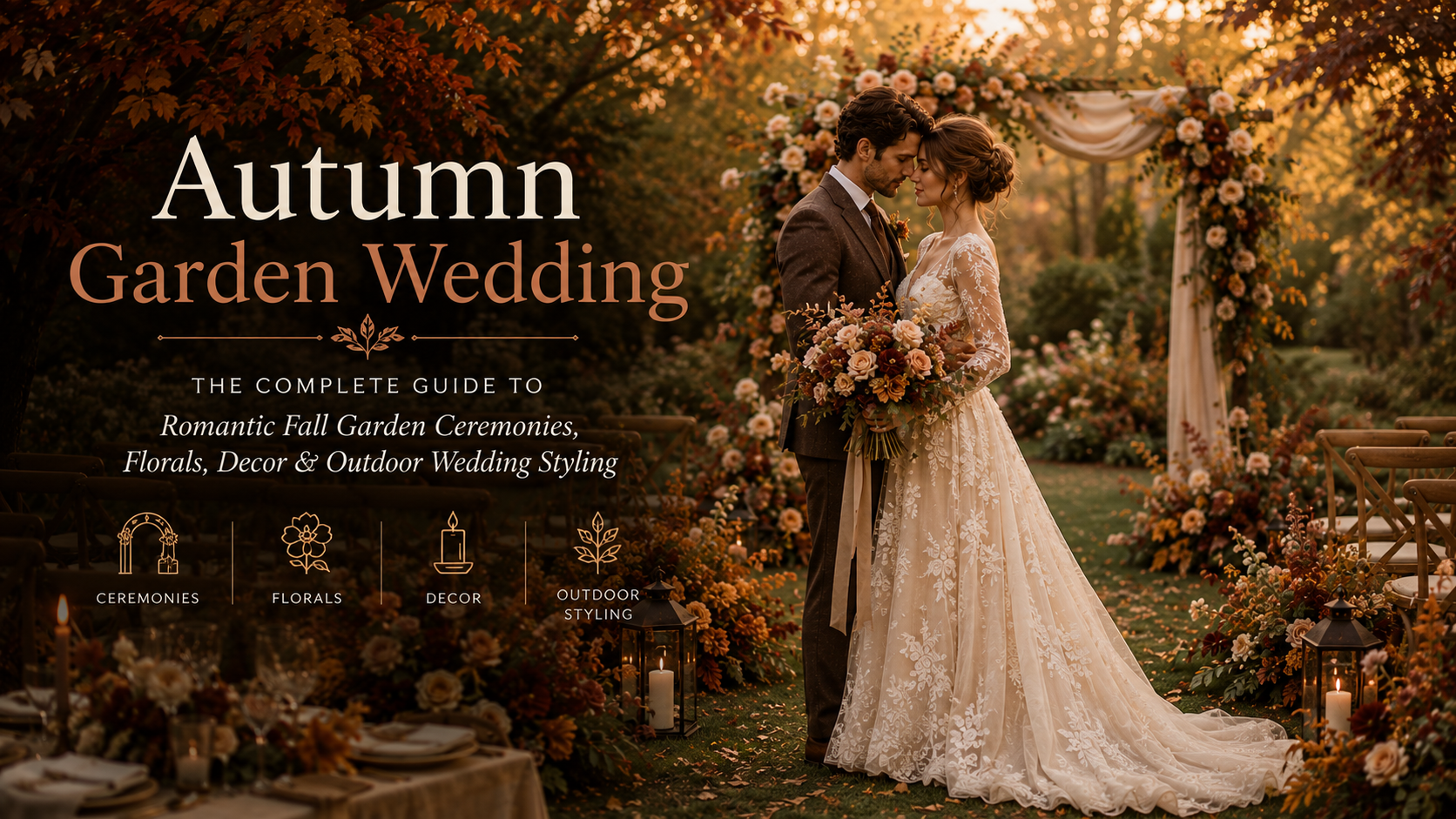
Autumn Garden Wedding – The Complete Guide to Romantic Fall Garden Ceremonies, Florals, Decor & Outdoor Wedding Styling
Autumn Garden Wedding
The Complete Guide to Romantic Fall Garden Ceremonies, Florals, Decor & Outdoor Wedding Styling
From golden-hour garden ceremonies and seasonal flowers to elegant outdoor decor, weather planning, bridal fashion, lighting, stationery, menus, and guest comfort — this is the bride’s complete guide to planning an autumn garden wedding that feels romantic, natural, and beautifully intentional.
An autumn garden wedding has a rare kind of beauty: the softness of a romantic outdoor ceremony combined with the depth of fall color, candlelight, textured florals, and the quiet magic of a garden slowly changing with the season.
Introduction
Why an Autumn Garden Wedding Feels So Romantic
An autumn garden wedding brings together two of the most romantic wedding aesthetics: the natural softness of a garden celebration and the rich, atmospheric beauty of fall. The garden gives the day movement, greenery, florals, winding paths, and open air. Autumn adds golden light, deeper color, cooler evenings, textured foliage, and a sense of intimacy that makes even a large wedding feel personal.
For the bride, planning an autumn garden wedding is not simply about choosing an outdoor venue and adding seasonal flowers. It requires a thoughtful balance between beauty and practicality. The ceremony may happen outside, but the weather may shift. The garden may look breathtaking in the afternoon, but the light may fade earlier than expected. The florals may feel abundant and romantic, but they need to work with the natural landscape rather than fight against it.
The best autumn garden weddings feel effortless, but they are never accidental. They are carefully layered with color, texture, timing, lighting, comfort, and atmosphere. The bride’s dress, the bridesmaid palette, the groom’s suit, the ceremony flowers, the aisle styling, the reception tables, the stationery, and even the menu should all feel like they belong inside the same seasonal garden story.
This guide is written from the bride’s perspective: how to choose the right autumn garden venue, how to style the ceremony, how to select seasonal flowers, how to build a refined color palette, how to plan for weather, how to dress the bridal party, how to design the reception, and how to make the entire wedding feel romantic, natural, elegant, and deeply memorable.

Garden Wedding Trends
The Biggest Autumn Garden Wedding Trends
The most beautiful autumn garden wedding trends are moving away from overly rustic styling and toward romantic, editorial garden design. Brides are choosing natural ceremony backdrops, garden-inspired floral meadows, textured tablescapes, candlelit outdoor dinners, soft draping, seasonal stationery, and color palettes that feel drawn from the garden itself rather than forced onto it.
01
Garden Meadow Ceremonies
Instead of heavy arches, brides are choosing floral meadows that look as if they are growing naturally from the aisle and ceremony space. This creates softness, movement, and a deeply romantic garden atmosphere.
02
Candlelit Outdoor Dining
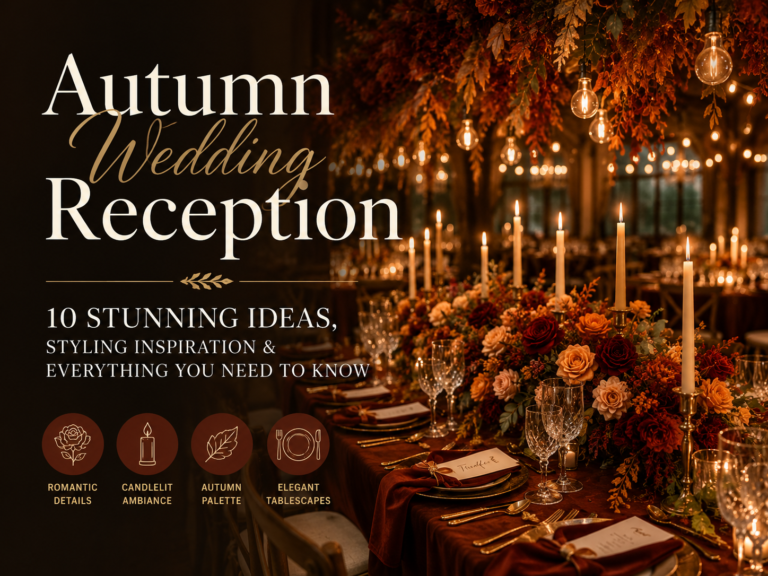
Autumn garden receptions are becoming warmer and more intimate, with long tables, taper candles, lanterns, textured linens, seasonal flowers, and dinner-party styling beneath trees or open-air tents.
03
Layered Seasonal Florals
Autumn garden florals are becoming softer and more textured, combining late-season roses, dahlias, foliage, berries, grasses, and warm botanical tones that feel natural to the setting.
04
Soft Garden Fashion
Brides are choosing gowns, veils, bridesmaid dresses, and groom styling that feel romantic but practical for the garden setting: flowing fabrics, warm tones, elegant shoes, and layered textures.

For the bride, the key trend is not simply making the wedding look seasonal. It is making the garden feel intentional. The ceremony should feel as if it belongs among the trees and flowers. The reception should feel warm enough for autumn evenings. The floral design should look connected to the natural surroundings rather than imported from a completely different visual world. The entire wedding should feel rooted in the garden, not merely placed on top of it.
The biggest mistake is over-styling. A garden already has beauty, texture, movement, and atmosphere. The bride does not need to decorate every branch and bench as if the garden failed the assignment. The most elegant approach is to enhance what already exists: frame the ceremony, soften the aisle, layer the tables, warm the evening with light, and let the natural setting breathe.
“The most beautiful autumn garden wedding does not compete with nature. It edits, frames, softens, and illuminates what the season already does beautifully.”
— The Garden Wedding Edit
Practical Guide
How to Plan an Autumn Garden Wedding Ceremony
The ceremony is the emotional center of an autumn garden wedding, and it should be planned with both romance and realism. A garden ceremony can be breathtaking, but it depends on timing, layout, weather, guest comfort, sound, footwear, seating, and photography. The bride should think about how the ceremony will feel from every angle: walking down the aisle, standing at the altar, looking back at the guests, and seeing the photos afterward.
Ceremony Layout
- Choose a natural focal point such as a tree, garden gate, fountain, or floral arch.
- Make sure the aisle feels generous enough for the dress, veil, and bouquet.
- Use floral meadows or low arrangements to frame the aisle without blocking views.
- Consider where the sun will be during the ceremony and portraits.
Guest Comfort
- Offer wraps, blankets, or heaters if the ceremony will continue into cooler evening hours.
- Provide stable paths or flooring if the garden surface is uneven.
- Have a clear weather backup that still feels beautiful, not like a punishment.
- Plan sound carefully so guests can actually hear the vows.
The bride should also consider the ceremony time carefully. Autumn light is gorgeous, but it fades quickly. A ceremony scheduled too late may leave almost no time for portraits before dark. A ceremony scheduled too early may feel bright and less atmospheric. The sweet spot often depends on the venue, sunset time, and photography plan. The goal is to give the ceremony beautiful light while still protecting enough daylight for couple portraits, family photos, and bridal party images.
A garden wedding also needs a practical shoe plan. Grass, gravel, and soft earth are not kind to delicate stilettos. The bride, bridesmaids, and guests may need block heels, flats, heel protectors, or designated pathways. Nothing ruins a graceful entrance quite like sinking into the lawn with every step. Very romantic in theory. In reality, a slow-motion battle with the ground.
The Garden Ceremony Rule
Plan the ceremony for beauty, but also for bodies, shoes, sound, light, and weather. A garden wedding should feel effortless to guests, which means the bride and planner have already solved the unglamorous details behind the scenes.
Color Palette
Autumn Garden Wedding Color Palettes
An autumn garden wedding color palette should feel connected to both the garden and the season. The most elegant palettes avoid harsh orange overload and instead use softened, layered tones: olive, sage, moss, warm ivory, copper, champagne, dusty rose, burgundy, taupe, mocha, and antique gold. These colors feel natural outdoors while still bringing the richness of fall.
Olive
Copper
Warm Ivory
Dusty Rose
Mocha
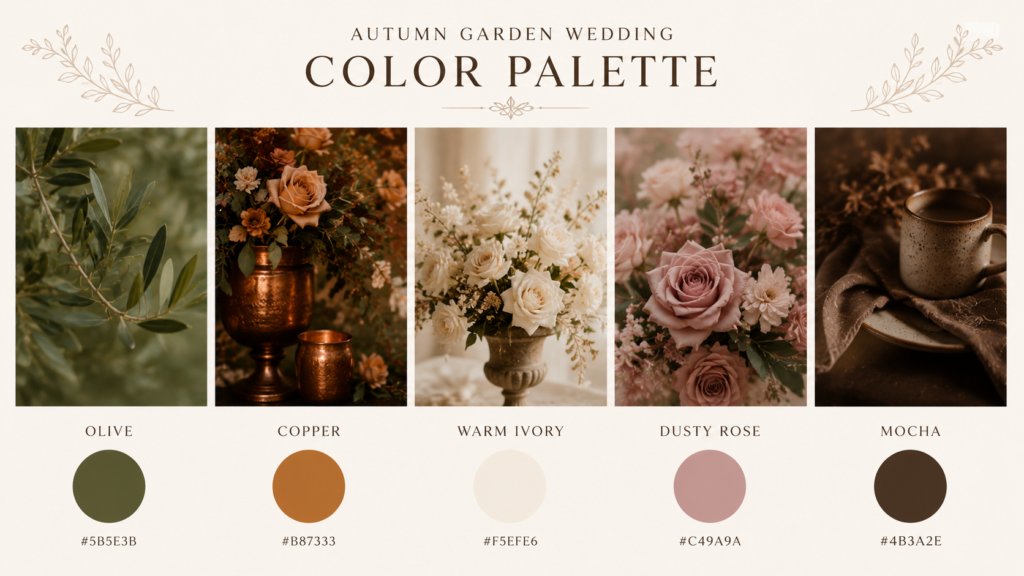
For a soft autumn garden wedding, the bride might choose olive, warm ivory, dusty rose, and antique gold. For a moodier garden celebration, burgundy, moss, mocha, and copper create more depth. For a refined minimalist garden wedding, sage, taupe, champagne, and cream feel elegant without becoming overly seasonal. The palette should look beautiful in the garden’s natural light, not just on a mood board.
The bride should also consider how the color palette will appear in photography. Deep colors can look stunning against greenery, but if everything is dark — dresses, flowers, linens, suits, and decor — the gallery can feel heavy. A lighter neutral, metallic accent, or soft floral tone gives the eye somewhere to rest. Autumn garden wedding styling needs contrast and breathing room. Otherwise, everything becomes a very expensive shadow.
Flowers & Decor
Autumn Garden Wedding Flowers & Decor Ideas
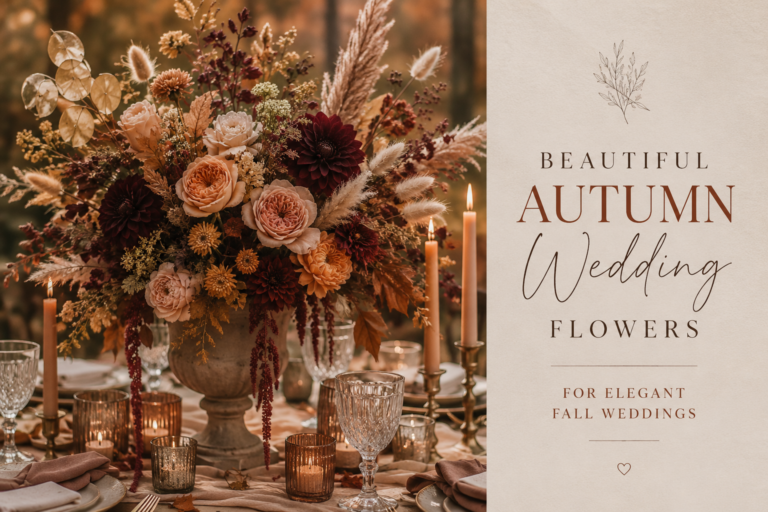
Flowers are the heart of an autumn garden wedding. The floral design should feel abundant but not artificial, seasonal but not overly themed, romantic but not chaotic. Garden weddings naturally suit arrangements that appear slightly loose, layered, and growing rather than stiffly arranged. Autumn adds depth through late-season blooms, foliage, berries, seed pods, dried grasses, and richer color variation.
The best flowers for an autumn garden wedding often include dahlias, garden roses, ranunculus, cosmos, scabiosa, amaranthus, chrysanthemums, Japanese anemones, berries, olive branches, copper beech foliage, and dried grasses. These flowers bring movement and texture, which is especially important outdoors where the arrangements need to hold their own against the natural setting.
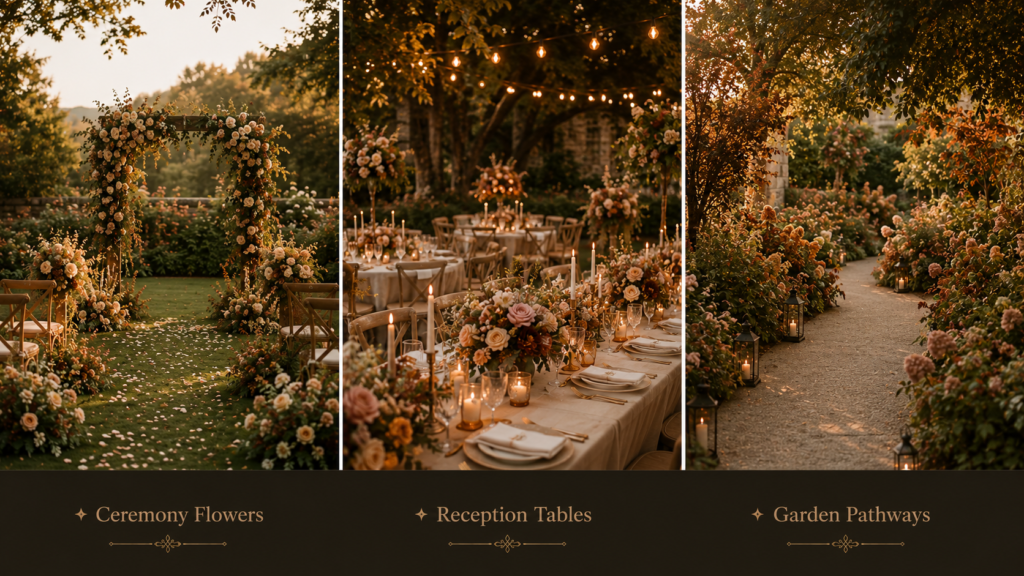
✦ Ceremony Flowers
Use floral meadows, garden arches, aisle clusters, or ground arrangements that look natural within the landscape rather than overly structured.
✦ Reception Tables
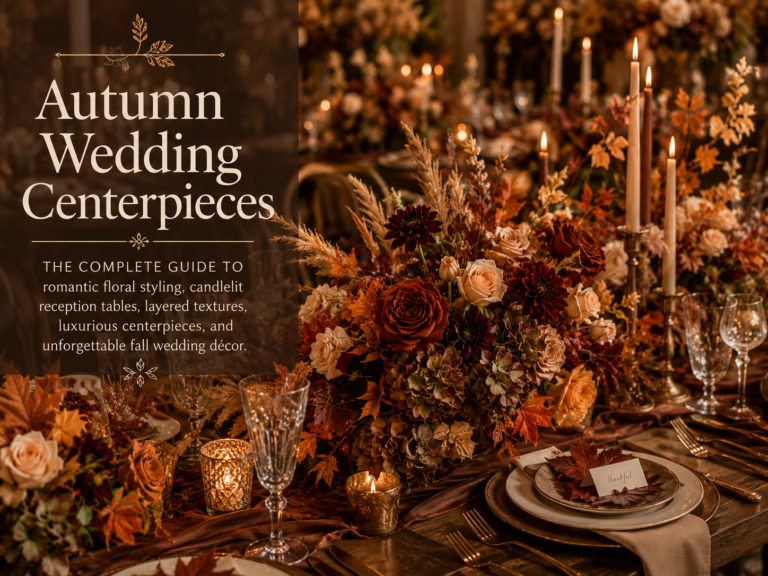
Layer taper candles, linen napkins, seasonal fruit, delicate menus, botanical arrangements, and warm glassware for a refined garden dinner-party feeling.
✦ Garden Pathways
Lanterns, petals, low florals, or small arrangements along paths can guide guests while making the garden feel intentionally designed.
“Autumn garden flowers should feel gathered from the edge of the season — soft, textured, slightly wild, and deeply romantic.”
— Seasonal Floral Styling Notes
Fashion & Beauty
Bridal Fashion for an Autumn Garden Wedding
Bridal fashion for an autumn garden wedding should feel romantic, natural, and practical enough for an outdoor setting. The bride can absolutely wear a dramatic gown, but the dress should work with garden paths, grass, cooler air, and movement. Flowing skirts, soft sleeves, lace textures, delicate embroidery, cape veils, and romantic trains all photograph beautifully in autumn gardens.
The bride should think carefully about fabrics. Heavy satin can look extraordinary against fall foliage, but it may feel formal for a very relaxed garden venue. Lace and tulle feel romantic and organic, while crepe or silk can suit a more modern garden wedding. Sleeves are especially beautiful in autumn, not only for warmth but also for the soft, graceful lines they create in outdoor photography.
Bride
Soft lace, long sleeves, flowing skirts, floral embroidery, cape veils, and textured gowns suit the romantic garden setting beautifully.
Bridesmaids
Olive, sage, dusty rose, copper, champagne, and mocha bridesmaid dresses feel natural, seasonal, and flattering outdoors.
Groom
Olive, espresso, charcoal, taupe, or brown suits work beautifully for autumn garden weddings, especially with textured ties and seasonal boutonnières.
Hair and makeup should also suit the garden atmosphere. Soft waves, low buns, floral pins, luminous skin, warm eye makeup, rosy cheeks, and natural lip tones photograph beautifully outdoors. The goal is polish without stiffness. A garden wedding can carry elegance, but it should not feel like everyone’s hair was lacquered into fear. Movement is part of the charm.
Reception & Lighting
Autumn Garden Wedding Reception, Lighting & Guest Experience
The reception is where an autumn garden wedding becomes truly atmospheric. As the light fades, the garden needs warmth, structure, and glow. Taper candles, lanterns, string lights, chandeliers, fire pits, and soft uplighting can turn the reception into a romantic evening celebration rather than a dark outdoor dinner where everyone quietly wonders where their fork went.
- Use long tables for an elegant garden dinner-party feeling.
- Layer candles, lanterns, and warm overhead lighting.
- Offer blankets, shawls, heaters, or fire pits for cooler evenings.
- Choose seasonal menus with roasted vegetables, warm starters, and spiced desserts.
- Keep signage and stationery consistent with the garden palette.
The guest experience matters enormously outdoors. Autumn temperatures can feel charming at 4 p.m. and surprisingly rude by 8 p.m. A bride should consider guest warmth, restroom access, pathways, tenting, sound, lighting, and food service flow. A romantic garden reception should make guests feel held by the atmosphere, not abandoned in a decorative forest with champagne.
“Outdoor romance becomes luxury when guests are comfortable enough to enjoy it.”
Stationery & Menu
Stationery, Menu & Seasonal Details
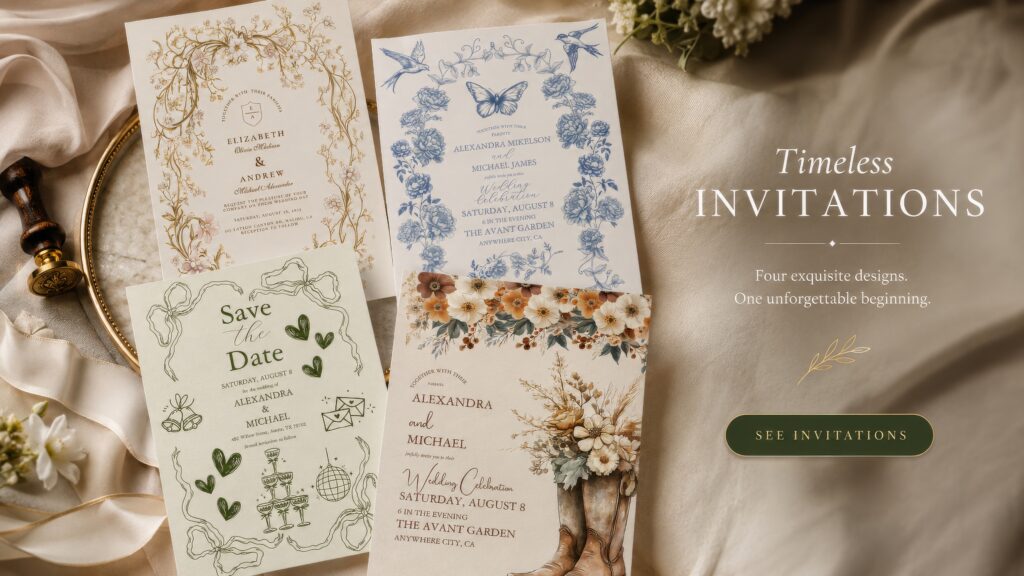
Stationery is one of the most elegant ways to introduce an autumn garden wedding before guests arrive. Invitations, menus, place cards, seating charts, welcome signs, and thank-you notes can all carry the garden mood through botanical illustrations, warm ivory paper, sage green details, copper accents, pressed-flower motifs, wax seals, and refined serif typography.
The menu should feel seasonal without becoming heavy. An autumn garden wedding can include warm canapés, roasted vegetable starters, herbed mains, fig and goat cheese bites, mushroom dishes, pear desserts, apple cakes, warm bread, signature cocktails, and late-night coffee or hot chocolate. The goal is comfort with elegance, not Thanksgiving cosplay. Nobody needs a decorative turkey situation at a wedding unless they specifically asked for chaos.
Mistakes To Avoid
Autumn Garden Wedding Mistakes Brides Should Avoid
The biggest mistake brides make with an autumn garden wedding is assuming the setting will do all the work. A beautiful garden helps, but it does not solve timing, temperature, lighting, sound, accessibility, or weather. The most successful garden weddings are romantic because they are carefully planned, not because everyone simply hoped the trees would handle logistics.
- Scheduling the ceremony too close to sunset.
- Ignoring rain, wind, mud, or cold weather plans.
- Choosing shoes that do not work on grass or gravel.
- Over-decorating a garden that already has natural beauty.
- Using flowers that clash with the existing landscape.
- Forgetting lighting once the sun goes down.
Another common mistake is treating the garden as a blank canvas. It is not blank. It already has color, structure, plants, pathways, shadows, and personality. The bride should work with the garden’s existing mood rather than forcing a completely unrelated theme onto it. A manicured rose garden, wild meadow, historic estate garden, and woodland ceremony space all need different styling approaches.
Finally, brides should avoid leaving comfort details until the last minute. Guests remember beauty, but they also remember being cold, lost, muddy, or unable to hear the ceremony. Elegant planning includes the glamorous and the boring. Unfortunately, chairs, paths, heaters, lighting, and backup plans are not sexy, but neither is chaos in formalwear.
Final Thoughts on Autumn Garden Weddings
An autumn garden wedding is beautiful because it combines natural romance with seasonal depth. The garden brings softness, movement, greenery, and life. Autumn brings warmth, texture, candlelight, richer colors, and a quieter emotional atmosphere. Together, they create a wedding style that feels timeless, intimate, and deeply poetic.
The most unforgettable autumn garden weddings are not the ones with the most decor or the most obvious fall details. They are the ones where every element feels considered: the ceremony timing, the flowers, the bride’s dress, the guests’ comfort, the lighting, the menu, the stationery, and the way the entire celebration moves gently from golden afternoon into candlelit evening.
When planned with intention, an autumn garden wedding feels less like an event placed outdoors and more like a love story unfolding naturally inside the season itself.