Autumn Wedding Suit – The Complete Groom’s Guide to Fall Wedding Style, Colors & Formalwear
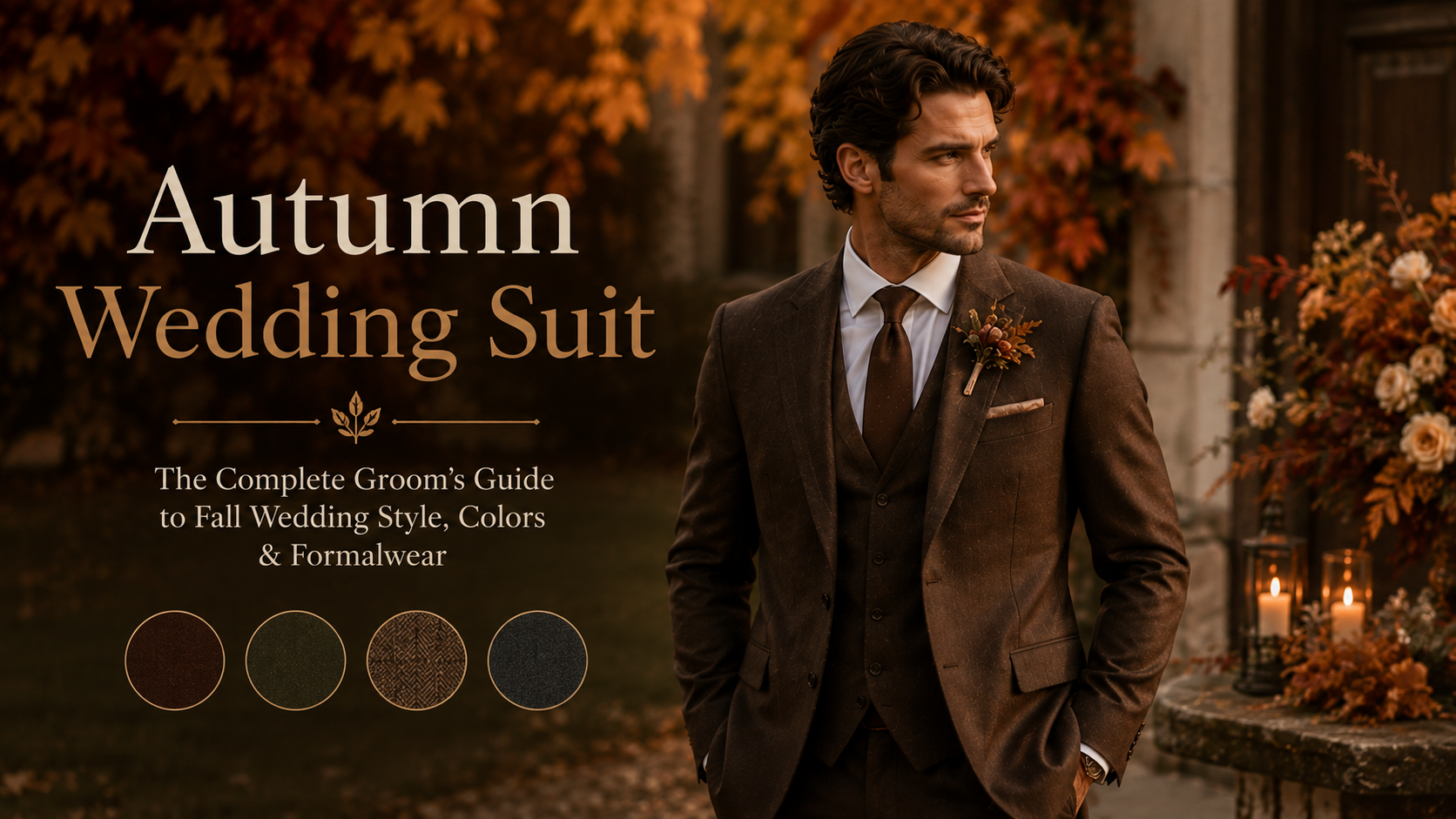
Autumn Wedding Suit
The Complete Groom’s Guide to Fall Wedding Style, Colors & Formalwear
From espresso suits and olive tailoring to velvet dinner jackets, seasonal boutonnières, groom accessories, groomsmen coordination, and venue-appropriate styling — this is the complete guide to choosing an autumn wedding suit that feels polished, masculine, romantic, and perfectly connected to the season.
An autumn wedding suit should do more than simply look formal. It should belong to the season, flatter the groom, complement the bride, work with the venue, and photograph beautifully against candlelight, textured florals, rich foliage, and the warm architecture of a fall wedding day.
Introduction
Why the Autumn Wedding Suit Matters So Much
The autumn wedding suit is one of the most important styling decisions for the groom, yet it is often treated as a last-minute formality. The bride’s gown receives mood boards, fittings, fabric conversations, accessories, hair trials, and emotional analysis worthy of a small royal court. The groom’s suit, meanwhile, is sometimes reduced to “navy or black?” — which is frankly rude to tailoring. For an autumn wedding, the groom’s look deserves much more intention.
Fall is a season of texture, depth, and atmosphere. The colors are richer, the light is softer, the receptions often move into candlelit evening earlier, and the overall mood of the wedding naturally becomes more cinematic. A groom’s suit should respond to that environment. The right autumn wedding suit can make the groom look polished, grounded, romantic, and completely aligned with the wedding’s visual story.
For the bride or couple planning the wedding, the suit is not an isolated choice. It should work with the bridal gown, bridesmaid dresses, florals, venue, stationery, decor, and photography style. A deep olive suit can look extraordinary beside rust bridesmaid dresses and warm autumn florals. A black tuxedo may be perfect for a candlelit ballroom. A brown wool suit may suit a countryside ceremony beautifully, while a velvet dinner jacket can turn an estate reception into something editorial and unforgettable.
This guide explores how to choose an autumn wedding suit with the same care and visual intelligence given to the rest of the wedding. From suit colors and fabrics to groom accessories, groomsmen coordination, boutonnières, venue matching, shoes, layering, weather planning, and photography, the goal is simple: help the groom look intentional, elegant, comfortable, and deeply connected to the season.
Suit Trends
The Biggest Autumn Wedding Suit Trends
Autumn groom style in 2026 is moving toward texture, warmth, and individuality. The most stylish grooms are not simply wearing whatever standard rental suit appears first on the rack. They are choosing tailoring that feels connected to the wedding setting, the season, and their own personality. The result is formalwear that looks refined without feeling stiff or generic.
01
Espresso & Chocolate Suits
Deep brown suits feel luxurious, warm, and modern for autumn weddings. Espresso tailoring pairs beautifully with ivory gowns, rust florals, champagne bridesmaid dresses, and candlelit receptions.
02
Deep Olive Tailoring
Olive green suits are one of the most elegant fall choices for grooms. They feel seasonal without being obvious and work especially well for vineyard, estate, garden, and woodland weddings.
03
Velvet Dinner Jackets
Velvet jackets bring instant drama to evening autumn weddings. Black, forest green, burgundy, espresso, and midnight tones feel especially strong for formal receptions.
04
Textured Wool & Tweed
Wool, flannel, and subtle tweed textures give autumn wedding suits depth and character. They are ideal for countryside weddings, mountain venues, and relaxed formal celebrations.

The biggest shift in groom fashion is that the suit is no longer expected to disappear quietly into the background. It can be a central design element without competing with the bride. A well-chosen autumn wedding suit can echo the season’s palette, ground the ceremony photos, and create a strong visual contrast beside the bride’s gown. This is especially important in fall, when wedding photography often includes warm foliage, darker florals, textured interiors, and candlelit evening scenes.
The key is intention. A groom should not choose a brown suit simply because it is autumn, or a velvet jacket simply because it looks dramatic online. The suit should belong to the venue, the time of day, the formality level, the bride’s gown, and the overall wedding palette. Otherwise, the groom can accidentally look like he wandered in from another event — possibly a very stylish whiskey tasting, but still another event.
“The best autumn wedding suit does not simply dress the groom. It anchors the entire wedding palette with confidence, texture, and quiet seasonal elegance.”
— The Groom Styling Edit
Practical Guide
How to Choose an Autumn Wedding Suit for the Groom
Choosing an autumn wedding suit should begin with the wedding’s full visual direction. Before deciding on color, fabric, tie, shoes, or boutonnière, the couple should consider the venue, formality level, season, weather, bridal gown style, bridesmaid dresses, floral palette, and photography mood. The groom’s suit should not feel like an afterthought; it should look like it was always part of the design plan.
Start With the Formality
- Black-tie weddings suit tuxedos, velvet dinner jackets, and polished formal shoes.
- Estate weddings suit espresso, charcoal, olive, or black tailoring with refined accessories.
- Vineyard weddings work beautifully with brown, taupe, olive, or warm grey suits.
- Rustic countryside weddings can handle wool, tweed, flannel, and relaxed tailoring.
Match the Wedding Palette
- Rust bridesmaid dresses pair beautifully with olive, espresso, or charcoal suits.
- Champagne bridesmaids allow the groom to wear deeper brown, black, or forest green.
- Burgundy florals work well with black, deep grey, chocolate, or navy tailoring.
- Warm neutral decor pairs best with taupe, camel, brown, or soft charcoal suits.
The groom’s suit should also be considered alongside the bride’s gown. A highly formal satin ball gown may call for a tuxedo, velvet jacket, or sharp black tailoring. A romantic lace gown may pair beautifully with softer wool, deep olive, or warm charcoal. A minimalist silk dress can handle a very clean black suit, an espresso suit, or an elegant double-breasted jacket. The visual relationship matters because the couple will be photographed together constantly.
Fit is just as important as color. A perfectly chosen autumn wedding suit can still fail if it fits poorly. Sleeves should be tailored, trousers should break correctly, shoulders should sit cleanly, and the jacket should close without pulling. The groom does not need to look like a fashion model. He does need to look like the suit belongs to him and not to a cousin who lent it in a parking lot.
The Groom Styling Rule
The groom should look like the most polished version of himself, not like he was dressed by a trend forecast against his will. Choose a suit that works with the season, but never forget the person wearing it. Confidence photographs better than forced fashion every single time.
Color Palette
The Best Autumn Wedding Suit Colors
Autumn wedding suit colors should feel rich without overpowering the rest of the wedding. The groom’s suit does not have to match the flowers or bridesmaid dresses exactly, but it should sit comfortably within the palette. Think of the suit as the grounding element. It creates contrast, structure, and visual weight beside softer bridal details.
Espresso
Deep Olive
Charcoal
Copper Brown
Warm Taupe
Black is still a strong choice for autumn weddings, especially formal evening celebrations, but it is not the only elegant option. Espresso, charcoal, deep olive, warm taupe, chocolate, and muted navy can feel more connected to fall while still looking polished. The right color depends on the venue and the wedding’s overall palette. A forest wedding might call for olive or brown. A black-tie ballroom may demand black or midnight. A vineyard celebration may feel best with taupe, mocha, or warm grey.
Couples should also consider how the suit color will photograph. Very dark suits can look beautiful in daylight but may lose detail in dim reception rooms. Light taupe suits look elegant outdoors but may feel too casual for evening black-tie. Green suits can be stunning, but the undertone matters. Too bright and the groom looks festive in the wrong holiday. Too muted and the suit becomes quietly sophisticated. Tailoring is a game of inches and undertones. Annoying? Yes. Worth it? Very much.
Venue Matching
Autumn Wedding Suits by Venue Style
The venue should guide the groom’s suit more than almost anything else. A suit that looks perfect in a candlelit manor may feel too formal for a relaxed vineyard. A tweed suit that looks charming in the countryside may feel completely wrong in a polished ballroom. Matching the autumn wedding suit to the venue helps the entire day feel cohesive and intentional.
🏛️
Estate Weddings
Choose black, espresso, charcoal, or velvet tailoring with polished shoes, refined accessories, and a formal boutonnière.
🍷
Vineyard Weddings
Brown, olive, taupe, and warm grey suits feel natural, elegant, and beautifully connected to harvest-season scenery.
🌲
Woodland Weddings
Deep olive, textured wool, tweed, or dark brown tailoring works beautifully with forest settings and organic florals.
🕯️
Ballroom Weddings
Black tuxedos, velvet dinner jackets, formal bow ties, and glossy shoes create the strongest polished evening look.
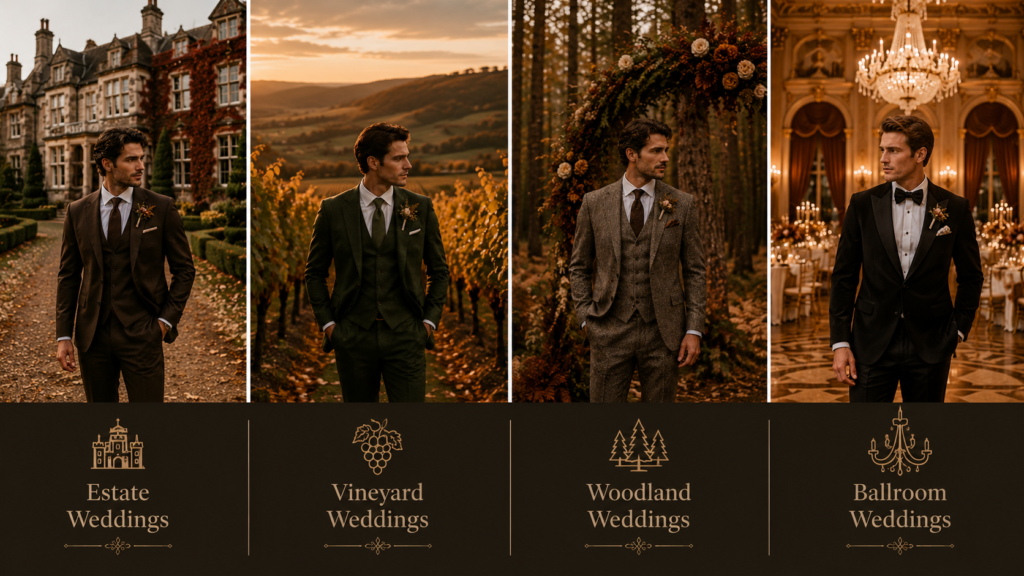
A couple should also think about photography locations. If the groom will be photographed outside in golden leaves, a warm brown or olive suit may feel more integrated than a stark black tuxedo. If portraits are taking place in a marble hallway or candlelit ballroom, black formalwear may look much stronger. The suit should not only look good in person; it should make sense in the images that will define the day afterward.
Fabrics & Layering
The Best Fabrics for an Autumn Wedding Suit
Fabric is one of the easiest ways to make an autumn wedding suit feel seasonal without relying on obvious colors. Fall tailoring can carry more texture than summer tailoring. Wool, flannel, velvet, brushed cotton, cashmere blends, and subtle tweed all bring depth to the groom’s look. They also photograph beautifully because they interact with light in a more dimensional way than flat synthetic fabrics.
Wool
Classic, elegant, breathable, and versatile. Wool suits are ideal for most autumn weddings, especially estate, city, and formal venues.
Velvet
Best for evening receptions, black-tie weddings, and dramatic groom styling. Velvet adds richness but should be used intentionally.
Tweed & Flannel
Textured, warm, and countryside-friendly. These fabrics suit rustic venues, woodland weddings, and cooler outdoor ceremonies.
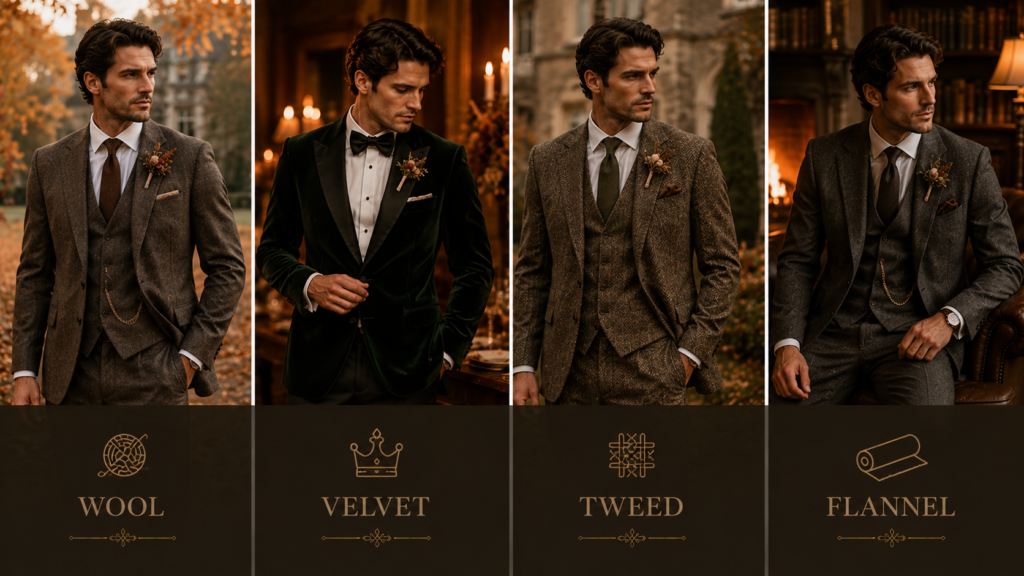
Layering also matters. A waistcoat can add formality, warmth, and structure. A turtleneck may work for a very modern elopement, but not for every wedding. A scarf or overcoat can be elegant for portraits in colder weather, especially if the celebration includes outdoor photos. The groom should feel comfortable throughout the day, not heroic for surviving it. Bravery is for vows, not freezing in a thin linen suit in October.
Groom Details
Accessories, Shoes & Boutonnières for the Groom
The accessories are what make an autumn wedding suit feel complete. A tie, bow tie, pocket square, shoes, cufflinks, watch, boutonnière, and even socks can either elevate the look or make it feel visually unfinished. For fall weddings, accessories should feel warm, textured, and intentional without becoming costume-like.
Ties & Bow Ties
Choose silk, wool, or velvet textures in espresso, rust, black, forest green, burgundy, or antique gold depending on formality.
Shoes
Brown leather, black patent, oxblood, or suede shoes can all work depending on the suit. The shoe should match the formality, not just the color.
Boutonnières
Use small seasonal florals, berries, dried textures, dark greenery, or a single refined bloom that echoes the bridal bouquet.
The boutonnière is especially important because it visually connects the groom to the flowers. It should never look like a random floral afterthought pinned onto a lapel by someone in a hurry. Autumn boutonnières can include ranunculus, spray roses, berries, dried grasses, scabiosa, olive leaves, copper foliage, or a small dark bloom. The best ones feel restrained, seasonal, and well-proportioned to the lapel.
“A groom’s accessories should feel like punctuation, not shouting. The suit is the sentence; the tie, shoes, pocket square, and boutonnière are the elegant finishing marks.”
— Autumn Formalwear Notes
Wedding Party
How to Style the Groom and Groomsmen Together
The groom should stand apart from the groomsmen, but not look disconnected from them. This balance is especially important in autumn wedding photography, where the entire wedding party often appears against textured natural settings, candlelit interiors, or rich floral installations. The groom’s look should be slightly elevated through color, fabric, accessories, or boutonnière design.
- The groom can wear a different suit color while the groomsmen wear charcoal or black.
- The groom can wear a velvet jacket while the groomsmen wear wool suits.
- The groom’s boutonnière can be larger or more refined than the groomsmen’s.
- Groomsmen ties can echo bridesmaid dresses without matching too literally.
- Pocket squares, shoes, or waistcoats can create subtle visual hierarchy.
For example, if the groom wears an espresso suit, the groomsmen might wear charcoal suits with brown ties. If the groom wears a black tuxedo, the groomsmen might wear black suits with simpler accessories. If the bridesmaids are in rust and olive, the groomsmen could wear dark grey with olive ties, while the groom wears deep brown or black. Coordination should feel intentional, not like everyone was forced into the same color family by committee.
Photography & Comfort
Photography, Weather & Comfort Considerations
An autumn wedding suit has to work in real conditions, not only in a fitting room. Fall weather can shift throughout the day. A groom may be photographed outside in cool wind, stand in the sun during the ceremony, move indoors for dinner, and dance for hours at the reception. The suit should look elegant while still allowing him to breathe, move, sit, hug, dance, and survive family portraits without internally combusting.
- Choose heavier fabrics only if the weather supports them.
- Consider an overcoat for outdoor portraits in colder climates.
- Make sure the groom can sit comfortably in the jacket.
- Test shoes before the wedding day, especially for outdoor venues.
- Avoid fabrics that wrinkle dramatically before portraits.
- Prepare a lint roller, pocket square backup, and boutonnière pins.
From a photography perspective, the groom’s suit should provide contrast beside the bride’s dress. Dark suits usually photograph beautifully against ivory gowns, especially in autumn settings. Lighter suits can be elegant, but they need enough structure and depth to avoid disappearing into pale backgrounds. Texture also matters in close-up photos: wool, velvet, and subtle weave patterns look richer than flat fabric when photographed in soft fall light.
Mistakes To Avoid
Autumn Wedding Suit Mistakes to Avoid
The biggest mistake couples make with an autumn wedding suit is choosing something “fall-inspired” without considering the full wedding design. A suit can be seasonal without being theatrical. The groom does not need to look like a woodland duke unless that is genuinely the wedding concept. Autumn style works best when the references are subtle: warm fabric, rich color, elegant tailoring, and thoughtful accessories.
- Choosing a fabric that is too heavy for the actual weather.
- Ignoring tailoring and relying only on suit color.
- Matching the groomsmen too literally to the bridesmaids.
- Choosing a boutonnière that is too large for the lapel.
- Wearing casual shoes with a formal suit.
- Choosing trendy colors that clash with the venue or flowers.
Another common mistake is forgetting the bride’s gown. The groom’s look should support the couple portrait as a whole. If the bride is wearing a very formal gown, the groom should not look too casual. If the bride’s look is soft and relaxed, a severe black tuxedo may feel too sharp unless the venue supports that contrast. The couple should feel styled together, not like two beautiful people attending different weddings in the same building.
Finally, do not leave alterations until the last moment. A groom’s suit often needs adjustments in the sleeves, trousers, jacket waist, and shoulders. These details matter tremendously in photos. A poorly fitted expensive suit looks less elegant than a modest suit tailored beautifully. Brutal but true: tailoring is where the magic lives.
Final Thoughts on the Autumn Wedding Suit
The autumn wedding suit is more than formalwear. It is part of the wedding’s visual identity, part of the couple’s portraits, and part of how the groom feels throughout one of the most important days of his life. When chosen thoughtfully, it brings structure, warmth, confidence, and seasonal elegance to the entire celebration.
The best autumn wedding suit does not chase trends blindly. It works with the venue, the bride’s gown, the wedding palette, the flowers, the weather, and the groom’s own sense of style. It feels polished but not forced, seasonal but not costume-like, masculine but not stiff.
When the color, fabric, fit, accessories, and boutonnière all work together, the groom does not simply look well dressed. He looks like he belongs completely inside the atmosphere of the day — and that is exactly what great wedding style should do.