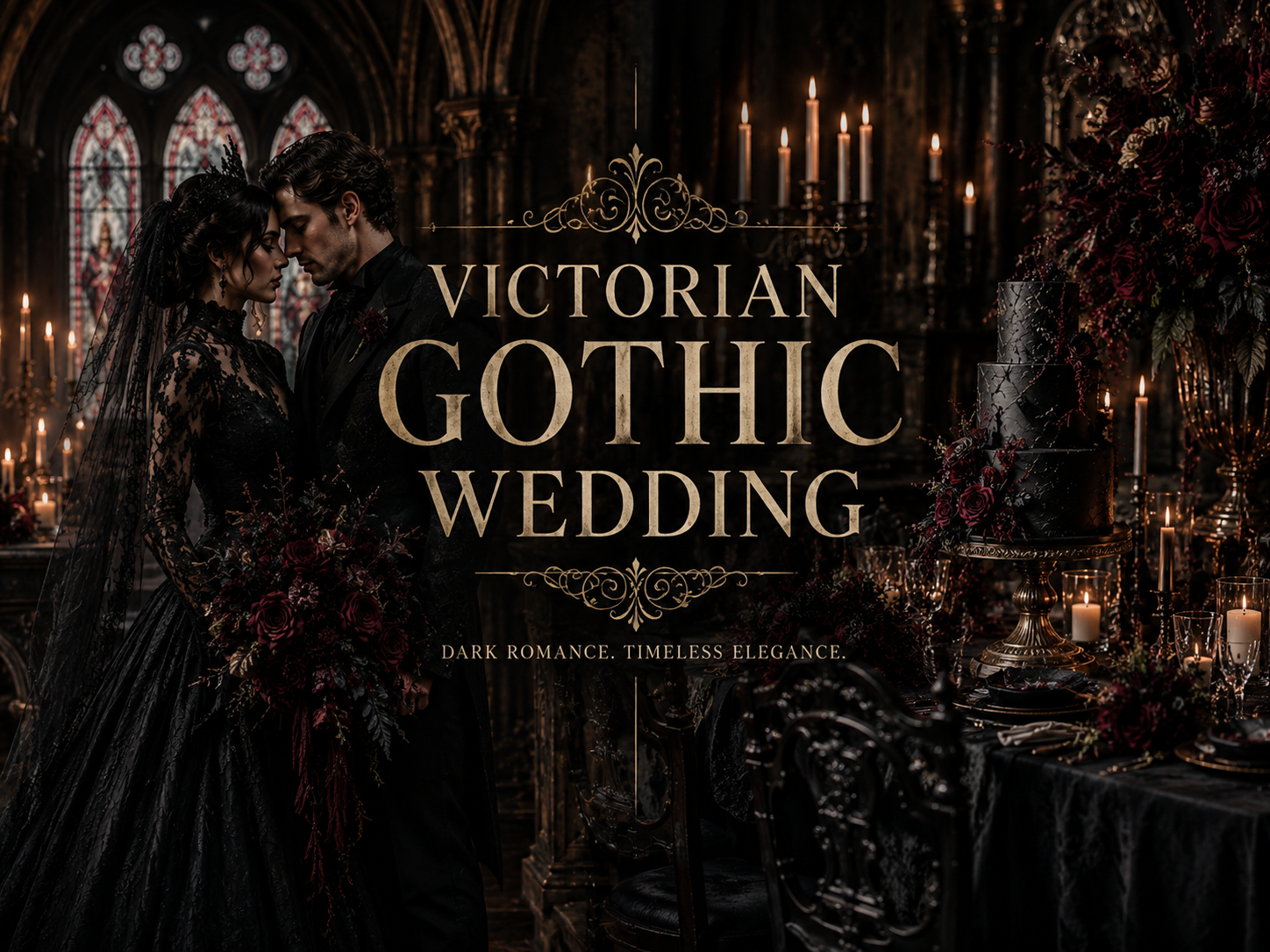
Victorian Gothic Wedding
The Dark Romance Edit · 2026
Victorian Gothic Wedding
Where Dark Romance Meets Timeless Elegance
The complete guide to planning a Victorian gothic wedding — from dramatic gowns and candlelit decor to dark florals, gothic cakes, and everything beautifully in between.
A Victorian gothic wedding is not a theme. It is a declaration — of depth, of beauty, of a love that refuses to be ordinary, and of an aesthetic so rich and layered it belongs entirely in its own magnificent world.
⚠ This post contains affiliate links. If you click and purchase through these links, I may earn a small commission at no extra cost to you. I only recommend products I genuinely believe will add value for my readers. Thank you for supporting Wedding Avenue Studio.
Introduction
The Victorian Gothic Wedding: A Love Story Written in Shadow and Light
There is a moment in every Victorian gothic wedding — usually when the candles are lit, the dark florals are in place, and the first notes of something haunting and beautiful drift through the stone-walled space — when the aesthetic transcends decoration and becomes atmosphere. Pure, immersive, unforgettable atmosphere. This is the defining quality of the Victorian gothic wedding done well: it does not merely look extraordinary. It feels extraordinary. Guests do not just attend; they are transported.
The Victorian gothic aesthetic draws from two of history’s most visually arresting eras and movements: the opulent romanticism of the Victorian period, with its love of elaborate detail, rich textiles, and deeply sentimental symbolism; and the gothic tradition, with its embrace of darkness, grandeur, the dramatic, and the beautifully melancholic. Together they produce a wedding aesthetic that is simultaneously maximalist and deeply personal — one that rewards every guest who pays attention with detail upon extraordinary detail.
Planning a Victorian gothic wedding requires the same meticulous care as any other luxury celebration — arguably more, because coherence of atmosphere is paramount. Every element must speak the same visual language. This guide covers that language in full: from venue and palette to gowns, florals, cake, decor, and every considered detail in between.
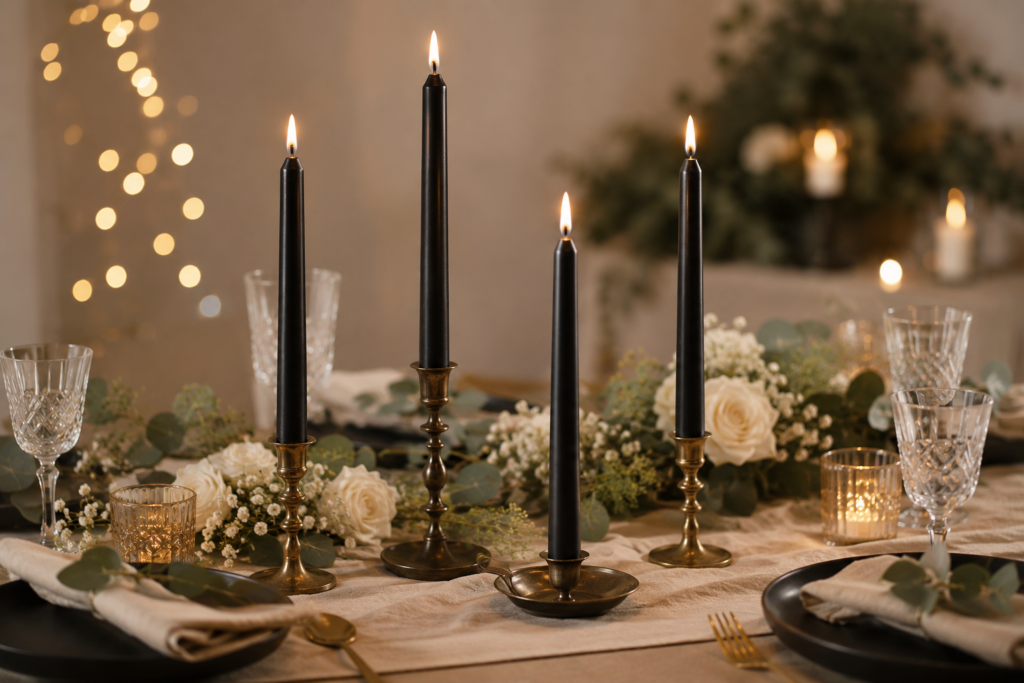
🕯️ The defining detail of a Victorian gothic reception: Tall black taper candles create the most dramatically atmospheric candlelight of any wedding aesthetic — irreplaceable, deeply beautiful and completely non-negotiable for a Victorian gothic celebration.
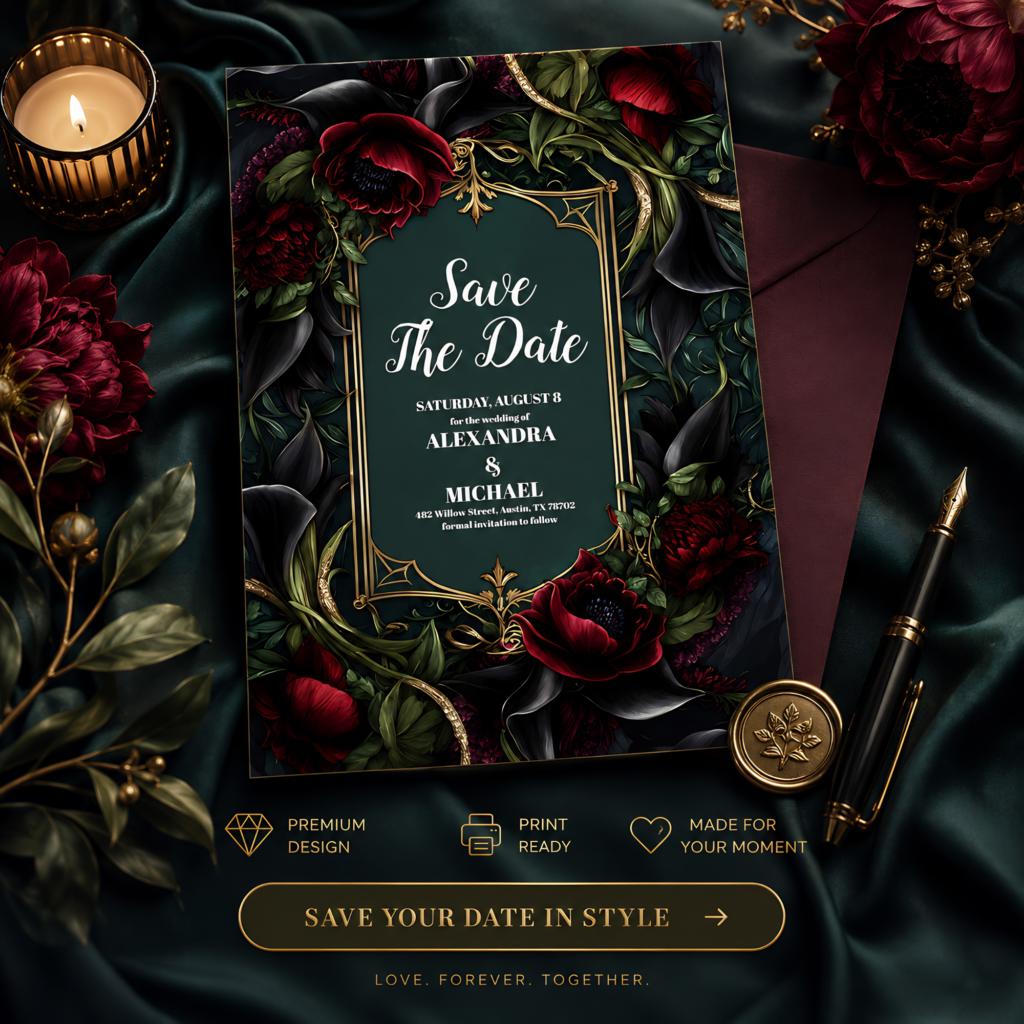
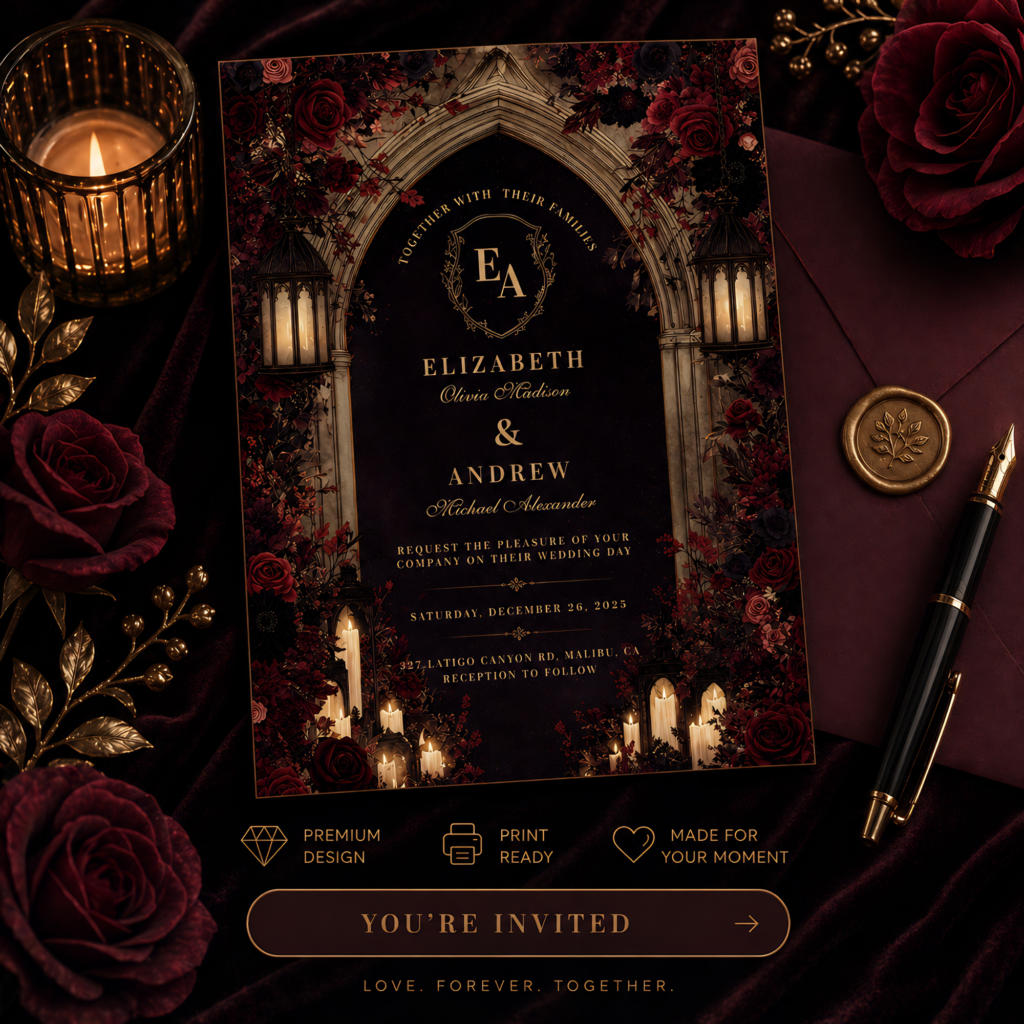
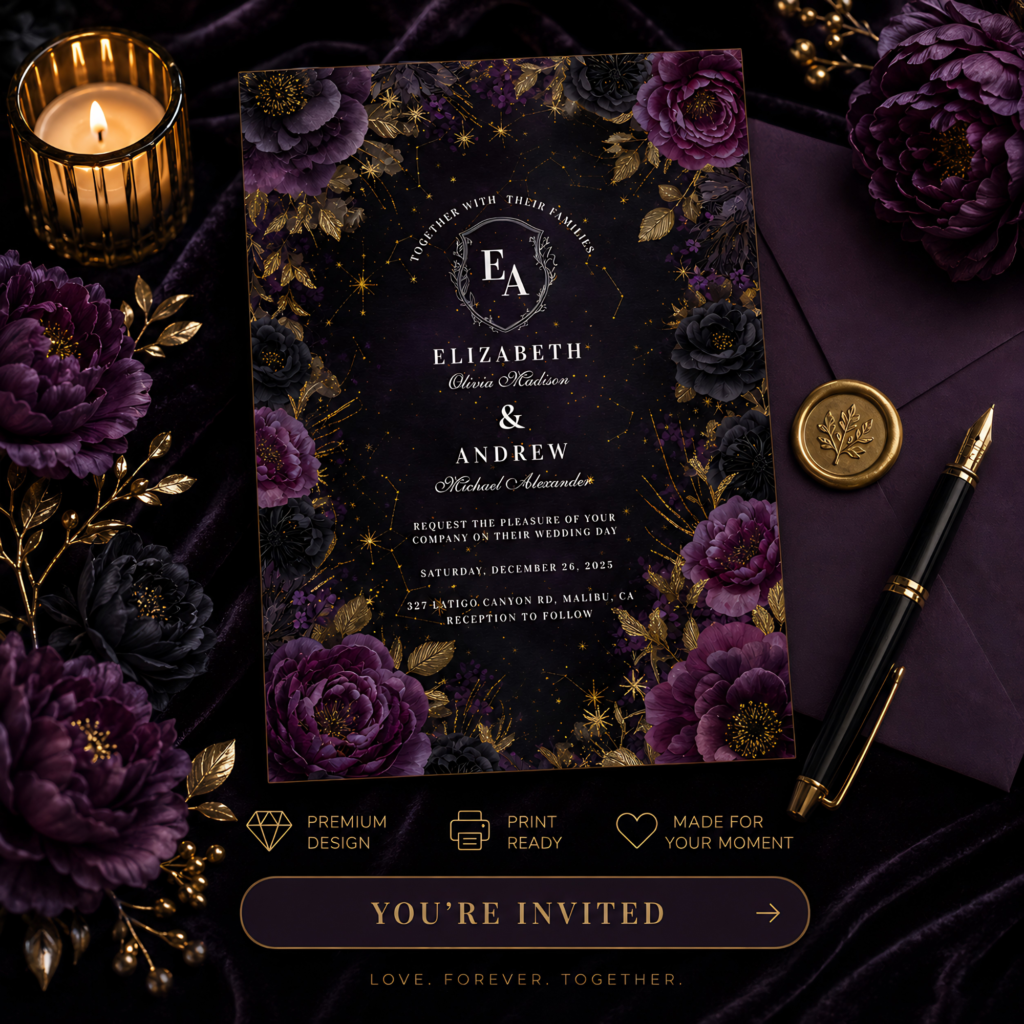
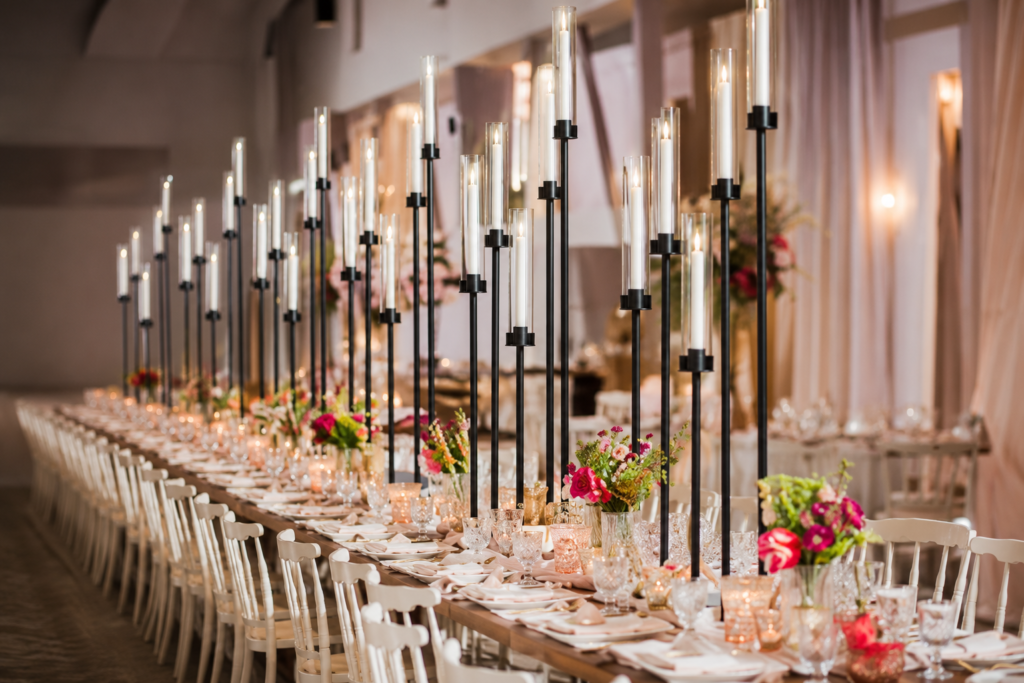
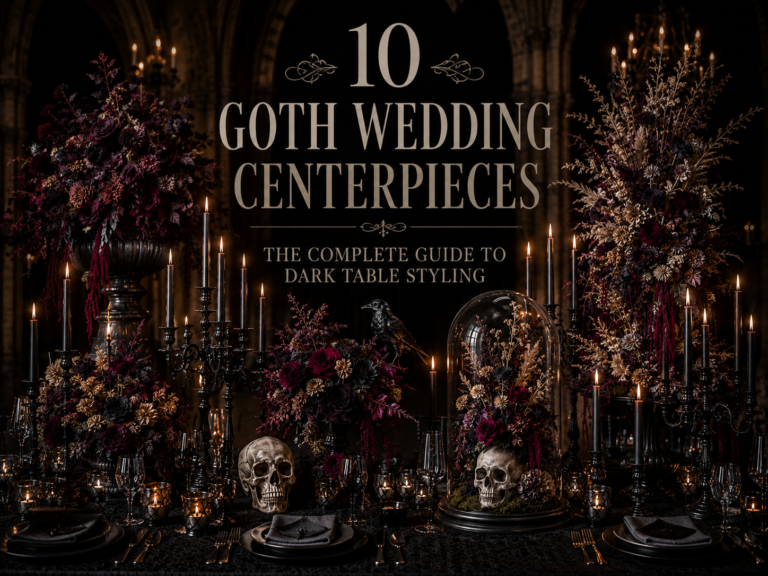
🖤 The centrepiece of the Victorian gothic table: A dramatic black iron candelabra holding multiple taper candles transforms any reception table into something genuinely extraordinary — architectural, atmospheric and completely aligned with the Victorian gothic aesthetic.
Colour & Atmosphere
The Victorian Gothic Palette: Building Darkness with Depth
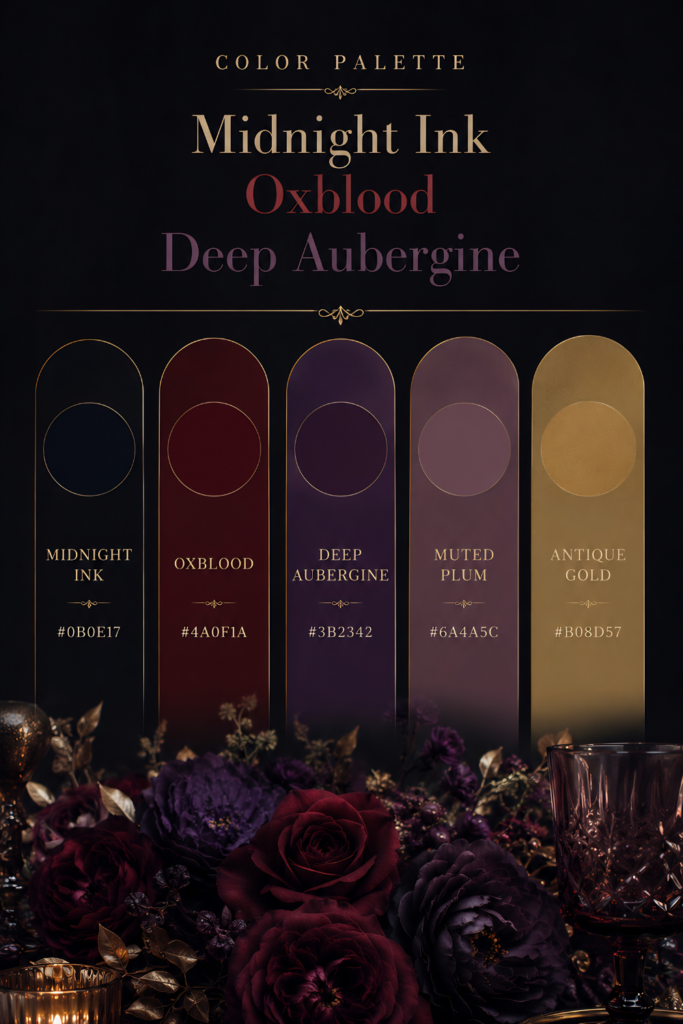
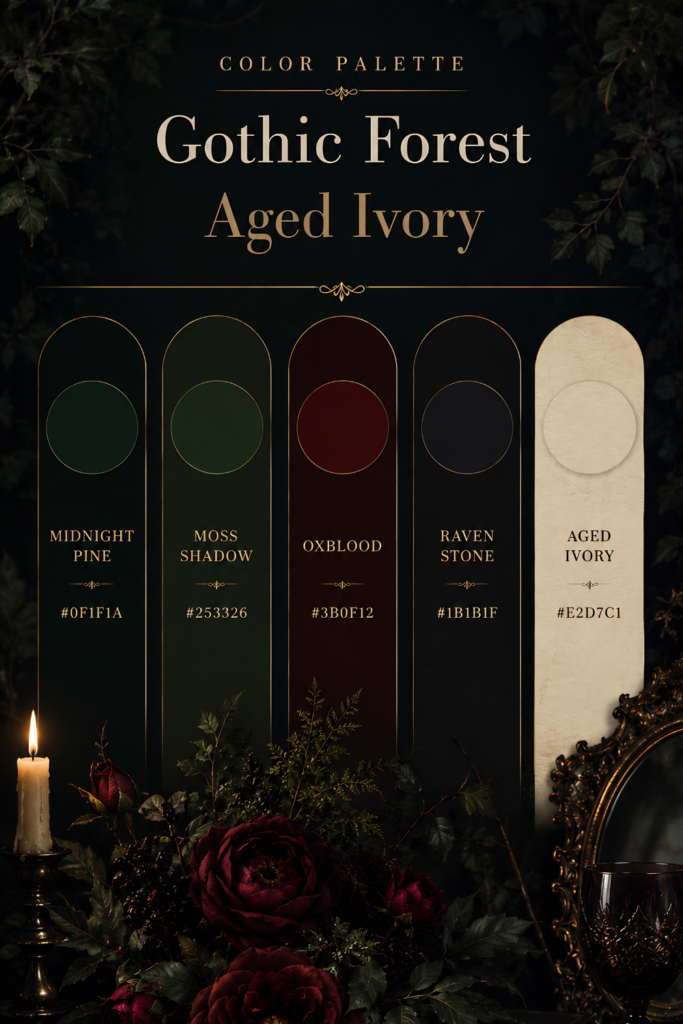
The Victorian gothic wedding palette is not simply black and red — though both have their rightful place within it. The most sophisticated interpretations of this aesthetic build their colour story with extraordinary nuance: deep jewel tones anchored by rich darks, softened by unexpected moments of pale contrast. Think oxblood and midnight ink punctuated by the ghost-pale ivory of aged lace. Deep aubergine bleeding into near-black. Forest green so dark it reads as shadow. And always, always, the warmth of candlelight gilding everything it touches.
The crucial design principle for Victorian gothic wedding palettes is contrast — not clash. Dark backgrounds make pale elements luminous. Rich jewel tones make aged metallics gleam. And the occasional ivory or champagne moment, whether in a bloom, a tablecloth edge, or the bride’s gown itself, gives the eye somewhere to rest before returning to the glorious darkness surrounding it.
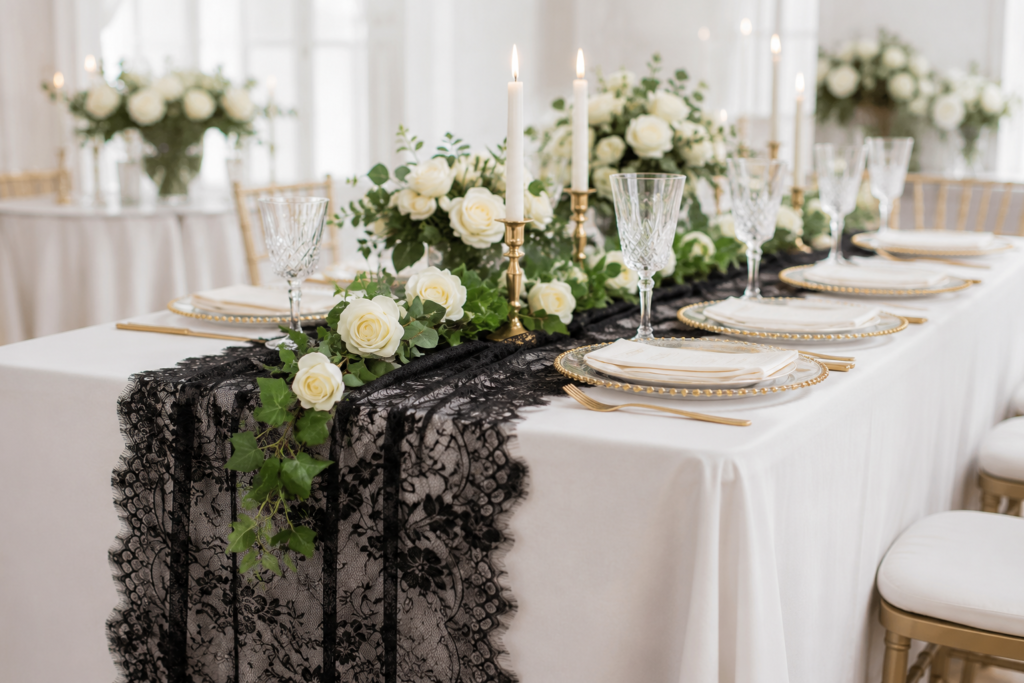
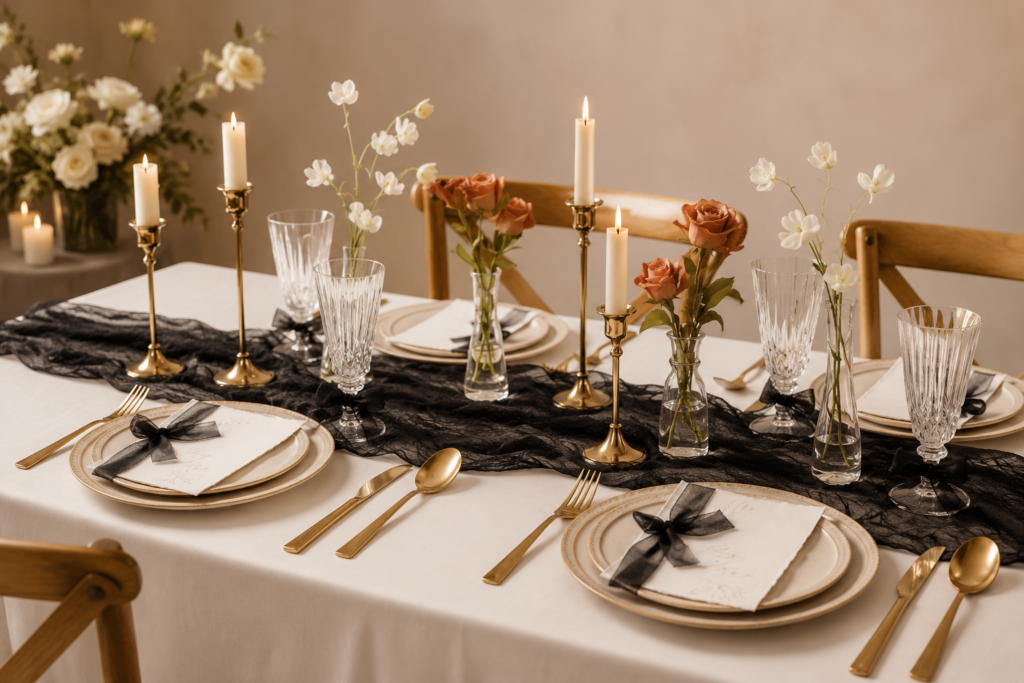
🕸️ Instant Victorian gothic atmosphere for your tables: A black lace table overlay draped over a deep jewel-toned tablecloth creates the most opulent and dramatically gothic table setting imaginable — layered, textural and deeply beautiful in candlelight.
Venue: The Architecture of Dark Romance
No element of the Victorian gothic wedding is more important than the venue. The right space does not merely host your celebration — it becomes the celebration. Stone walls, vaulted ceilings, stained glass windows, wrought iron details, and the kind of architectural grandeur that makes candlelight look inevitable rather than decorative: these are the hallmarks of a Victorian gothic wedding venue that truly delivers.
The ideal Victorian gothic venue does not need to be decorated so much as activated. A medieval church with its existing stone and shadow. A Victorian manor house with its oak-panelled rooms and leaded windows. A converted chapel with original ironwork and exposed timber. Even a dramatic cave or a castle ruin — somewhere the architecture itself speaks of age, of history, of grandeur. When the bones of the space are right, every candle you place and every dark floral arrangement you add simply deepens the atmosphere that was already present.
01
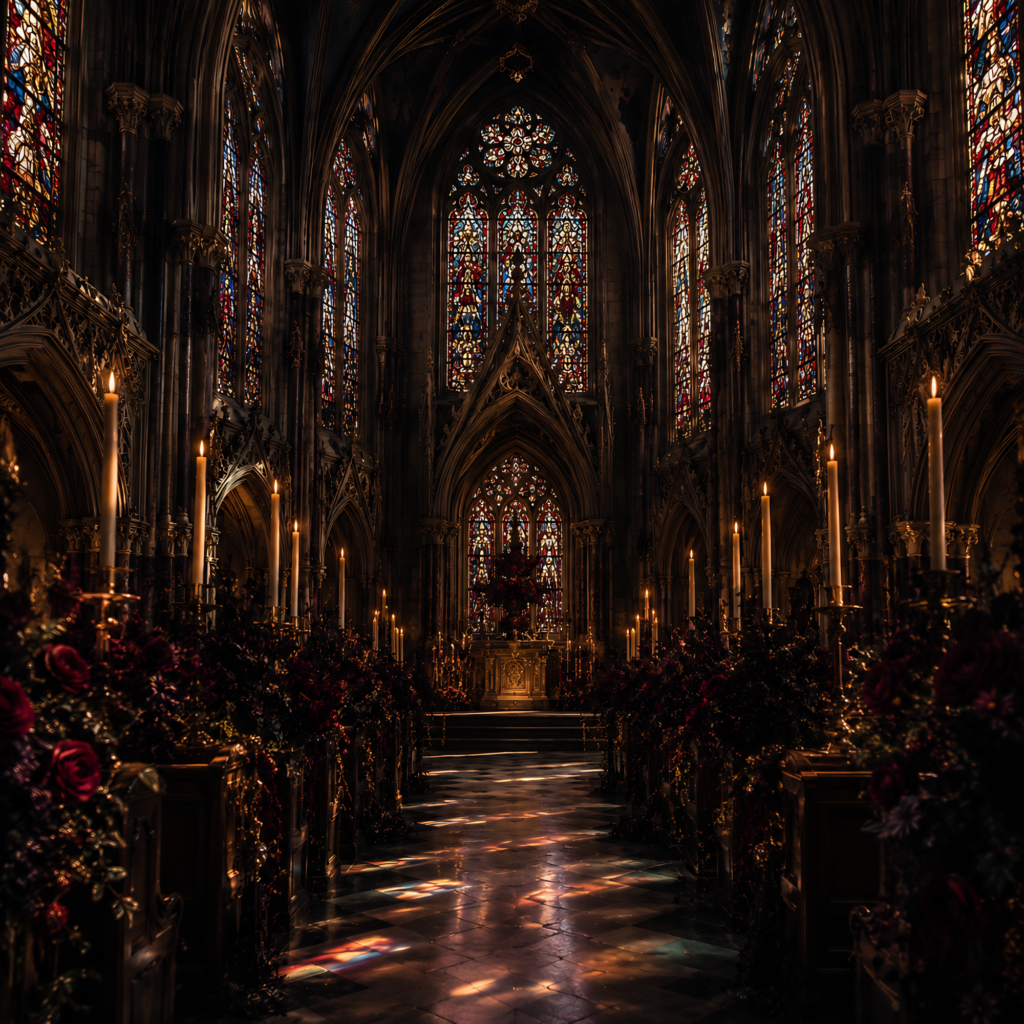
The Gothic Cathedral
Pointed arches, ribbed vaulting, and stained glass that throws jewel-toned light across stone floors. The definitive Victorian gothic wedding setting — and utterly unrepeatable in its grandeur.
02
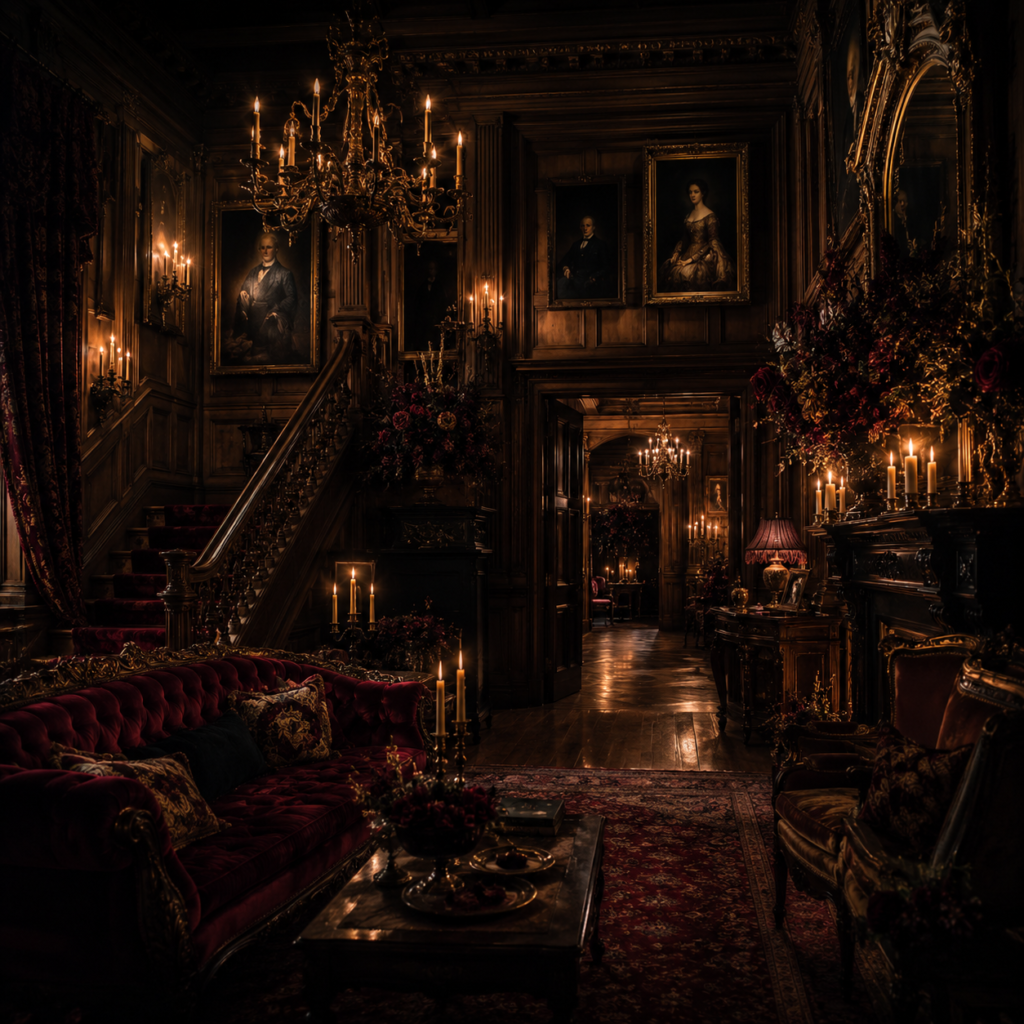
The Victorian Manor
Oak panelling, portrait-hung corridors, and drawing rooms built for candlelight. A Victorian manor house gives the gothic aesthetic its perfect domestic counterpart — opulent, brooding, magnificent.
03
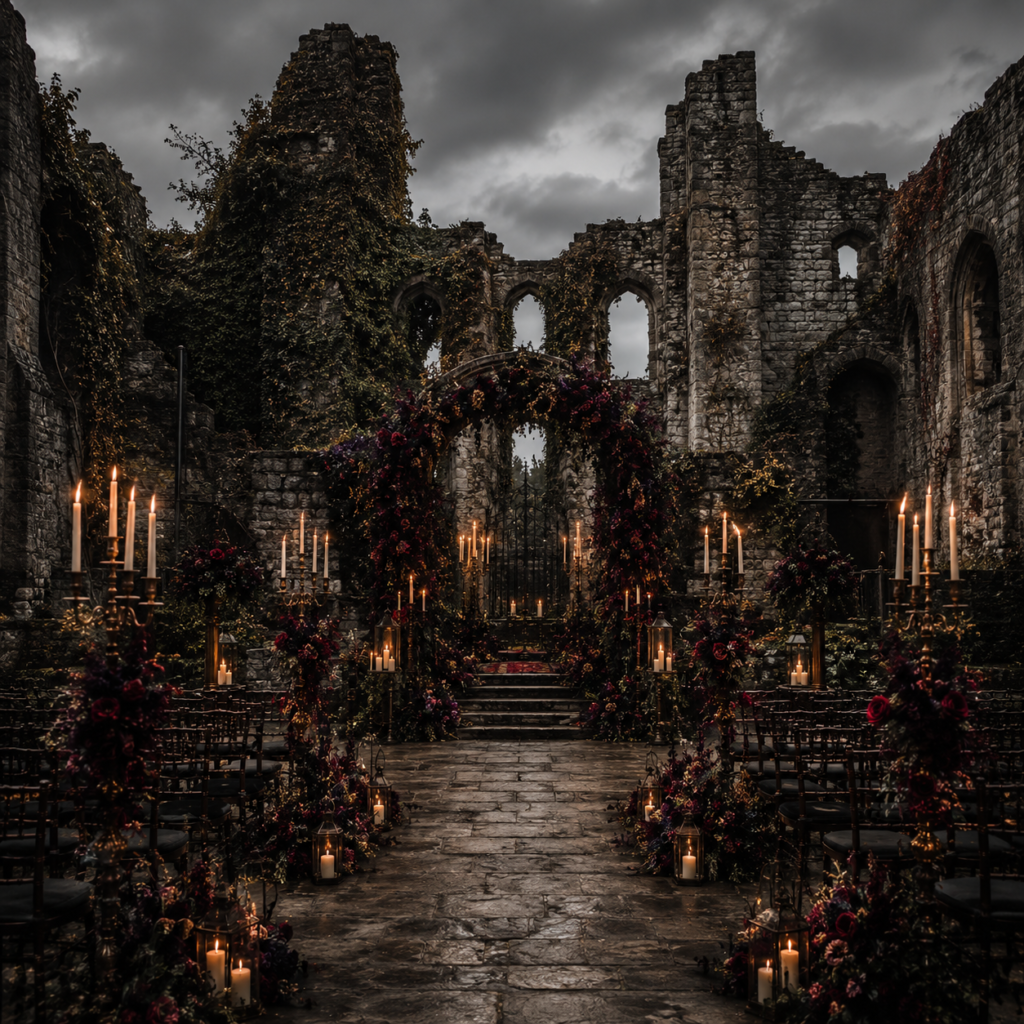
The Castle Ruin
For outdoor ceremonies of extraordinary drama. Tumbled stone, ivy-covered battlements, and open sky framing the exchange of vows. Nothing photographs with more gothic power than ancient stone under a pewter sky.
04
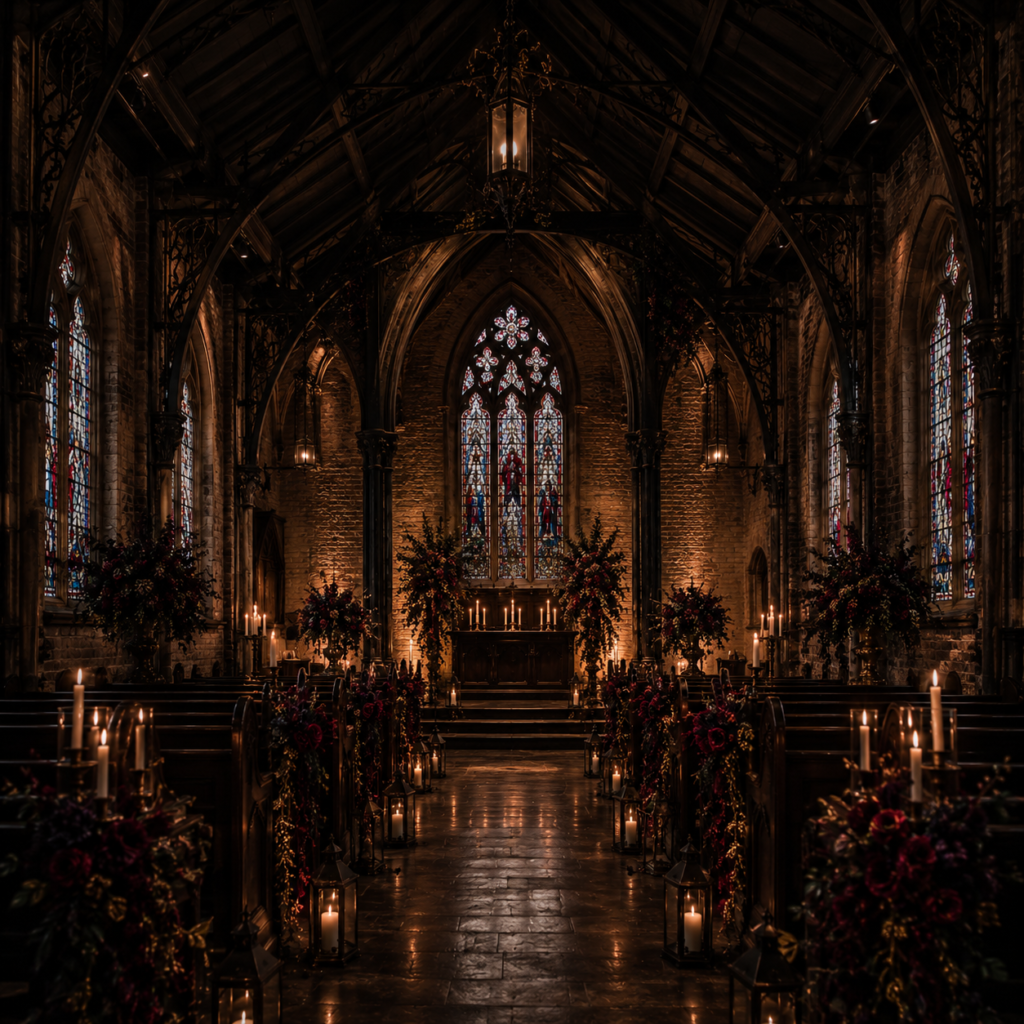
The Converted Chapel
Original ironwork, exposed timber beams, arched windows, and the sacred geometry of ecclesiastical architecture repurposed for dark romance. Intimate in scale, enormous in atmosphere.
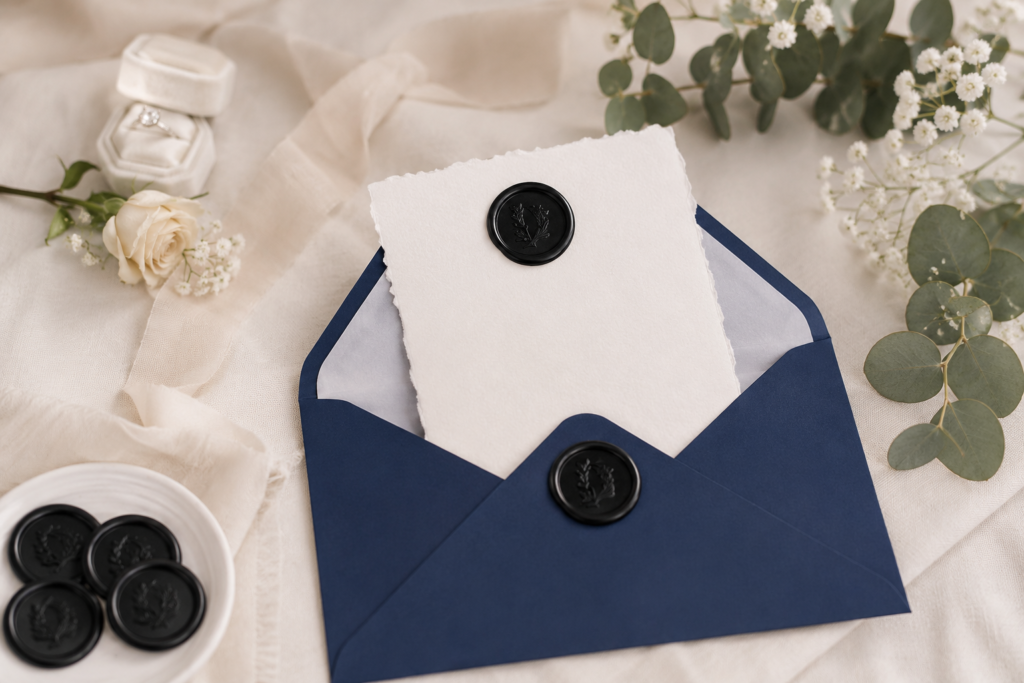
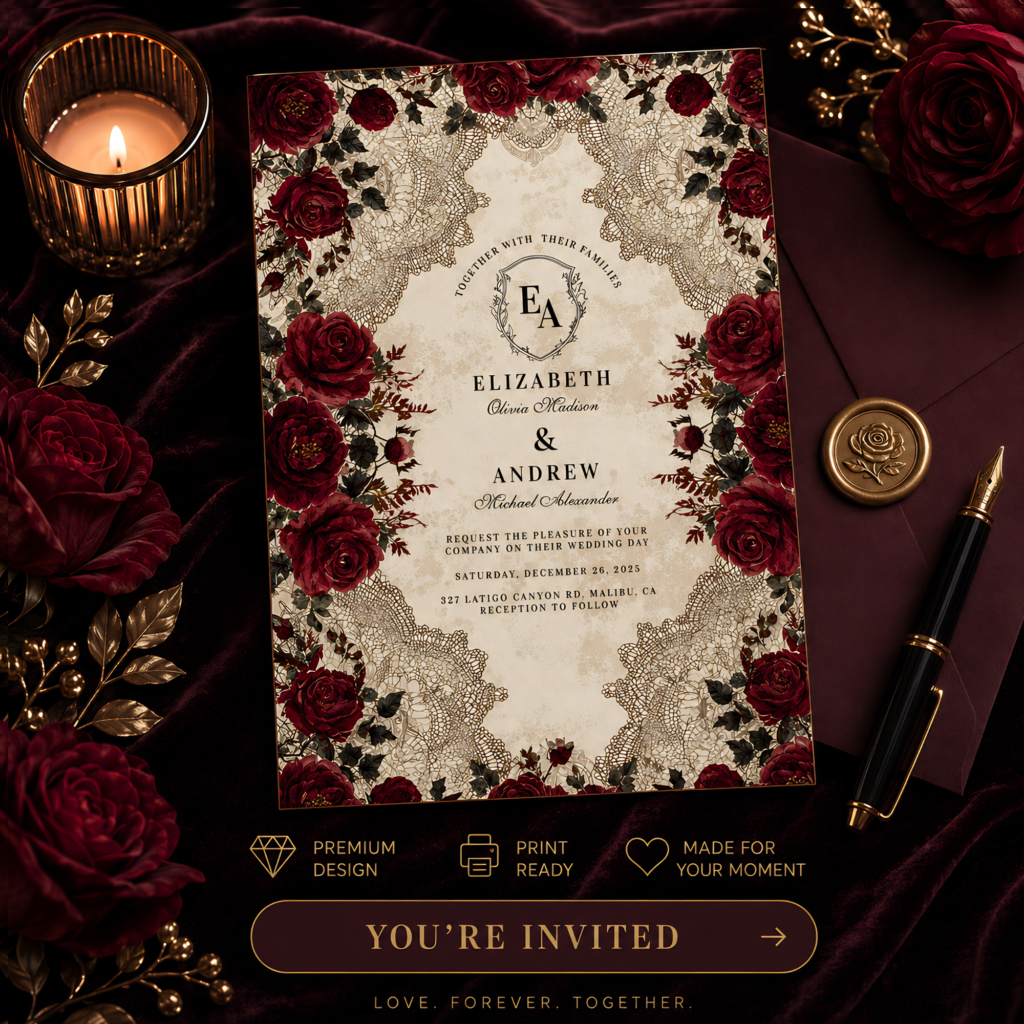
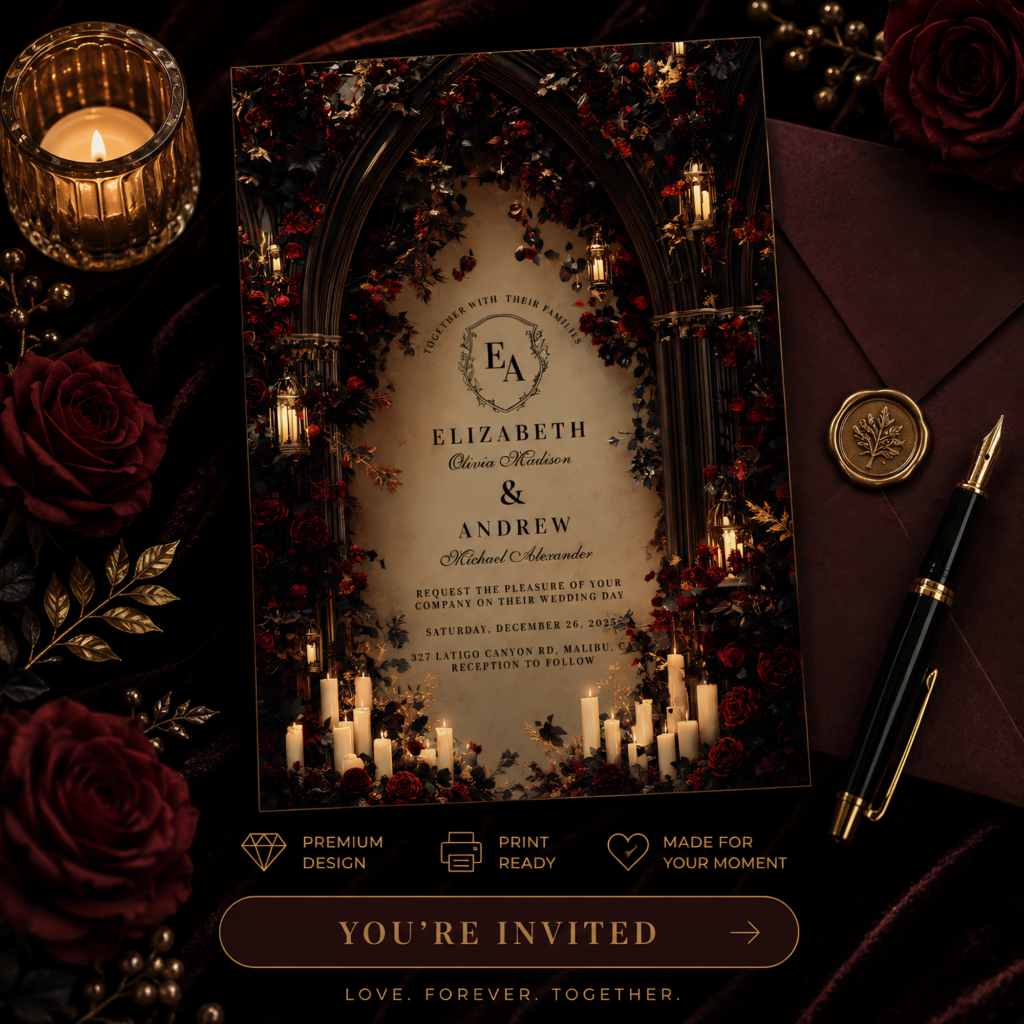
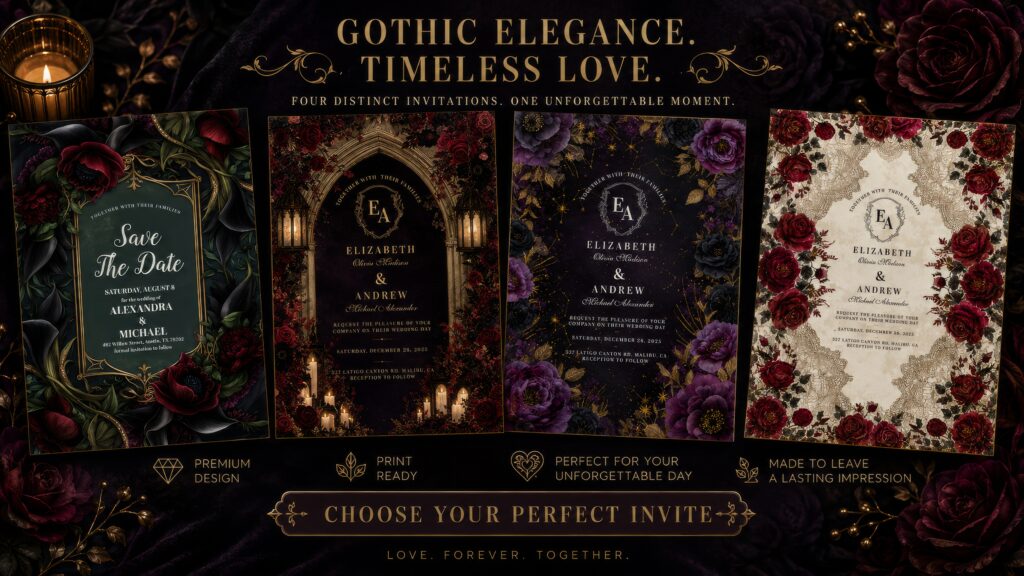
🖤 The perfect finishing touch for Victorian gothic invitations: A gothic wax seal stamp kit transforms your invitation envelopes from beautiful to genuinely extraordinary — the single most impactful detail you can add to Victorian gothic stationery for under £30.
The Golden Rule of Victorian Gothic Venues
Visit every venue at dusk with a lit candle in hand. If the space becomes more beautiful in that light — if the shadows deepen rather than flatten, if the architecture gains rather than loses — you have found your venue. The Victorian gothic wedding belongs to candlelight, and no space should be booked without understanding precisely how it behaves after dark.
Bridal Fashion
The Victorian Gothic Wedding Dress: Drama as Devotion
The Victorian gothic wedding dress is perhaps the most exquisitely considered garment in all of bridal fashion. It must carry the full weight of the aesthetic — the darkness, the romance, the grandeur, the historical depth — while remaining genuinely, transcendently bridal. This is not a costume. It is a gown that happens to be one of the most extraordinary things a person can wear on the most extraordinary day of their life.
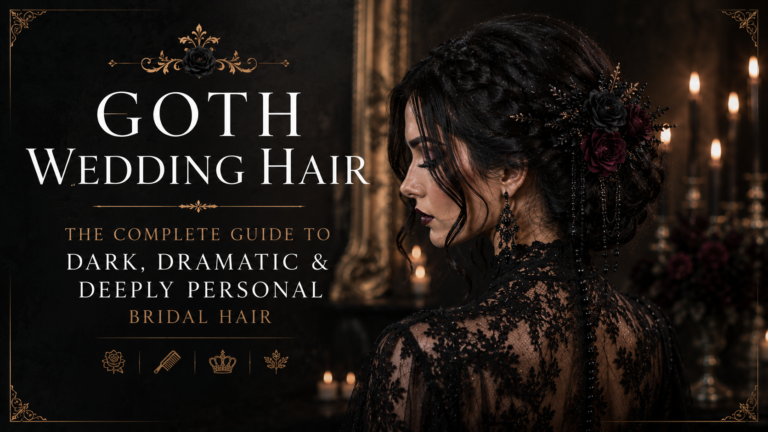
The silhouettes most authentically aligned with the Victorian gothic tradition are those with historical roots: the high-necked Victorian collar, the long-sleeved lace bodice, the dramatic cathedral train, the corseted waist, and the structured bustle. In 2026, these elements appear both in period-faithful interpretations and in dramatically modern iterations — a sleek black column gown with a single panel of Chantilly lace; a deep oxblood velvet gown with a sweeping skirt; an ivory silk dress with antique black lace overlay and Victorian-button detailing down the back.
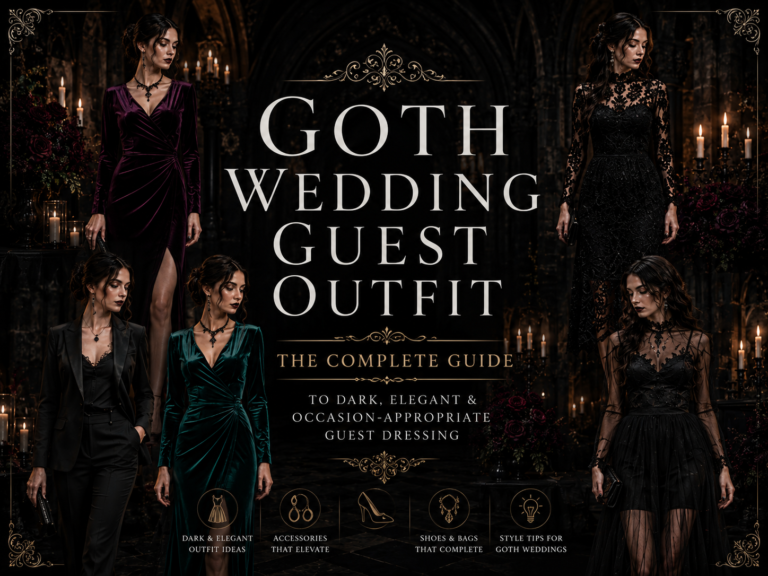
Colour in the Victorian gothic bridal wardrobe has fully, magnificently expanded. While ivory and antique white remain beautiful and appropriate, the most visually arresting Victorian gothic brides of 2026 are choosing black, deep wine, midnight blue, and charcoal as primary gown colours — or opting for a dramatic colour-block between a dark bodice and an ivory or blush skirt. Each is a valid, gorgeous, wholly considered choice. The only requirement is that the gown be intentional, be exquisite, and be entirely true to the vision.
🌹 The most versatile Victorian gothic detail: Black velvet ribbon wrapped around bouquet stems, tied on napkins, used to secure invitations or woven through floral arrangements instantly elevates any Victorian gothic element — rich, tactile and deeply beautiful.
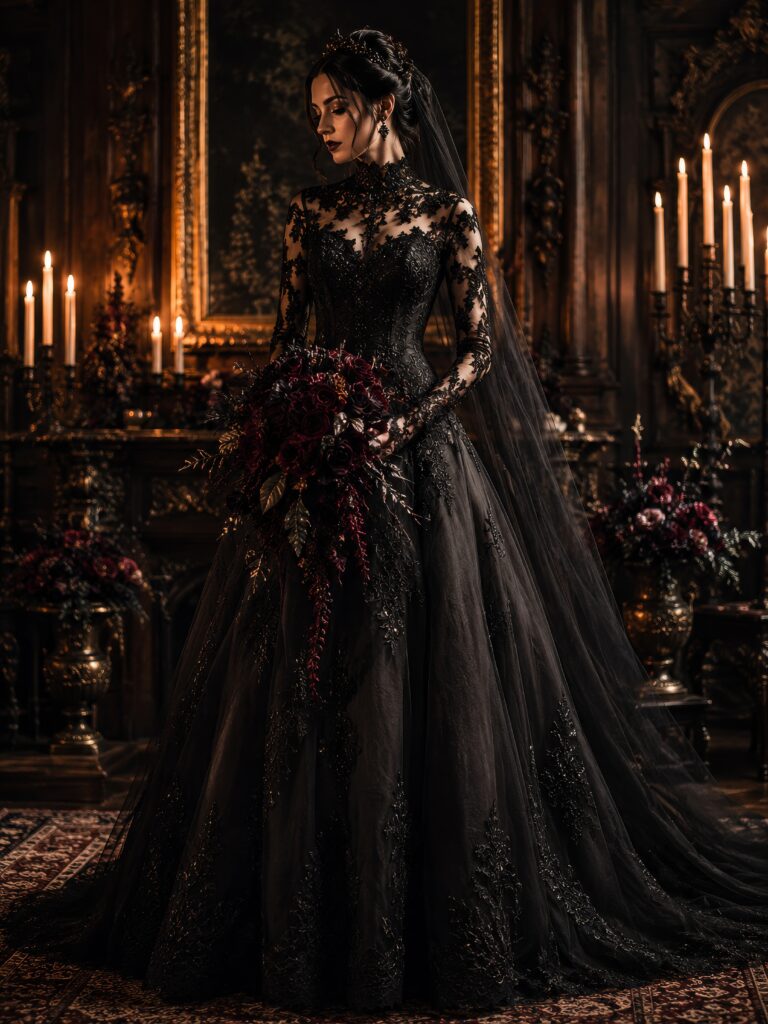
“The Victorian gothic bride does not walk down the aisle. She processes — slowly, deliberately, magnificently — through a world she has built from her own imagination.”
— The Dark Romance Edit
Dark Florals
Victorian Gothic Wedding Flowers: Darkness in Full Bloom
Floral design for the Victorian gothic wedding is one of its most thrilling creative territories. The Victorian era was itself obsessed with flowers — every bloom carried meaning within the elaborate language of floriography, and arrangements were composed as carefully coded messages of sentiment and symbol. For the modern Victorian gothic wedding, this tradition offers extraordinary creative depth: you are not simply choosing flowers that look beautiful. You are choosing flowers that mean something.
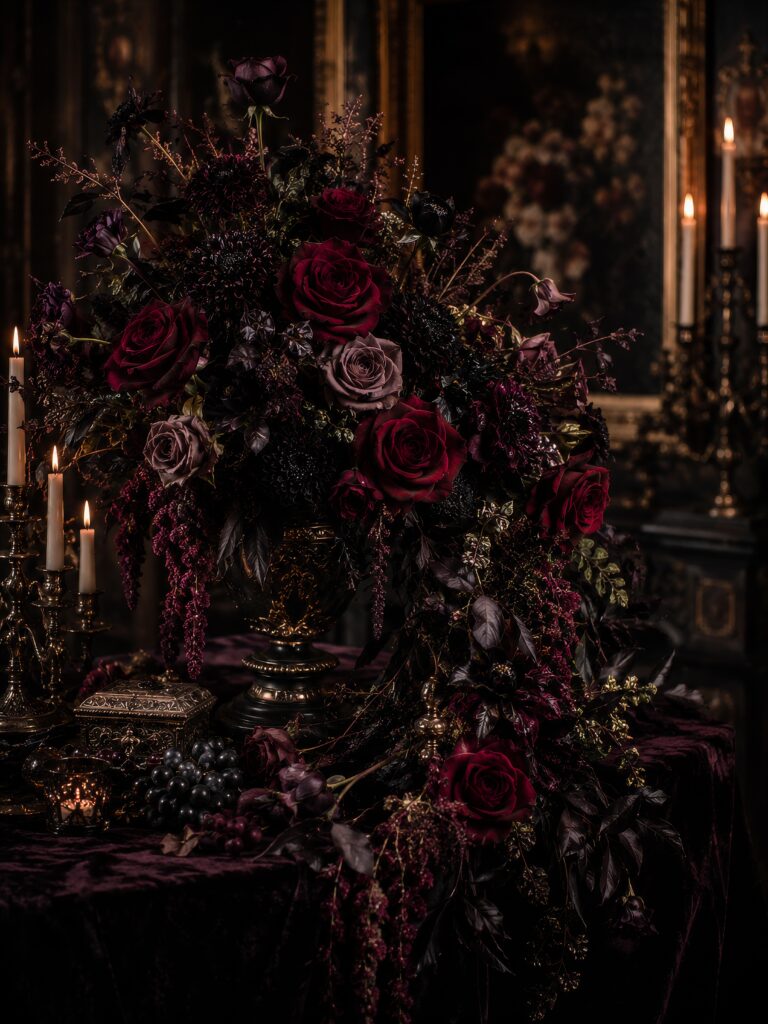
Dark florals are the centrepiece of the Victorian gothic aesthetic, and in 2026 the range of genuinely dark blooms available to couples is broader than ever. Black baccara roses, deepest burgundy dahlias, near-black hellebores, chocolate cosmos, deep plum anemones, and dark-centred scabiosa all offer extraordinary dramatic impact. Combined with the textural richness of dried grasses, twisted willow branches, blackberries on the vine, and dark foliage — smoke bush, black mondo grass, dark-leafed elder — the arrangements become sculptural, deeply atmospheric, and unlike anything seen at a conventional wedding.
Dark Blooms to Request
- Black Baccara roses — the definitive gothic rose
- Deep burgundy dahlias for dramatic volume
- Hellebores in near-black and deep plum
- Chocolate cosmos — dark, velvety, extraordinary
- Anemones with their graphic dark centres
- Deep purple lisianthus for layered texture
Gothic Foliage & Texture
- Smoke bush in deep burgundy-purple
- Dark-leafed elder for brooding foliage
- Twisted willow branches for architecture
- Blackberries and sloe berries on the vine
- Black mondo grass for graphic ground texture
- Dried seed pods and skeletal botanicals
Decor & Atmosphere
Victorian Gothic Wedding Decor: Layers of Magnificent Darkness
Victorian gothic wedding decor operates on the principle of maximalist restraint — which is to say, it is abundant and layered and rich, but every element is chosen with precise intentionality. Nothing should be present without purpose. Nothing should be dark merely for darkness’s sake. The decor must feel like a world that belongs to the couple who inhabits it — opulent, personal, and deeply atmospheric.
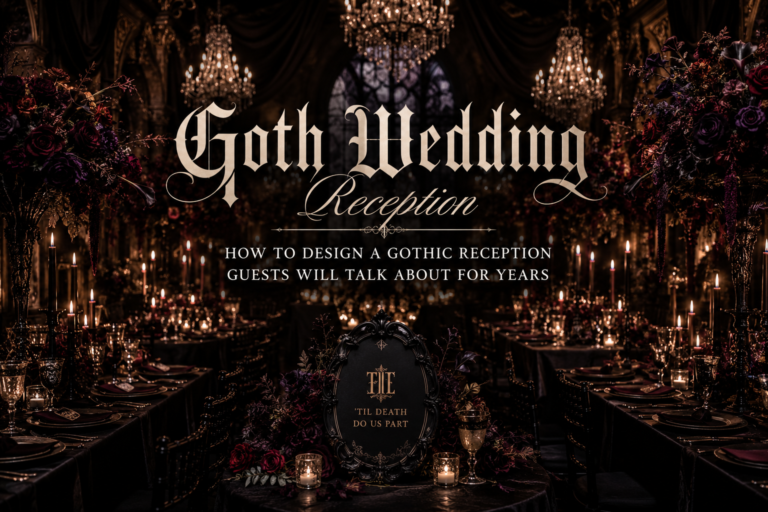
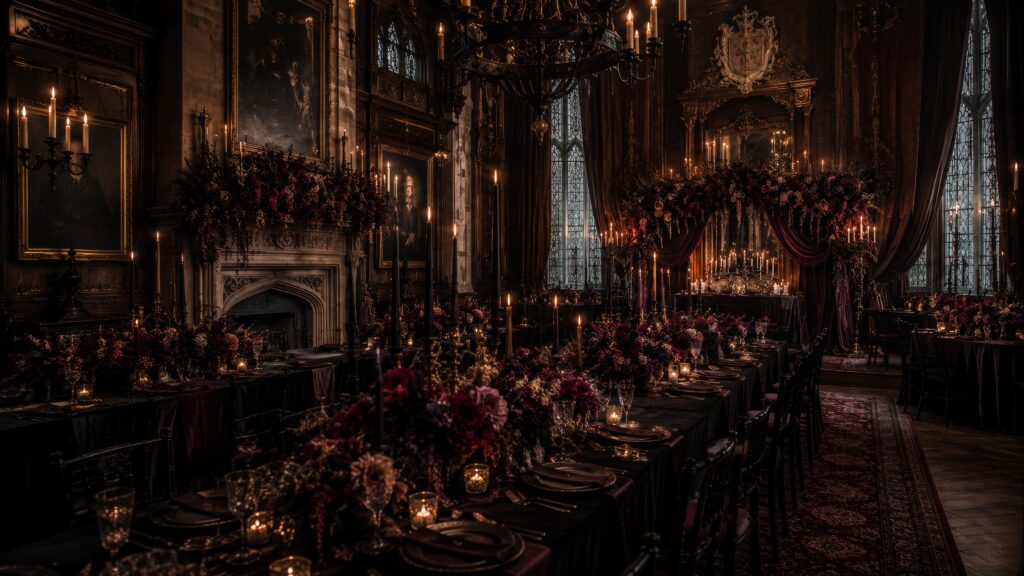
Candles are the single most important decor element of the Victorian gothic wedding. Not fairy lights — candles. Tall black tapers in iron candelabras. Clusters of pillar candles in varying heights on mirrored surfaces that double their light. Church candles in amber glass hurricanes. Beeswax pillars in aged pewter holders. The warmth of real flame is irreplaceable in this aesthetic, and no LED substitute will produce the same quality of flickering, shadowplay that makes a Victorian gothic reception feel genuinely transported from another era.
🕯️
Candlelight
Tall black tapers, iron candelabras, pillar clusters, and amber glass hurricanes. Real flame only — it is non-negotiable.
🪞
Antique Mirrors
Foxed, gilded, and ornately framed antique mirrors double candlelight and multiply depth. Essential to the Victorian gothic table.
📖
Vintage Books & Ephemera
Stacked leather-bound volumes as table risers, Victorian specimen jars, taxidermy-bell cloches, and aged paper menus.
🕸️
Velvet & Lace Linens
Deep jewel-toned velvet tablecloths, black lace overlays, and aged linen napkins tied with wax seals and dark ribbon.
The Cake
The Victorian Gothic Wedding Cake: Architecture in Sugar
The Victorian gothic wedding cake is one of the most visually powerful elements of the entire celebration — and one of the most joyfully creative commissions you will give any supplier. It is the intersection of architectural ambition and sugar craft, and the finest Victorian gothic wedding cake makers approach it as exactly that: a structural, sculptural, edible work of art.
The most striking Victorian gothic wedding cakes of 2026 work in deep, dramatic colour — near-black fondant or buttercream with hand-painted details in gold, the palest ivory, or deep crimson. Gothic architectural motifs pressed into the icing: pointed arches, rose windows, intricate lacework patterns. Sugar flowers in dark blooms — black roses, midnight dahlias, dark hellebores — cascading down tiers. Draped fondant suggesting Victorian silk. Hand-gilded details that catch candlelight with every flicker. These cakes are not simply delicious. They are the centrepiece of the room.
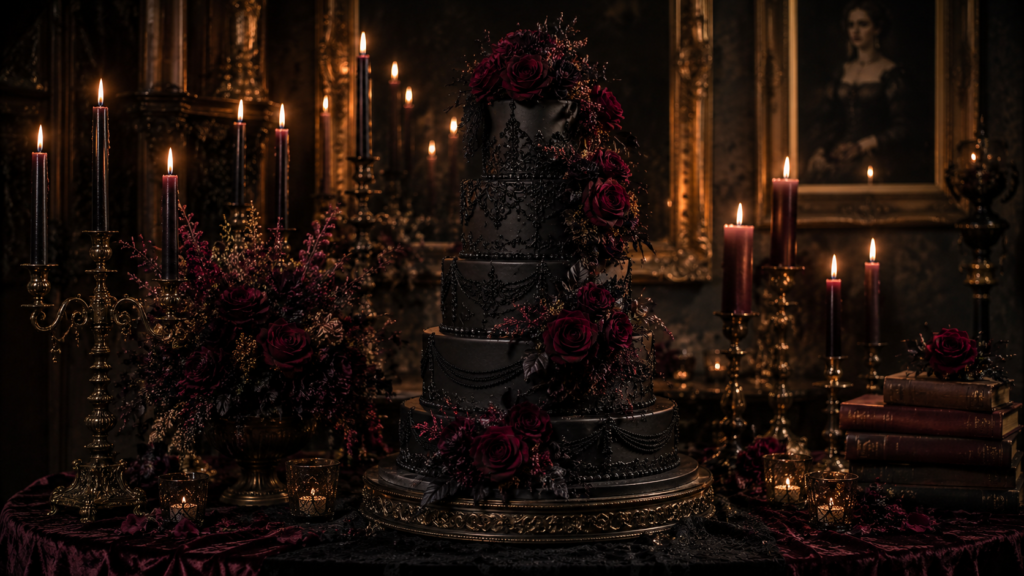
“In the Victorian era, the wedding cake was a symbol of prosperity and shared fortune. In the Victorian gothic wedding, it becomes something more: a monument to the particular, extraordinary beauty of darkness chosen deliberately and celebrated completely.”
— The Dark Romance Edit
Practical Planning
Ten Things Every Victorian Gothic Couple Must Know
- Coherence of atmosphere is everything. Every supplier — florist, cake maker, stationer, musician — must understand the Victorian gothic aesthetic fully. Brief with images, mood boards, and words. A single jarring element can break the spell of the entire day.
- Check candle policies before booking any venue. Many historic venues restrict naked flame. Understand the rules and plan your lighting design within them — or choose a venue with a more permissive approach.
- Commission your stationery as an extension of the decor. Victorian gothic wedding stationery — wax-sealed envelopes, deep-toned card stock, gothic typefaces, illustrated motifs — sets the aesthetic from the moment guests receive their invitation.
- Choose your photographer with extraordinary care. The Victorian gothic aesthetic demands a photographer who understands low-light, candlelit photography and who shoots with genuine artistic sensitivity. Review their portfolio specifically in dark interior settings.
- Plan the music as carefully as the decor. A live string quartet playing darkly romantic repertoire — Elgar, Barber, Rachmaninov — during the ceremony transforms the atmosphere entirely. For the reception, consider a Victorian-era band or a carefully curated gothic orchestral playlist.
- Lean into Victorian symbolism in your floral choices. Every flower carried meaning in the Victorian floriography tradition. Black roses for devotion and new beginnings. Dark red roses for deep love. Rosemary for remembrance. Build your bouquet with intention and share the meanings with your guests.
- Allow more setup time than you think you need. Victorian gothic decor — the candles, the layered textiles, the floral arrangements, the antique objects — takes significantly longer to style than conventional wedding decor. Brief your venue and styling team accordingly.
- Consider the guest experience at every moment. The Victorian gothic aesthetic can feel exclusive and unwelcoming if it is not handled with warmth. The food, the service, the welcome — all should be as generous and warm as the decor is dramatic.
- Invest in a specialist dark-florals florist. Not every florist works confidently with dark blooms and gothic arrangements. Seek out a specialist whose portfolio specifically includes Victorian, gothic, or dark romantic styling.
- Book October or November for natural atmospheric alignment. The Victorian gothic wedding belongs to autumn and winter — to early dark, to mist, to bare branches and candlelit stone. Let the season itself complete the aesthetic.
“Darkness, chosen deliberately and surrounded by beauty, is not the absence of light. It is the fullest possible expression of it.”
— Victorian Gothic Wedding Planning Notes
Closing Thoughts
The Victorian Gothic Wedding: A Celebration Without Equal
There are weddings that are beautiful. There are weddings that are elegant. There are weddings that are romantic, that are personal, that are moving. And then there are Victorian gothic weddings — which are all of these things simultaneously, and something else entirely besides. They are immersive. They are singular. They are the product of a couple who refused the ordinary and built, deliberately and magnificently, something that belongs only to them.
The Victorian gothic wedding asks more of its planners than most — more research, more supplier briefing, more attention to atmospheric coherence, more willingness to commit fully to a vision that the mainstream will not always immediately understand. It rewards that commitment with something no other wedding aesthetic can offer: a day so visually and emotionally complete that it functions as a world unto itself.
Find your venue in the stone and shadow. Commission your gown in the dark and the lace. Fill the space with black roses and candlelight. And then, when everything is in place and the music begins, walk into the world you have built — and inhabit it completely.
Ready to Plan Your Victorian Gothic Wedding?
Explore our curated collection of Victorian gothic wedding stationery — dark romantic invitations, RSVP cards, save the dates, menus, and matching paper goods designed for couples who love elegant darkness.