Woodland Wedding Centerpieces & Ceremony Decor — Complete Forest Styling Guide 2026
Woodland Wedding · 2026
Woodland Wedding Centerpieces & Ceremony Decor — Complete Forest Styling Guide 2026
From fairy ring centerpieces and ancient tree ceremony spaces to wildflower reception tables and enchanted forest lighting — a complete styling guide to decorating a woodland wedding that works with the forest rather than over it.
The most common mistake in planning a woodland wedding is treating the forest as a backdrop rather than a collaborator. The trees, the light, the texture of old bark and living moss and the sound of a clearing settling into the afternoon — these are not the setting for your decor. They are the decor, and every element you add should be chosen with that fact fully in mind. This guide covers every styling element of a woodland wedding in 2026 — centerpieces, ceremony arch, aisle, reception table, bouquet, lighting, and the stationery suite that carries the forest’s visual language from the first invitation to the last thank you card — with one consistent principle throughout: add only what belongs.
The best-decorated woodland weddings are not the most decorated ones. They are the ones where the couple understood what the forest was already doing and had the restraint to respond to it rather than replace it.

Section 01
The Woodland Styling Philosophy
Every decision in a woodland wedding styling scheme should start with the same question: is this responding to the forest, or is it competing with it? The distinction sounds simple and is, in practice, the hardest principle to apply consistently. A bouquet of flowers that looks as though it was gathered from a nearby meadow is responding to the forest. A bouquet of flowers in colours that have no relationship to the setting it is placed in is competing with it. Moss used as a surface material for a centerpiece base is responding to the forest. Artificial moss used to create a look that could exist in any venue is not. The question is always: would this have a reason to be here if the forest itself chose it?
Restraint is the operative word for everything that follows. The most common failure in woodland wedding decor is over-decoration: filling every surface and every sight line because the instinct in a large natural setting is to create density. The opposite approach produces better results. A single well-chosen centerpiece element, given space around it. A ceremony arch that stops where the natural treeline begins rather than trying to compete with it. Fairy lights used as punctuation rather than fill — a single strand through a branch rather than a canopy covering the sky. Every addition should make the setting feel more itself, not less.
Lighting deserves special mention because it is the element that changes most dramatically between daytime and evening in a woodland setting and the one most couples underplan. In afternoon light, a forest needs almost nothing artificial: the dappled quality of natural light through canopy does work that no lighting designer can replicate. In the evening, however, lighting becomes the entire atmosphere of the space — and the decision between fairy lights, lanterns, and candles, and the specific density and positioning of each, creates entirely different experiences. Plan the evening lighting as deliberately as you plan the ceremony florals, because it matters as much.
Section 02
Woodland Wedding Centerpieces
2.1 — Forest Floor Centerpieces
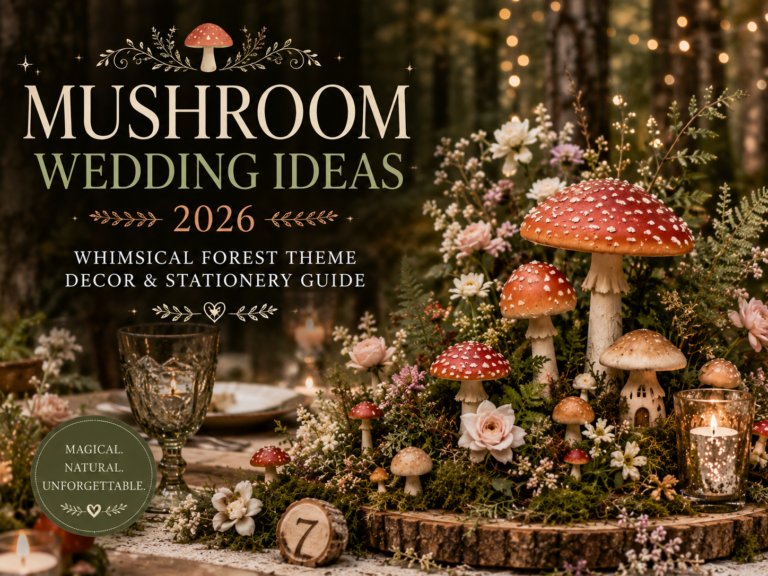
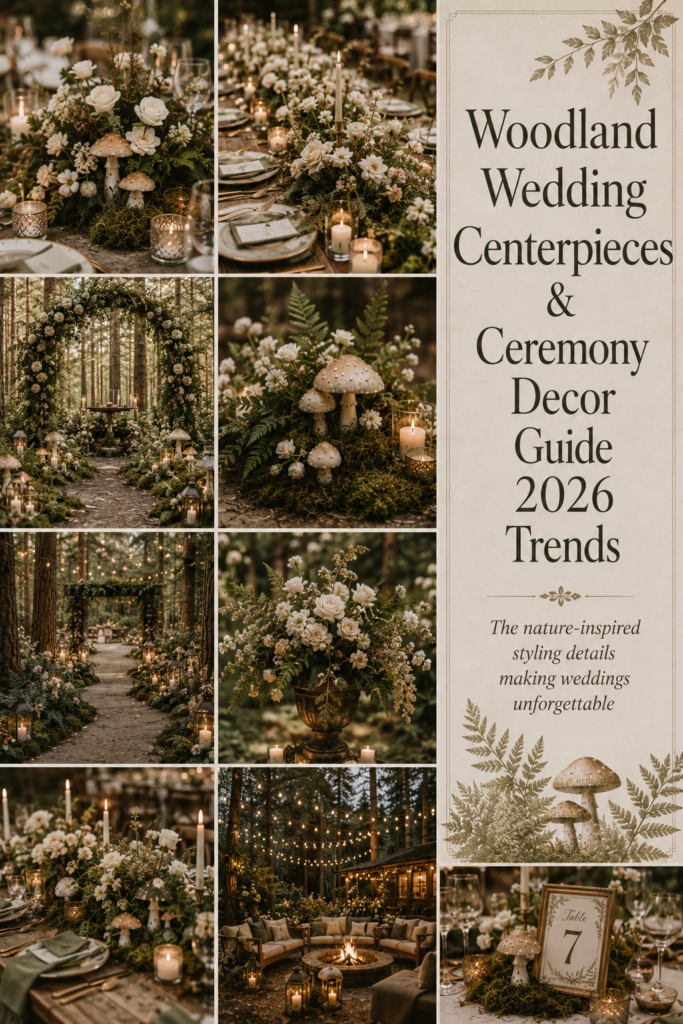
The forest floor centerpiece brings the ground-level richness of the woodland directly onto the reception table: a base of fresh moss, dense and genuinely green, with woodland botanicals tucked into and around it at varying heights. Mushroom elements — ceramic, resin, or carefully chosen dried specimens — can appear as though they grew into the arrangement overnight. Small stones, pieces of lichen-covered bark, or seed heads provide the textural variation that makes the arrangement feel genuinely complex rather than assembled. Vessel choices matter enormously here: hollowed logs or sections of bark-covered timber as low vessels, unglazed ceramic in earthy tones, or stone as a base all maintain the botanical register far better than conventional glass or metal.
2.2 — Wildflower Centerpieces
Wildflower forest wedding centerpieces work best when they look genuinely gathered rather than purchased: stems that are not all the same height, a mix of open blooms and buds, trailing foliage that spills over the edge of the vessel rather than being contained within it. Cosmos, chamomile, sweet William, and ox-eye daisies in season are the natural choices for summer and early autumn. Dahlias in rust and copper alongside dried grasses suit mid and late autumn. The vessel for a wildflower centrepiece should disappear behind the arrangement: jam jars, vintage bottles and jugs in milk-glass or amber, or small ceramic vessels in earthy tones allow the flowers rather than the container to lead. Groupings of three or five small vessels rather than a single centrepiece create a looser, more gathered impression that suits the woodland aesthetic better than a single formal arrangement.
2.3 — Antler & Botanical Centerpieces
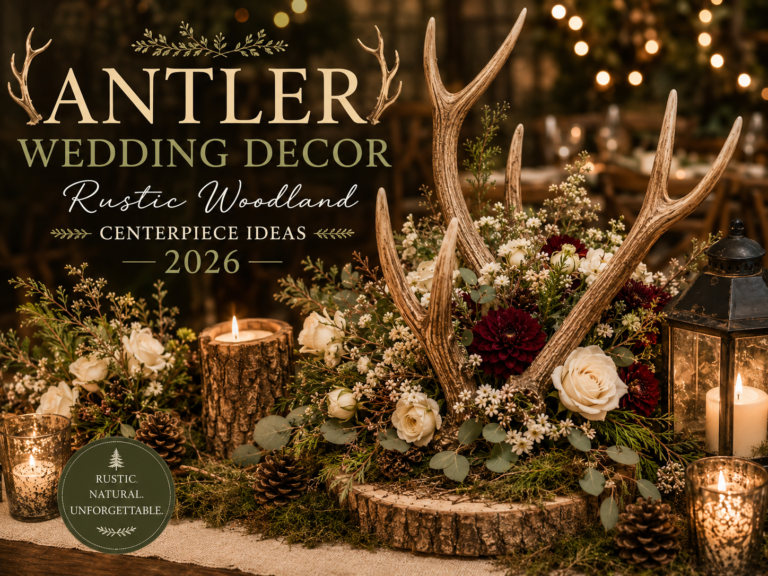
An antler centerpiece becomes editorial rather than thematic when the botanical context surrounding it is as considered as the antler itself. The antler — real shed antler or high-quality resin in a natural form — should be treated as the structural anchor of the arrangement: florals and foliage built low around its base, candles clustered nearby, moss tucked in at the ground level between the tines. The botanical material should look as though it grew toward the antler rather than being arranged around it. What makes the difference between an antler centrepiece that reads as genuinely beautiful and one that reads as a hunting lodge detail is almost entirely this: the quality and naturalness of the botanical material alongside it. Dense, real moss, loose-stemmed seasonal florals, and trailing greenery that spills and falls rather than being held in position will shift the reading entirely.
2.4 — Tall Forest Centerpieces
A tall centerpiece for a woodland reception brings the vertical structure of the forest canopy down to table level, and when executed well creates a genuinely extraordinary visual effect: guests seated beneath an arrangement of branching stems and trailing botanical material that makes the reception feel like an extension of the woodland outside. Bare or lightly foliaged branches in muted natural tones serve as the structural element, with seasonal florals and trailing greenery added at intervals along the length. The key is scale — tall enough to read across a long table but not so tall it becomes a visual obstruction for guests seated opposite. Heights of 90 to 120 centimetres work reliably for most table configurations, with the branching structure of the upper section providing the visual interest without blocking sightlines entirely.
2.5 — Enchanted Forest Centerpieces
For the most magical register of the enchanted forest wedding centerpieces category, fairy lights within the centerpiece design itself create an effect that is genuinely unlike anything available in conventional floral design. A glass terrarium with a forest floor arrangement inside it — moss, small stones, dried botanical elements, perhaps a ceramic mushroom detail — with a small strand of warm fairy lights wound through the base creates a centerpiece that glows from within as the evening progresses, becoming more beautiful as the natural light fades. Clear glass vessels with botanicals and submerged fairy lights at the base work similarly: the light travels upward through the water or the botanical material, creating a warm diffuse glow rather than a point source, which is an entirely different and far more atmospheric effect.
Complete the Forest Floor Table
Place cards and menus that echo the forest floor complete the table’s visual story. The Forest Woodland Wedding and Animals Woodland Wedding collections — both fully customizable with your names, date, and wedding details — carry deep botanical woodland illustration through every piece of table stationery.
Section 03
Woodland Wedding Ceremony Decor
3.1 — Choosing & Defining the Ceremony Space
The woodland wedding ceremony space should be chosen with the light at the time of the ceremony as the primary consideration — not the overall beauty of the location, which will be apparent at any hour, but the specific quality of light available at the moment the vows take place. Afternoon sun filtered through canopy creates a golden diffuse quality that flatters completely and photographs with extraordinary warmth. Direct overhead sun in a clearing creates harsh shadows that look unflattering and require no supplementary lighting but often less beautiful photos. Spend time in your chosen venue at the exact time of day your ceremony is planned, in the same season if possible, and assess the light at that moment rather than at any other.
3.2 — The Woodland Ceremony Arch
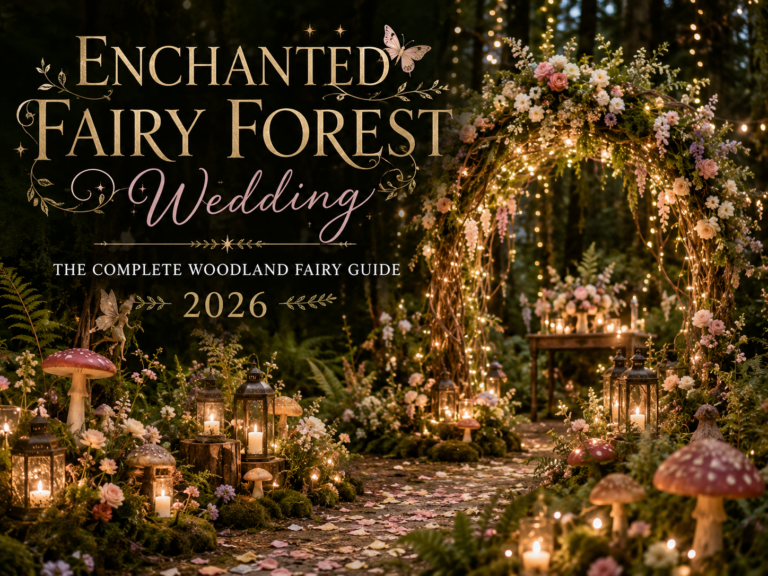
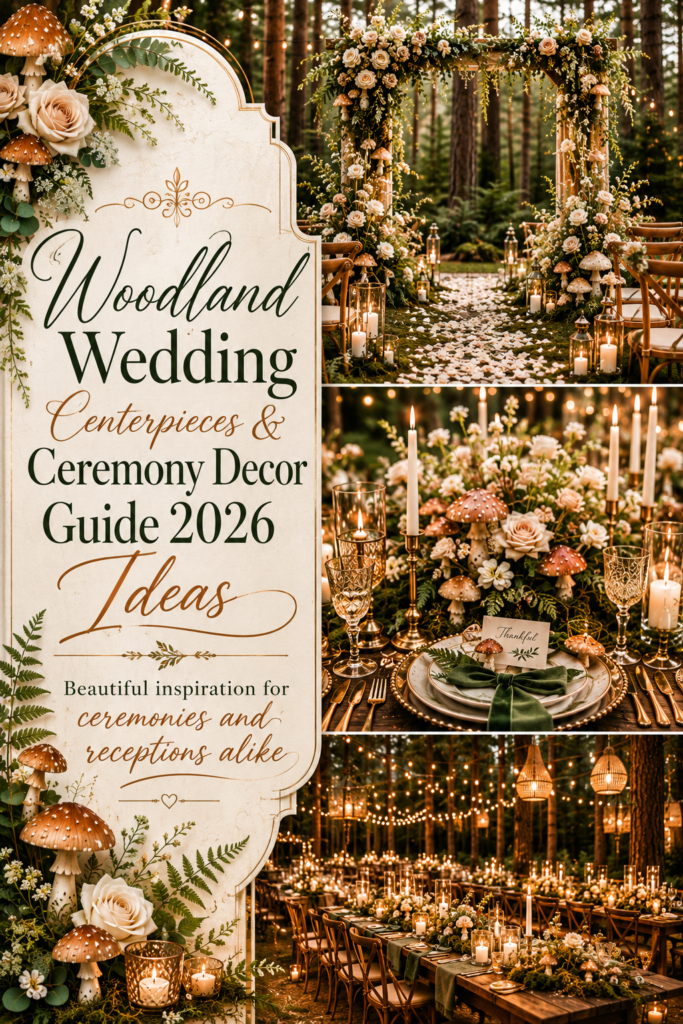
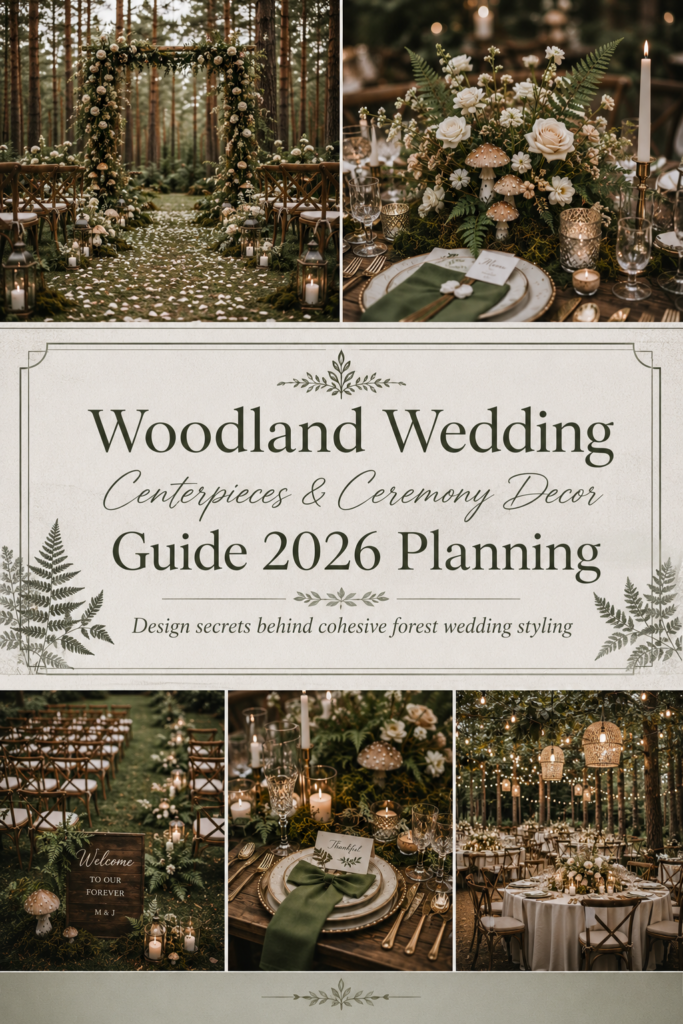
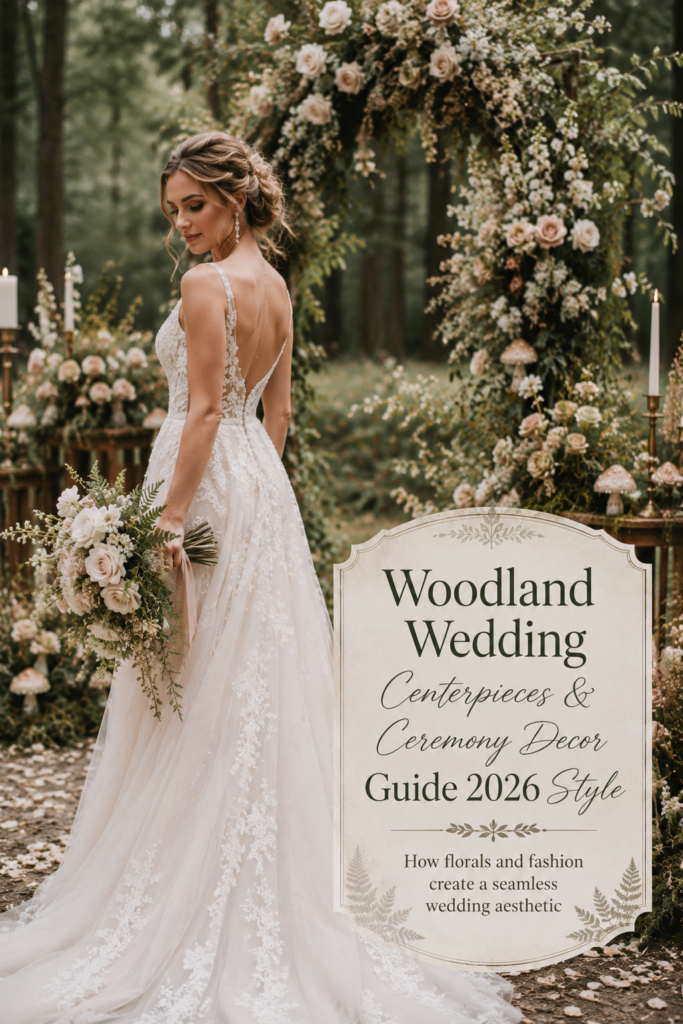
The woodland wedding arch is the single most searched element of the woodland ceremony category, and for good reason: it is the visual anchor of every ceremony photograph and the element that most clearly defines the aesthetic register of the day. For a woodland setting, the arch should feel as though it grew rather than was constructed — which means natural materials, organic asymmetry, and botanical abundance that looks gathered rather than arranged. A living branch arch, constructed from freshly cut or foraged branches bent into a curved form, with wildflowers and foliage wound through and trailing from the ends, creates this quality most directly. A foliage arch on a timber frame, using eucalyptus, ivy, and seasonal greenery as the primary material with florals added as accents, is more reliably structured while maintaining the organic feel.
Placement of the arch is as important as its construction. Position it so the treeline or the natural woodland behind it forms the backdrop in ceremony photographs, rather than open sky or the path that guests arrived by. The arch should frame the couple against the forest, not against the horizon. Ensure the arch is weighted or secured to ground spikes appropriate to the surface beneath it — a ceremony arch that shifts or falls in a breeze is one of the few woodland wedding failures that is genuinely preventable and genuinely memorable for the wrong reasons.
3.3 — Aisle Styling
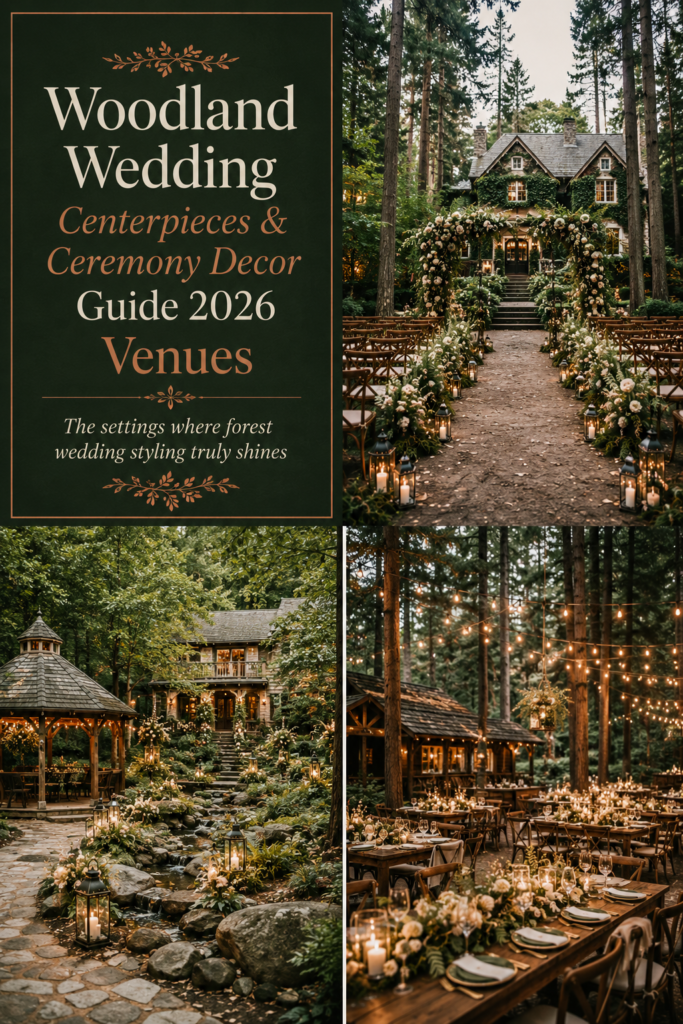
The aisle of a woodland ceremony should feel like an invitation to walk further into the forest rather than a corridor constructed within it. Scattered wildflower petals along a natural path, lanterns in glass vessels at ground level beside tree roots or set directly on the earth, and small bunches of seasonal wildflowers tied with natural twine to branches or stakes at every second or third row: these are the aisle markers that suit the setting without competing with it. Avoid anything at the aisle edges that is designed to read from a distance — the aisle styling should reward being walked rather than observed from afar. Candles rather than flowers at ground level create a genuinely beautiful effect as the light begins to fade, particularly in late afternoon ceremonies that run into early evening.
3.4 — Programs & Ceremony Stationery
Ceremony programs are held in every guest’s hands during the vows — for a woodland wedding they should feel like they belong to the forest: botanical illustration that echoes the arch botanical, a palette drawn from the woodland setting, and typography with the kind of natural quality that belongs to a handwritten note found in an old book rather than a corporate document. A folded program with botanical illustration on the cover, in the same visual language as the invitation suite, creates the first piece of stationery guests hold in person after receiving the invitation weeks earlier. That continuity is felt even when guests do not consciously notice it.
Ceremony Programs for the Forest
The Enchanted Woodland Wedding collection — fully customizable with your names, date, and wedding details — brings forest magic to ceremony programs that feel like they genuinely belong in the clearing where your vows take place.
Section 04
Woodland Wedding Reception Styling
4.1 — Table Styling
Long tables suit a woodland reception better than round ones — visually and practically. They adapt more easily to irregular spaces and the organic geography of woodland settings; they create a communal dining experience that matches the setting better than separated rounds; and they give the forest floor aesthetic — moss runners, trailing botanical table runners, centrepiece groupings that extend along the length — more space to breathe and develop. Linen in warm ivory, soft sage, or natural unbleached linen suits the woodland palette consistently better than white or bright coloured options. The ground-level forest floor elements — moss, small botanicals, natural materials placed directly on the table surface as runners or under centrepiece elements — are the detail that makes a woodland wedding table decor scheme feel genuinely of the forest rather than in front of a photograph of it.
4.2 — Lighting
Woodland wedding fairy lights work best at two different levels simultaneously: very high in the canopy, so sparse they suggest stars or fireflies rather than decoration; and lower, in the middle branches, denser, creating the effect of a lit interior in an outdoor space. The contrast between these two levels — sparse above, gathering below — creates depth and atmosphere that a single uniform lighting layer cannot. Candles and lanterns at ground level and on the tables provide the third layer: the warm, moving light that creates the intimate quality of the reception space and makes faces and flowers both look their best. The consistent principle across all three levels is that no harsh white or bright light should appear at any point — only warm tones (2700K to 3000K if you are working with electric sources) that complement rather than bleach the natural palette of the setting.
4.3 — Signage & Welcome Details
A welcome sign for a woodland wedding should feel as though it belongs in the forest rather than in a ballroom: natural timber as the sign material itself where possible, or a frame of foliage around a printed or hand-lettered design that echoes the botanical illustration of the stationery suite. Directional signage through the forest — pointing guests from car parks or entrances toward the ceremony space, the reception, the facilities — is both practical and an atmospheric opportunity: wooden arrows on natural stakes, with a sprig of seasonal botanical beside each one, transform what is essentially a wayfinding exercise into part of the overall woodland aesthetic. Guests navigating a forest toward a ceremony space via botanical signage are already in the world of the celebration before they arrive at it.
Stationery for the Reception
The Whimsical Woodland Wedding collection — fully customizable with your names, date, and wedding details — carries playful botanical woodland magic through welcome signs, table details, and every other reception stationery piece.
Section 05
Woodland Wedding Bouquet
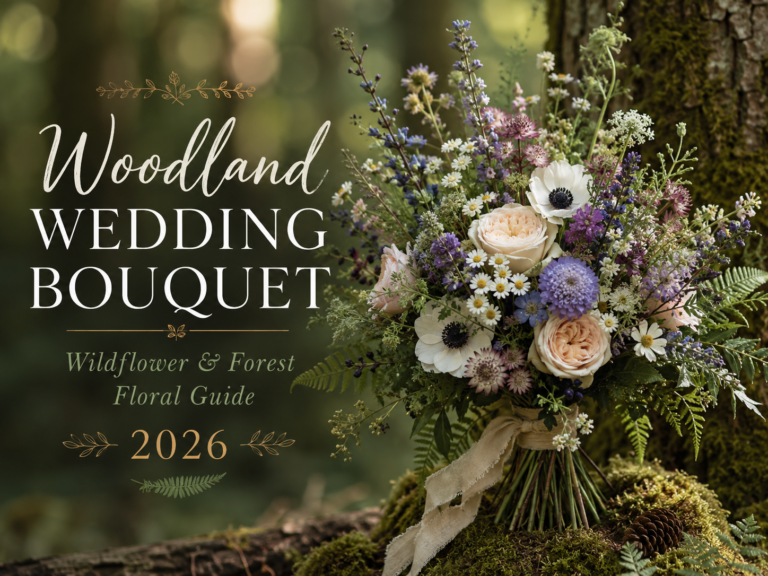
The woodland wedding bouquet should look as though it was gathered from a meadow edge rather than constructed in a studio. The stems should not all be the same height; the arrangement should have a slight looseness at the edges and not be tightly bound into a perfect sphere. Trailing foliage, fern fronds that extend beyond the main body of the bouquet, seed heads and dried grasses adding movement and texture at the edges: these are the details that shift the bouquet from formal to genuinely botanical. The wrapping material matters too — natural twine, undyed ribbon in ivory or sage, or linen ribbon rather than satin all belong to the aesthetic better than polished alternatives.
A forest floor bouquet incorporates elements that belong specifically to the woodland environment: moss details at the stem base, fern fronds and large botanical leaves as structural elements, perhaps a trailing ivy stem that creates a cascading quality. For the mushroom wedding aesthetic, small ceramic mushroom details can be tucked into the bouquet among the wildflower stems so they appear to grow naturally within the arrangement. For the antler aesthetic, a small antler charm at the handle — or a single small antler tine incorporated into the stem wrap — ties the bouquet to the wider motif of the day. In briefing any florist, the most useful phrase for achieving the right quality is this: the bouquet should look as though it was gathered that morning from the specific meadow the wedding is taking place near. That single instruction will communicate more than any list of specific flowers or arrangement styles.
Stationery to Match Your Wildflower Bouquet
The Wildflower Woodland Wedding collection — fully customizable with your names, date, and wedding details — carries the same botanical wildflower abundance as a gathered meadow bouquet through to every piece of place-setting stationery on the reception table.
Section 06
Woodland Wedding Stationery
Stationery is the first woodland detail guests receive — weeks or months before any of the decor in this guide exists in physical form. The invitation arrives and does something that no centerpiece or ceremony arch can do at that moment: it communicates the visual language of the celebration, establishes the palette, and creates the first expectation of what awaits. For a woodland wedding, the invitation should feel like stepping briefly into the forest on the morning of a clear October day — the botanical illustration doing the work of the setting before the setting itself is accessible.
Throughout the day itself, stationery appears at seven distinct moments: save the date and invitation (before the day), welcome sign and ceremony programme (at arrival and during the vows), seating chart (at the reception entrance), menu card and place card (at the table), and thank you card (after the wedding). A coordinated woodland stationery suite — in which the botanical illustration, palette, and typography remain consistent across all of these — creates a visual thread that guests experience as extraordinary consistency of design, even when they couldn’t identify the specific source of that quality. The forest language begun in the invitation is still present when the thank you card arrives six weeks later.
For the stationery flat lay — a photograph that consistently outperforms almost every other image type in the woodland wedding category on Pinterest — the woodland setting itself provides everything needed: aged timber, bark, fresh moss, seasonal wildflowers, and a quality of natural light that makes botanical invitation suites photograph with extraordinary depth and richness. An invitation suite styled on a bed of moss with real wildflowers alongside it and a section of lichen-covered bark beneath it is an image that communicates everything about a woodland wedding’s aesthetic in a single frame.
Shop the Collections
Five Woodland Wedding Stationery Collections
Forest Woodland Wedding
Deep forest botanical for table details and ceremony programs — the most architectural and ancient-feeling woodland collection.
Enchanted Woodland Wedding
Forest magic for ceremony programs and welcome signs — botanical enchantment in every piece guests hold in the clearing.
Whimsical Woodland Wedding
Playful botanical for reception signage and table details — joyful forest magic that photographs beautifully against any woodland backdrop.
Wildflower Woodland Wedding
Wildflower abundance for bouquet-matching place cards and menus — the most generously botanical collection in the woodland range.
Animals Woodland Wedding
Woodland wildlife illustration for nature-loving table settings — deer, fox, and forest creatures across every piece of table stationery.
Frequently Asked Questions
Common Questions
What are the best woodland wedding centerpiece ideas?
The best forest wedding centerpieces are the ones that feel as though they belong in the setting: a forest floor arrangement with real moss as the base, wildflowers and small woodland botanical details tucked in as though they grew there, candles in glass vessels clustered nearby. The vessel choice matters as much as the botanical material — hollowed timber, bark-covered containers, unglazed ceramic, or stone all maintain the naturalistic register better than conventional glass or metal vases. Groupings of mismatched small vessels with wildflower stems rather than a single formal centrepiece suit the aesthetic better than anything that reads as constructed rather than gathered.
How do I decorate for a woodland wedding ceremony?
Start with less rather than more: assess the natural architecture of the ceremony space and decide what it already provides before adding anything. The woodland wedding ceremony arch should be positioned with the treeline as the backdrop for photographs, secured to ground spikes appropriate to the surface, and constructed from natural materials — living branches, trailing foliage, seasonal florals — that look gathered rather than arranged. Aisle markers should be at ground level — glass lanterns, wildflower bunches tied to stakes, scattered petals — rather than raised on stands. Ceremony programmes in a botanical illustration that matches the invitation suite are the final detail that ties the ceremony into the broader visual story.
What flowers work best for woodland wedding centerpieces?
Flowers that look genuinely gathered from a nearby setting rather than florist-purchased: cosmos, chamomile, sweet William, and ox-eye daisies for spring and summer; dahlias in rust, copper, and deep burgundy, late sunflowers, and dried grasses for autumn. Fern fronds, trailing ivy, and seasonal foliage provide the structural greenery that makes woodsy wedding decorations look as though the forest is contributing to its own celebration. The consistent principle: abundance and looseness rather than precision, flowers that spill and trail rather than stand in neat contained arrangements.
What stationery suits a woodland wedding?
Botanical illustration in the palette of your chosen woodland aesthetic, with typography that belongs to the handmade rather than the digital. The five collections in the showcase above each match a different register of the woodland wedding: the Forest Woodland Wedding for the most architecturally dramatic woodland, the Enchanted Woodland Wedding for fairy forest celebrations, the Whimsical Woodland Wedding for the joyful and playful version, the Wildflower Woodland Wedding for botanical abundance, and the Animals Woodland Wedding for wildlife-loving couples. All fully customizable.
Woodland Wedding Stationery · 2026
Shop Woodland Wedding Collections
Fully customizable with your names, date and wedding details.