Woodland Wedding Dress
Woodland Wedding · 2026
Woodland Wedding Dress — Nature Inspired Bridal Guide 2026
From flowing chiffon fairy gowns and botanical lace creations to earthy boho silhouettes and enchanted forest bridal looks — the complete guide to choosing your woodland wedding dress in 2026.
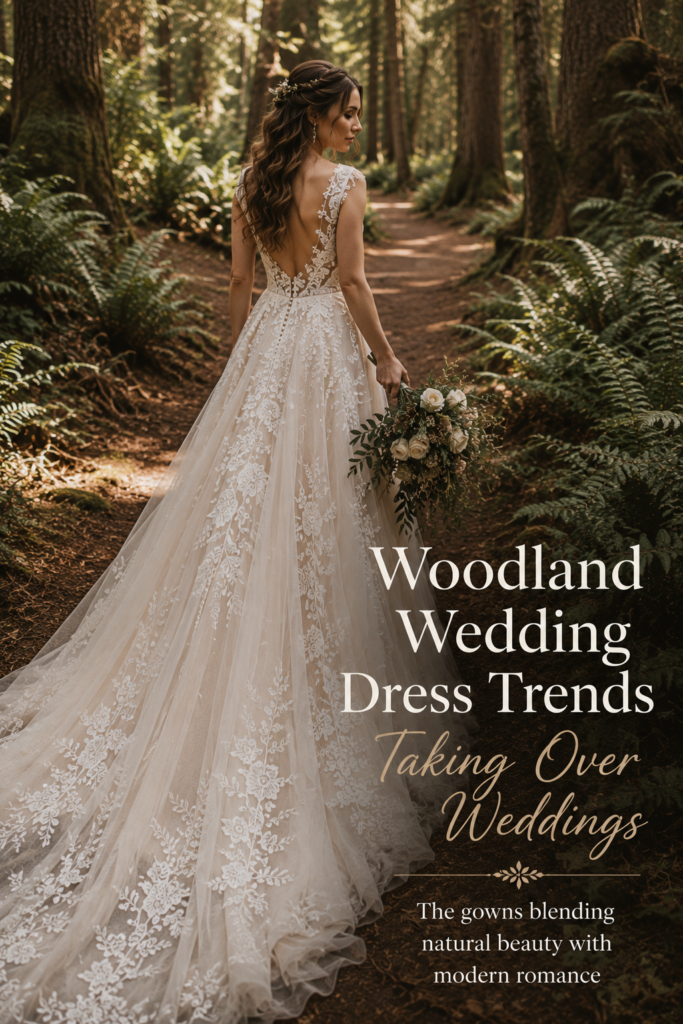
The woodland bride has a specific vision that is difficult to articulate precisely but immediately recognisable in a photograph: a dress that looks as though it belongs in the forest, not as though it was transported there for a scheduled event. The fabric should move with the breeze rather than against it. The details — the lace, the embroidery, the silhouette — should echo the botanical world surrounding the ceremony rather than contrasting with it. This guide identifies six distinct woodland bridal aesthetics for 2026, describes what defines each one, and explains how to choose the approach that most naturally suits both the bride and the forest she is planning to marry in. It also covers accessories, hair, and the stationery suite that completes the woodland bridal story before a single guest has arrived at the ceremony.
She walked into the trees wearing something the colour of old lace, and the trees did not notice the difference. The fabric moved the way the ferns moved in the same breeze. She looked, in the best possible way, as though she had always been there.

Section 01
The Woodland Bride Aesthetic in 2026
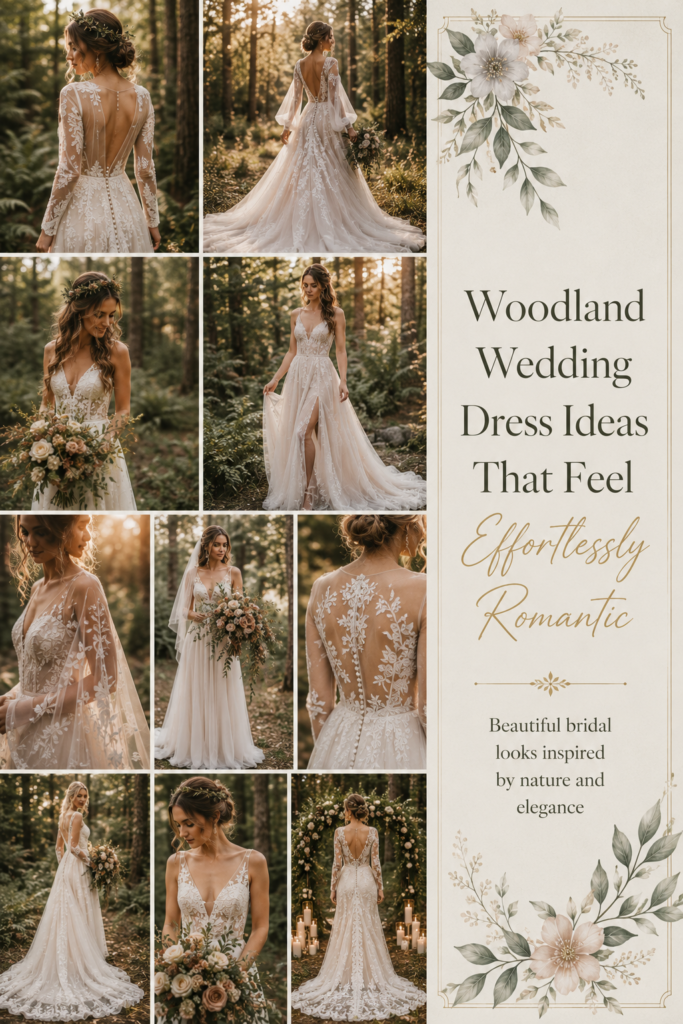
She has been saving photographs for months, possibly years. Ancient trees, dappled light, a dress that trails slightly in the ferns. A flower crown that looks less like an accessory and more like something that arrived on its own. She is not looking for a specific gown so much as a specific feeling — the feeling of being genuinely at home in the landscape rather than posed against it. The woodland fairy wedding dress search on Pinterest grew faster than any other bridal category in 2025 and shows no sign of slowing in 2026, because this aesthetic answers something that conventional bridal fashion rarely does: it asks the dress to belong somewhere specific, and that specificity is what makes it extraordinary.
The woodland bridal aesthetic has expanded significantly from a single “romantic bohemian” category into six distinct directions, each with its own visual logic, its own fabric choices, and its own relationship to the forest setting. The fairycore movement — which brought the specific aesthetics of fairy tales, forest magic, and the otherworldly into mainstream fashion — has contributed one end of the spectrum. The cottagecore movement — which celebrated rural domesticity, handmade quality, and the beauty of the genuinely ordinary natural world — has contributed another. Between and beyond them, the boho bride who finds beauty in organic texture and natural colour, the dark fairy bride who wants magic and shadow in equal measure, and the earthy wildlife bride who simply wants to feel like the forest itself: all of these are woodland brides in 2026, and they want very different dresses.
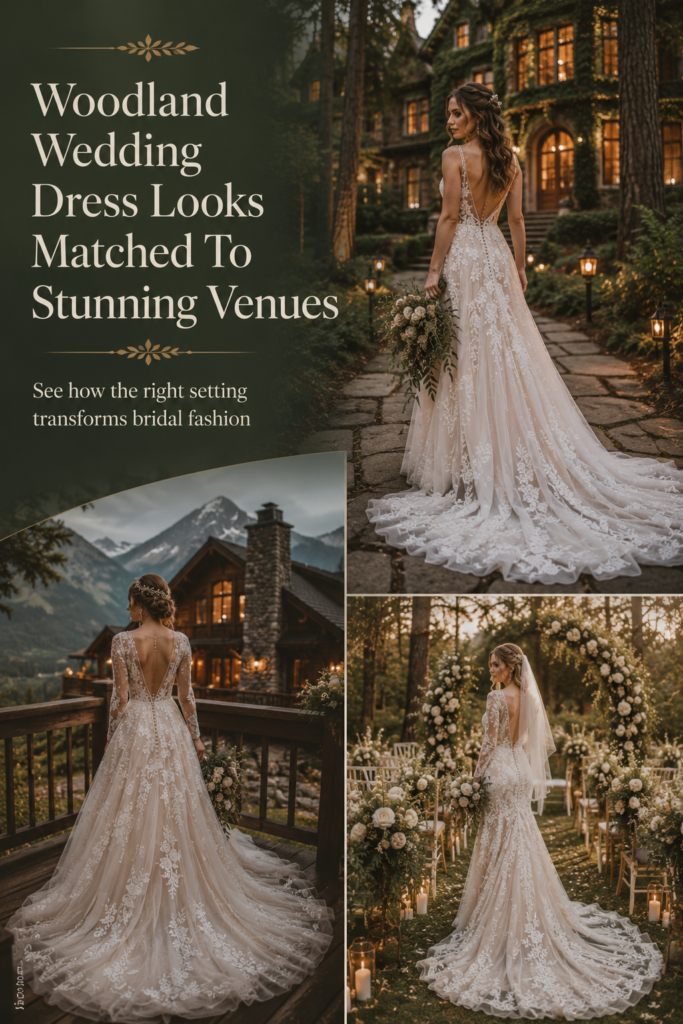
What distinguishes a woodland dress from a simply beautiful or romantic or bohemian one is ultimately the question of belonging. A nature inspired wedding dress is not simply a pretty dress worn outdoors. It is a dress that looks as though it has a genuine reason to be in the specific natural setting it inhabits. The fabric should move the way the foliage around it moves. The colour should belong to the palette of that forest at that hour. The details — lace, embroidery, fabric texture — should echo the botanical world rather than contrast with it. In natural light, with the right photographer and the right setting, a woodland dress achieves something formal bridal fashion rarely can: the bride looks not as though she is being photographed in front of nature, but as though she is part of it.
This quality — belonging — is also why these photographs perform so consistently well on Pinterest, Instagram, and in editorial wedding coverage. Images of woodland brides in the right settings, at the right time of day, in gowns that genuinely suit the landscape, have a visual depth and atmospheric richness that studio or ballroom bridal photography cannot replicate. The light through canopy at three in the afternoon in October, falling on flowing chiffon, is an image that no photographer needs to engineer: the forest engineers it, and the dress is there to receive it.
Section 02
The Six Woodland Wedding Dress Aesthetics
The woodland bridal aesthetic has become specific enough by 2026 that choosing the right dress begins with identifying which register you are drawn to. Six aesthetics follow — from the most ethereal to the most understated, from the lightest to the darkest. Find the description that makes you immediately want to keep reading.
Aesthetic 2.1
The Fairy Forest Gown
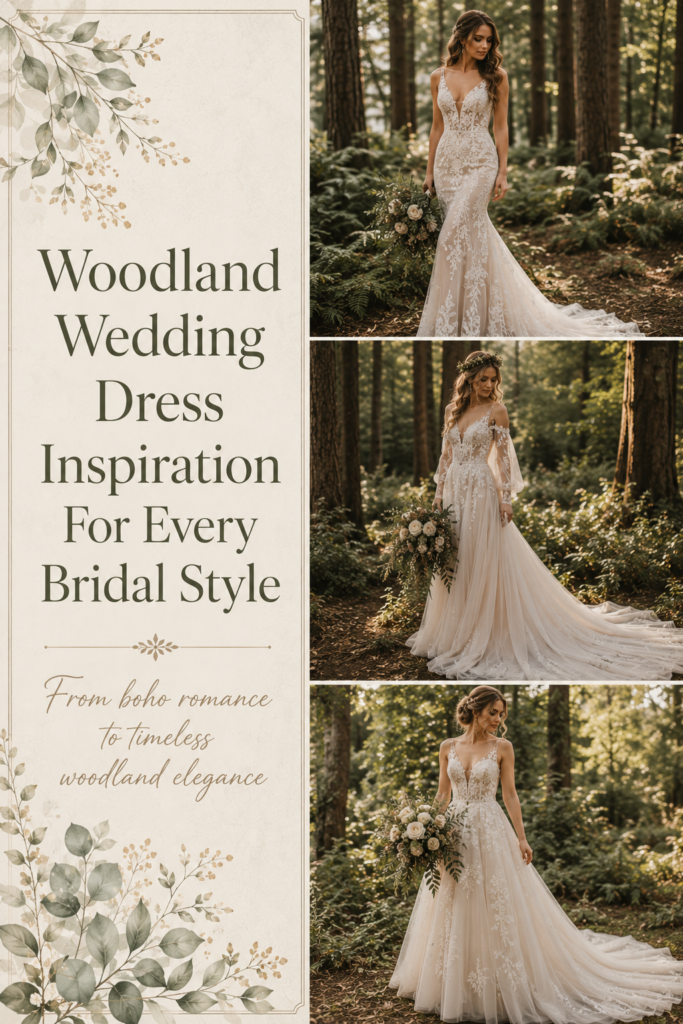
The most searched woodland fairy wedding dress aesthetic is built around the specific quality of a gown that appears to belong to a world where the distinction between the human and the natural has become pleasantly unclear. Flowing chiffon or the softest tulle — fabrics light enough to respond to the smallest forest breeze and create movement that suggests the dress is breathing — form the foundation of this look. The silhouette is almost always A-line or empire waist, long and trailing, with the kind of skirt that gathers wildflower stems and catches dew from the undergrowth as the bride walks. This is, emphatically, not a dress designed for a ballroom.
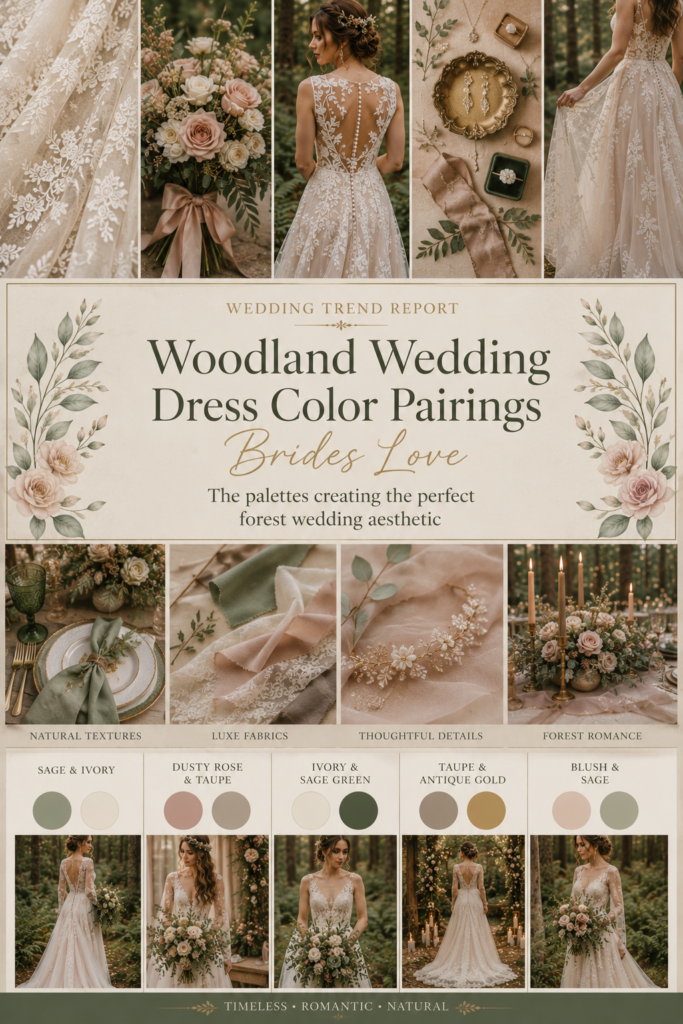
The details that define the fairy forest gown are the ones that belong to the natural world: delicate botanical embroidery on the bodice or sleeves, worked in white or ivory thread so it is visible only when light falls across it at an angle; flutter sleeves in layers of chiffon that move independently of the body beneath them; an open back that allows the forest air to reach the skin. Trailing skirts of three or four layers of lightweight fabric, each slightly different in opacity, create a depth when photographed that reads as genuinely ethereal rather than simply lengthy. The colour is almost always ivory, soft white, or the palest blush — and the most adventurous version allows itself the palest sage, which in the right forest setting reads not as a colour choice but as a natural phenomenon.
This dress photographs magnificently in ancient tree settings for one specific reason: the fabric responds to the same light and air that photographs the trees. When a gentle breeze moves through a woodland clearing in late afternoon, a chiffon fairy gown moves with it in exactly the way the leaves and ferns do — everything in the frame animated by the same invisible force. The photographer’s job, in this setting, is simply to be ready.
Styling the fairy forest gown: barefoot or barely shod, flower crown over loose unstructured hair, minimal jewellery that does not compete with the botanical setting. The specific accessories that work best are the ones that could have been found nearby: a crown of fresh wildflowers gathered that morning, a thin chain of antique gold, no earrings larger than a small botanical detail. The goal is a bride who looks as though she arrived in the forest already wearing what she arrived in, and found it was exactly right.
Complete the Look: Stationery
A fairy forest bride deserves stationery that carries the same ethereal magic from the moment guests receive the invitation — botanical illustration with the same quality of delicacy and depth as the embroidery on the gown itself. The Enchanted Woodland Wedding collection — fully customizable with your names, date, and wedding details.
Aesthetic 2.2
The Botanical Lace Gown
If the fairy forest gown is about movement and light, the botanical lace gown is about detail and depth. This is the nature inspired wedding dress for the bride who wants every square centimetre of her gown to tell a botanical story — flowers climbing the sleeves, leaves worked into the train, a bodice so densely illustrated in needle and thread that it reads as a piece of botanical art at close range and, from the distance of the aisle, as something that has genuinely grown on the person wearing it. Botanical lace is the most technically complex woodland bridal choice, and it is also the most completely of the aesthetic: a bride in botanical lace looks, more than almost any other bridal style, as though she grew into the forest rather than stepping into it.
The lace itself comes in two registers. The first is the delicate, open-worked variety: widely spaced botanical motifs on sheer ground, the flowers and leaves floating as individual illustrations within a near-transparent background. This reads as light and ethereal in photographs and suits the fairy forest aesthetic as much as the botanical one. The second is the denser, more architectural variety: closely worked floral and leaf patterns with genuinely three-dimensional appliqué elements that catch light and cast small shadows on the fabric beneath them. This second variety is the more dramatic choice and the one that reads most powerfully in photographs taken in deep woodland shade, where light and dark contrast creates the specific depth that makes botanical lace look genuinely extraordinary.
Silhouettes that work best with botanical lace are those that allow the lace to be the primary visual story: fitted bodices that show the botanical pattern clearly, A-line skirts that allow the lace in the train and hem to trail naturally, and long sleeves that give the climbing botanical detail the length it needs to develop fully. Short or structured silhouettes tend to interrupt the lace’s visual narrative. The opposite of interruption is a cathedral train of dense botanical lace trailing through a woodland clearing: an image that belongs in no other setting and perfectly in that one.
Styling botanical lace outdoors requires one primary consideration: ground surface. Deep lace trains are exquisite on grass and woodland earth and can be gently cleaned afterward; they are damaged by rough stone and gravel, which catch the individual lace threads. Scout your venue with the train in mind. For the rest of the styling: botanical lace carries its own jewellery in the form of the needlework itself, so hair accessories and jewellery should be genuinely minimal. A single botanical hairpin. Small stud earrings. The lace has already said everything that needs to be said.
Complete the Look: Stationery
Botanical lace tells its story in thread; botanical stationery tells it in illustration. The two belong together — wildflower invitation suites that share the same spirit of dense, detailed nature imagery as the gown itself. The Wildflower Woodland Wedding collection — fully customizable with your names, date, and wedding details.
Aesthetic 2.3
The Earthy Boho Gown
The earthy boho gown is the most grounded of the six — the dress for the bride who wants to feel like the forest rather than like a visitor from another world who has arrived in it. Where the fairy gown is ethereal and the botanical lace is architectural, the earthy boho gown is organic: heavy natural-fibre fabrics that drape with genuine weight and character, raw or unfinished hems that look as though the dress was cut that morning with deliberate artlessness, flowing silhouettes that prioritise the sensation of wearing over the visual impact of being seen. This is, in the very best sense, a comfortable dress. The kind a bride can actually walk in, through real woodland ground, at any pace she chooses.
Fabrics for the earthy boho gown are those with natural origin and natural behaviour: linen, raw silk, crepe, and the heavier organic chiffons that hang with substance rather than floating. The colour palette stays close to the forest floor: warm ivory, unbleached cream, the palest terracotta, the dull gold of dried grasses. Not white — white belongs indoors, in controlled light. These tones belong outdoors, where the light is warmer and more unpredictable and infinitely more flattering to organic fabric colours. The silhouette is almost always a variation on flowing and unstructured: slip dresses, column gowns with movement, two-piece combinations of a simple fitted top with a flowing skirt, or the classic boho A-line with its specific quality of generous movement without grandeur.
Ornamentation in the earthy boho aesthetic tends toward the minimal and the handmade: a single piece of hand-embroidered botanical detail at the cuff or neckline rather than an embroidered bodice, a lace trim that reads as genuinely vintage rather than manufactured to look it, a ribbon tie at the waist in undyed linen. The operative quality is always that it looks as though it was made by hand rather than produced at scale, which means the most expensive boho gowns often look less expensive than they are, and the most thoughtfully chosen affordable ones look like heirlooms.
For outdoor ceremonies on natural terrain — woodland paths, meadow grass, uneven ground — the earthy boho gown is arguably the most practically suited of the six. The natural fibres move with walking rather than against it, the unstructured silhouette accommodates unexpected terrain, and the raw or handkerchief hem clears the ground without the vulnerability of lace to snagging. Style with natural hair worn loose or in a simple braid, dried botanical elements rather than fresh flowers, and accessories in aged brass or bone rather than polished metal. The whole effect should be the opposite of effort: a bride who looks as though she dressed in a meadow and found she had been dressed perfectly.
Complete the Look: Stationery
The earthy boho bride wants every detail to feel organic and genuine — including the invitation. Boho woodland stationery in warm earthy tones and loose botanical illustration carries the same free-spirited warmth as the gown itself. The Boho Woodland Wedding collection — fully customizable with your names, date, and wedding details.
Aesthetic 2.4
The Cottagecore Woodland Gown
The cottagecore wedding dress woodland variant celebrates the most romantically domestic of the six aesthetics: puffed sleeves, milkmaid necklines, wildflower embroidery, and the specific feeling of a bride who has walked out of a century-old farmhouse into the meadow beside it wearing something her grandmother would have recognised as extraordinary but not alien. This is the woodland aesthetic with the most literary quality — the dress that belongs in the pages of a novel set in the English countryside, where a character falls in love in an orchard in September and doesn’t fully understand how lucky she is until much later.
The defining silhouette is the puff sleeve, and in 2026 it appears in a range of interpretations: the voluminous Victorian-inspired sleeve that runs from shoulder to wrist, gathering at the cuff; the shorter puff at the shoulder that releases into a flowing skirt; the flutter puff that is more suggestion than structure, in lightweight fabric that collapses slightly in movement. Each of these belongs to the same cottagecore register while creating very different photographic effects. The Victorian sleeve is the most dramatic and works best for formal outdoor ceremonies. The shorter puff is the most versatile and suits both indoor and outdoor settings. The flutter puff is the most romantic and the one that moves most beautifully in a gentle breeze.
Milkmaid and square necklines are the natural companions to the cottagecore sleeve: framing the collarbone and shoulders with gentle structure while the skirt flows freely. Wildflower embroidery on the bodice or along the hemline — worked in coloured thread rather than the white-on-white of the fairy gown — introduces soft colour notes that connect the dress to the seasonal botanical world around it. A dress with a bodice embroidered in small flowers in pale pink, ivory, and gold, worn in a wildflower meadow where those same colours are present in the real flowers around the ceremony space, creates a visual resonance between bride and setting that photographs with exceptional warmth.
Hair for a cottagecore woodland bride tends toward the historically romantic: loose waves, soft braids, a low chignon with natural tendrils escaping at the temples. Fresh flowers worked into the hair — not a dramatic crown but a scattering of small stems pinned in at intervals — suit the aesthetic perfectly. The overall effect should be the quality of genuine care applied with apparent effortlessness: a bride who has taken the time to look beautiful in a way that doesn’t look as though she has taken any time at all.
Complete the Look: Stationery
The cottagecore bride connects naturally to wildflower stationery — botanical abundance in warm, romantic illustration that carries the same old-world domestic warmth as the puffed sleeves and milkmaid necklines of the gown. The Wildflower Woodland Wedding collection — fully customizable with your names, date, and wedding details.
Aesthetic 2.5
The Dark Fairy Gown
For the bride drawn to the older, stranger end of the fairy tale tradition — the forest at dusk rather than at noon, the celebration that leans into shadow alongside light — the mystical wedding dress dark fairy aesthetic is the most dramatically distinctive of the six. This is not a subversion of bridal convention so much as a different and equally genuine tradition: the dark dress has as long a history as the white one, and in a woodland setting at evening, it belongs far more naturally. Deep midnight blue, darkest forest green, burgundy so deep it reads as black in shadow and as richest red in candlelight: any of these, in fabrics that move as beautifully as the conventional ivory fairy gown, create a bridal image that is genuinely extraordinary and recognisable as belonging to no other aesthetic.
The structural logic of the dark fairy gown is the same as the lighter version: flowing fabric, movement, botanical or celestial detail in the embroidery, trailing skirts that interact with the ground they move across. The difference is entirely in colour and in the specific quality of darkness that the colour allows. A midnight blue chiffon gown in a forest clearing at dusk, with fairy lights in the canopy above and candlelight at ground level, catches and reflects light in the way that dark fabric uniquely does: absorbing some, returning other, creating a depth and luminosity that pale fabrics simply cannot replicate. The dark fairy bride often chooses metallic embroidery — silver or gold botanical detail on dark fabric — which catches every light source present in the woodland setting and creates the specific effect of a constellation arranged across the gown.
This aesthetic performs best in photographs taken in low light or at twilight, when the forest is at its most atmospheric and the candlelight has become the primary illumination. A dark fairy gown in full afternoon sunlight is slightly flat, the way any very dark-coloured fabric can be in bright unmodified light. But at dusk, or in the deep shade of an old-growth forest at any hour, it becomes something else entirely: the dress is lit from within, the embroidery glows, and the impression is less of a bride in a gown than of a figure who has arrived from somewhere more beautiful and more mysterious than ordinary life.
Styling the dark fairy gown: silver or gold botanical hair accessories rather than fresh flowers (which read as too light against dark fabric in photographs), dramatic metallic jewellery that catches the available light, bare shoulders where the fabric allows. The specific quality to aim for is what might be called comfortable theatricality — a look that is dramatic without appearing to require effort, as though the darkness of the gown is simply the accurate colour of the bride in question. She is not performing darkness. She simply belongs to it.
Complete the Look: Stationery
A dark fairy celebration needs stationery that matches its atmospheric register — moonlit botanical illustration and twilight tones from the invitation through to the last place card at a candlelit table. The Fairy Goth Theme collection — fully customizable with your names, date, and wedding details.
Aesthetic 2.6
The Wildlife Woodland Gown
The most understated of the six — and, in its own way, the most confident. The woodsy wedding dress wildlife woodland aesthetic does not announce itself. It simply belongs: warm ivory or the palest cream, in fabric that drapes naturally, with botanical details that are present because they belong rather than to make a statement. This is the dress for the bride who is more interested in feeling genuinely at home in the forest than in being seen to be there. The photographs it produces tend to be quieter than those of the more dramatic aesthetics — and are often, for exactly that reason, the ones that aged the best over decades.
The wildlife woodland gown carries its forest connection in botanical and creature details rather than in silhouette drama: small embroidered wildlife motifs on the cuff or at the hem, worked into the gown with the same skill as the botanical embroidery of the lace aesthetic but with specific forest creature references rather than purely floral ones. A single small embroidered fox at the train hem. A pair of birds worked into the sleeve. A scattering of acorns or oak leaves at the waistline. These details are small enough to be missed at distance and perfectly legible up close, which creates the specific quality of a private joke between the bride and anyone who looks closely: a gown that offers its secrets only to those who earn them.
Fabrics for the wildlife woodland gown tend toward the medium-weight organics: heavy crepe or silk charmeuse with natural body, soft velvet for autumn and winter weddings where the texture belongs to the season, chiffon layered over heavier lining for the kind of movement that photographs as flowing without the vulnerability of a purely lightweight fabric to the elements. Colour stays in the palest neutral register: warm ivory, unbleached cream, the specific off-white of old silk that has been washed and worn and loved. Nothing bright, nothing sharp, nothing that would look wrong in a forest in October.
The wildlife woodland bride styles herself with the same understatement as the gown: hair worn naturally, a flower crown only if the flowers are wild, no jewellery that reads as precious or formal. If there is jewellery, it is antique: a pin from another century, a ring that belonged to someone before her, a chain thin enough to disappear into the lace at the neckline. The effect should be of a woman who dressed without a mirror and was somehow exactly right. Which is, of course, the most difficult effect to achieve, and the most beautiful when it is achieved correctly.
Complete the Look: Stationery
The wildlife woodland bride connects naturally to stationery that celebrates the creatures of the forest alongside its botanicals — illustration with genuine character, in warm natural tones that belong to the same world as the gown. The Animals Woodland Wedding collection — fully customizable with your names, date, and wedding details.
Section 03
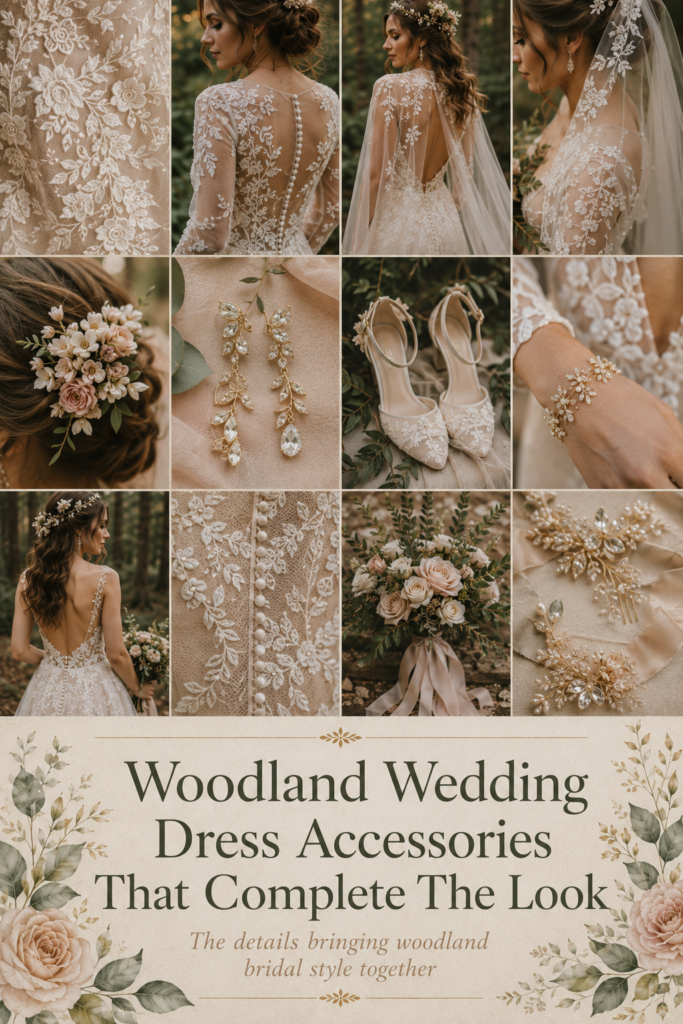
Woodland Bridal Accessories & Style Details
The Flower Crown
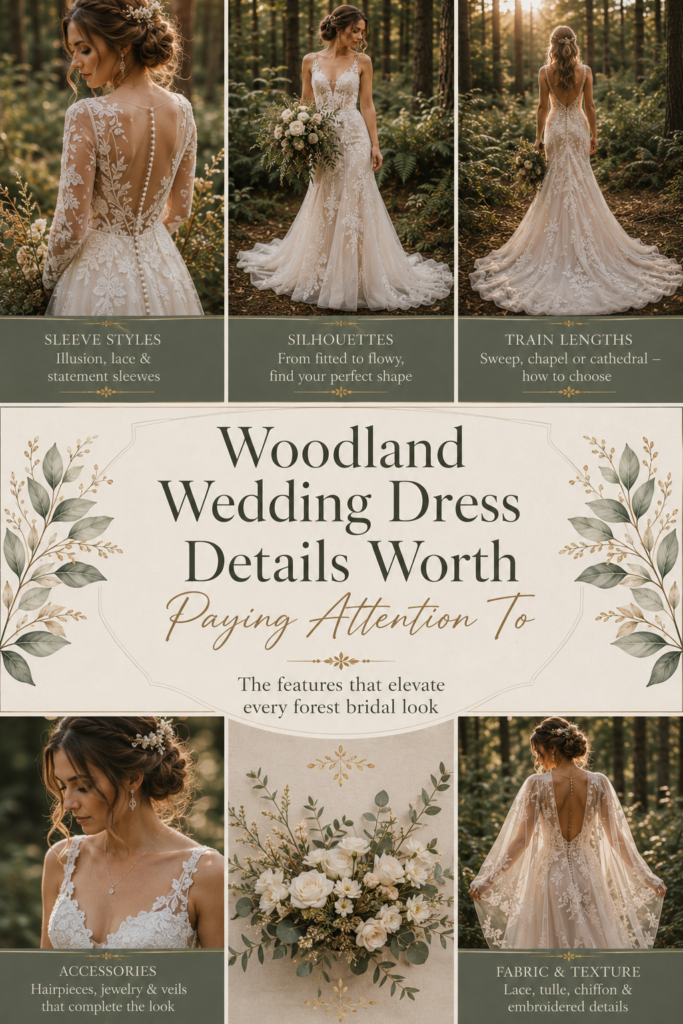
The flower crown is the most universally recognised symbol of the woodland bridal aesthetic, and it deserves more thought than it usually receives. The most beautiful woodland flower crowns are not the most elaborate ones — they are the ones that look as though they were made from what was growing nearby that morning. A few stems of whatever is in season, wound loosely with natural twine or fine floral wire, positioned on the head so it sits slightly back from the forehead rather than sitting straight across it: this is the crown that photographs as genuinely natural. The very elaborate and precisely constructed versions, with flowers hot-glued into perfect arrangements, tend to read as decorative rather than organic in photographs, which is the opposite of what the woodland aesthetic requires.
Dried botanical crowns — dried grasses, seed heads, preserved foliage — are the alternative for brides who want the crown to last through the day without wilting in summer heat. They also suit the earthy boho and cottagecore aesthetics better than fresh flowers in some settings, particularly autumn and winter woodland weddings where fresh wildflowers are not in season. The distinction between a beautiful dried botanical crown and one that reads as less considered is entirely in the quality and natural variety of the dried material used: genuine dried botanical specimens with real texture and colour, rather than craft-supply dried flowers with the flattened appearance of things that were never particularly alive.
Hair for the Woodland Bride
The woodland bride’s hair should look as though it has been allowed to do what it wanted rather than controlled into something it is not. This is different from being unstyled: the best woodland bridal hair is specifically styled to look natural, which requires exactly as much skill as conventionally formal bridal hair but in a different direction. Loose waves that have been set and released, soft braids that incorporate botanical elements, low chignons with natural-looking tendrils at the temples: all of these suit the woodland aesthetic better than anything architecturally precise or highly lacquered. The general principle is that a gentle breeze should be able to move through the hairstyle without ruining it, and this usually means avoiding styles that require significant product to hold in position.
Shoes & Ground Considerations
The most practical decision in woodland bridal styling is footwear, and it is also one of the most photographically significant. The woodland aesthetic is forgiving of unusual shoe choices in a way that conventional bridal is not: bare feet in a woodland ceremony are genuinely beautiful in photographs and the most sustainable choice for an outdoor setting; flat sandals in natural leather suit both the aesthetic and the terrain; block-heeled boots in cream or ivory can work beautifully for autumn and winter weddings; low kitten heels are the maximum practical advice for woodland ground. Stilettos and narrow heels are not a practical choice on woodland ground, grass, or earth and create a specific hazard in terrain that is uneven — the only element of woodland wedding styling where practicality and aesthetics are in perfect agreement.
Section 04
Practical Guidance for the Woodland Bride
Working with Natural Light
The single most important factor in how any woodland wedding dress photographs is the light at the moment of the photograph, and light in woodland settings varies enormously by hour, season, and canopy density. Late afternoon in October, with a full canopy overhead and low sun entering the clearing at an angle, is a different photographic environment from a June morning with high sun and thin canopy. Brief your photographer in advance with the specific setting and the planned ceremony time, and ask them to assess the light at that hour before the wedding day. The dress choice and the timing of formal photographs can both be adjusted around the light rather than working against it.
Caring for Natural Fabrics Outdoors
The fabrics most suited to the woodland aesthetic — chiffon, linen, raw silk, natural crepe — are more delicate than the structured fabrics of conventional bridal wear and require specific consideration for an outdoor setting. Lightweight chiffon picks up moisture from the ground in damp conditions; linen creases with sitting; raw silk can mark if it comes into contact with tree bark or rough surfaces. None of these is a reason to choose a different fabric, but all of them are reasons to plan the day with the fabric’s behaviour in mind: a layer of protection between the gown and the seating during the reception, a trusted attendant who knows where the delicate areas of the dress are, and a dress steamer available at the venue for early-day creasing are the practical considerations that allow you to wear the dress you want to wear without anxiety about the environment you’re wearing it in.
Frequently Asked Questions
Common Questions
What makes a wedding dress “woodland” rather than simply boho?
The distinguishing quality is belonging. A boho dress is a style choice that can be worn anywhere with the right styling. A woodland wedding dress is specifically designed to look as though it belongs in a natural forest setting — fabrics that respond to the same breeze that moves the leaves around them, colours that exist in the natural palette of the setting, details that echo the botanical world rather than simply decorating the wearer. The question to ask is not “is this boho?” but “would this dress look more beautiful in a forest than anywhere else?” If yes, it is a woodland dress.
What fabrics work best for a woodland wedding dress?
Chiffon and soft tulle for the fairy forest aesthetic, where movement in the breeze is the defining quality. Natural linen, raw silk, and heavy crepe for the earthy boho and wildlife woodland aesthetics, where organic weight and texture matter more than float. Lace in botanical patterns for the botanical lace aesthetic, where the detail of the fabric is the primary visual element. The consistent principle: fabrics with natural origin or natural behaviour in the setting, in colours that belong to the woodland palette at the time of year you are marrying.
Can I wear a flower crown for a woodland wedding?
What stationery completes the woodland bridal look?
Stationery in the botanical illustration style of whichever of the six aesthetics above most closely matches your dress. The Enchanted Woodland Wedding collection suits the fairy forest and dark fairy aesthetics, the Wildflower Woodland Wedding suits botanical lace and cottagecore, the Boho Woodland Wedding suits the earthy boho gown, and the Animals Woodland Wedding suits the wildlife woodland aesthetic. All are fully customizable.
Woodland Wedding Stationery · 2026
Complete the Woodland Bridal Story
The dress begins the story. The stationery begins it months earlier — fully customizable with your names, date and wedding details.
Similar Posts
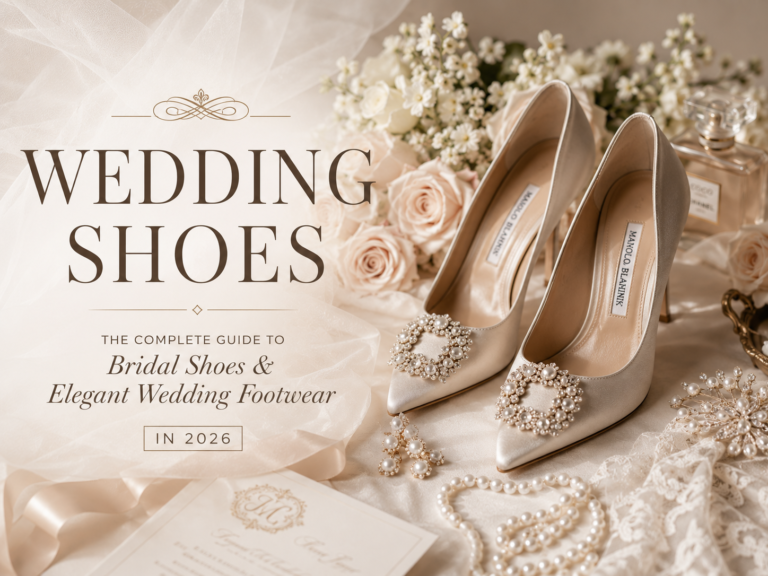
Wedding Shoes – The Complete Guide to Bridal Shoes & Elegant Wedding Footwear in 2026
Wedding Shoes The Complete Guide to Bridal Shoes & Elegant Wedding Footwear in 2026 From timeless satin heels and romantic pearl details to comfortable block heels, bridal flats, soft metallics, and statement designer shoes — the definitive guide to choosing wedding shoes that feel beautiful, wearable, and completely bridal. Wedding shoes are never just shoes….
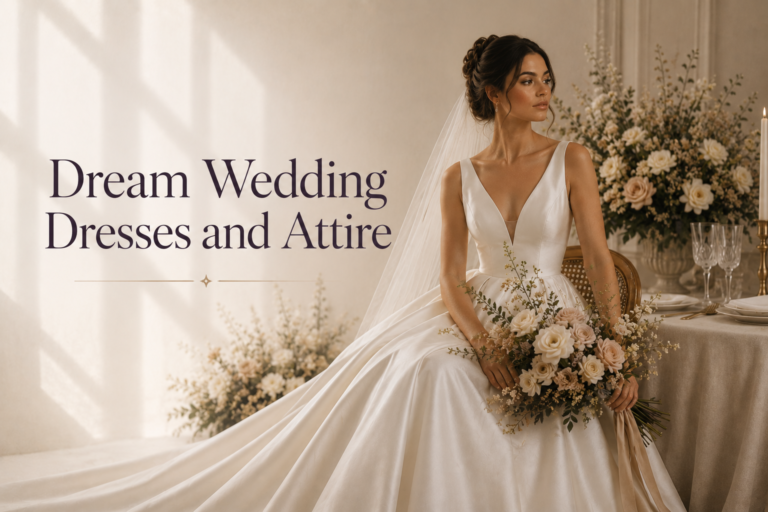
Dream Wedding Dresses and Attire
Dream Wedding Dresses & The Art of Bridal Attire From dream wedding gowns to bridesmaids dresses, bridal makeup to the perfect bouquet — your complete guide to wedding attire in 2026. Your dream wedding dress is not simply a garment. It is the opening note of the most important day of your life — the…
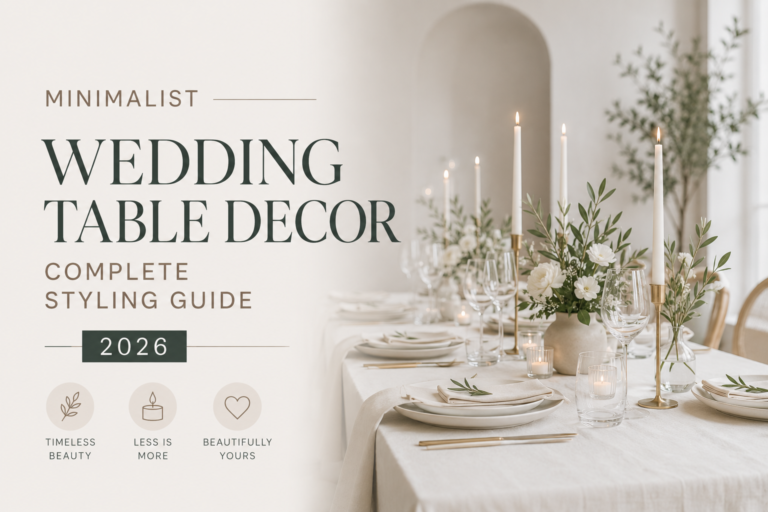
Minimalist Wedding Table Decor — Complete Styling Guide 2026
Wedding Decor · 2026 Minimalist Wedding Table Decor — Complete Styling Guide 2026 Five complete minimalist table aesthetics, the centrepiece guide, linen and setting details, and how stationery becomes part of the table design. The minimalist wedding table is one of the most consistently misunderstood concepts in reception planning. It is not an empty table….
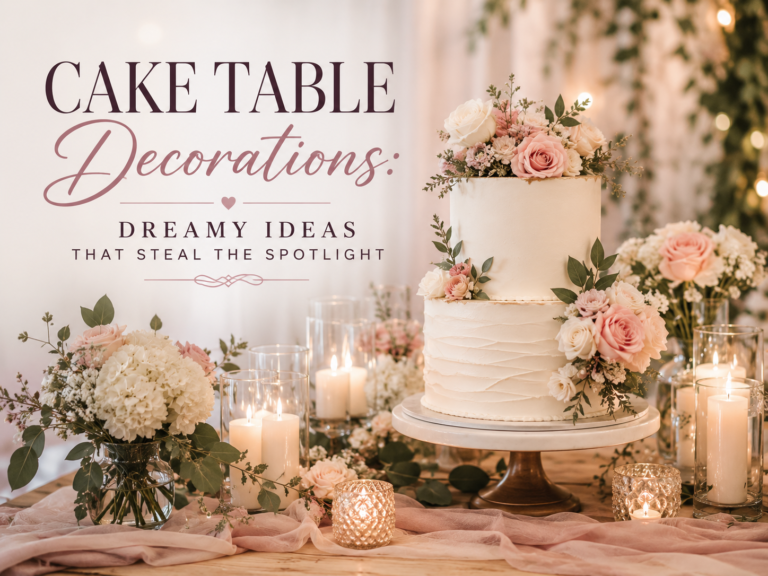
Cake Table Decorations: Dreamy Ideas That Steal the Spotlight
Celebration Styling · Decor Inspo Cake Table Decorations: Dreamy Ideas That Steal the Spotlight From fairy-light canopies to cascading florals — everything you need to style a cake table that’s impossible not to photograph. There’s a moment at every great celebration where guests stop mid-conversation, tilt their heads, and reach instinctively for their phones. Nine…