Celtic Woodland Wedding
Woodland Wedding · 2026
Celtic Woodland Wedding — Ancient Forest Ceremony Guide 2026
From ancient sacred grove ceremonies and handfasting rites to heather-crowned brides and deep forest botanical stationery — the complete guide to a Celtic woodland wedding that honours nature, heritage and one another.
Celtic peoples did not choose old forests for ceremonies by accident. Trees were not background. They were participants — witnesses with their own authority, whose age made them appropriate presences at moments that also intended to last a very long time. A Celtic forest wedding in 2026 carries this understanding into a contemporary celebration: the ancient tree is still the witness, the natural world is still the setting, and the botanical and symbolic details that have connected Celtic cultures to the land for millennia are available to any couple who wants to bring them honestly into their ceremony. This guide covers every element of a Celtic nature wedding in 2026: the ceremony traditions, the four distinct aesthetics within this style, the colour stories, the décor, the florals, and the stationery that carries the motifs of ancient forest and Celtic heritage from the first invitation through to the last botanical detail on a reception table deep in old woodland.
The Celts did not believe in forests. They lived in them — which is a different relationship entirely. The oak was not a symbol of permanence. It was permanence, already present, and you honoured it by understanding that your ceremony was taking place within something that had been happening for much longer than the occasion itself.

Section 01
The Celtic Woodland Wedding Aesthetic
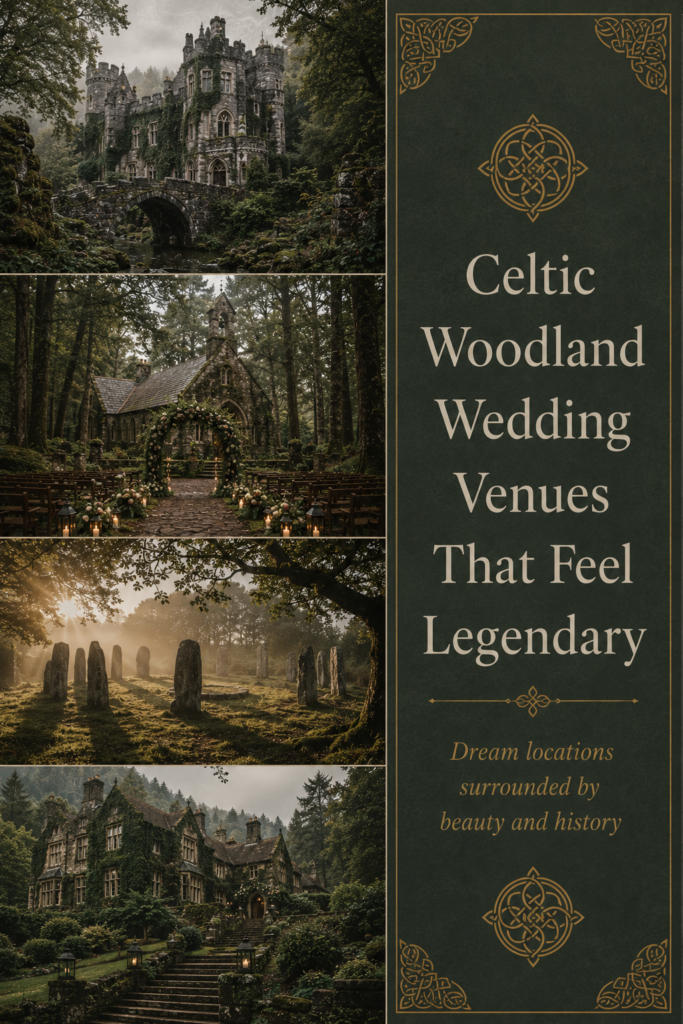
A Celtic woodland wedding is distinct from other woodland wedding aesthetics in one fundamental quality: the trees are not background. In the broader woodland wedding aesthetic, the forest is a setting — extraordinarily beautiful, enormously helpful to the photographer, and more atmospherically rich than any interior space. In the Celtic woodland aesthetic, the forest is a participant. The ancient oak whose canopy forms the ceremony space is not decorating the moment — it is witnessing it, in the specific sense that the Celtic traditions of tree reverence accorded to particular trees the authority to be present at and to sanction significant human events. The couple who plans a Celtic forest ceremony is not decorating under a tree. They are holding a ceremony in the presence of one.
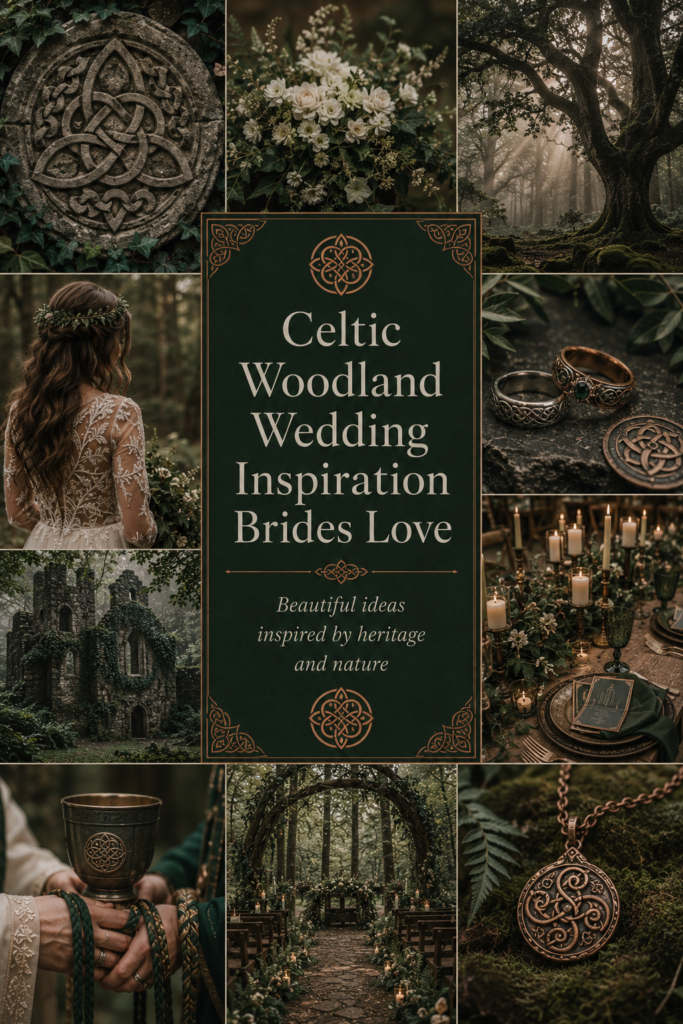
The key visual elements of the Celtic woodland wedding aesthetic draw from a deep and consistent tradition: the Celtic knot as both decorative motif and philosophical statement about the interconnectedness of all things; the sacred grove as ceremony space, preferably with trees old enough to have genuine character; handfasting as a ceremony form that is both ancient and increasingly popular with couples who want a ceremony that is more organic and more personal than conventional formats; the stag, raven, fox, and other woodland creatures of Celtic mythology as decorative motifs with genuine symbolic weight; heather, thistles, oak leaves, and ivy as the botanical vocabulary of Celtic nature connection; and stone — either found naturally at the venue or incorporated as deliberate natural elements — as the material that most connects a celebration to the specific land it takes place on.
What the Celtic woodland wedding is not: a costume event or a theatrical recreation of a historical period. The most beautiful Celtic forest weddings in 2026 are those that connect genuinely and specifically to the traditions they reference without treating them as aesthetic accessories. A handfasting ceremony performed because the couple has researched the tradition, understands its significance, and wants to incorporate it into a contemporary ceremony is a meaningful choice. The same ceremony performed because it looks good in photographs is a different thing. This guide assumes the former and proceeds accordingly — which is why the section on Celtic ceremony traditions below describes each element with genuine respect for what it is, alongside practical guidance for how to incorporate it thoughtfully.
Section 02
Celtic Woodland Ceremony Traditions
2.1 — Handfasting
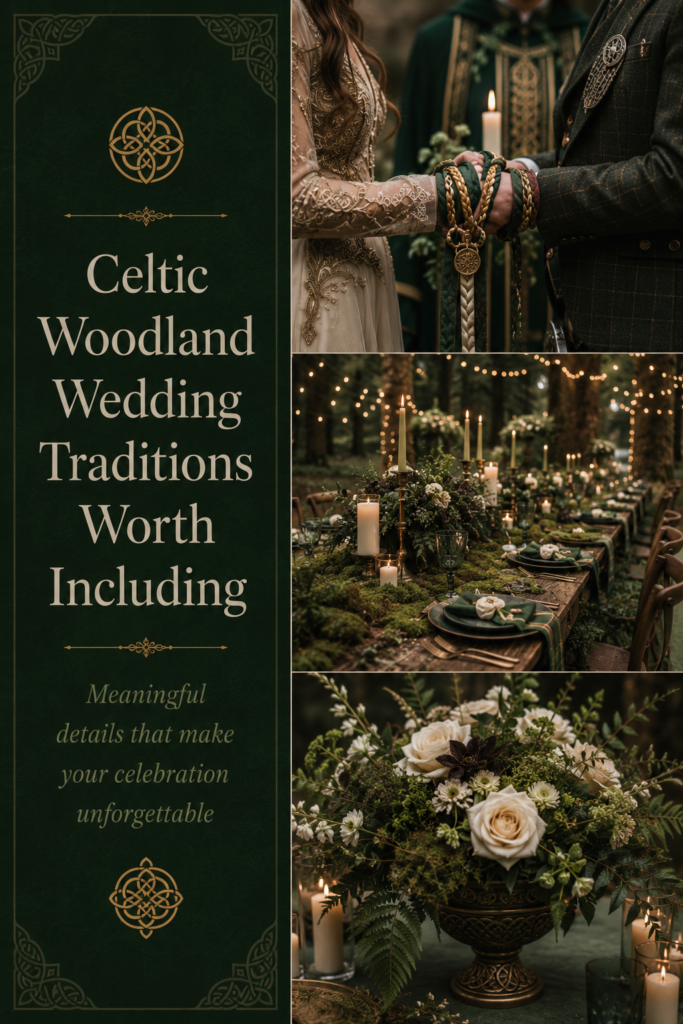
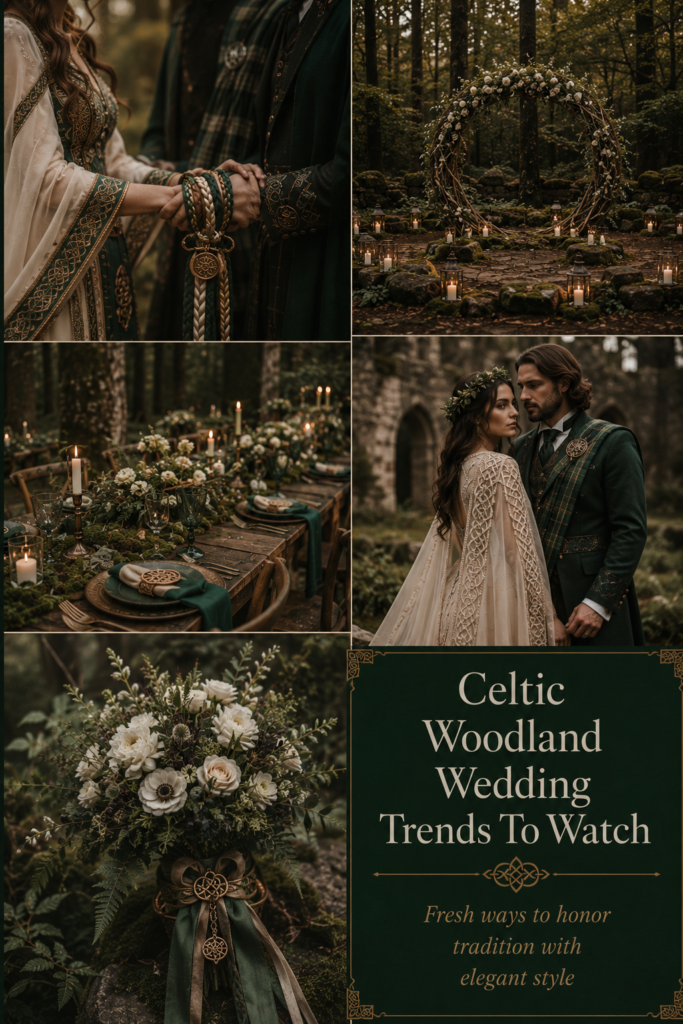
Handfasting is the most widely known Celtic ceremony tradition and the one most frequently incorporated into contemporary weddings. In its historical form, it was a betrothal or marriage ritual in which the couple’s hands were bound together with cord or ribbon — the literal origin of the phrase “tying the knot” — as a visible representation of the commitment being made. The specific form of the ceremony varied across Celtic cultures and time periods, and a wide range of contemporary interpretations exist, from the most historically informed to the most personally adapted. What is consistent across the tradition is the central symbolic act: the binding of hands, the visible and material commitment, the cord as the physical form of the promise.
For couples incorporating handfasting into a contemporary ceremony, the most important decisions are: the cord or ribbon material and its colour, since these carry symbolic significance across different Celtic traditions and it is worth researching the specific meanings relevant to the heritage being honoured; the wording of the handfasting vows, which should be written personally or adapted from traditional formulations rather than simply borrowed from a Pinterest board; and the person performing the binding, who should ideally be someone with a genuine role in the couple’s life rather than simply an officiant performing a procedure. The handfasting moment in a ceremony held beneath an old tree is one of the most visually and emotionally powerful ceremonies available — the cord, the hands, the ancient tree — and it repays the care taken to make it genuine.
2.2 — Sacred Grove Ceremonies
The sacred grove — the nemeton in Celtic traditions — was a specific kind of place: a clearing in old woodland, sometimes containing particular trees of significance (the oak most commonly, though ash and yew also carried sacred associations in various Celtic traditions), where ceremonies and gatherings took place. The sacred grove was not any gathering of trees but a place with specific character: the quality of being enclosed by old woodland while opening upward to the sky, the particular silence of certain clearings, the sense of being in a space that has been significant to humans for a long time.
For a contemporary Celtic forest wedding, the sacred grove concept translates naturally into choosing a ceremony space with genuine woodland character: a clearing between genuinely old trees, ideally including at least one oak or ash of substantial age, with the sense of being held within the forest rather than simply positioned at its edge. Natural altars — a large flat stone, a section of ancient fallen tree, or a simple arrangement of gathered stones from the venue — suit this ceremony format far better than constructed altars or arches. The space itself is the altar, and the ceremony happening within it is what makes it sacred in the moment rather than what makes it decorated.
2.3 — Celtic Ceremony Elements
Beyond handfasting and the sacred grove setting, a range of other Celtic ceremonial elements can be incorporated into a contemporary wedding thoughtfully. The four Celtic elements — earth, air, fire, and water — can be represented symbolically in the ceremony space: stones at the four compass points, candles for fire, a bowl of spring water, incense or wildflower botanicals for air. The Celtic tree calendar provides a seasonal and botanical connection for couples who want to anchor their ceremony in the natural world’s own timing: each month has an associated tree with its own symbolic qualities, and incorporating that tree’s botanical material into the ceremony and florals creates a connection between the date and the land that no imported flower can replicate.
Celtic knot motifs in the ceremony setting are most effective when they appear in materials that belong to the natural world rather than in manufactured decorations: a knotwork pattern carved into a wooden sign, woven into the cord used for handfasting, or present in the botanical illustration of the stationery suite. The Celtic knot works because it represents an idea — the interconnectedness of all things, the continuity of love and life — that is genuinely relevant to a wedding, not merely because it looks beautiful (though it does). Decorating with Celtic knotwork because it is visually interesting is different from incorporating it because it says something the couple wants to say, and the difference is visible in how it reads on the day.
Ceremony Stationery for the Ancient Forest
The Forest Woodland Wedding collection — fully customizable with your names, date, and wedding details — carries deep ancient woodland botanical illustration through ceremony programmes and every other piece guests hold during a Celtic forest celebration.
Section 03
Celtic Woodland Aesthetics
The Celtic woodland aesthetic encompasses four distinct visual registers, each connecting the ancient tradition to the natural world in a different way.
Aesthetic 3.1
The Ancient Forest Aesthetic
Deep, sacred, connected to history
The most directly ancient and most specifically Celtic of the four — the ancient forest aesthetic treats the forest itself as the primary ceremonial space, with everything else responding to rather than imposing upon what the trees already provide. This is the aesthetic for couples who want their celebration to feel genuinely old rather than merely romantic: ceremonies held at the base of trees with significant character and age, natural altars of gathered stone rather than constructed altars, botanical decoration in the specific species that Celtic tradition honoured — oak, ash, hazel, elder, hawthorn. The colour palette is the forest’s deepest: ancient green, stone grey, the specific dark of old bark, gold only as a note of warm light from candles or stationery rather than a dominant design element.
The ancient forest aesthetic requires a venue with genuine old woodland character and will not fully succeed in a managed park, a garden with mature planting, or any space that looks like rather than is old forest. The couples best suited to this aesthetic are those who find the specific quality of great age in living things genuinely moving rather than merely decorative, and who want their ceremony to take place in the presence of something that has been witnessing seasons for longer than any human institution they belong to.
Stationery for this Aesthetic
The Enchanted Woodland stationery collection carries the ancient forest’s botanical depth and atmospheric grandeur into every printed piece — illustration that belongs to the oldest and most genuinely sacred part of the woodland aesthetic. The Enchanted Woodland Wedding collection — fully customizable with your names, date, and wedding details.
Aesthetic 3.2
The Wildflower Celtic Aesthetic
Meadow wildflowers, softer, romantic
The most romantically abundant of the four — the wildflower Celtic aesthetic connects the Celtic relationship to the natural world through the specifically generous abundance of meadow wildflowers, particularly those that appear in Celtic botanical traditions: clover and heather, wild rose and foxglove, hawthorn blossom and elder flowers. Where the ancient forest aesthetic is deep and still, this one is bright and generous, filled with the specific colour of a Celtic meadow in June — soft purples, creams, pinks, and the warm gold of later-season wildflowers. The ceremony space is more open — a woodland edge or meadow clearing rather than the heart of the forest — and the overall feeling is of a celebration that has been set in the landscape rather than within it.
This aesthetic suits couples who love the Celtic nature connection but want a celebration that is warm and light rather than atmospheric and ancient. The handfasting cord for this aesthetic might be woven from wildflower stems or wound with heather and wild clover; the ceremony arch is a garland of wildflower abundance rather than twisted branches; and the palette is the meadow’s own palette at the peak of the growing season. The Celtic connection in this aesthetic lives primarily in the symbolic elements — the handfasting, the seasonal botanical choices — rather than in the visual register of ancient darkness.
Stationery for this Aesthetic
The Wildflower Woodland stationery collection carries the same botanical abundance as a Celtic meadow celebration — wildflower illustration that connects the paper world to the living botanical world of the ceremony setting. The Wildflower Woodland Wedding collection — fully customizable with your names, date, and wedding details.
Aesthetic 3.3
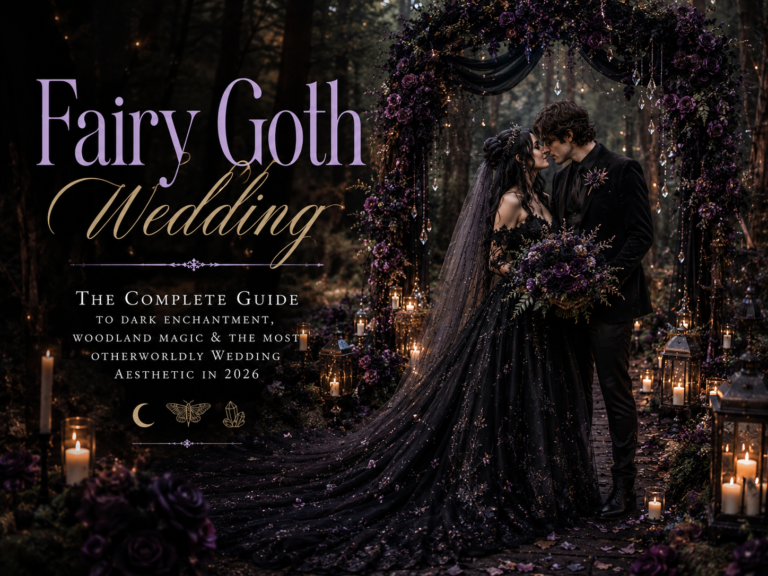
The Dark Celtic Forest Aesthetic
Ancient, atmospheric, moody
The most atmospheric and the most specifically connected to the older, more mysterious end of Celtic mythology — the dark Celtic forest aesthetic draws on the traditions of the otherworld, the liminal spaces between the human world and what lies beyond it, the specific quality of very old woodland at dusk when the familiar has become unfamiliar. Ravens and stags as symbolic presences. Deep forest green and near-black as the dominant palette tones. Ceremony timing at the edge of golden hour or into blue hour, so the light itself is transitioning as the vows are spoken. Stone and twisted ancient wood as the primary decorative materials.
This aesthetic requires the same care around genuine versus costume that the broader woodland goth aesthetic requires — the dark Celtic forest celebration is most powerful when it draws genuinely on the aspects of Celtic tradition it references rather than treating them as visual accessories. The Cernunnos figure, the Morrigan, the raven as an aspect of wisdom rather than simply as a gothic symbol: these carry genuine weight in the traditions they come from, and a celebration that acknowledges that weight reads very differently from one that borrows the imagery without the understanding.
Stationery for this Aesthetic
The Goth Forest Theme stationery collection carries the dark ancient forest atmosphere into every printed piece — botanical illustration with the specific depth and atmospheric quality of old woodland after the light has left it. The Goth Forest Theme collection — fully customizable with your names, date, and wedding details.
Aesthetic 3.4
The Boho Celtic Aesthetic
Free-spirited, nature-connected, organic
The most contemporary of the four — the boho Celtic aesthetic brings Celtic nature connection into a free-spirited, organically beautiful celebration that feels personal and unhierarchical rather than traditional and formal. Macramé alongside Celtic knotwork, pampas grass and heather in the same arrangement, wildflowers gathered with the deliberate looseness of the boho aesthetic alongside the specific botanical species of Celtic tradition. The handfasting cord is handwoven and personal; the ceremony space is a clearing that feels discovered rather than chosen; the overall atmosphere is of a celebration that could have happened spontaneously, in the right place, at the right moment, by people who know where they are.
This aesthetic is the most accessible entry point to the Celtic woodland wedding for couples who are drawn to the nature connection and the ceremonial depth of Celtic tradition but want a celebration that feels contemporary rather than historically informed. The Celtic elements — handfasting, sacred botanicals, the meaningful presence of the natural world in the ceremony — sit within a boho aesthetic that many couples already find natural and comfortable, and the result is a celebration that is genuinely personal without requiring deep knowledge of Celtic tradition to feel complete.
Stationery for this Aesthetic
The Boho Woodland stationery collection carries the free-spirited organic warmth of the boho Celtic aesthetic into every printed detail — botanical illustration with the earthy, nature-connected character of a celebration that belongs to the land. The Boho Woodland Wedding collection — fully customizable with your names, date, and wedding details.
Section 04
Celtic Woodland Color Palettes
Ancient Grove
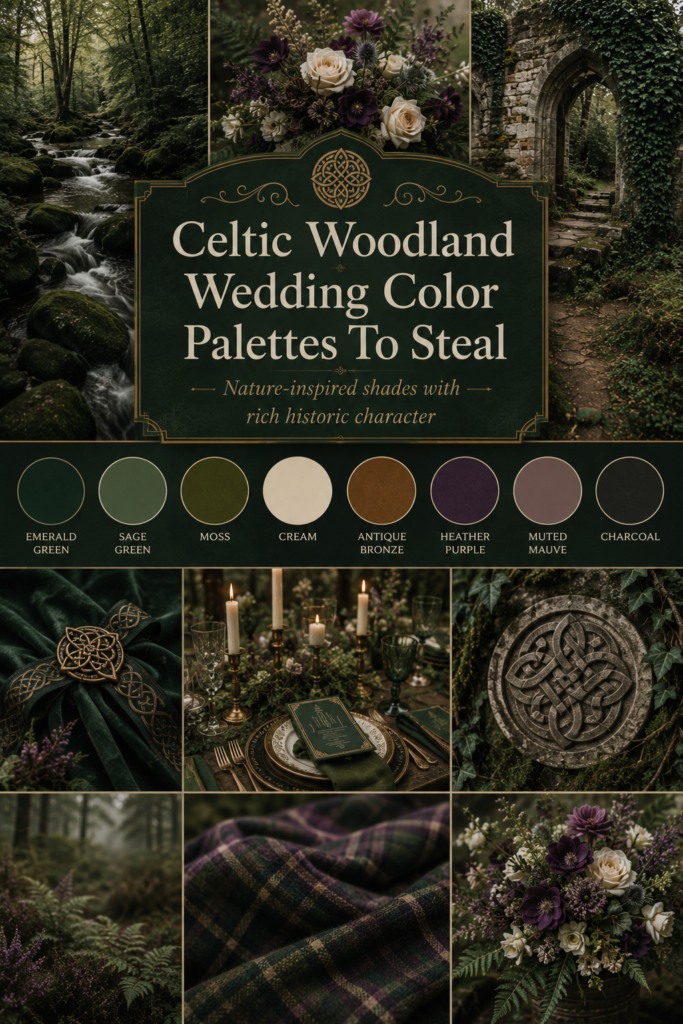
Deep ancient green · Stone grey · Bark brown · Antique gold
The palette of the oldest woodland at its most fundamental — deep green that belongs to moss and ancient bark, stone grey from the rocks that have been present in the forest clearing longer than the trees themselves, bark brown in the organic range between warm and cool, and antique gold as the colour of candlelight on old surfaces. This palette suits the ancient forest and dark Celtic aesthetics most directly and is most beautiful in the natural light of late afternoon or the warm artificial light of candles.
Heather & Stone
Heather purple · Forest green · Stone · Wildflower cream
The palette of the Celtic moorland and highland tradition — heather purple in its specific range from pale mauve to deep violet, forest green as the understorey reference, stone as the material connection to the land, and wildflower cream as the botanical light note. This palette bridges the Celtic nature connection to the specific landscape of Scotland and Ireland most directly and suits the wildflower Celtic and boho Celtic aesthetics most naturally.
Sacred Meadow
Wildflower bright · Sage · Ancient gold · Warm ivory
The palette of the Celtic meadow tradition at its most generous — wildflower brightness in the specific mixed palette of a meadow in late June, sage as the botanical green reference, ancient gold as the connecting thread between the living botanical world and the decorative details, and warm ivory as the base material. This palette is the warmest and most accessible of the four and suits the wildflower Celtic aesthetic most naturally.
Forest Night
Near-black green · Deep stone · Silver · Pale bone ivory
The most dramatic and most atmospheric of the four — the palette of an old forest after dark, where the familiar colours of nature have deepened toward their darkest register and the only light is what the moon and candles provide. This palette suits the dark Celtic forest aesthetic exclusively and requires low, warm, natural or near-natural lighting to achieve its most beautiful form.
Section 05
Celtic Woodland Décor
Celtic woodland décor is most effective when it consists primarily of materials that belong to the natural and historical world of Celtic tradition rather than manufactured items with Celtic-inspired printed designs. The hierarchy of material authenticity in this aesthetic runs: natural and foraged materials (most authentic), handcrafted items from natural materials (excellent), historically informed reproductions in natural materials (appropriate), printed or manufactured Celtic-themed decorations (least suited to the aesthetic). A carved wooden sign with a Celtic knotwork border belongs. A mass-produced banner with a shamrock print does not.
Stone altar elements are among the most powerful and most practical decorative choices for a Celtic forest ceremony: gathered stones from the venue itself, arranged in a simple cairn or placed at the four compass directions, connect the ceremony to the specific land it takes place on in a way that no purchased decoration can replicate. A flat stone of substantial size at the ceremony centre, used as the natural altar surface for the handfasting cord and any other symbolic elements, provides a focal point that reads as genuinely ancient rather than constructed. Carved standing stones, where they are available at the venue or can be responsibly sourced, are among the most dramatic and most photographically powerful ceremony elements available to any woodland wedding aesthetic.
Woodland creature motifs — the stag as a Celtic symbol of the masculine principle and of the wildwood itself, the raven as a symbol of wisdom and transformation, the fox as a creature of intelligence and adaptability, the hare as a symbol of fertility and the shifting of seasons — appear in Celtic tradition with genuine symbolic weight and translate beautifully into wedding decoration in carved wood, pressed metal, or botanical illustration. These creatures appearing in the stationery suite, on carved wooden signs, as small details on the ceremony and reception tables, are not merely decorative in the Celtic woodland aesthetic: they are carrying specific meanings from a tradition that knew exactly what it was doing when it assigned particular qualities to particular animals.
Woodland Creature Stationery
The Animals Woodland Wedding collection — fully customizable with your names, date, and wedding details — carries deer, fox and forest wildlife in botanical illustration that connects every printed detail to the Celtic woodland creature tradition.
Section 06
Celtic Woodland Florals
The botanical vocabulary of a Celtic woodland wedding is drawn directly from the plants that appear in Celtic tradition and mythology — which is also, not coincidentally, the botanical vocabulary of the British and Irish landscape at any time of year. Heather is the most immediately recognisable Celtic botanical element: the specific mauve-to-purple range of late summer heather on moorland is one of the most beautiful and most distinctive palette contributions available to any Celtic celebration, and it appears in arrangements ranging from the simplest posy to the most elaborate centrepiece with the same quality of genuine belonging to the setting. Thistles carry their own Celtic heraldic significance alongside their distinctive sculptural form; wildflowers in the specific mixed palette of the Celtic meadow tradition; foxgloves in their architectural summer form; hawthorn blossom in spring; and elder flowers for early summer all provide genuinely seasonal and genuinely Celtic botanical material.
Oak leaves and ivy are the two most powerfully symbolic botanical materials available to a Celtic woodland celebration. Oak is the sacred tree of the Druids, the most venerated tree in the Celtic world, and incorporating oak leaf botanical detail — in the ceremony arch foliage, in the bridal crown, in the centrepiece arrangements, in the botanical illustration of the stationery suite — connects the celebration to that tradition in the most direct botanical way possible. Ivy, with its continuously growing, unkillable, undying character, carries the Celtic meaning of fidelity and eternal connection, making it the most symbolically appropriate greenery for a wedding in any tradition that assigns that meaning to it.
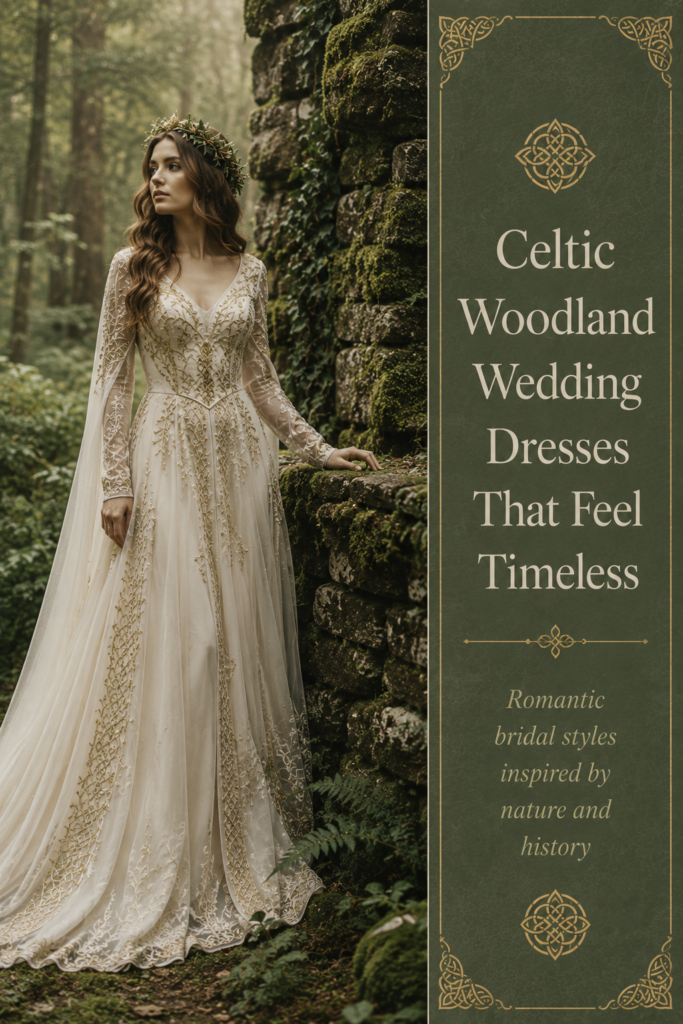
The Celtic bridal crown — the flower crown worn rather than carried — is the most visually powerful connection between the Celtic bride and the natural world she is celebrating within. In its most specifically Celtic form, the crown includes the botanical materials of the tradition: heather, ivy, oak leaves, and whatever wildflowers are growing locally at the time of the ceremony. In its contemporary Celtic interpretation, the same materials are arranged with the beautiful looseness of the wildflower crown aesthetic rather than the formal precision of a historical reconstruction. The result is an accessory that belongs to both the ancient tradition and the contemporary woodland wedding aesthetic simultaneously, which is exactly the quality the Celtic woodland wedding celebrates throughout.
Section 07
Celtic Woodland Wedding Stationery
The stationery for a Celtic woodland wedding is the first way the celebration communicates its character to the world beyond the venue, and it arrives months before any guest has walked beneath an old tree or felt the specific atmospheric quality of a forest clearing in the late afternoon. What the invitation communicates in that first moment — in its botanical illustration, its typography, its palette, and the quality of the paper itself — should be consistent with what the guest will experience at the ceremony: ancient, genuine, deeply connected to the natural world, and possessed of the specific quality of a celebration that takes seriously the traditions it draws on.
Celtic stationery motifs that carry genuine meaning rather than surface decoration: knotwork borders in botanical illustration styles that connect the interlaced pattern to the living botanical world it represents; forest creature illustrations — the stag, the raven, the fox — in a style that gives them genuine character rather than simply placing silhouettes; oak leaf and ivy botanical detail that connects the paper world to the specific botanical tradition of Celtic celebration; and the specific deep green and stone-grey tones of the ancient forest palette, which communicate something about the visual register of the celebration before the recipient has read a single word. The typography for Celtic woodland stationery should feel as though it has genuine age: classic serif styles with real historical depth, natural script that belongs to a handwritten tradition, or old blackletter for the most committed dark Celtic aesthetic.
The stationery flat lay for a Celtic woodland wedding is among the most distinctive and most historically resonant images produced at any wedding in this aesthetic: botanical illustration on cream card laid on a bed of oak leaves and moss, with a heather sprig and a loop of the handfasting cord beside it, photographed in the specific quality of light that old woodland provides in the late afternoon. These images tell the story of the entire aesthetic in a single frame — the paper, the botanical material, the ancient forest setting, the human tradition connecting all three — and they perform consistently among the most saved and shared woodland wedding images because they offer something that most woodland wedding photographs do not: a visual vocabulary that is genuinely ancient.
The six collections below each connect to one or more of the Celtic woodland aesthetics described in this guide. All are fully customizable with your names, date, and wedding details, and all can be extended across the full suite of stationery touchpoints — from save the date and invitation through to ceremony programme, welcome sign, menus, place cards, and thank you cards — so the visual story begun in the first envelope runs consistently through every printed detail of the day.
Shop the Collections
Six Celtic Woodland Stationery Collections
Forest Woodland Wedding
Deep ancient woodland botanical illustration with the grandeur and atmospheric depth that suits a Celtic sacred grove ceremony.
Enchanted Woodland Wedding
Forest magic and botanical enchantment — for Celtic woodland celebrations where the ancient and the enchanted meet in the same clearing.
Wildflower Woodland Wedding
Wildflower botanical abundance for the Celtic meadow celebration — heather, wildflowers and botanical generosity in illustration form.
Boho Woodland Wedding
Free-spirited organic botanical illustration for the boho Celtic wedding — nature-connected warmth that belongs to the land.
Animals Woodland Wedding
Stag, fox and woodland creatures in botanical illustration — Celtic woodland wildlife carried through every stationery piece with genuine character.
Goth Forest Theme
Deep atmospheric forest botanical illustration for the dark Celtic aesthetic — ancient woodland at its most mysterious.
Frequently Asked Questions
Common Questions
What is a Celtic woodland wedding?
A Celtic woodland wedding is a celebration that connects a contemporary ceremony to the ancient Celtic traditions of nature reverence, sacred grove ceremony spaces, and the deep connection between human significant events and the natural world. It is distinct from other woodland wedding aesthetics in that the trees are not simply a beautiful setting but participants in the ceremony, as they were in the specific Celtic traditions of tree reverence and sacred grove gathering. Core Celtic ceremony elements may include handfasting, the use of botanicals from the Celtic tree calendar, Celtic knot motifs with genuine symbolic meaning, and woodland creature references from Celtic mythology.
What is handfasting and how is it incorporated into a woodland wedding?
Handfasting is a Celtic ceremony tradition in which the couple’s hands are bound together with cord or ribbon as a visible representation of the commitment being made — the literal origin of “tying the knot.” In a contemporary Celtic woodland wedding, it can be incorporated as a complete alternative to conventional vows, as an additional element within a more conventional ceremony, or as a symbolic gesture within a personal ceremony format. The key decisions are: the cord material and colour (which carry symbolic meaning in Celtic tradition), the wording of any handfasting vows, and who performs the binding. Held beneath an ancient oak, it is one of the most visually and emotionally powerful ceremony moments available to any couple.
What flowers suit a Celtic woodland wedding?
The botanical vocabulary of Celtic tradition and the plants that grow naturally in the British and Irish landscape are the same: heather (the most recognisably Celtic botanical element), thistles, wildflowers in the seasonal mixed palette of the Celtic meadow, foxgloves, hawthorn blossom in spring, elder flowers in early summer, and the foliage of oak, ivy, and ash. Oak leaves carry specific Celtic sacred significance and are the most symbolically appropriate greenery for this celebration. Ivy, with its meaning of fidelity and eternal connection, is the most symbolically appropriate trailing element. Both should be incorporated in any Celtic woodland wedding where the botanical symbolism is as important as the visual effect.
What stationery suits a Celtic woodland wedding?
Botanical illustration in the specific palette of your chosen Celtic woodland aesthetic, with typography that has genuine historical depth. The Forest Woodland Wedding collection suits the ancient forest aesthetic; the Wildflower Woodland Wedding collection suits the wildflower Celtic aesthetic; the Animals Woodland Wedding collection carries stag, fox and woodland creatures through every piece; and the Goth Forest Theme collection suits the dark Celtic forest aesthetic. All are fully customizable.
Celtic Woodland Wedding Stationery · 2026
Shop Celtic Woodland Stationery Collections
Six ancient forest collections for every Celtic woodland aesthetic — fully customizable with your names, date and wedding details.