Celestial Wedding Cake
Celestial Wedding · 2026
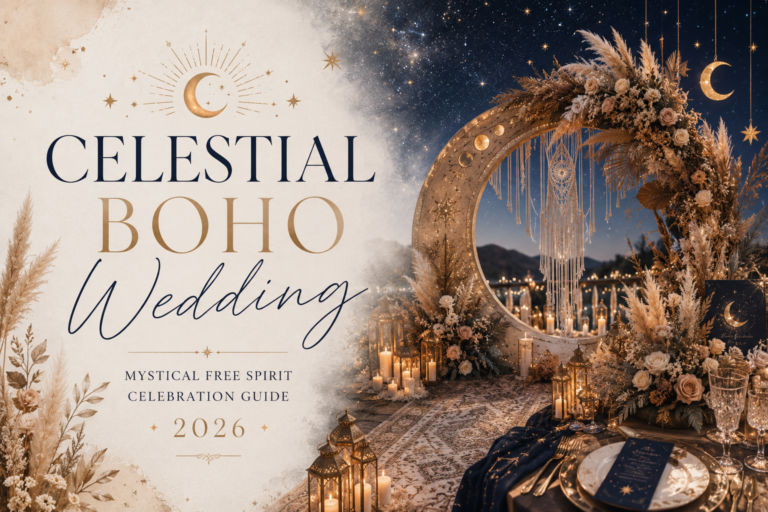
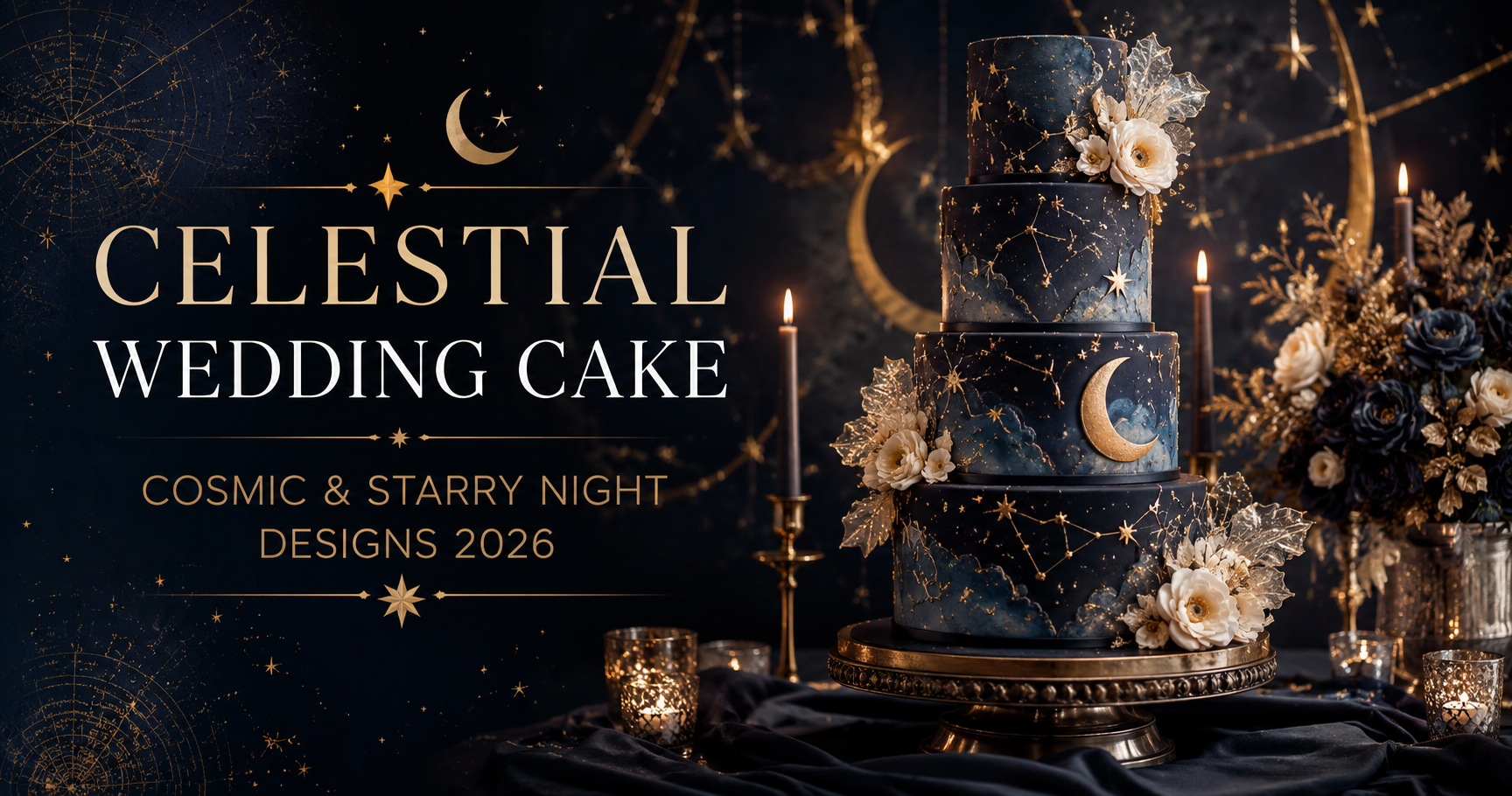
Celestial Wedding Cake — Cosmic & Starry Night Designs 2026
Six celestial cake styles, the flavours that suit them, how to choose a topper, and the stationery that completes the world the cake belongs to.
The celestial wedding cake has become one of the most searched and most saved cake aesthetics on Pinterest in 2026, and it is not difficult to understand why: it is the one tier of the wedding that genuinely attempts to reproduce the night sky in an edible, temporary, extraordinary form. Hand-painted galaxy effects, gold leaf star scatter, constellation piping in fine spun sugar, moon phase tiers progressing from new moon to full — these are the techniques that have transformed the celestial cake from a theme element into a genuine confectionery art direction.
This guide covers the six primary celestial cake styles and what distinguishes each one, the flavours that most coherently match each aesthetic, the topper choices that complete each design, and — most importantly — how to connect the cake visually and aesthetically to the rest of the celestial wedding through the stationery suite that carries the same palette from the invitation to the cake table.

“Stars captured in sugar and gold — the wedding cake as the one moment in the day where the night sky itself becomes something that can be cut and shared and tasted.”
Section 01 The Celestial Wedding Cake Aesthetic
The celestial wedding cake is defined by its relationship with light — specifically, the quality of scattered light against dark, which is the fundamental visual experience of the night sky and which translates more successfully into cake design than almost any other natural phenomenon. The techniques that achieve this: hand-painted galaxy effects using edible food colour in midnight blue, deep purple, and soft white, applied with a flat brush in overlapping washes that produce the specific depth and dimensionality of the night sky; gold leaf star scatter applied individually over the painted surface so that each piece catches light differently; constellation piping in fine white or gold royal icing following the actual geometric patterns of specific constellations; and moon and sun fondant elements sculpted and applied as dimensional details rather than as flat decoration.
The 2026 celestial cake trends reflect the maturation of the aesthetic from a single visual effect (the galaxy wash) into a full range of distinct approaches that each produce different emotional registers and suit different wedding aesthetics. The hand-painted galaxy cake is the most dramatic and the most associated with the dark celestial aesthetic; the gold constellation cake on ivory or white fondant is the most elegant and the most editorial; the sun and moon cake in warm gold is the most romantic and the most widely accessible; the vintage star map cake on aged fondant is the most intellectually specific and the most connected to the dark academia and vintage celestial aesthetics; the moon phase cake progressing tier by tier from crescent to full moon is the most narrative and the most photographically structured; and the geode celestial cake — which combines the crystal geode technique with the midnight blue and gold of the celestial palette — is the most visually unusual and the most conversation-worthy at the reception.
The quality decision that most determines whether a celestial cake reads as genuinely designed or as merely themed is the consistency of the palette across the cake’s decoration. A midnight blue and warm gold palette applied consistently — the specific quality of gold, the specific depth of the blue, the specific temperature of the overall combination — produces a cake that belongs to the same visual world as the rest of the celestial wedding. A cake with the right motifs (stars, moons) but in the wrong palette register (too much silver, too bright a blue, the wrong temperature of gold) reads as a celestial cake that was decorated with the right intentions but without full commitment to the specific palette of this specific celebration.

Section 02 Six Celestial Cake Styles
Each style below is a complete aesthetic direction with its own technique vocabulary, palette register, and emotional quality. The stationery bridge at the end of each entry shows how the same palette translates from the cake into the printed layer of the celebration.
2.1 The Galaxy Painted Cake
The Galaxy Painted Cake is the most dramatic and the most widely recognised of the six celestial cake styles — it is the cake that most people picture when they imagine a celestial wedding cake, because the hand-painted galaxy effect is simultaneously the most technically distinctive and the most immediately spectacular of the available celestial cake techniques. The technique involves applying layers of diluted food colour gel — typically in midnight blue, deep purple, dusty violet, and soft white — with a flat brush in overlapping, blended washes directly onto the cake’s fondant or buttercream surface, building depth through layering until the surface reads as three-dimensional space rather than as flat painted decoration. The final layer of white or silver food colour, flicked across the surface with a fine brush to suggest stars, creates the specific quality of scattered light that defines the galaxy effect.
The gold detail is the most important decision in the Galaxy Painted Cake, and it should be applied after the galaxy painting rather than as part of it: gold leaf pieces placed individually across the painted surface (not in a uniform scatter but in the irregular clustering pattern of actual star fields), or fine gold lustre powder mixed to a paste and applied as constellation line-work over the galaxy base. The quality of the gold must match the warmth of the rest of the celestial wedding palette — warm antique gold rather than bright yellow gold, which reads as generic metallic against the deep blue base rather than as the luminous warmth that the combination is intended to produce.
The silhouette for the Galaxy Painted Cake should provide the maximum possible surface area for the painting: a tall, straight-sided tier structure (rather than angled or scalloped tiers) maximises the vertical canvas; three to five tiers provides the depth needed for the galaxy effect to read as genuinely dimensional. A single tier in the galaxy palette, beautifully executed, is far more effective than multiple tiers in which the effect has been hurried or diluted. The Galaxy Painted Cake is the cake that requires the most skilled execution of the six styles — brief your chosen cake maker well in advance with specific palette references from the wedding stationery and decoration.

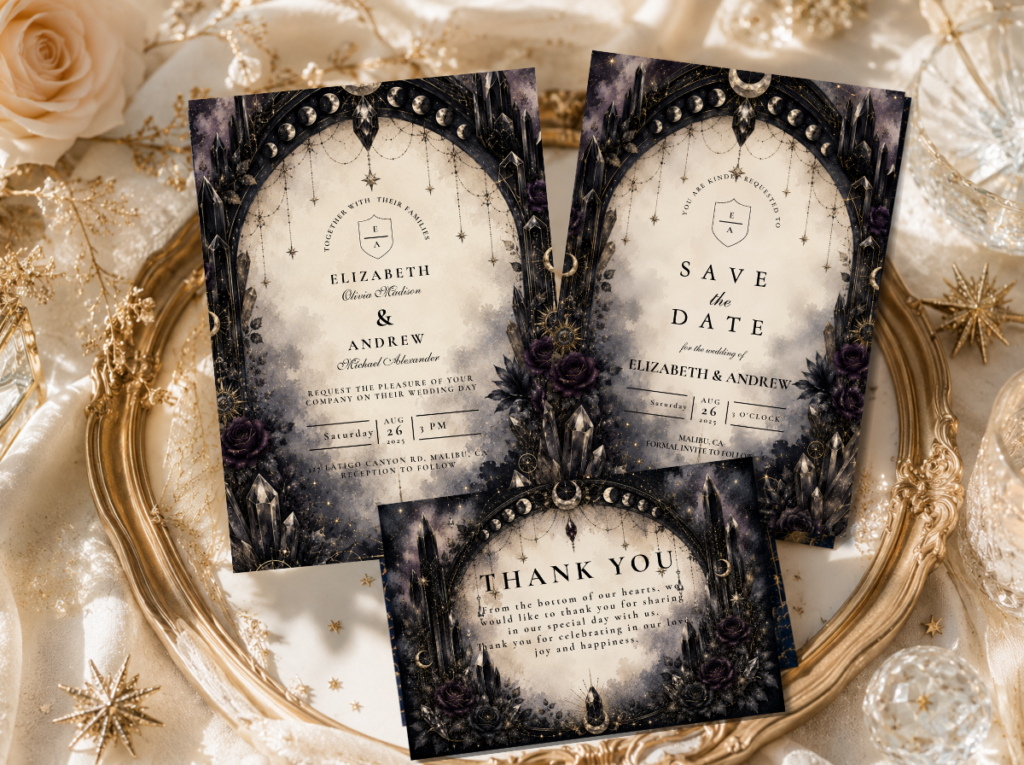
The Celestial Dark collection and Black Gold Celestial suite carry the Galaxy Painted Cake palette into stationery — near-black with warm gold constellation work that matches the cake’s deep galaxy base and gold star detail across every printed element.
2.2 The Gold Constellation Cake
The Gold Constellation Cake is the most elegant and the most editorial of the six styles — it is the celestial cake for the couple who wants the celestial aesthetic expressed with restraint and precision rather than with drama and spectacle. The technique is the inverse of the Galaxy Painted Cake: instead of beginning with darkness and adding light, the Gold Constellation Cake begins with a light base — white or ivory fondant, or a very pale warm cream buttercream — and applies the celestial detail in fine gold, creating constellation line-work on a clean, pale surface in the manner of a fine illustration or an engraved print. The result reads as sophisticated, controlled, and genuinely beautiful in the way that a piece of jewellery or a fine map is beautiful — through precision and intentionality rather than through drama.
The constellation piping technique that defines this style requires a fine piping tip and a steady hand: the constellation patterns should follow the actual geometric relationships of specific constellations (Orion, Cassiopeia, Leo, Lyra — ideally the constellations with personal meaning to the couple) rather than an abstract arrangement of dots and lines. The gold should be in warm metallic food colour or edible gold paint applied with a fine brush, and the line quality should be consistent and confident — a single confident line reads as illustration; a hesitant scratchy line reads as mistake. The quality of the piping work is the entire quality of this cake.
The Gold Constellation Cake suits the most formal and the most fashion-forward celestial wedding aesthetics: the couple whose invitation suite is more graphic and less atmospheric, who want their celestial wedding to read as designed rather than enchanted. It also photographs exceptionally well in close-up detail shots, which is why it appears so consistently on wedding blogs and in styled shoot photography — the clarity of the gold on pale background creates a high-contrast detail that reads beautifully at every scale from full-length reception shot to macro detail photograph.

The Celestial Starry Nights collection and Mystical Black Gold Celestial suite bring the constellation palette into stationery — warm gold constellation line-work in the same style as the piped cake detail, across the complete printed suite.

2.3 The Sun & Moon Cake
The Sun and Moon Cake is the most romantic and the most widely accessible of the six celestial cake styles — it uses the celestial bodies as motifs rather than as palette or texture, which means it can work at almost any scale, in almost any flavour, and for almost any formality level of celestial wedding. The sun and moon as a paired symbol — one representing warmth, activity, and the known world; the other representing mystery, change, and the interior life — is among the most ancient and most universally understood symbols of complementarity and partnership, which makes it particularly resonant in a wedding context where the two people being celebrated are themselves a paired complementarity.
The technique for the Sun and Moon Cake centres on the fondant or wafer paper sculpted celestial elements: a crescent moon in smooth ivory or champagne fondant, its edge precisely cut and its surface given a slight dimensional quality; a sun disc with extended rays in warm gold, either flat or slightly raised; smaller stars scattered around the larger central elements. The palette is the warmest of the six cake styles: ivory or champagne as the cake base, warm amber gold for the sun elements, cool cream or very pale silver for the moon elements. This is the only celestial cake style in which the moon and sun’s different temperatures are used as a design element — the warm gold of the sun and the cool cream of the moon create a visual dialogue that mirrors the wedding’s own pairing.
The Sun and Moon Cake is particularly suitable for couples who want a celestial aesthetic that reads as personal and symbolic rather than as technical and painterly. It requires less specialist technical skill than the Galaxy Painted Cake or the Gold Constellation Cake, but produces a result that is often more emotionally resonant because the symbolism is more immediately legible to guests. A single-tier cake with a beautiful sun-and-moon composition at its front face, photographed from the front and from the detail, produces images that are among the most shared and most saved in the celestial cake category.

The Celestial Gold collection brings the sun and moon palette into stationery — warm amber gold and ivory with solar and lunar motifs in the warmest and most romantic register of the celestial aesthetic.

2.4 The Vintage Star Map Cake
The Vintage Star Map Cake is the most intellectually distinctive and the most specific of the six styles — it draws its visual language from the tradition of historical celestial illustration (the Renaissance star atlases, the Victorian constellation maps, the antique celestial globes) and applies that tradition to the cake surface in a way that reads as genuinely artisanal and historically informed rather than as generically celestial. The technique involves creating a fondant surface that reads as aged — slightly yellow-toned warm cream or parchment-coloured fondant rather than bright white — and then applying constellation details, star chart notations, and celestial map elements in a sepia or antique gold that references historical printing rather than modern metallic decoration.
The specific details that elevate the Vintage Star Map Cake from the generic to the genuinely specific: constellation notations in the style of historical star charts (the constellation name in a period-appropriate script, the main star positions marked with small raised fondant dots, the connecting lines in a fine hand-drawn quality); antique celestial map borders in the ornate style of Renaissance cartography (decorative corner elements in antique gold, a warm parchment-toned background that references aged paper rather than modern fondant); and any personal celestial details that connect the cake specifically to the couple — the specific constellation that was directly overhead at the site where they met, or the moon phase of their first date, incorporated into the map in the style of a historical atlas annotation.
The Vintage Star Map Cake is most at home in the Renaissance Celestial and Victorian Astronomy wedding aesthetic contexts described in the vintage celestial wedding guide — it belongs naturally in the dark academia crossover, in the historic library or manor house venue, in the context of a wedding where the guests are likely to examine the cake closely and find genuine meaning in its specific references. A Vintage Star Map Cake placed beside a Vintage Celestial Renaissance invitation suite completes a visual statement about the couple’s relationship with the history of human wonder about the cosmos.
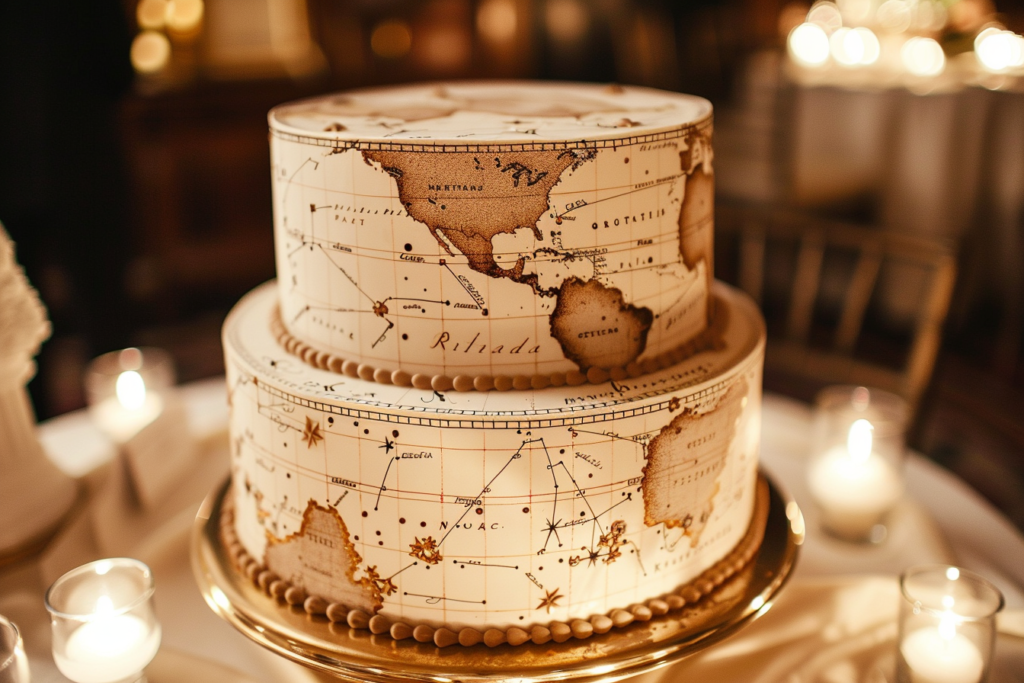
The Vintage Celestial Renaissance collection and Cosmic Vintage Constellation suite bring the antique star map aesthetic into stationery — aged parchment tones, sepia and antique gold constellation work, the historical celestial illustration quality that the Vintage Star Map Cake expresses in sugar and fondant.

2.5 The Moon Phase Cake
The Moon Phase Cake is the most narratively structured of the six styles — it organises the cake’s tiers around a specific progression, typically from new moon (a nearly dark tier with the faintest crescent detail) through waxing crescent and half moon to gibbous and finally to full moon (the brightest and most fully decorated tier), or in reverse. This progression gives the cake a reading direction — it tells a story across its tiers — which is something no other celestial cake style achieves, and which gives it a specific quality of intention that makes it feel genuinely designed rather than decorated.
The technique for the Moon Phase Cake varies depending on how literally the moon phases are represented. The most graphic version uses fondant circles of different sizes in white or pale cream on a dark base — each circle representing a different phase, positioned to suggest the sequential relationship between them. The most painterly version uses the galaxy painting technique for the dark tiers and builds the moon phases as gradually increasing areas of illumination — darkness becoming light across the progression of the cake. The most sculptural version uses dimensional fondant moon elements, each tier carrying a different three-dimensional moon form, from a thin crescent to a fully round disc.
The Moon Phase Cake is particularly suitable for couples for whom the moon has specific personal significance — couples who track the lunar calendar, who have a favourite moon phase, or who were engaged or married under a specific phase that is meaningful to them. Including the specific moon phase of the wedding day (or of a significant moment in the relationship) in the tier progression transforms the Moon Phase Cake from a beautiful aesthetic choice into a specific and personal record of the celebration.
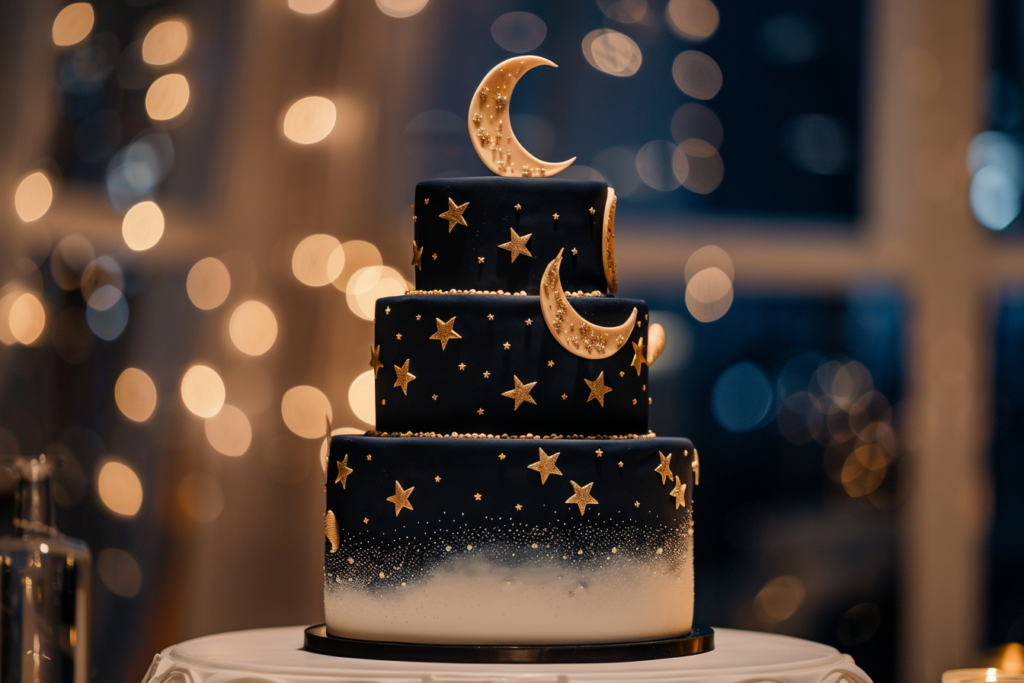
The Celestial Starry Nights collection carries the moon phase palette into stationery — midnight blue and warm gold with moon and constellation motifs that extend the cake’s narrative across every printed element of the celebration.
2.6 The Geode Celestial Cake
The Geode Celestial Cake is the most visually unusual and the most conversation-worthy of the six styles — it combines two distinct confectionery art traditions (the geode cake, which uses rock candy or isomalt crystals to create a geological crystal formation on the cake surface, and the celestial cake, which uses the midnight blue and gold palette of the night sky) in a combination that reads as genuinely original because it is genuinely unusual. The resulting aesthetic — crystalline midnight blue and gold formations that could be read as either a cross-section of a night-sky geode or as a galaxy viewed through a geological frame — is one of the most distinctive in the entire celestial wedding category.
The technique involves cutting or carving a channel into one side of the cake (typically through the tiers at an angle, so the geode appears to run diagonally through the cake structure), filling that channel with blue and gold sugar crystals, isomalt pieces, or rock candy dyed to the celestial palette, and then surrounding the crystalline interior with fondant or buttercream in deep midnight blue with gold lustre detail. The exterior of the cake reads as celestial; the interior, visible only once the cake is cut, reveals the geode structure that makes this design unique. The cutting of the Geode Celestial Cake at the reception produces one of the most dramatic reveal moments available in the celestial cake category.
The Geode Celestial Cake is the most technically demanding of the six styles and requires the most specific expertise from the chosen cake maker — not all confectioners who work in the celestial style also have geode technique experience, and the combination requires genuine skill in both areas simultaneously. Brief the chosen cake maker with specific palette references (the exact midnight blue, the specific warm antique gold) and structural references (the angle of the geode channel, the crystal density) well in advance, and confirm that the crystals and isomalt will be in the same palette temperature as the rest of the celestial wedding decoration rather than in a generic jewel blue.

The Celestial Dark collection carries the Geode Celestial Cake palette into stationery — deep midnight and warm gold that matches the cake’s crystalline celestial aesthetic across invitation, menu card, and every other printed element.
Section 03 Celestial Cake Flavours
The flavour of the celestial wedding cake should belong to the same sensory world as its visual palette — which means choosing flavours with depth, complexity, and the specific quality of something rare or carefully made rather than the generic sweetness of most conventional wedding cake flavour choices. The flavours that most coherently match the celestial aesthetic are those that reference the night, the botanical world at its most aromatic, or the specific warmth of antique and aged things.
Blueberry and Lavender
The most naturally celestial of all flavour combinations — blueberry for its specific midnight blue tone (a blueberry compote or curd layer between the tiers creates a filling that is literally the colour of the galaxy palette), and lavender for its association with the twilight hour between day and full night. The combination is floral, deep, and slightly aromatic in a way that references the celestial world without being literal about it. The frosting for a blueberry lavender cake should be a gentle purple-grey buttercream or a pale cream — not blue, which reads as artificial rather than atmospheric.

Blackcurrant and Violet
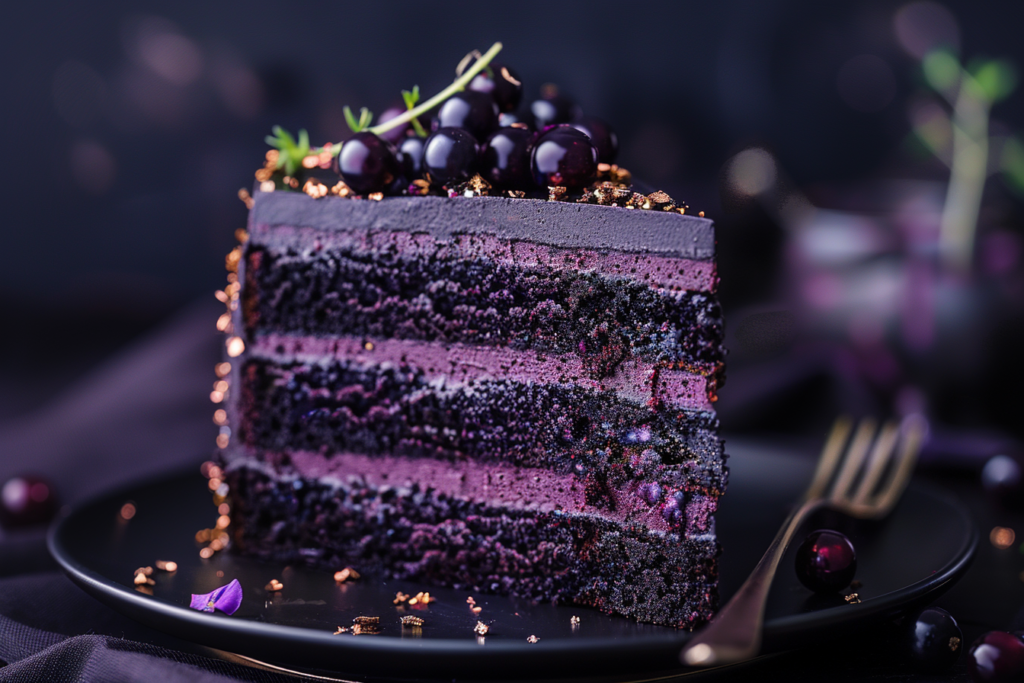
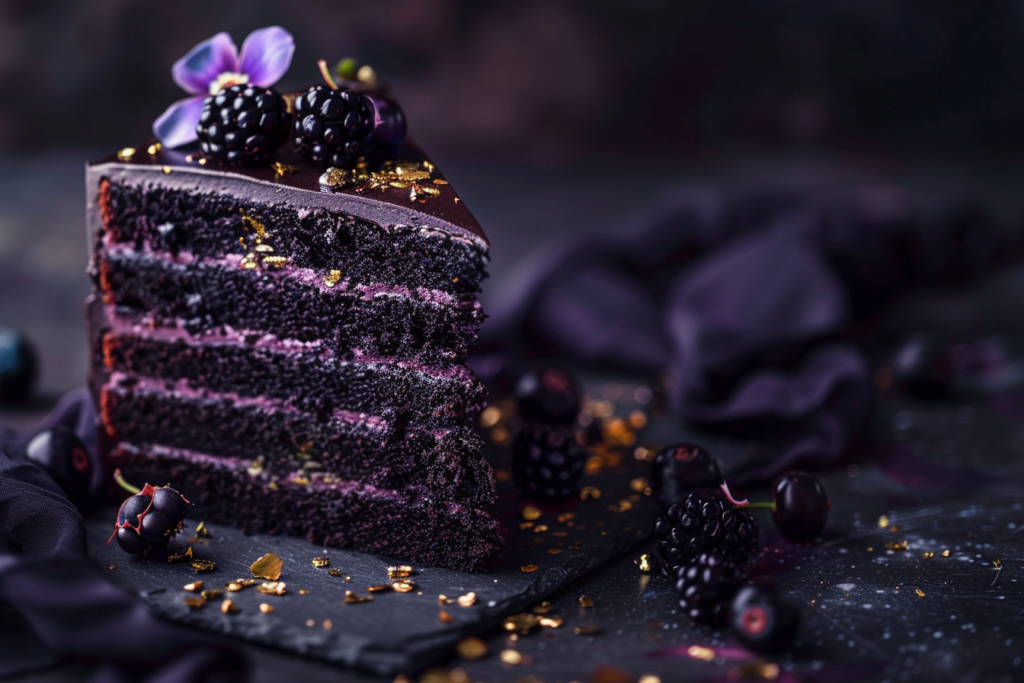
The most dramatic of the celestial flavour directions — blackcurrant is one of the deepest and most complex berry flavours available, and violet adds a floral dimension that shifts the combination from fruit cake toward something more specifically romantic. A blackcurrant and violet filling in a dark chocolate sponge, frosted in near-black buttercream with gold leaf detail, produces a cake whose interior colour (the deep purple-black of the blackcurrant curd against the dark chocolate sponge) matches the visual palette of the Galaxy Painted Cake in its cross-section.
Earl Grey and Honey
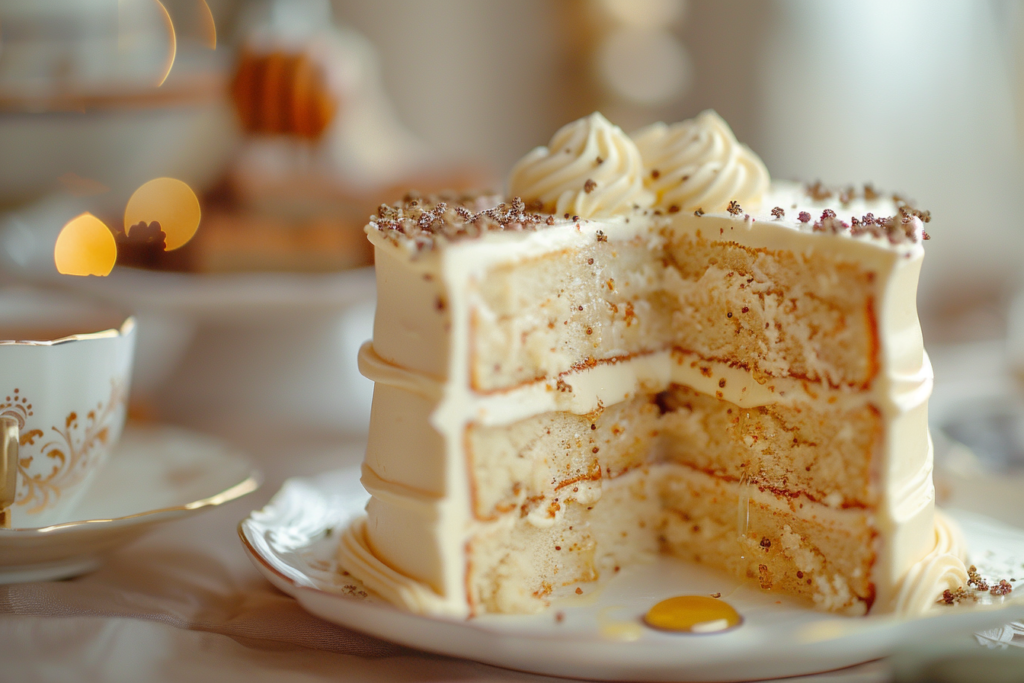
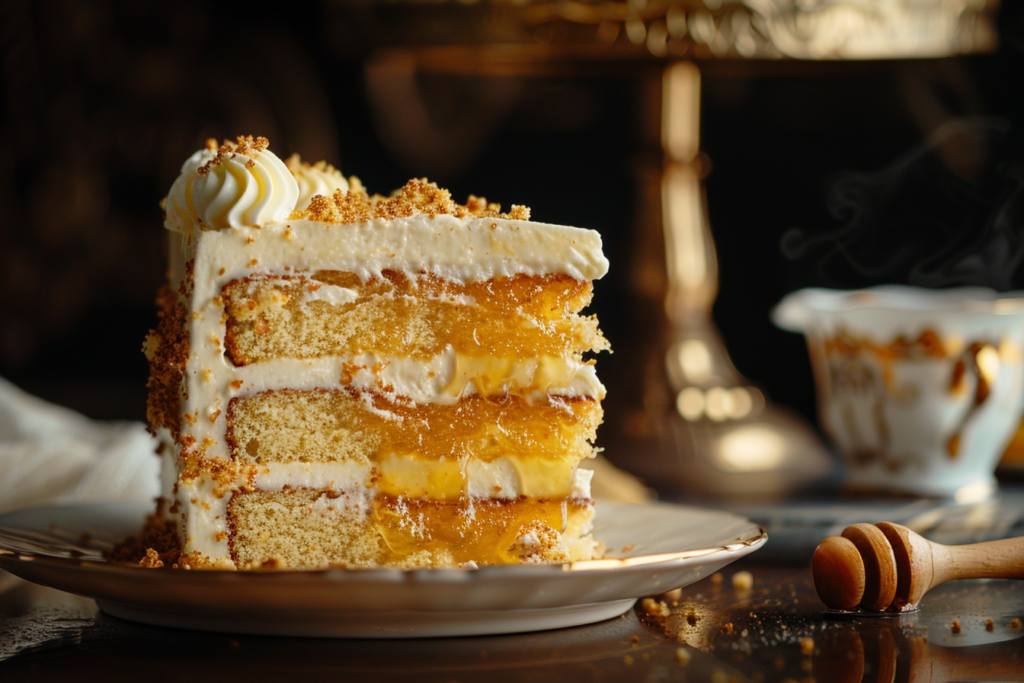
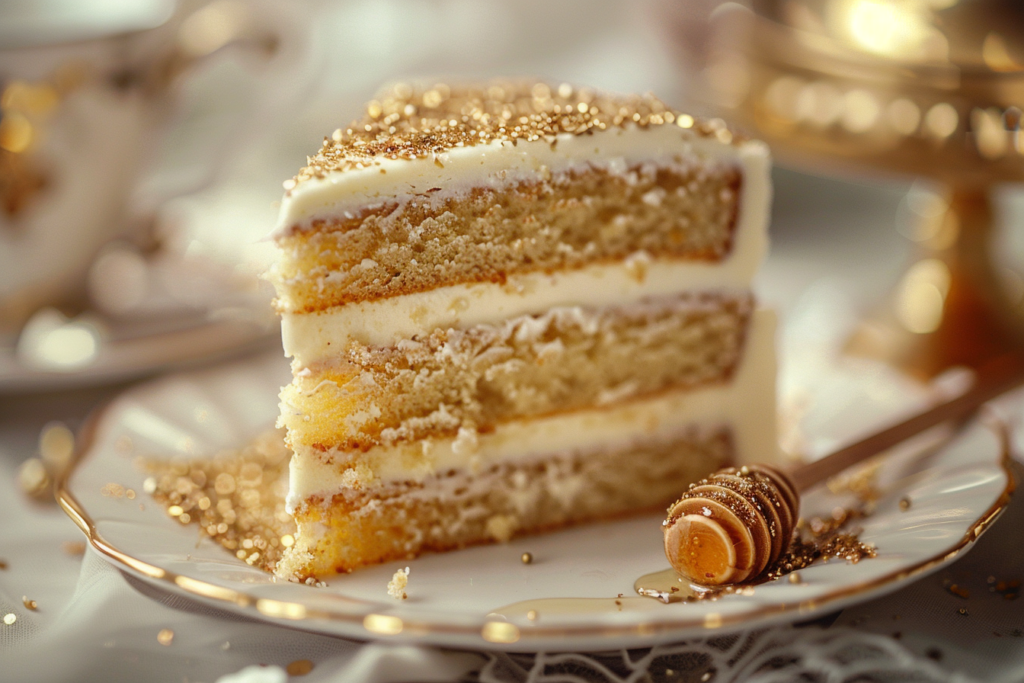
The most intellectually appropriate flavour pairing for the Vintage Star Map and Dark Academia Celestial cake styles — Earl Grey references the tea-drinking, book-reading, library-inhabiting quality of the dark academia aesthetic; honey is the most ancient sweetener, connecting the cake to a pre-modern sensibility that suits the historical register of the vintage celestial aesthetic. The combination is aromatic rather than intensely sweet, which suits the more restrained and considered quality of the vintage celestial aesthetic well.
Dark Chocolate and Gold Leaf
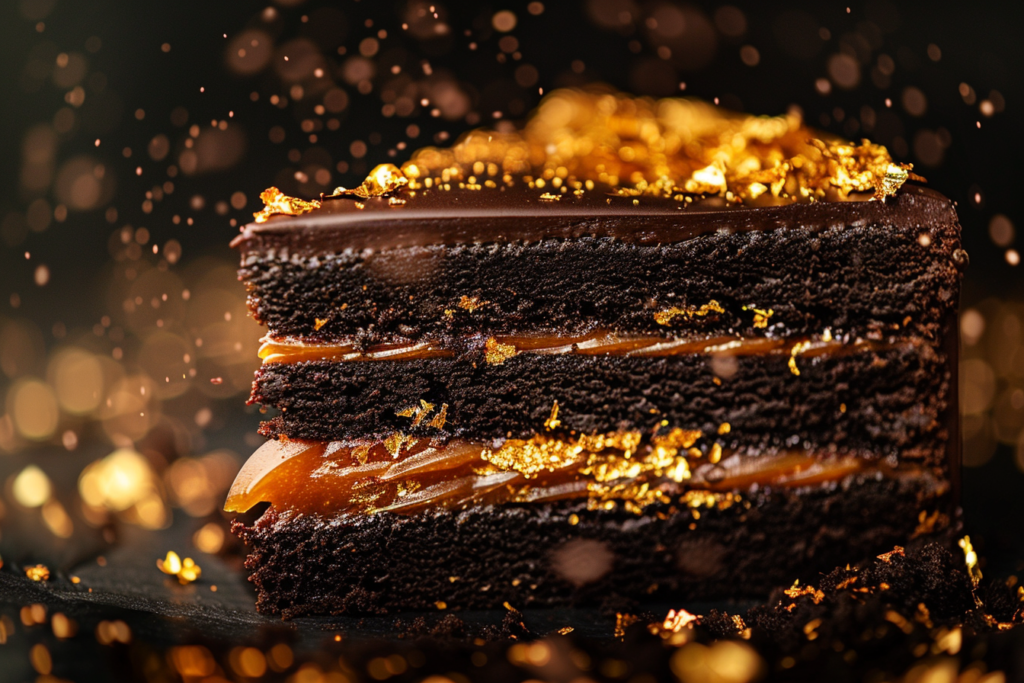
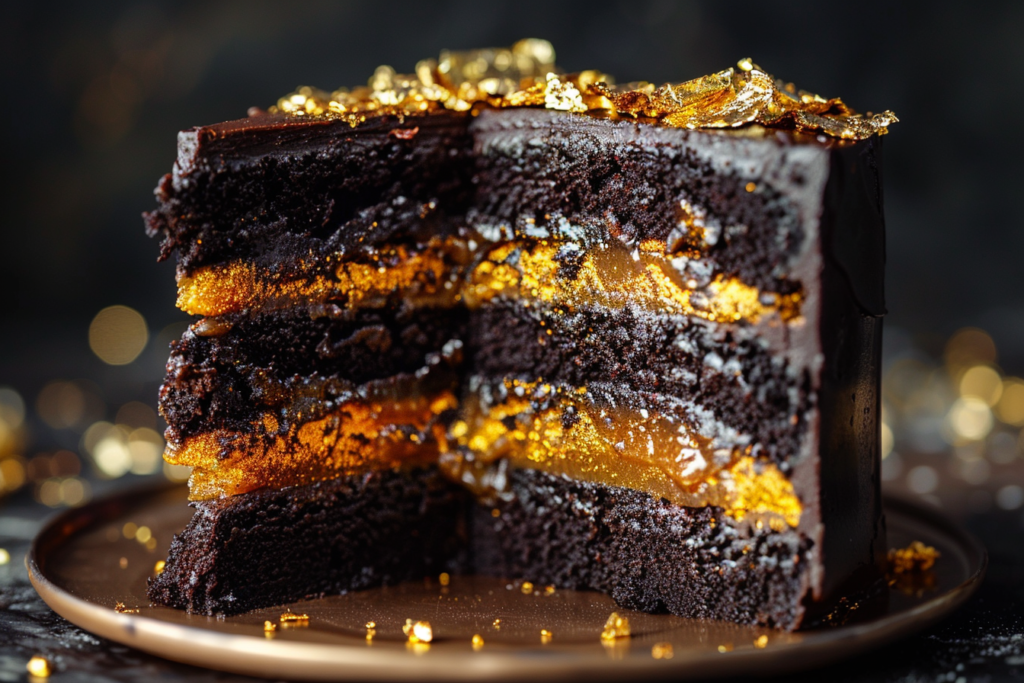
The most straightforward and most universally appropriate celestial flavour pairing — dark chocolate for depth, richness, and the specific quality of darkness that is central to the celestial aesthetic, and gold leaf (edible, applied to the interior of the tiers as well as the exterior) for the luxury and warmth that the gold metallic palette communicates visually. A dark chocolate and salted caramel filling adds the warm amber quality that connects to the gold elements of the celestial palette.

Elderflower and Stardust
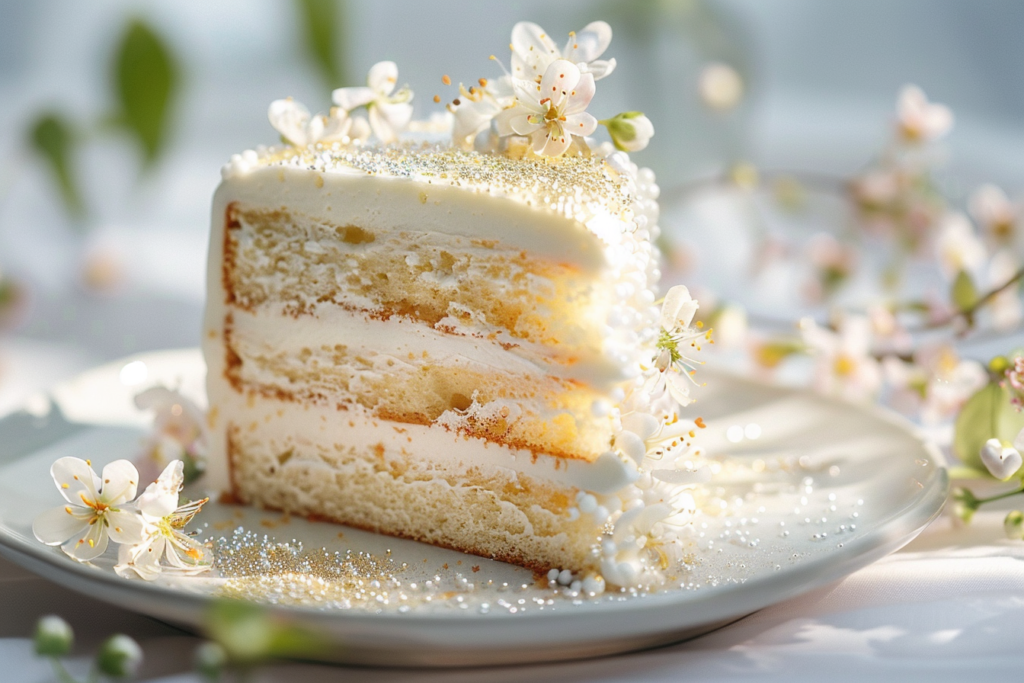
The most romantic and the most summery of the celestial flavour directions — elderflower has been the signature English summer cake flavour since the early 2000s and carries an association with outdoor, garden, and botanical celebrations that suits the Boho Celestial and Botanical Celestial cake and wedding aesthetics. The ‘stardust’ element is edible gold or silver lustre powder mixed into the frosting or scattered through the filling, which does not add a distinct flavour but adds the visual element of finding glitter in the interior of the cake when it is cut — a small, specific, delightful surprise that belongs entirely to the celestial aesthetic.
Section 04 Celestial Cake Toppers
The celestial wedding cake topper is one of the most searched elements of the entire celestial wedding category — ‘gold celestial wedding cake topper’ is a specific and frequently searched term, and the topper is the decorative element that most clearly and most immediately signals the celestial aesthetic to guests viewing the cake from any distance. The choice of topper should be made as part of the cake’s overall design rather than as an afterthought: the topper’s material, scale, and motif vocabulary should be consistent with the cake’s palette and technique.
Gold Celestial Moon and Star Topper
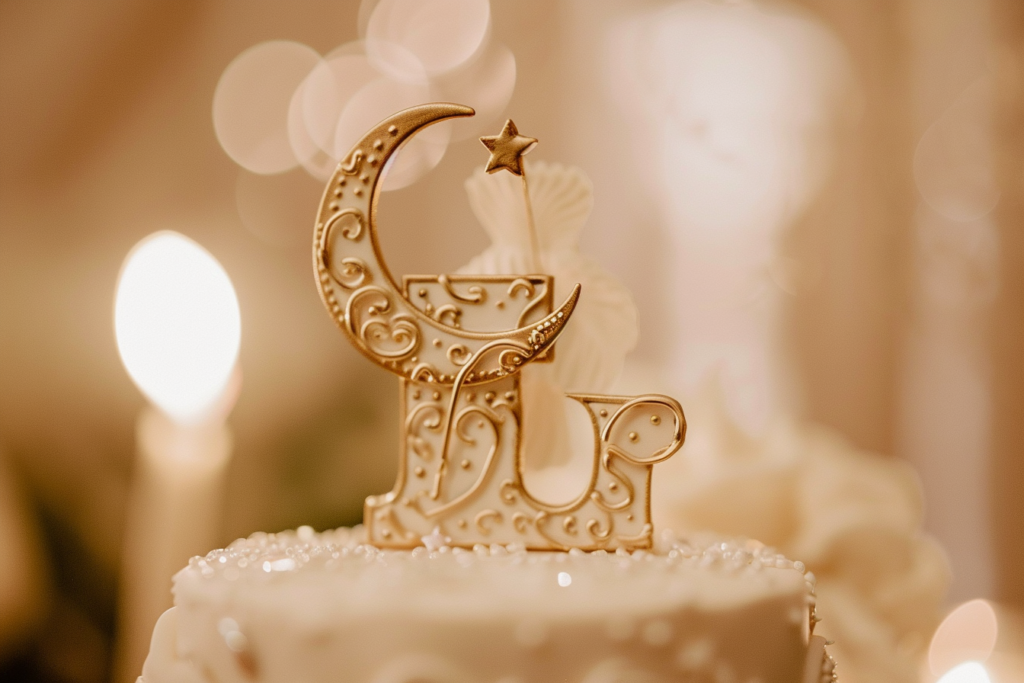
The gold moon and star topper — a crescent moon with attendant stars in warm gold metal or gold-painted wire — is the most classic and the most frequently chosen of the celestial cake toppers, and it works beautifully across all six celestial cake styles because its motif vocabulary is the most universal of the celestial options. The quality decision that matters most: the gold should be warm antique gold rather than bright shiny gold, and the finish should be matte or slightly brushed rather than high-polish, so that the topper reads as part of the same aesthetic world as the cake rather than as a generic party store item in a roughly matching colour.

Constellation Wire Topper
A constellation rendered in fine gold or brass wire — the geometric form of a specific constellation, scaled to the top tier and mounted on a single wire stem — is the most specific and most personal of the celestial topper options. The specific constellation chosen should have personal meaning to the couple: the constellation of the month they met, the constellation visible above the venue on the wedding night, the constellation whose mythology resonates with the couple’s story. A wire constellation topper for the Gold Constellation Cake, using the same constellation that is piped on the tier below it, creates a visual coherence between the topper and the cake’s own decoration that reads as genuinely designed.

Personalised Celestial Monogram Topper
A monogram topper — the couple’s initials — in a font that incorporates celestial elements (star dot details on each letter, constellation-like connecting lines between the initials, a crescent moon as the full stop) is the most formally appropriate topper for the most formal celestial weddings. The monogram should be in the same gold temperature as the rest of the celestial decoration, and the celestial elements on the letters should reference the stationery suite’s motif vocabulary for maximum coherence across the printed and decorative layers of the wedding.
Dried Botanical and Celestial Combination Topper
A combination topper that uses dried botanical elements — dried astrantia, dried lunaria, dried cosmos seed heads, dried pampas grass in small quantities — alongside a small gold moon or star element is the most specifically suited to the Boho Celestial and Botanical Celestial cake and wedding aesthetics. The botanical elements should be in the cake’s warm neutral palette (cream, aged ivory, warm amber), and the gold celestial element should be positioned at the apex of the botanical arrangement so that the topper reads as the night sky emerging from the botanical world — which is precisely the visual metaphor that the Boho Celestial and Botanical Celestial aesthetics are built around.

Section 05 Styling the Celestial Cake Table
The celestial cake table is the secondary photographic focal point of the reception — after the backdrop and the guest tables, it is the surface that appears most frequently in professional wedding photography and that communicates the most about the wedding’s aesthetic intentionality to anyone who views the photographs afterward. The cake table styling should carry the same palette, the same material vocabulary, and the same level of design intention as every other styled surface in the room.
The linen for a celestial cake table should be dark: midnight navy or deep charcoal velvet, or a very deep midnight blue silk, rather than the standard white or ivory tablecloth that the majority of cake tables default to. The dark base allows the cake to read as luminous against it — the same principle that makes stars visible against the night sky — and prevents the visual competition that occurs when a pale or heavily decorated cake sits against an equally pale or equally decorated tablecloth. If the cake table linen cannot be dark, the next best option is the specific warm cream that reads as parchment rather than as bright white, which suits the Vintage Star Map and Sun and Moon cake styles specifically.
The cake table props should be chosen from the same material vocabulary as the rest of the celestial decoration: small moon phase candle holders in aged brass or blackened metal placed around the base of the cake stand; a small scattering of gold crystal or rock candy pieces (the same material as the Geode Celestial Cake if that style is chosen) around the stand base; dried botanical elements in small vessels if the Boho Celestial aesthetic is relevant; and — the most important detail for the photographic record — the celestial invitation suite placed beside the cake in a deliberate composition for the detail shot. This is the flat lay that connects the cake to the rest of the designed world of the wedding, and it is the photograph most likely to appear in published wedding coverage.
The cake stand itself is a styling decision that most couples underestimate: the celestial cake should not sit on a generic white or chrome cake stand. A wooden slice or a solid wood drum stand in a warm honey tone suits the warmer celestial cake styles; a blackened metal or aged brass stand suits the darker styles; a clear glass column stand allows the full silhouette of the cake to be seen from all sides without a competing base element. The stand should be chosen after the cake design is confirmed, not before, because the stand’s material should reference the cake’s primary palette rather than introducing a new material note.
The Mystical Black Gold Celestial collection produces the most dramatic cake table invitation detail shot — midnight invitation beside galaxy cake, both in the same deep celestial palette. For the vintage cake table, the Vintage Celestial Renaissance suite beside the Vintage Star Map Cake produces the most coherent parchment-and-gold flat lay available.

Section 06 Cake to Complete Wedding — Stationery
The connection between the celestial wedding cake and the celestial wedding stationery is the most visually productive design relationship available in the celestial wedding — because both the cake and the invitation are objects that are photographed individually, together, and in relation to the rest of the wedding’s designed elements, and when they belong to the same visual world, the photographs that result are among the most beautiful and most coherent in any wedding aesthetic category. The detail shot of the galaxy cake beside the midnight invitation suite; the close-up of the gold constellation piping beside the same constellation in the suite’s motif — these are the images that define the celestial wedding in its most complete form.
The specific stationery decision that most powerfully connects the cake to the rest of the celestial wedding is choosing the invitation suite before the cake design is finalized — and then using the suite’s palette, its gold temperature, and its illustration quality as the reference for every cake design decision. When a baker is briefed with the specific palette of the invitation suite (the exact midnight blue, the specific warmth of the gold, the quality of the constellation illustration) rather than with a generic reference to ‘celestial aesthetic,’ the resulting cake is far more likely to read as part of the same designed world as the rest of the wedding rather than as a separate element that happens to use the same motifs.
The six stationery collections below cover the full range of celestial cake styles: the dark, atmospheric collections for the Galaxy Painted Cake and Geode Celestial Cake; the classic constellation collections for the Gold Constellation Cake and Moon Phase Cake; the warm, vintage collections for the Vintage Star Map Cake; and the gold and romantic collections for the Sun and Moon Cake. Browse all six before committing to a stationery direction — the right collection is the one whose palette most closely matches the specific celestial cake style the couple has chosen, because that match is what produces the photographic coherence that makes the best-executed celestial weddings so distinctive.
The most effective flat lay for the celestial cake table: the invitation, the menu card, the place card, and the envelope liner from the suite placed in a thoughtful arrangement beside or in front of the cake. Each element adds a layer of designed identity to the photograph that makes the image not just visually beautiful but visually complete — the viewer understands that every aspect of this celebration was considered from the same visual starting point.
Dark & Galaxy
Celestial Dark
Near-black and gold — the stationery that matches the Galaxy Painted Cake and Geode Celestial Cake.
Constellation
Celestial Starry Nights
Midnight blue and warm gold — the stationery that matches the Gold Constellation Cake and Moon Phase Cake.
Warm Luminous
Celestial Gold
Sun and moon warmth — the stationery that matches the Sun & Moon Cake in its warmest and most romantic register.
Vintage
Celestial Vintage
Parchment and antique gold — the stationery that matches the Vintage Star Map Cake’s historical register.
Signature Dark
Mystical Black Gold Celestial
The most dramatically atmospheric suite — constellation gold on deep midnight, for the most dramatic celestial cake table flat lay.
Antique Maps
Vintage Celestial Renaissance
Renaissance star atlas quality — the stationery most specifically matched to the Vintage Star Map Cake’s historical illustration style.


Frequently Asked Questions
What is a celestial wedding cake?
A celestial wedding cake is any wedding cake that takes the night sky — stars, constellations, the moon, the sun, galaxies — as its primary aesthetic inspiration. The six styles in this guide range from the hand-painted Galaxy Painted Cake (midnight blue and purple galaxy wash with gold star scatter) to the precise Gold Constellation Cake (gold constellation piping on pale fondant), the romantic Sun and Moon Cake, the intellectually specific Vintage Star Map Cake, the narrative Moon Phase Cake, and the visually unusual Geode Celestial Cake (crystal formation in the celestial palette). What unites all six is the use of celestial motifs and the deep, dark, gold-accented palette of the night sky — whether as the base of the cake (dark) or as the detail applied to a lighter base (gold on ivory).
What flavors go with a celestial wedding cake?
The flavours that most coherently match the celestial aesthetic are those with depth and complexity rather than simple sweetness: blueberry and lavender (whose colours match the galaxy palette), blackcurrant and violet (the most dramatic and the most specifically midnight-toned flavour combination), earl grey and honey (the most intellectually appropriate for the vintage celestial and dark academia aesthetics), dark chocolate and gold leaf (the most universally accessible and the most visually coherent with the dark celestial palette), and elderflower with edible gold or silver lustre (the most romantic and most botanical). The flavour briefing to the chosen cake maker should include the aesthetic direction as well as the specific flavour preference, because the interior colour of the cake (visible when it is cut) is as much a design decision as the exterior decoration.
What is a gold celestial wedding cake topper?
A gold celestial wedding cake topper is any cake topper — a standalone decorative element placed at the top of the wedding cake — that uses gold metallic detail and celestial motifs (moon, stars, constellations, sun) as its primary design vocabulary. The most commonly searched version is the crescent moon with attendant gold stars in warm antique gold wire or metal, which works across all six celestial cake styles described in this guide. Other versions include constellation wire toppers (a specific constellation rendered in fine gold wire), personalised monogram toppers with celestial motifs incorporated into the letterforms, and botanical-celestial combination toppers (dried florals with a small gold moon or star element at the apex). The quality decision that matters most for all versions: the gold should be warm antique gold rather than bright shiny gold, and the finish should be matte or brushed rather than high-polish, so that the topper reads as part of the same aesthetic world as the cake and the rest of the celestial wedding decoration.
How do I connect the celestial cake to the rest of the wedding’s design?
The most effective connection between the celestial wedding cake and the rest of the wedding’s designed elements is through the stationery suite: choosing the invitation suite first, in the same palette and celestial aesthetic direction as the planned cake, and then briefing the cake maker with specific palette references drawn from the suite. When the cake and the invitation share the same gold temperature (both warm antique gold, or both brighter metallic), the same depth of background colour (both midnight, or both the specific warm cream of the vintage celestial palette), and the same celestial motif vocabulary (both featuring the same constellation, or both using moon forms in the same style), they read as part of the same designed world rather than as two elements that happen to share a theme. The flat lay photograph — invitation suite placed beside the cake for a detail shot — is the most important visual record of this connection, and it should be planned and composed rather than improvised on the day.
Complete the Celestial World
Find the Stationery Suite That Matches Your Celestial Cake
The detail shot of cake beside invitation is the image that makes the celestial wedding complete — choose the suite that belongs to the same palette as the cake, and let both carry the same night sky.