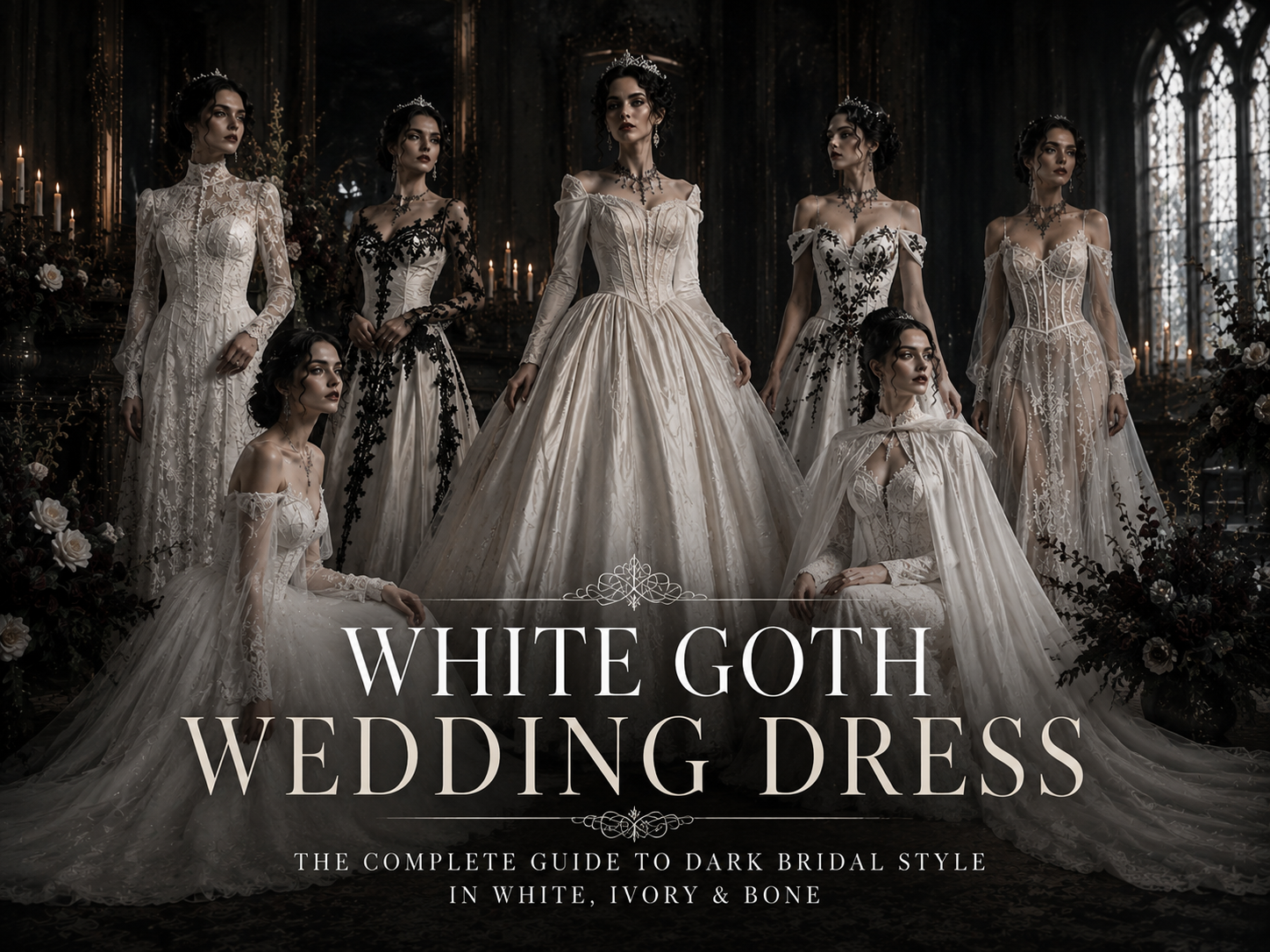
White Goth Wedding Dress – The Complete Guide to Dark Bridal Style in White, Ivory & Bone
The Gothic Bridal Edit · 2026
White Goth Wedding Dress
The Complete Guide to Dark Bridal Style in White, Ivory & Bone
From Victorian lace column gowns and ethereal tulle ballgowns to dramatic white velvet and black-detail contrast — your definitive guide to the white goth wedding dress in 2026.
The white goth wedding dress is the most quietly powerful choice in all of dark bridal fashion. It wears the colour of tradition and the spirit of darkness simultaneously — and in doing so, it achieves something neither a conventional white gown nor a black one can manage alone.
Introduction
Why the White Goth Wedding Dress Is the Most Sophisticated Choice in Dark Bridal Fashion
There is a particular assumption in wedding culture — and in goth culture simultaneously — that darkness must express itself in dark colours. That the goth bride who chooses black is making the braver, more authentic statement than the one who chooses white. This assumption is wrong on both counts, and the white goth wedding dress of 2026 proves it comprehensively. A white or ivory gown constructed with the full creative vocabulary of the gothic tradition — Victorian lace, dramatic silhouette, sculptural construction, dark detail, and an uncompromising relationship with the architecture of the dress — is not a compromise between two aesthetics. It is a synthesis of them, and the result is something more complex, more visually layered, and more genuinely surprising than either a black gown or a conventional white one would produce.
The white goth wedding dress also solves one of the most common practical tensions in goth bridal planning: the desire for an unambiguously gothic aesthetic alongside a context — a traditional church, a family with strong expectations, a formal venue — that makes a fully black gown feel confrontational rather than personal. The white goth dress navigates this tension not by backing down from the aesthetic but by expressing it in a register that meets the occasion on its own terms while remaining absolutely, unmistakably goth in every element of its construction. It is the gown that reads as a wedding dress to every guest in the room and as a gothic statement to every person who looks closely enough to understand what they are seeing.
This guide covers the full landscape of the white goth wedding dress in 2026 — from the ten most distinctive silhouettes and the fabrics and details that give them their gothic character, to colour variations within the white family, accessory directions, styling approaches, and everything you need to know before commissioning or choosing the white gown that is both completely bridal and completely, darkly yours.
What Makes a White Dress Gothic
The Gothic Vocabulary Applied to White: What Separates a White Goth Gown From a Conventional Bridal Dress
A white wedding dress becomes a white goth wedding dress not through the addition of dark accessories or a black veil — though these may complete the look — but through the design language of the dress itself. The gothic vocabulary is applied to the white gown through its construction, its detail, its silhouette, and its relationship with the historical traditions of the gothic aesthetic. A white lace gown with a high Victorian collar and covered buttons is a white goth dress. A white silk ballgown with a corseted bodice and an asymmetric black lace overlay is a white goth dress. A white velvet column gown with dramatic sculptural sleeves and no other embellishment is a white goth dress. What makes all of them gothic is not their darkness but their deliberateness — the quality of having been chosen with a specific, considered, historically informed aesthetic intention.
✦ Gothic Design Elements in White
- High Victorian collar or mandarin neckline in white or ivory lace
- Long sleeves — lace, structured, or dramatically flared at the wrist
- A corseted bodice with visible boning or lace-up back detailing
- A cathedral or chapel train with asymmetric volume or trailing detail
- Black lace overlay or black embroidery on a white silk base
- Architectural silhouette — bustle, overskirt, or dramatic train manipulation
- Covered buttons from neck to hem in the Victorian tradition
- Sheer panels with visible structure — bones, boning channels, internal architecture
✦ What Keeps It Bridal
- The base colour — white, ivory, bone, or champagne — reads immediately as bridal
- The train — however dramatic — signals ceremony and occasion
- The veil — even a black or dark-edged one — places the look within the wedding tradition
- The overall silhouette reads as a gown rather than a costume
- The quality of construction signals formal occasion rather than theatrical performance
- The accessories bring darkness without overwriting the bridal character of the base gown
The Edit
10 White Goth Wedding Dress Designs for 2026
Each of these ten designs represents a complete creative direction — a specific way of expressing the gothic aesthetic through a white or near-white gown. Some lean toward the Victorian and the historically faithful. Others use the white base as a canvas for dark contrast and modern drama. All of them are unmistakably, completely goth — and all of them are unmistakably, completely bridal.
01
The Victorian White Lace Column
A floor-length column gown in ivory or antique white Chantilly lace over a silk lining in the same tone — with a high Victorian collar, long sleeves ending in lace cuffs, and a row of covered buttons running the full length of the back. This is the most historically faithful of all white goth wedding dress designs and the one with the deepest roots in the gothic tradition. The high collar and covered buttons reference Victorian mourning and formal dress directly. The lace — especially in its most intricate, most antique-looking forms — carries three centuries of dark romanticism in its pattern. Photographed in a stone church or gothic chapel, this gown is completely, devastatingly correct.
02
The White Velvet Ballgown
A full-skirted ballgown in ivory or winter-white silk velvet — structured, architectural, and imposing in its volume. Velvet in white or very pale ivory has a quality of aged grandeur that no other fabric in a pale tone can replicate: it photographs with extraordinary depth, it moves with a weight and presence that stiffer fabrics lack, and it reads simultaneously as completely bridal and profoundly gothic. With a corseted bodice and a cathedral train, this is the white goth wedding dress that commands every room it enters — not through its darkness but through its sheer physical authority.

03
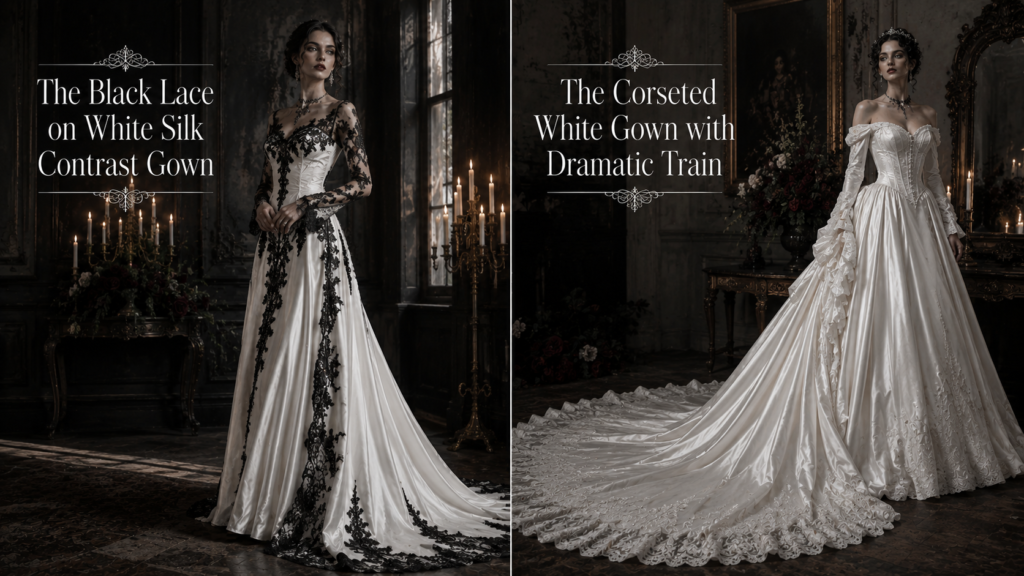
The Black Lace on White Silk Contrast Gown
An ivory or white silk base gown — column, A-line, or fitted — with a black Chantilly or Guipure lace overlay on the bodice, the sleeves, or both. The contrast between the white silk visible through and beneath the black lace creates one of the most visually complex and most photographically extraordinary effects available in all of white goth bridal fashion. The black lace reads as dark; the white silk beneath it reads as bridal; and the combination of the two reads as something entirely its own — a gown that is simultaneously in two worlds and perfectly at home in both. This is arguably the defining white goth wedding dress silhouette of 2026.
04
The Corseted White Gown with Dramatic Train
A white duchess satin or mikado silk gown with a fully structured, visibly boned corseted bodice — the boning channels and lace-up back detail visible as deliberate design elements rather than concealed construction — and a cathedral train that pools dramatically behind the bride during the processional. The corset bodice is one of the most immediately and most powerfully gothic elements available in white bridal fashion: it references the structural undergarments of the Victorian and Edwardian periods directly, and in white or ivory it reads as simultaneously historical and contemporary, formal and transgressive.
05
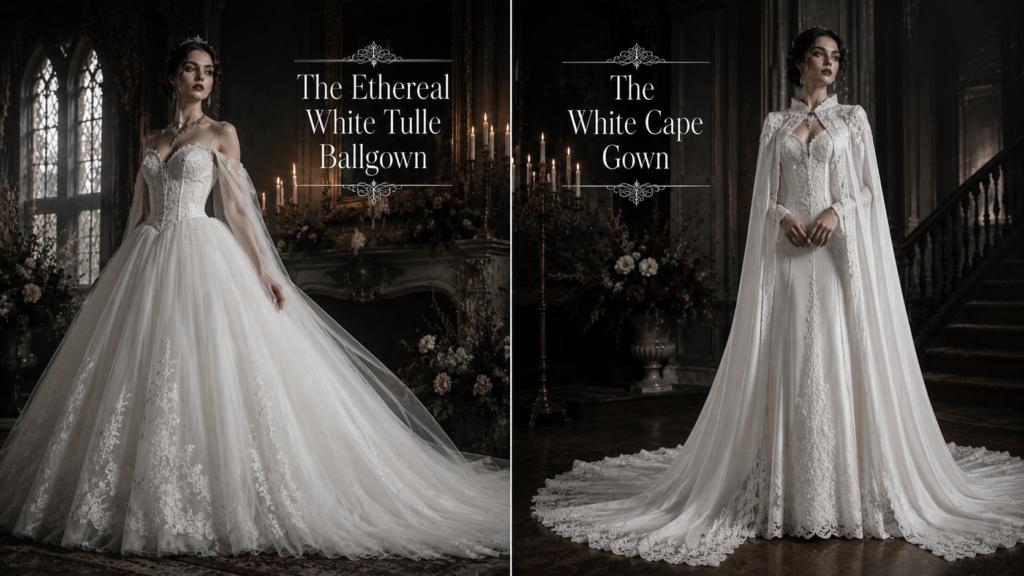
The Ethereal White Tulle Ballgown
An enormous, cloud-like skirt in layered white or very pale grey tulle — soft, voluminous, and seemingly weightless — over a structured fitted bodice with dark lace or black embroidery detail. The gothic quality of this gown lies in the contrast between its almost supernatural lightness and the dark details that interrupt it: a black floral embroidery creeping up from the hem, a near-black lace bodice against the pale skirt, or a trailing black lace overskirt worn over the tulle. This is the most romantically theatrical of all white goth wedding dress designs — a gown that looks as though it belongs in a painting of a haunted moor at midnight rather than in a conventional wedding album.
06
The White Cape Gown
A fitted white silk or crepe base gown worn with a dramatic floor-length or cathedral-length white lace cape — or alternatively, a white base gown with a black lace cape for maximum contrast. The cape transforms the white goth wedding dress into something with genuine theatrical presence and movement: it billows in the processional, it trails magnificently in outdoor photographs, and it allows for the most famous of all goth bridal styling moments — the removal of the cape for the reception to reveal the fitted gown beneath. A white lace cape over a white gown reads as ethereal. A black lace cape over a white gown reads as unmistakably, definitively gothic.
07
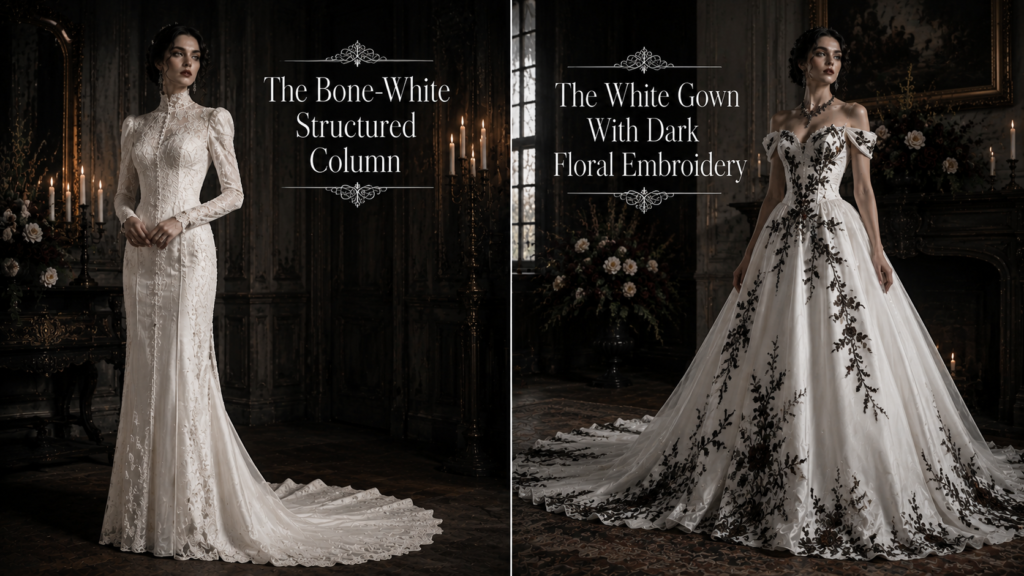
The Bone-White Structured Column
A sleek, architectural column gown in bone-white or very pale antique ivory heavy crepe — minimal in its embellishment, maximal in the precision of its construction. The gothic quality here is expressed entirely through silhouette and structure: a dramatically deep open back, a trained hem that moves with quiet authority, and sleeves that are either entirely absent or spectacularly long and trailing. No lace, no embroidery, no detail that is not also structure. The bone-white column gown is the most modernist and the most quietly confrontational of all the white goth wedding dress designs — a gown that makes its statement through restraint and that reads as gothic through the quality of its ambition rather than the legibility of its references.
08
The White Gown With Dark Floral Embroidery
A white or ivory silk base gown — ballgown, A-line, or column — with hand-embroidered dark floral motifs in black, deep plum, or very dark navy thread creeping from the hem upward, from the cuffs inward, or from the neckline downward. Roses, thorns, raven feathers, botanical vines, or gothic botanical illustration rendered in dark thread on a pale background. This is one of the most labour-intensive and most genuinely extraordinary options in all of white goth bridal design: each embroidered piece is unique, the craftsmanship is immediately visible and appreciated at close range, and the effect — dark botanical life growing across a pale ground — is one of the most beautiful images in all of alternative bridal fashion.
09
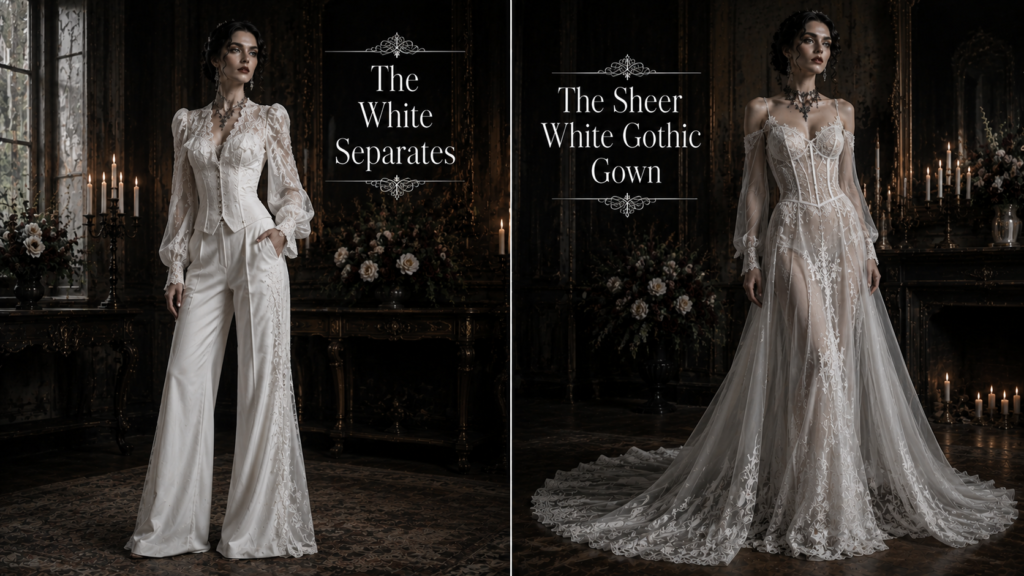
The White Separates
A structured white or ivory bodice — corseted, high-necked, or dramatic in its sleeve detail — worn with a separate, dramatically full white tulle or duchess satin skirt. The separates format in white gothic bridal fashion allows for maximum flexibility: each piece can be individually extraordinary in a way that a single unified gown sometimes cannot achieve, and the combination of a corseted bodice with a sweeping skirt creates a visual drama and silhouette change across the body that the most structured single-piece gown rarely matches. Worn with dark accessories throughout and transformed at the reception by removing the skirt to reveal a fitted white mini or tailored trouser beneath.
10
The Sheer White Gothic Gown
A gown constructed primarily from sheer white silk organza, chiffon, or tulle — through which a white or very pale underlining is visible, creating a layered, almost translucent quality that floats rather than falls. The gothic element is introduced through what is beneath and around the sheer layer: dark floral appliqué visible through the sheer outer surface, a deep plum or near-black slip beneath the white chiffon, or delicate black lace insets at the sleeve and bodice. This is the most ethereal and the most atmospheric of all white goth wedding dress designs — a gown that looks as though it exists at the threshold between the material and the immaterial, which is precisely where the gothic tradition has always been most comfortable.
“The white goth wedding dress makes its statement not through its colour but through its construction — through the high collar, the visible bones, the black lace overlay, the cathedral train. It says everything the black gown says, in the language the occasion was built to understand.”
— The Gothic Bridal Edit
The White Palette
Choosing Your White: Ivory, Bone, Champagne, and the Tones That Suit the Gothic Aesthetic
Not all whites are equal — and in the context of the white goth wedding dress, the specific tone of white you choose carries significant aesthetic implications. A stark, cool, blue-white reads as clinical and contemporary — it can work beautifully in the right context but it is not typically the most sympathetic tone for the gothic aesthetic, which favours warmth, age, and depth even in its pale registers. The whites that work most naturally within the white goth wedding dress tradition are those that carry a suggestion of age, of time, of having been somewhere before the wedding day — antique ivory, warm bone, aged cream, and the very palest champagne.
Antique Ivory
Warmest and most historically gothic. Suggests age and provenance. The most natural partner for black lace overlays.
Warm Bone
Slightly greyer and more mineral than ivory. The most architectural white — suits structured column and corseted gowns.
Winter White
Cool, clear, and ethereal. The most dramatic contrast against black lace details. Best in velvet or structured fabrics.
Pale Champagne
The warmest of the white family. Photographs beautifully in candlelight. The most romantic and the most subtly coloured option.
Fabrics
White Goth Wedding Dress Fabrics: The Materials That Carry the Gothic Character
The fabric of a white goth wedding dress is where much of the gothic character is communicated — because in the absence of dark colour, the weight, the texture, the historical associations, and the physical presence of the fabric itself must carry the aesthetic. A white Chantilly lace gown reads as gothic because Chantilly lace has been associated with formal, funerary, and Victorian dress for two centuries. A white silk velvet reads as gothic because velvet has an inherent quality of aged luxury that no lighter fabric can approach. The fabric choices available to the white goth bride are rich, varied, and deeply specific in the qualities they communicate.
Primary Gothic Fabrics in White
- Ivory silk velvet — aged grandeur and extraordinary depth of tone in pale
- White Chantilly lace — the most historically gothic fabric available in any colour
- White Guipure lace — more graphic and structured; suits architectural silhouettes
- Bone-white duchess satin — heavy, structured, and deeply photogenic
- White silk organza — sheer, dramatic, and extraordinary in long trains and capes
- Antique ivory brocade — richly patterned with the suggestion of centuries of use
Dark Detail Fabrics to Add
- Black Chantilly lace — as overlay panels, sleeves, or bodice detail
- Black Guipure lace — more graphic; perfect for collar and cuff detail
- Black silk organza — for overskirts, capes, and trailing panels
- Deep plum or midnight velvet — for ribbon, trim, and bodice insert detail
- Dark embroidery thread — black, dark plum, or deep navy on white base fabric
- Black tulle — layered with white for depth and atmospheric shadow in the skirt
Accessories
Accessorising the White Goth Wedding Dress: Darkness in the Details
The accessories of the white goth wedding dress carry a disproportionate amount of the aesthetic’s darkness — because the gown itself is pale, the dark elements must arrive through what surrounds and completes it. This is where the white goth bridal look differs most decisively from the conventional white bridal look, and where the most powerful creative decisions are made. A white lace gown with a pearl tiara reads as traditionally bridal. The same white lace gown with a black lace mantilla veil, oxidised silver jewellery set with dark stones, and a bouquet of black roses reads as completely and unmistakably goth. The accessories do not need to be numerous. They need to be chosen with complete precision and complete commitment.
🖤
The Veil
A black lace cathedral mantilla — the single most powerful gothic accessory for a white gown. Or a white tulle veil with a black lace edge trim. Or an entirely black silk tulle veil for maximum contrast. Any of these transforms a white gown into a white goth wedding dress immediately and completely.
💎
Jewellery
Oxidised silver or darkened gold set with black diamonds, onyx, deep amethyst, or garnet. A statement choker or layered chains over a high neckline. Avoid anything that reads as conventional bridal — the jewellery must be in dialogue with the gothic character of the gown.
🌹
The Bouquet
Black Baccara roses against the white gown — one of the most visually powerful contrasts in all of bridal photography. Deep burgundy and near-black anemones for a slightly softer alternative. Or all white blooms with dried dark botanical elements for a more subtle approach.
💄
Makeup
The pale gown calls for darker, more dramatic makeup than a conventional bridal look. A deep wine or near-black lip against an ivory gown creates a contrast of extraordinary power. A dramatically smoky eye against a high-necked white collar is one of the most immediately and completely goth images in all of bridal fashion.
The One Rule for White Goth Bridal Accessories
In white goth bridal styling, every accessory must earn its place by contributing something specifically gothic to the total look — not simply something beautiful. A beautiful pearl tiara contributes nothing gothic. A beautiful oxidised silver crown set with dark amethysts contributes everything. The test is not whether the accessory is lovely. The test is whether it moves the look toward the gothic aesthetic or away from it. Apply this test to every piece before committing to it, and you will not go wrong.
Practical Planning
Ten Things Every White Goth Bride Should Know Before Choosing Her Dress
- The white goth wedding dress requires more deliberate curation than the black one. Because the base colour is conventionally bridal, every gothic element must be more precisely chosen and more intentionally applied. A black gown is gothic by default. A white gown is gothic only through the specific decisions made about its construction, detail, accessories, and styling. Approach every decision with that additional layer of intentionality.
- The veil is one of the most powerful single decisions in white goth bridal styling. A black lace mantilla over a white lace Victorian column gown transforms the look entirely and immediately. More than any other single accessory, the veil — in its colour, its fabric, and its length — communicates the gothic aesthetic of the total look. Consider it with as much care as you consider the gown itself.
- Most mainstream bridal boutiques will not have what you are looking for. The white goth wedding dress is not typically found on a standard high street bridal boutique rail. A Victorian lace gown with a high collar exists in the market, but you may need to search specifically for it — through alternative bridal designers, bespoke dressmakers, and boutiques that specifically cater to non-conventional bridal aesthetics.
- The combination of black and white in a single gown requires exceptional construction quality. Black lace overlay on white silk, or black embroidery on an ivory base, requires a level of technical skill and fabric knowledge that not all dressmakers possess equally. Where black and white fabrics are combined in a single garment, the construction must be flawless — any imprecision is immediately and harshly visible against the contrast of the two tones.
- Test the complete look in the lighting conditions of your venue. A white goth wedding dress with black lace detail will read very differently in bright natural light, in candlelit low light, and under flash photography. The contrast between white and black details can appear very dramatic or relatively subtle depending on the light. Test before you commit, and brief your photographer specifically.
- Bring every accessory to every fitting from the first appointment. The black lace veil, the oxidised silver jewellery, the dark bouquet — all of these must be assessed in combination with the dress from the earliest fitting. The white goth look is a total composition, and the balance between the pale gown and the dark accessories must be calibrated at every stage of the process.
- White velvet in warm-toned lighting is one of the most beautiful materials available in all of bridal fashion. Ivory or antique-white silk velvet in candlelight photographs with a depth and warmth that no other pale fabric approaches. If you are drawn to a velvet gown, understand that the photography from your reception — in the candlelit room you have designed — will be extraordinary in ways that studio photography in a boutique cannot anticipate or replicate.
- The gothic character of a white gown depends more on the silhouette than on the detail. A white lace gown with a high Victorian collar and covered buttons is instantly recognisable as gothic even without a single dark accessory. A white satin strapless gown with black lace overlay reads as a conventional gown with dark detail. The silhouette is the foundation. The details deepen and extend it. Get the silhouette right first.
- Consider the practical advantages of the white goth dress in mixed-aesthetic contexts. If your wedding has guests with a wide range of aesthetic backgrounds and expectations — including family members for whom a fully black bridal gown would be genuinely upsetting — the white goth wedding dress offers a genuine solution. It reads as completely bridal to every guest while expressing the gothic aesthetic completely to every person who understands it. It asks nothing of anyone while giving everything to its wearer.
- The right white goth wedding dress feels like you — not like a compromise. The white goth dress is not the choice made for other people’s comfort. It is the choice made because white — in this specific silhouette, with these specific fabrics and details and accessories — is the most honest, most beautiful, and most completely personal expression of who you are on your wedding day. If the white gown you are considering feels like a concession to expectation rather than an expression of your actual aesthetic, keep looking. The right dress — even in white — will feel as completely, darkly yours as any black gown ever could.
Final Thoughts
White Is Not the Opposite of Gothic. In the Right Dress, It Is Its Fullest Expression.
The white goth wedding dress is for brides who understand that the gothic aesthetic has never been only about darkness. It has always been about depth — about the layering of beauty and shadow, of history and intention, of the formal and the transgressive. A white gown with a high Victorian collar and black lace overlay carries exactly that layering. It honours the tradition of the bridal gown while refusing to be entirely contained by it. It speaks the language of the occasion while insisting on speaking its own simultaneously. That double register — at home in the church and at home in the dark — is precisely what the best gothic art has always managed, and it is what the best white goth wedding dress manages too.
Choose the silhouette that is historically and personally yours. Add the dark detail that the gown needs to become fully itself. Find the black lace veil, the oxidised silver jewellery, the dark bouquet that complete the picture. And then stand in that dress — white and gothic and completely, honestly yours — and know that you did not compromise. You synthesised. And the result is something more beautiful than either aesthetic alone could have produced.