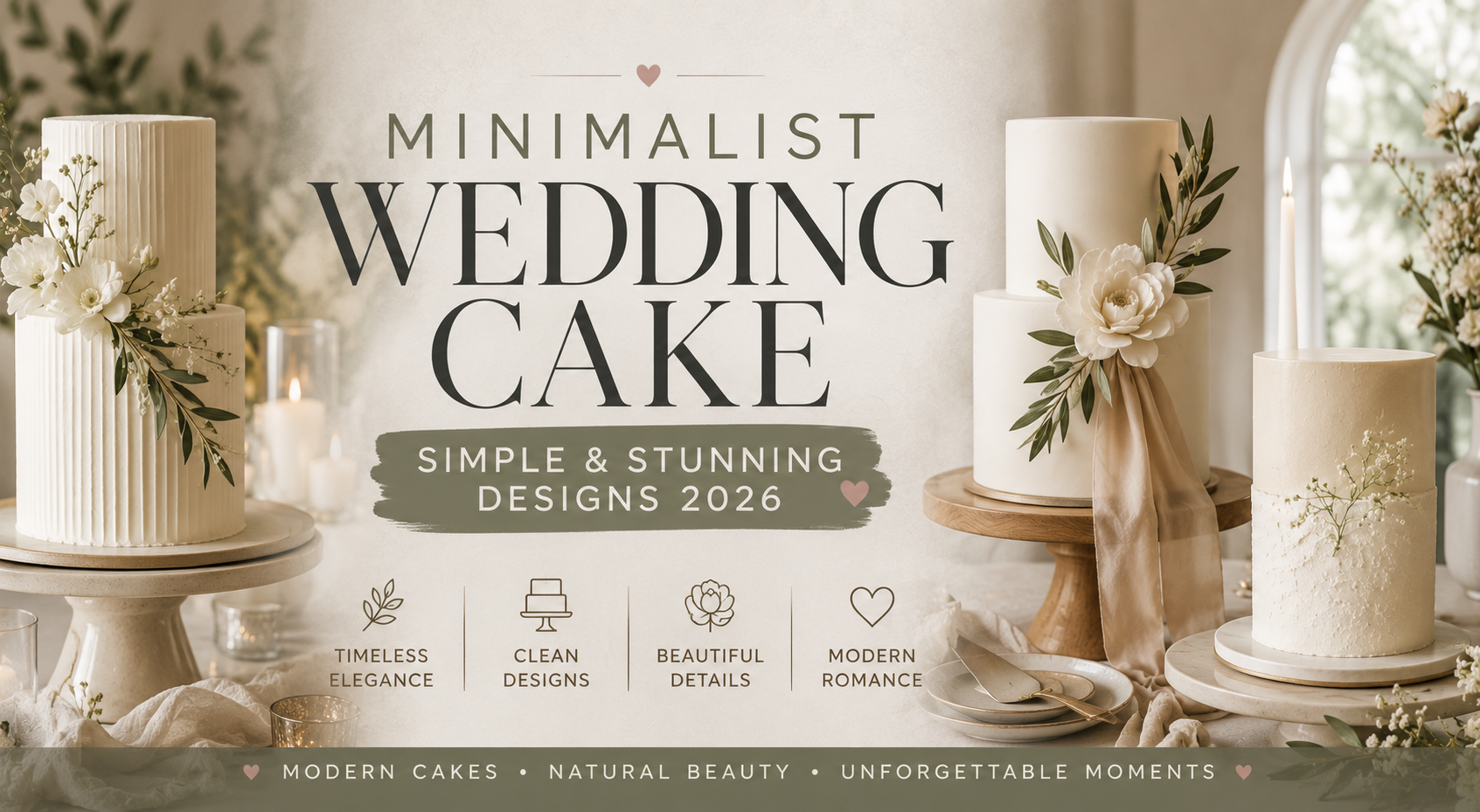
Minimalist Wedding Cake — Simple & Stunning Designs 2026
Wedding Cake · 2026
Minimalist Wedding Cake — Simple & Stunning Designs 2026
Six styles that prove the quietest cakes photograph the best, the flavour guide for a restrained aesthetic, the cake table setup, and how stationery ties everything together.
There is a version of the minimalist wedding cake that looks expensive because of what it has, and a version that looks expensive because of what it does not. The second one is almost always more interesting to look at and significantly harder to get right. Done correctly, a minimalist cake does not announce itself — it earns a second glance, and then a third, because it communicates a decision rather than a default. This guide covers what makes the distinction real, six styles that consistently deliver on it, and how to carry the same design logic through to the table and the stationery.
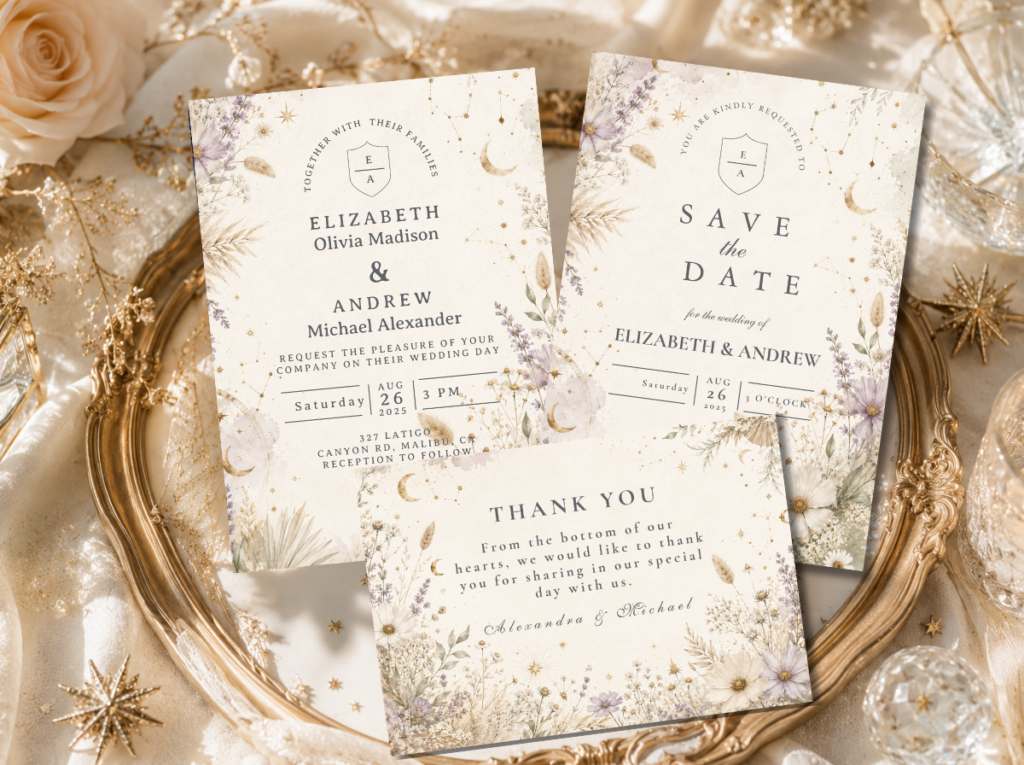
Browse the Wedding Avenue stationery collections.
Invitations, place cards, and suite elements that pair correctly with every minimalist cake style below.
“A minimalist cake does not need less thought. It needs more — every detail visible, every decision deliberate, nothing left to chance or decoration to cover.”
Section 01 What Makes a Wedding Cake Minimalist
Minimalist is not a synonym for small, plain, or budget-conscious. It is an aesthetic category defined by restraint — the deliberate decision to let fewer elements carry more weight — and it requires more precise execution than heavily decorated styles do, precisely because there is nowhere to hide an imprecise edge or an off-colour fondant patch. A five-tier fondant cake covered in sugar flowers is forgiving in ways a single-tier naked cake or a smooth white fondant cylinder is not.
The minimalist wedding cake is defined by three qualities applied simultaneously. First, a legible silhouette — the shape of the cake communicates something on its own without decoration to direct the eye. Second, a deliberate surface — whether that surface is perfectly smooth fondant, intentionally textured buttercream, or the open crumb of a naked cake, the surface itself is a design decision rather than a medium waiting for decoration to arrive. Third, one considered detail — a single botanical element, a geometric line, a black ribbon, or nothing at all. One. The moment there are two details competing for attention, the cake stops being minimalist and starts being ‘simple but decorated.’
This is worth naming explicitly because the most common minimalist cake mistake is adding one element too many. A perfect smooth white fondant single-tier needs nothing beside it. A naked cake with a single greenery sprig does not also need a monogram topper. A textured buttercream does not need a ribbon and a floral arrangement and a personalised tag. Each of those additions is individually beautiful — together, they cancel the minimalist quality the cake was supposed to have.
✨ Styling Note
The minimalist cake test: if you can remove one element and the cake still reads as complete — or reads as more complete — that element was not earning its place. Apply this to every addition under consideration: the topper, the ribbon, the flower, the monogram. Minimalist design is an editing process as much as a creative one. Start from nothing and add only what the cake genuinely needs; never start from a decorated vision and remove until it looks simpler.
Section 02 Six Minimalist Wedding Cake Styles
Six complete styles, from the most architectural to the most organic. Each pairs with a stationery collection that belongs to the same visual register.
Most Architectural
White Fondant Single Tier
Pure White · Ivory · Matte Finish
What it is: A single-tier cylinder or drum cake in smooth white or warm ivory fondant, perfectly level and edge-precise, with no surface decoration or with one deliberate geometric accent — a single gold leaf stripe at the base, a matte white ribbon flush to the tier, or nothing at all.
Best for: Couples who want the cake to read as a piece of sculpture rather than as a dessert; editorial and luxury weddings where every element is treated as a design object; venue spaces with strong architectural character that a multi-tier decorated cake would compete with.
What breaks the look: A slight warmth difference between fondant tiers; any visible seam in the fondant; a topper that introduces a second visual language (rustic, vintage, floral) that the smooth white surface does not set up.
The white fondant single tier is the hardest minimalist style to execute and the most rewarding when it lands. The entire visual weight of the cake rests on the quality of the fondant surface — the smoothness of the finish, the precision of the edges, the exactness of the colour match between the fondant and any accent. This is the style where the execution of the detail matters more than the detail itself. One perfectly applied stripe of antique gold leaf at the base of a smooth white tier is worth ten floral arrangements placed around a fondant that does not quite sit level.
Most Organic
Naked Cake
Warm Cream · Warm Ivory · Natural Sponge
What it is: A cake with the buttercream applied sparsely enough that the sponge layers are visible through the sides — the specific warm cream-and-caramel quality of exposed sponge layers communicating texture, warmth, and a studied informality. One botanical element at the top tier, or nothing.
Best for: Garden, outdoor, and woodland weddings; couples who want the cake to feel warm and seasonal rather than formal and white-tied; autumn and spring palettes where the natural sponge tone belongs to the same colour world as dried botanicals and warm linen.
What breaks the look: Over-decoration that erases the naked quality — too much buttercream on the sides reads as a poorly frosted cake rather than a deliberate naked one; fresh flowers that are too abundant for the restrained quality of the exposed sponge; bright white buttercream when warm ivory belongs.
The naked cake is the most forgiving of the six styles for someone sourcing from a general bakery rather than a specialist wedding pastry chef, which makes it a genuinely practical minimalist option. The key decision is how naked — the ratio between visible sponge and visible buttercream determines whether the cake reads as deliberately minimal or as incomplete. A very thinly frosted naked cake with perfectly smooth buttercream crumb-coat visible on the sides reads as intentional; irregular smears of buttercream that vary in thickness read as unconsidered.
✨ Styling Note
For a naked cake, the botanical element at the top tier should follow the same restraint rule as the rest of the minimalist approach: one element, specifically chosen, placed asymmetrically rather than centred. A single eucalyptus sprig and two dried rose heads placed off-centre reads as considered. A full botanical crown reads as a different cake style. The nakedness of the cake has already done the visual work of communicating organic warmth — the botanical accent only needs to confirm it, not repeat it.
Most Tactile
Textured Buttercream
Warm White · Warm Ivory · Palette Knife Texture
What it is: A buttercream cake with intentional surface texture applied by palette knife — horizontal swipe marks, organic ridged texture, or vertical combed lines — rather than a smooth frosted surface. The texture itself is the decoration; additional elements should be minimal or absent.
Best for: Couples who want warmth and handcraft quality without the rustic quality of a naked cake; spring and summer weddings with a botanical or garden palette; venues where a perfectly smooth surface would feel out of register with the setting.
What breaks the look: A texture that is too aggressive and reads as an unfinished frosting job rather than a deliberate surface; additional decoration that competes with the texture (a textured buttercream does not need a ribbon — the texture is already doing that visual work); warm ivory buttercream beside a cool white fondant accent that reads as two different whites.
Textured buttercream is the style most consistently requested in 2026 Pinterest searches because it threads the needle between formal and informal in a way few other cake styles manage. The texture communicates handcraft quality and warmth without the exposed sponge of a naked cake or the precision requirement of smooth fondant. The one technical note: the texture must be applied in a single session with consistency across the tier — a texture that changes character between the lower and upper sections of the same tier is visible in photographs.
Most Botanical
Single Botanical Detail
Warm White · Sage · One Botanical Motif
What it is: A smooth or semi-smooth fondant or buttercream cake with one botanical element — a single pressed leaf impression in the fondant, a hand-painted botanical sprig on one side of one tier, or one placed dried or sugar-crafted flower — applied as the sole decoration.
Best for: Couples who want one moment of visual interest without committing to a fully decorated cake; garden and botanical weddings where the cake needs to reference the floral world without being a floral arrangement itself; any palette direction where one accent colour from the flowers needs to appear on the cake.
What breaks the look: More than one botanical element; botanicals placed symmetrically around the tier rather than as a single considered placement; the botanical element chosen for colour rather than for form — in a minimalist cake, the form of the botanical matters more than its colour.
The single botanical detail style is the most versatile of the six because the botanical element can be adapted to almost any wedding palette and season while the base cake stays in the clean, minimal register. The critical restraint decision: one element means one. A single spray of pressed eucalyptus on one side of the bottom tier. A single dried palm leaf at the top. One hand-painted botanical motif. The moment a second botanical element is introduced — even a small one — the cake moves out of the minimalist botanical category and into the decorated botanical category.
Most Modern
Geometric Minimalist
White · Matte Gold · Clean Lines
What it is: A cake with tiers of differing sizes arranged with architectural precision, or a cake where geometric elements — a precisely applied gold line, a sharp-edged fondant panel, a mirror-glaze section — create visual interest through form rather than through decoration.
Best for: Contemporary, urban, and industrial venue weddings; couples whose broader wedding design language is architectural or interior-influenced rather than botanical or romantic; editorial and fashion-adjacent weddings where the cake is treated as an installation rather than a tradition.
What breaks the look: Imprecise geometric elements — a gold stripe that is not perfectly level reads as a mistake rather than a decision; conflicting geometric languages (a sharp-edged fondant panel beside a soft textured buttercream reads as inconsistent rather than as contrast); overworking the geometry past one or two elements.
The geometric minimalist cake is the most unforgiving of the six styles in terms of execution precision. Every clean line depends on the execution being as precise as the concept, and in professional photography the smallest deviation from level or parallel is visible. This is worth discussing directly with the pastry chef before deciding on this style — not to discourage it, but to confirm that the specific geometric detail under consideration is within comfortable reach of their execution level. A single perfectly applied gold leaf bar at the base of a smooth white cylinder is a better geometric statement than an ambitious multi-panel design that cannot be executed at the required precision.
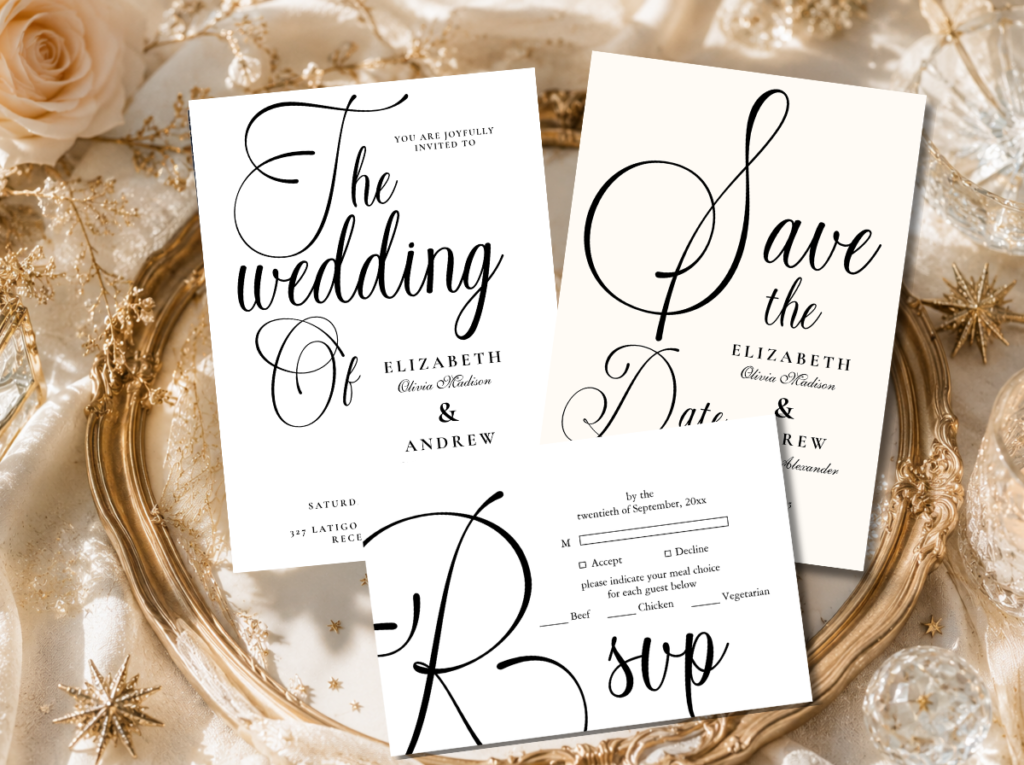
Most Dramatic
Black & White Elegant
Matte Black · Bright White · Sharp Contrast
What it is: A cake where black and white elements create high-contrast minimalist drama — a black-fondant tier beside white tiers, a matte black ribbon on a white cake, or a black botanical illustration applied directly to white fondant.
Best for: Black-tie and formal evening weddings; couples whose stationery, florals, and overall design language already includes black as a primary element; photographers who shoot in high contrast and want a cake that reads powerfully in monochrome.
What breaks the look: Black and white elements in the wrong ratio — too much black reads as gothic rather than elegant; too little reads as an accent rather than a design choice; cool-bright white rather than warm ivory beside matte black, which reads as stark rather than sophisticated.
The black and white minimalist cake is the most polarising of the six styles — it reads as either the most sophisticated or the most dramatic cake in the room, depending entirely on whether the overall wedding design language sets it up correctly. A black-and-white cake at a wedding where everything else is warm ivory, greenery, and dried botanicals reads as a mismatch. The same cake at a black-tie evening wedding with white florals, black linen, and high-contrast stationery reads as the defining visual moment of the reception. The style succeeds when it completes a design language that was already moving toward it.
Section 03 Minimalist Cake Flavours
The flavour of a minimalist wedding cake belongs to the same restraint logic as its appearance — which does not mean it should be simple or understated in quality, but that the flavour choice should cohere with the aesthetic rather than contradict it. A highly decorated cake can carry a complex, layered flavour profile without any tension. A minimalist cake where the surface is doing precise visual work benefits from a flavour that earns its place without competing for attention.
Three questions to ask when finalising the flavour for a minimalist cake: does the flavour feel appropriate to the visual register of the cake (a naked cake with warm exposed sponge layers suits a flavour in the same warm, organic family — vanilla bean, browned butter, honey); does the filling complement the buttercream or fondant without changing its colour where visible at the cut (a raspberry filling beside white buttercream produces a visibly pink edge in photographs — beautiful in some contexts, a surprise in others); and does the flavour scale correctly to the number of guests sharing it, since a complex layered flavour that reads beautifully on a tasting slice can read as muddy on a thinner reception cut.
Vanilla Bean — The Minimalist Foundation
Vanilla bean is the flavour that most naturally belongs to the minimalist wedding cake across all six styles. A high-quality vanilla bean cake communicates exactly what the minimalist aesthetic does — restraint, precision, and quality that shows up in what is there rather than in what is added. It is also the flavour that photographs most neutrally, which matters more than it might seem when the visual work is being done by the cake surface itself.
Browned Butter — The Warmth Upgrade
Browned butter adds a nutty, caramel-warm depth to a vanilla base that suits the naked cake and textured buttercream styles specifically. It reads as sophisticated without being complex, and its warm colour shows through the exposed sponge of a naked cake in a way that enriches the visual without changing it. One of the most underused flavour choices in minimalist wedding cakes and consistently the one that guests comment on most specifically.
Lemon with Elderflower — The Spring and Garden Direction
Lemon and elderflower is the flavour that most naturally pairs with the botanical styles — single botanical detail and naked cake. The specific quality of elderflower (floral, slightly honeyed, not aggressively perfumed) belongs to the same aesthetic world as a single pressed eucalyptus leaf or a dried rose on a clean buttercream surface. A spring or garden wedding with a minimalist botanical cake is the context where this flavour reads most specifically right.
Dark Chocolate — For the Black & White Direction
Dark chocolate is the one flavour that earns a natural place in the black and white minimalist cake, both because its deep, rich flavour profile matches the dramatic visual register of the style and because the visible dark sponge layers at the cut communicate the same high-contrast quality as the exterior. Pair with a bitter chocolate ganache rather than a sweet buttercream filling for the most coherent result across the cut.
Honey Almond — The Geometric Direction
Honey almond cake reads as warm and considered in the same way that a precise geometric gold-on-white design does — it is not simple or generic, but it is not complex in a way that announces itself over the visual experience of the cake. A frangipane layer or a marzipan element can carry the almond flavour through the cut in a way that reads as intentional rather than as background flavour.
Section 04 Styling the Minimalist Cake Table
The cake table is the surface the minimalist cake sits on, and it deserves the same restraint the cake itself demonstrates. A minimalist cake surrounded by elaborate cake table decoration — a full floral arrangement, a personalised banner, a layered tablecloth with a runner and a garland — reads as a designed cake placed inside a differently designed space. The cake should be the primary visual event of the table.
Three principles for the minimalist cake table:
One Surface, One Height
A single elevated surface — a marble slab, a raw linen-covered table, a minimal acrylic or oak riser — that places the cake at a height where it can be photographed clearly without ambient interference. One surface, one height. A stacked cake table with multiple riser levels, multiple surfaces, and multiple materials around the cake introduces visual complexity that the minimalist cake is specifically trying to avoid.
The Companion Element Rule — Maximum Two
The cake can be accompanied by a maximum of two companion elements: a small placed botanical element beside the cake on the same surface (not on a separate surface); and a single candle or votive in the same palette as the cake. Two. A cake knife and server laid flat on the cake table surface counts as one of the two — choose between the knife set and the botanical, or the knife set and the candle. The moment a third element is introduced, the table reads as decorated rather than designed.
Linen Before Flowers
If the cake table has a linen, choose it before the florals — because the linen is what guests see as the background of the cake in every photograph, and the wrong linen tone beside the cake surface creates a visible colour relationship that no floral arrangement can resolve. Warm ivory linen beside warm ivory fondant reads as intentional. Cool white linen beside warm ivory fondant reads as a slightly off tone that a guest cannot identify but a camera can.
✨ Styling Note
A marble slab under a minimalist cake costs almost nothing relative to the visual upgrade it provides. The specific combination of a clean-surfaced single-tier cake on a white or grey marble slab reads as a luxury object in a way that the same cake on a standard table surface does not — because the marble belongs to the same precise, architectural register as the cake. Source marble offcuts from a stone yard rather than a wedding rental company — the same quality, a fraction of the cost, and available in sizes that fit a single-tier cake exactly.
Section 05 Stationery & Cake Coherence
A minimalist wedding cake and a maximally decorated stationery suite create a visible tension that guests feel without being able to identify. The reverse is equally true — a clean, minimal invitation suite beside a heavily decorated cake. Coherence between the cake and the stationery is not about matching them literally; it is about ensuring both belong to the same visual register.
The practical application: the stationery suite should share the same palette temperature (warm or cool), the same level of decoration (restrained or abundant), and the same typographic register (precise and modern, or soft and calligraphic) as the cake design. Below are the six collections that pair most specifically with each cake style from Section 02.
White Fondant
White & Minimalist Suite
Clean white and warm ivory — the most architecturally precise stationery direction for the smooth fondant cake.
Naked Cake
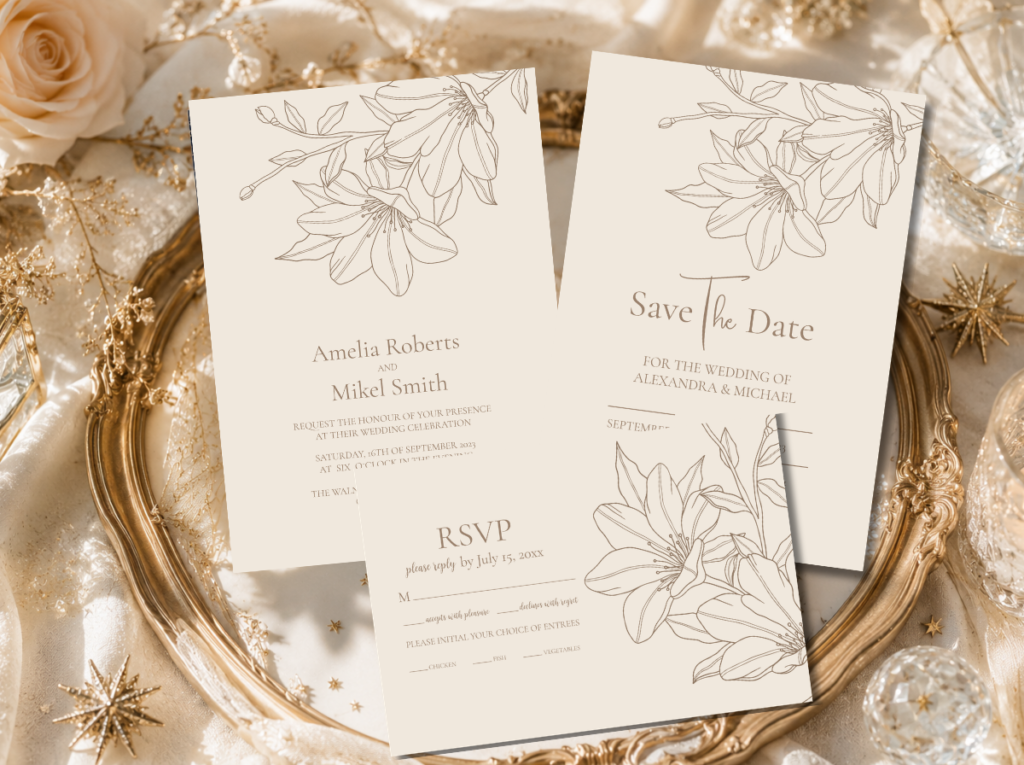
Naked Cake Suite
Warm cream and organic botanical illustration — pairs with the exposed sponge warmth of a naked cake.
Textured
Textured Buttercream Suite
Warm palette with handcraft illustration quality — matches the organic precision of textured buttercream.
Botanical
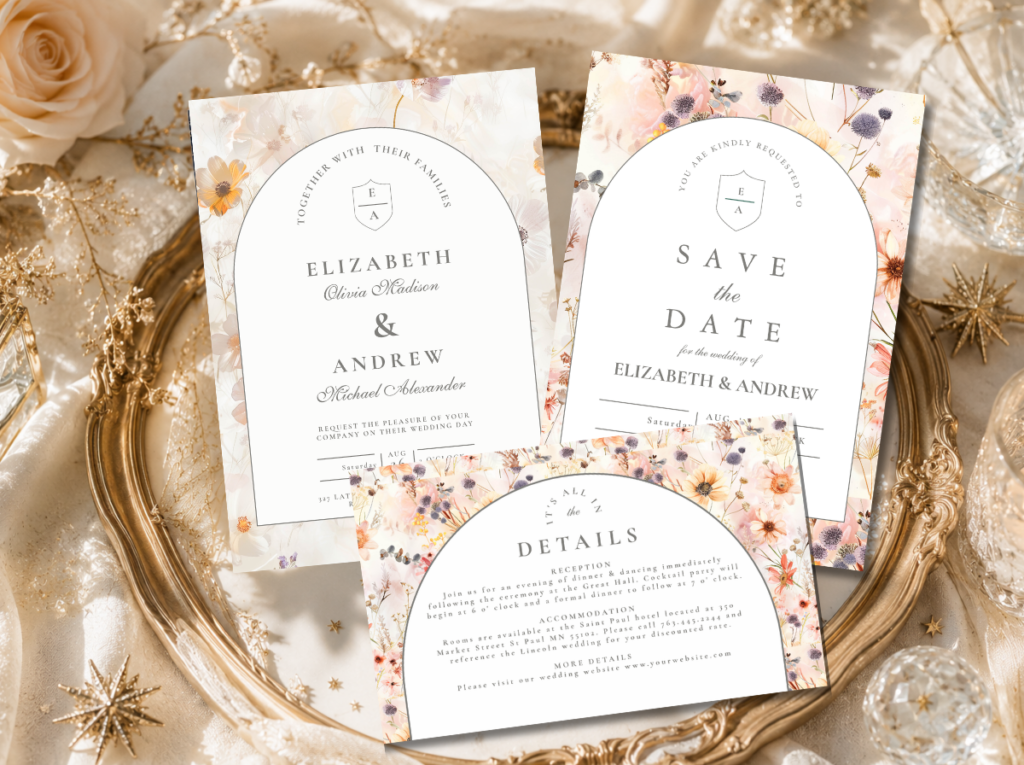
Botanical Detail Suite
Single botanical motif illustration — mirrors the one-element restraint of the botanical detail cake style.
Geometric
Geometric Minimalist Suite
Clean lines and modern precision — the stationery direction that belongs alongside a geometric minimalist cake.
Black & White
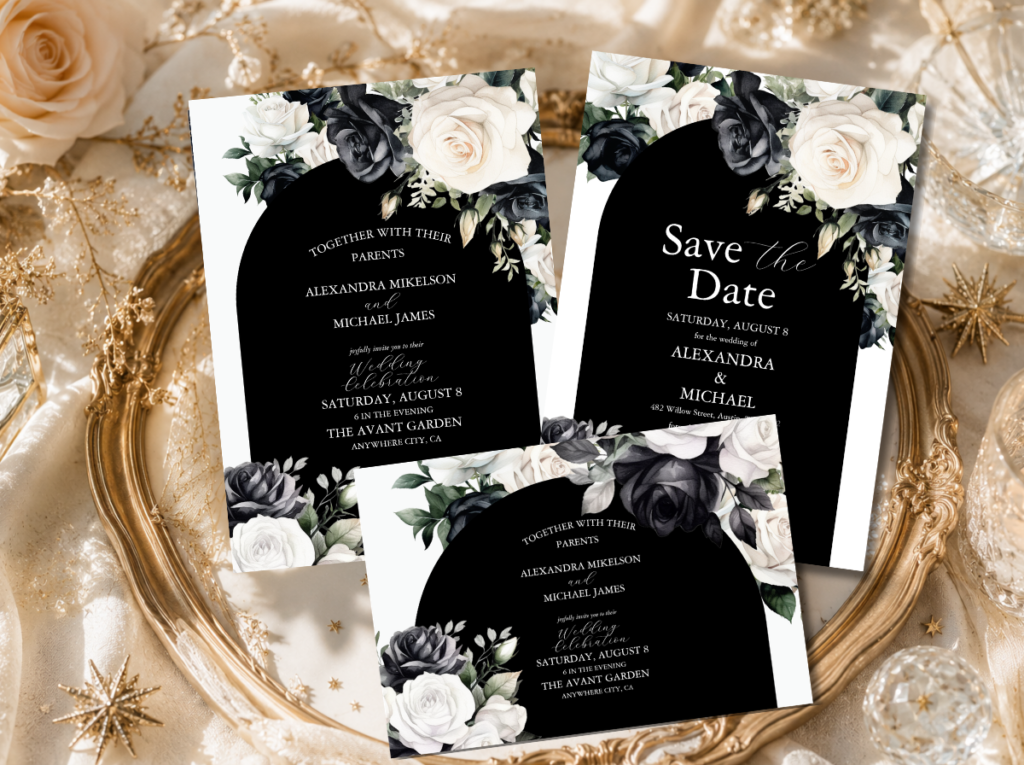
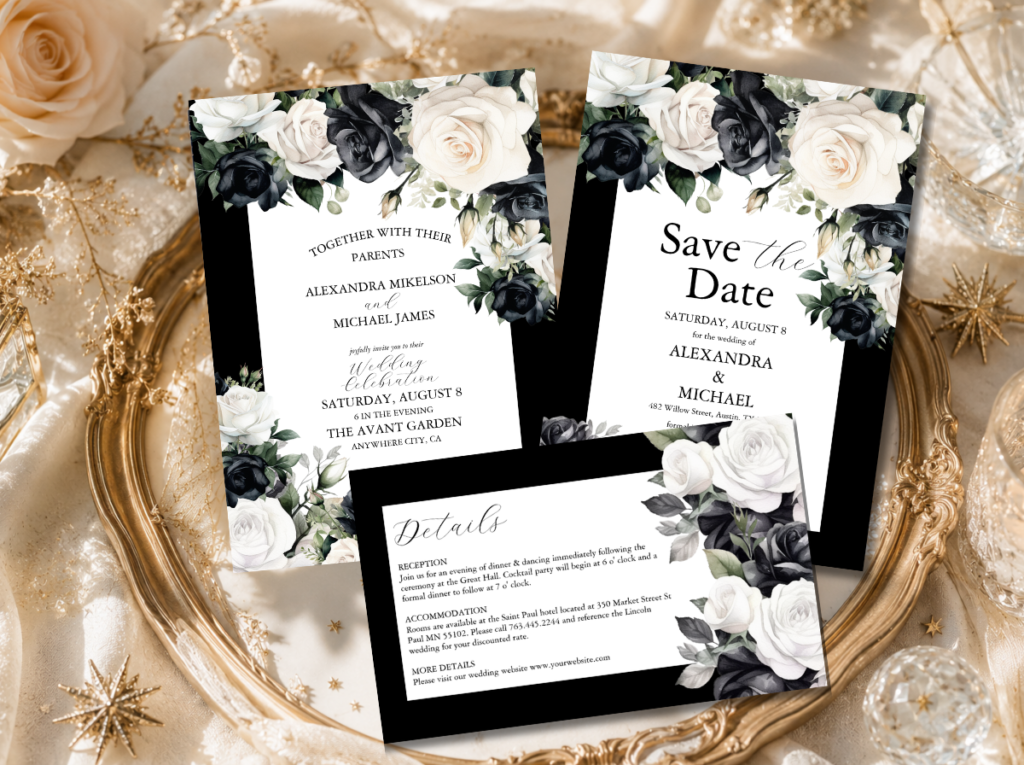
Black & White Elegant Suite
High contrast and editorial precision — the only stationery register that belongs with the black and white cake style.
Frequently Asked Questions
Is a minimalist wedding cake less expensive than a decorated cake?
Not necessarily — and sometimes the opposite. A heavily decorated sugar-flower cake distributes cost across many elements; a minimalist cake concentrates cost in the precision of execution of fewer elements. A perfectly smooth fondant single-tier requires the same technical skill as a five-tier decorated cake, and in some cases more — because there is no decoration to redirect the eye from an imprecise surface. The cost of a minimalist cake is driven primarily by the quality of execution rather than by the quantity of material, which means an experienced pastry chef capable of delivering that quality will price it accordingly.
How do I make sure my minimalist cake photographs well?
Three decisions matter. The surface finish must be consistent and intentional — a textured buttercream must have consistent texture across every section visible from the camera’s primary angle, and a smooth fondant must be free of seams or joins in the primary shot. The linen or surface the cake sits on must belong to the same colour temperature as the cake — a warm ivory cake on a cool white surface reads as two slightly different whites in photographs. And the companion elements on the cake table must be styled before the photographer arrives rather than assembled at the event — a minimalist cake table looks very different when the companion elements were placed with intention versus placed quickly during setup.
Can a minimalist wedding cake feed a large number of guests?
Yes — the minimalist aesthetic is a design language, not a size limitation. A three-tier naked cake or a three-tier smooth fondant cake in simple stacked form serves as many guests as a three-tier decorated cake of the same dimensions. The visual impact of a minimalist multi-tier cake often reads as stronger than a heavily decorated cake of the same size, because the clean silhouette reads from a distance in a way that fine decoration does not.
What is the biggest mistake couples make with minimalist wedding cakes?
Adding one element too many after the cake design is finalised. A minimalist cake design is completed — with one botanical element, or a single ribbon, or a geometric stripe — and then in the week before the wedding a topper is added, or a second floral arrangement is placed around the base, or a personalised monogram is requested. Each addition is made independently and seems small in isolation; together, they remove the minimalist quality the cake was designed to have. The minimalist cake is finished when the original design says it is finished.
Complete the Look
Minimalist Wedding Stationery Collections
Six stationery directions — one for each cake style above — so the invitation tells guests exactly which world they are walking into.