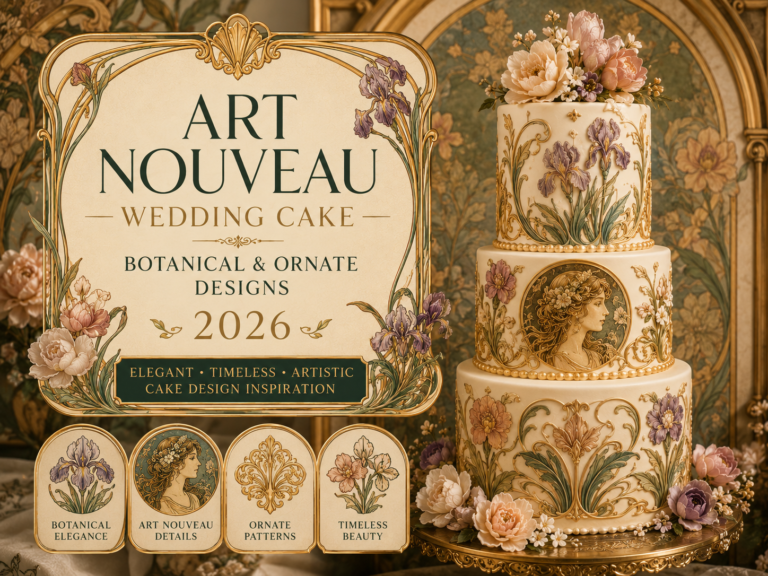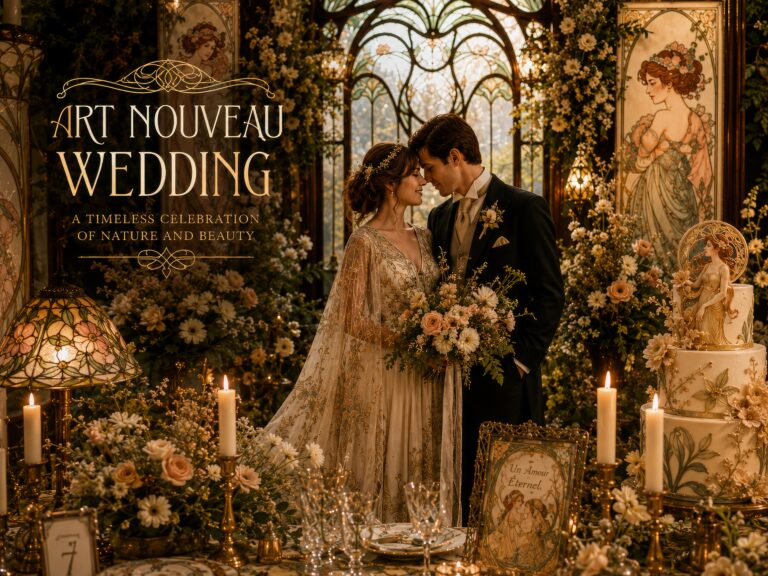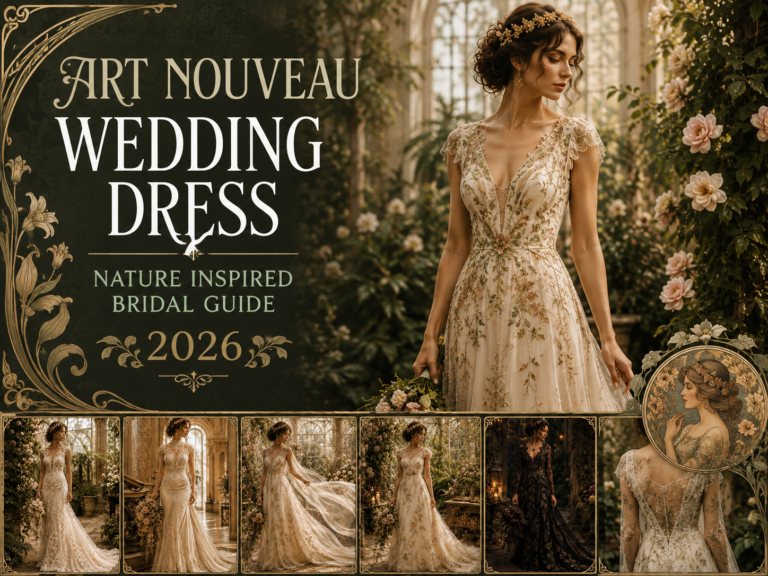
Art Nouveau Wedding Ring
Art Nouveau Wedding · 2026
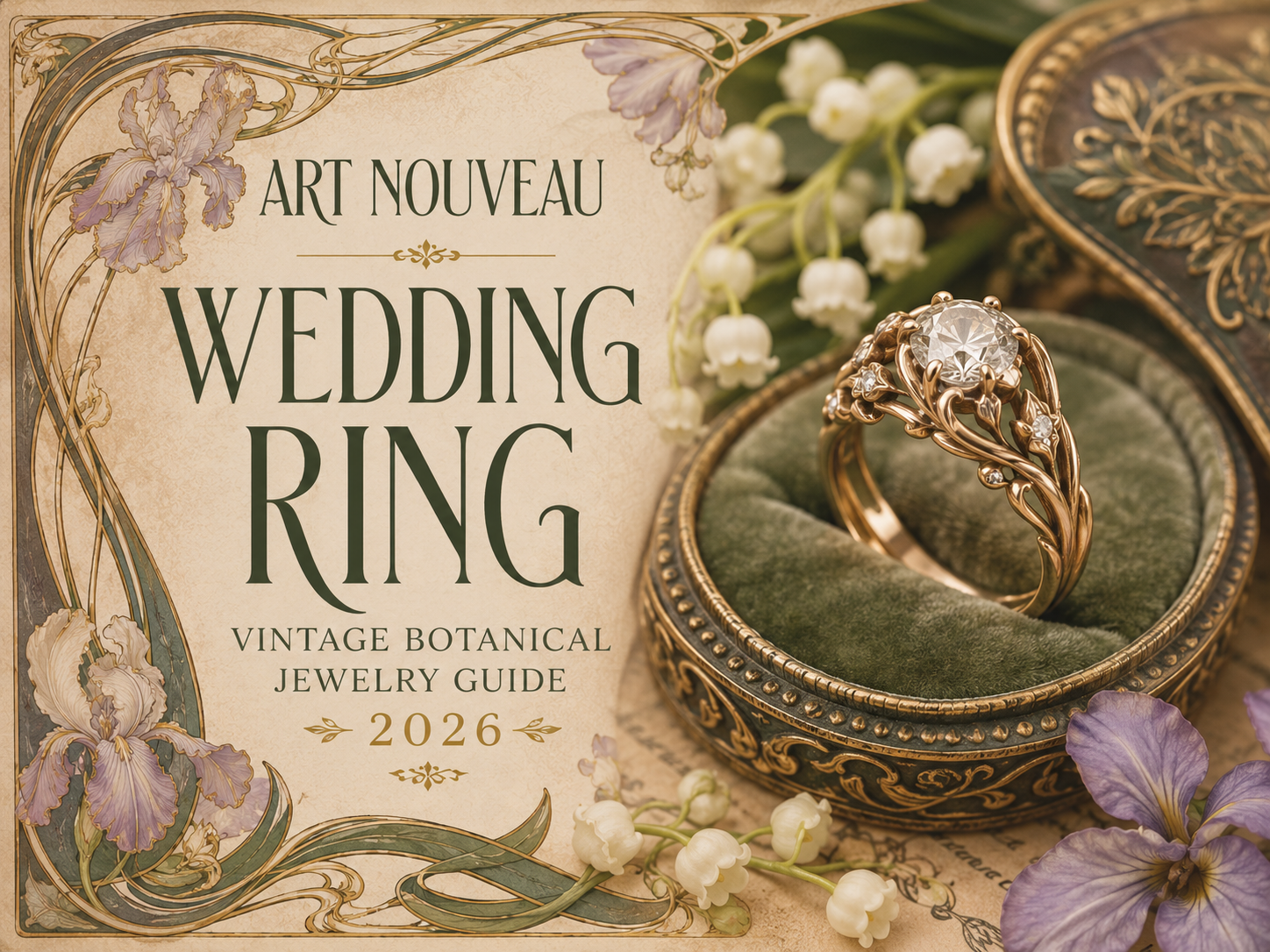
Art Nouveau Wedding Ring — Vintage Botanical Jewelry Guide 2026
From sinuous botanical vine bands and dragonfly motif settings to asymmetric organic gold work — the complete guide to choosing an art nouveau wedding ring in 2026.
An art nouveau engagement ring looks nothing like the rings that dominate contemporary bridal jewellery, and that is the entire point of choosing one. Where contemporary settings favour the clean geometric precision of a solitaire on a plain band, art nouveau jewellery favours the organic curve, the botanical motif rendered with genuine accuracy, and the sense that the gold itself has grown into its shape rather than being bent there. This guide covers what genuinely distinguishes art nouveau jewellery from its neighbouring eras, the specific ring styles that belong to the tradition, how to pair a wedding band with an art nouveau engagement ring, where the trend is heading in 2026, and how your ring connects to the stationery and broader aesthetic of an art nouveau wedding.
Art nouveau jewellers did not set a stone and decorate around it. They imagined a piece of the natural world — a dragonfly mid-flight, a vine in the act of climbing, a flower at the precise moment of opening — and found, somewhere within that living composition, the place a diamond belonged.
Section 01
What Makes a Ring Art Nouveau
The defining quality of an art nouveau wedding ring is sinuous line work: curves that flow and trail in the specific organic rhythm of growing things rather than the controlled, regular curves of conventional jewellery design. This is visible in the band itself — an art nouveau band rarely sits as a plain uniform circle of metal but instead carries the suggestion of a vine or stem, narrowing and widening, occasionally interrupted by a leaf or bud, never quite symmetrical in the way a contemporary band is symmetrical. The setting around any central stone follows the same principle: rather than a uniform prong setting holding a stone at the centre of an otherwise undecorated band, an art nouveau setting integrates the stone into a botanical or natural composition, so the diamond or gemstone reads as a dewdrop on a leaf, or the eye of a dragonfly, or the centre of an opening flower, rather than as the obvious focal point of an otherwise neutral piece of jewellery.
Botanical and insect motifs appear throughout genuine art nouveau jewellery design with a consistency that reflects the movement’s core philosophy: the dragonfly, with its iridescent wings and elongated body, was one of the most beloved motifs of the entire period, appearing in brooches, pendants, and rings with wings rendered in enamel or pavé-set gemstones and bodies that curve along the line of a finger or wrist. The peacock, with its extraordinary tail feathers, provided endless opportunity for the jewel-toned enamel work the movement favoured. Flowing florals — wisteria, irises, poppies, and the various climbing vines that appeared throughout art nouveau botanical illustration — translate into rings where the band itself becomes a stem and the central setting becomes a bloom. Asymmetric settings, where the stone sits slightly off-centre within its botanical or organic frame rather than precisely centred, are another consistent quality: art nouveau jewellers deliberately avoided the rigid symmetry that both earlier and later jewellery traditions favoured.
The distinction between art nouveau and art deco jewellery — the style that followed it almost immediately, beginning around 1910 and dominating through the 1920s and 1930s — is the clearest and most useful distinction for identifying genuine art nouveau pieces. Art deco favoured geometric precision: straight lines, symmetrical repeated patterns, sharp angular settings, and a machine-age aesthetic that celebrated industrial regularity. Art nouveau favoured exactly the opposite: organic asymmetry, curved lines, botanical irregularity, and a deliberate rejection of the geometric precision that industrial design was beginning to celebrate elsewhere. A ring with a stepped, symmetrical geometric setting in a grid-like pattern is art deco. A ring with a curving vine, an asymmetric botanical cluster, or a single dragonfly motif with organically rendered wings is art nouveau. The two styles are sometimes confused because they are chronologically adjacent, but their underlying design philosophies are direct opposites.
The distinction between art nouveau and Victorian jewellery, which preceded it, is more subtle but equally important. Victorian jewellery — particularly in its later, more ornate periods — favoured dense, structured ornamentation: intricate repeated patterns, formal symmetrical arrangements, and a quality of busyness that filled every available surface with consistent, regular decorative detail. Art nouveau, while equally detailed and equally willing to cover a surface in ornamentation, organised that detail according to organic, flowing logic rather than formal repeated structure. The practical way to distinguish the two: Victorian ornamentation tends to repeat a motif in a regular, almost architectural pattern; art nouveau ornamentation tends to follow the irregular, asymmetric logic of a single growing botanical form, with no two sections of the design identical to one another in the way that Victorian pattern repetition typically is.
Section 02
Art Nouveau Engagement Ring Styles
Botanical Vine Bands
The botanical vine band is the most quietly versatile art nouveau ring style: a band where the metal itself is shaped into the suggestion of a climbing vine, with small leaves or buds in low relief along its length, narrowing and widening with the same organic irregularity as a real stem. The central stone, where one is set, often appears as though it grew from the vine’s structure — nestled within a cluster of leaves rather than elevated above the band on tall prongs. This style suits the bride who wants the art nouveau aesthetic in its most subtle and everyday-wearable form: detailed enough to reward close examination, restrained enough to wear comfortably alongside other jewellery and through ordinary daily activity.

Flower Cluster Settings
The flower cluster setting places the central stone at the heart of a fully realised botanical composition: petals rendered in gold or platinum surrounding the stone in the specific irregular arrangement of a real flower rather than a uniform halo, sometimes accompanied by smaller stones representing dew or pollen, with the petals occasionally extending asymmetrically to one side in the organic manner the movement favoured throughout. This is the most visually dramatic of the art nouveau engagement ring styles and suits the bride who wants her ring to read immediately and unmistakably as botanical art rather than as a more restrained nod to the aesthetic. The specific flower referenced — a rose, a poppy, a wisteria cluster — can be chosen for personal significance as well as visual preference.

Dragonfly & Nature Motif Rings
The dragonfly is the single most historically significant non-floral motif in the art nouveau jewellery tradition, and a dragonfly motif ring — wings rendered in enamel or pavé gemstones in the iridescent blues and greens the insect displays in life, body curving along the line of the finger — is among the most specifically and unmistakably art nouveau choices available. Other nature motifs from the tradition include the peacock feather, rendered in jewel-toned enamel with the distinctive eye pattern at its centre; the butterfly, with wings spread symmetrically but rendered with the same organic detail as the dragonfly; and less commonly, botanical seed pods and the specific curling form of an unfurling fern frond. These motif rings are the most visually distinctive and most immediately conversation-starting of the art nouveau styles, and they suit the bride who wants her ring to be recognised specifically as art nouveau rather than simply as vintage or antique-inspired.

Asymmetric Organic Settings
The asymmetric organic setting is the most contemporary-feeling of the genuinely art nouveau styles — a central stone held within a setting that deliberately avoids any symmetrical or centred arrangement, with the surrounding metalwork flowing more heavily to one side in the manner of a plant growing toward available light. This style requires no specific botanical or insect reference to read as art nouveau; the asymmetry and organic line work alone are sufficient, because they embody the movement’s underlying design philosophy directly rather than through a specific representational motif. This is often the style that appeals most to brides who love the art nouveau sensibility but want a ring that reads as quietly sophisticated rather than overtly historical or thematic.

Vintage Filigree
Filigree work — fine, lace-like metalwork created by twisting and soldering delicate threads of gold or platinum into intricate openwork patterns — appears throughout the art nouveau period, though it is shared territory with the Edwardian jewellery tradition that overlapped it closely. Art nouveau filigree distinguishes itself through its organic rather than geometric patterning: the fine metal threads trace botanical curves and flowing lines rather than the more regular lattice and scrollwork patterns that characterise the broader Edwardian filigree tradition. This style produces some of the most delicate and intricate art nouveau rings available, with the openwork construction creating a quality of lightness and movement in the metal itself that solid-band styles cannot achieve.

Section 03
Art Nouveau Wedding Band Pairings
Pairing a wedding band with an art nouveau engagement ring requires more deliberate thought than pairing a plain band with a contemporary solitaire, because the engagement ring’s organic, often asymmetric detail does not sit alongside a band the way a simple centred stone does. The most successful pairings fall into two approaches: matching botanical continuation, where the wedding band carries a simplified version of the engagement ring’s motif — a thinner version of the same vine pattern, or small botanical details that echo without competing with the engagement ring’s central composition — so the two rings read as a single continuous piece when worn together. The second approach is a contoured or shaped band, cut to follow the irregular outline of the engagement ring’s asymmetric setting rather than sitting as a straight band against it, which allows the two rings to nest together physically in a way that a generic straight band cannot achieve against an organically shaped engagement ring.
Mixed metals — particularly the combination of yellow gold and rose gold — have genuine precedent in the art nouveau tradition and offer a specific way to add visual interest to a wedding band without competing against a detailed engagement ring. Rose gold, with its warm pink-toned alloy, was used throughout the period for its specific warmth and its complementary relationship to the deeper jewel-toned enamel and gemstone work the movement favoured. A rose gold wedding band against a yellow gold engagement ring, or rose gold botanical detail against a yellow gold base, creates a subtle two-tone effect that adds richness without introducing a third colour or competing decorative motif. White gold and platinum, while less specifically associated with the period’s warmer aesthetic register, were also used, particularly for filigree work where the cooler tone better displayed the fine openwork detail.
The general principle for any wedding band pairing: an art nouveau engagement ring with substantial botanical or motif detail is generally better served by a simpler, complementary band than by a second equally detailed piece, since two highly detailed organic designs worn together can compete rather than harmonise. The exception is the matching botanical continuation approach described above, where the band’s detail is specifically designed as a continuation of the engagement ring’s pattern rather than as an independent decorative statement — in that case, the two pieces are conceived as a single composition from the outset rather than paired after the fact.
Section 04
Where Art Nouveau Jewelry Trends Are Heading in 2026
Interest in vintage and antique sourcing has grown substantially as part of the broader art nouveau wedding aesthetic surge, with couples increasingly seeking out genuinely period pieces rather than contemporary reproductions. This reflects a wider cultural shift toward valuing the specific patina and quality of genuinely old jewellery — the slight irregularities of hand craftsmanship, the warmth that antique gold develops over a century of wear, the simple fact of an object’s genuine connection to the historical period it represents. For couples pursuing this route, working with reputable antique jewellery specialists who can verify period and authenticity is essential, since the value and meaning of a genuine antique piece depends entirely on its authenticity being correctly established.
Custom botanical designs represent the other major direction in 2026: couples working with jewellers to create entirely new pieces that apply genuine art nouveau design principles — organic line work, specific botanical or insect motifs with personal significance, asymmetric settings — to a ring made specifically for them rather than sourced from the period or reproduced from an existing historical design. This approach allows for the specific botanical species or insect motif that holds personal meaning for the couple, rendered with the authentic design language of the movement rather than a generic vintage-inspired setting. The growth of this custom approach reflects increasing jeweller fluency with genuine art nouveau design principles, beyond the more generic “vintage-style” rings that have been available for years without genuine reference to the movement’s specific visual philosophy.
The Edwardian and art nouveau crossover trend is among the most interesting developments in 2026 bridal jewellery: the two traditions overlapped chronologically and shared several techniques (particularly filigree work and the use of platinum), and pieces that combine the Edwardian tradition’s formal refinement with art nouveau’s organic botanical detail are increasingly sought after. This crossover style typically presents as fine filigree metalwork (the Edwardian contribution) shaped into organic, botanical patterns (the art nouveau contribution) rather than the more rigid geometric lattice work that pure Edwardian filigree favoured. For couples who love the art nouveau aesthetic but want a ring with slightly more structural refinement and slightly less botanical abundance, this crossover territory offers a genuinely well-precedented middle path between the two related period traditions.
Section 05
Tying Your Jewelry to Your Wedding Aesthetic
The ring is, in a very specific sense, the smallest and most permanently worn piece of the entire art nouveau aesthetic a couple builds across their wedding — and choosing it with genuine attention to the movement’s design principles signals something about the broader celebration before any guest has seen the venue, the stationery, or the dress. A botanical vine band or a dragonfly motif ring tells anyone who notices it that this couple has chosen their aesthetic with specific, genuine understanding rather than borrowing a label loosely. This is the same quality that distinguishes genuinely art nouveau stationery from stationery that merely borrows the aesthetic’s name: specific botanical accuracy, organic asymmetric composition, and gold detail that connects every element rather than appearing only as an isolated accent.
Matching the botanical illustration on your stationery to the specific detail of your ring creates a visual coherence that rewards close attention: a ring with a wisteria or vine motif pairs naturally with stationery built around cascading botanical illustration; a ring with a single flower cluster setting pairs with stationery featuring the same or a closely related botanical species; a ring with fine filigree detail pairs with stationery that uses sinuous gold line work as its primary decorative element rather than dense botanical illustration. This is not a requirement but an opportunity — the kind of detail that most guests will never consciously register but that contributes to the cumulative sense of a celebration that has been considered at every scale, from the largest decorative element to the smallest piece of jewellery worn on a single hand.
The flat lay photograph of the ring beside the invitation suite is among the most popular and most consistently shared images in art nouveau wedding photography, and for good reason: it places the smallest and the most intimate piece of the aesthetic directly beside the first and most public piece, and when both genuinely embody the movement’s organic botanical design language, the visual conversation between them is immediate and striking. Plan this photograph deliberately — the ring placed on or beside the invitation’s botanical illustration, in natural warm light, with the gold tones of the ring and the gold line work of the stationery positioned to echo one another. Photographers who specialise in this aesthetic will often request this shot specifically because of how reliably it performs on Pinterest and in engagement announcement posts.
The four stationery collections below each offer a different register of the art nouveau botanical tradition, matched to the ring styles described above. All are fully customizable with your names, date, and wedding details.
Shop the Collections
Stationery Matched to Your Ring
Art Nouveau Floral
Flowing botanical illustration and antique gold detail — pairs naturally with flower cluster settings and botanical vine bands.

Art Nouveau Vintage
Warm nostalgic botanical art nouveau — the visual companion to antique-sourced and vintage filigree rings.

Flora Vintage Art Nouveau Wedding
Pure vintage botanical elegance — for rings with fine filigree detail and Edwardian crossover styling.

Wisteria Arch Botanical Wedding
Cascading wisteria and botanical abundance — the natural match for vine band and asymmetric organic ring settings.
Frequently Asked Questions
Common Questions
What makes a ring art nouveau?
Sinuous, organic line work rather than geometric precision; botanical or insect motifs (vines, flowers, dragonflies, peacocks) rendered with genuine natural accuracy; asymmetric settings where the stone is integrated into a natural composition rather than centred on a plain band; and the underlying design philosophy that ornamentation should follow organic, growing logic rather than formal repeated pattern. The clearest test: does the design look as though it grew, or does it look as though it was assembled from regular geometric or repeated elements? The former is art nouveau; the latter belongs to art deco or Victorian traditions.
Should I choose a vintage ring or a reproduction?
Both are legitimate paths and the choice depends on priorities. A genuine antique offers an authentic connection to the period, the patina and craftsmanship quality of hand-finished work, and often a lower cost than an equivalent newly made piece with comparable stone quality — but requires verified provenance and may need resizing or minor restoration. A custom or reproduction piece offers exact sizing, full control over stone choice and quality, and the option to incorporate personally significant botanical or insect motifs that may not exist in available antique stock. Neither is more “authentically” art nouveau than the other if the reproduction genuinely follows the movement’s design principles rather than offering a generic vintage-inspired setting.
What metals suit art nouveau rings?
Yellow gold is the most historically dominant choice and suits the warm antique palette the movement favoured throughout. Rose gold appears frequently, particularly paired with yellow gold for two-tone botanical detail, and complements the jewel-toned enamel and gemstone work common to the period. Platinum and white gold were used, particularly for fine filigree work where a cooler tone better displayed delicate openwork detail, though they are less specifically associated with the movement’s warmer overall aesthetic register. Avoid bright, highly polished contemporary white metal finishes, which read as distinctly modern rather than period-appropriate.
How do I match my stationery to my jewelry aesthetic?
Match by motif and register rather than by exact colour: a vine band or asymmetric organic ring pairs with the Wisteria Arch Botanical collection; a flower cluster setting pairs with the Art Nouveau Floral collection; vintage filigree or antique-sourced rings pair with Art Nouveau Vintage or Flora Vintage Art Nouveau. Plan a flat lay photograph of the ring beside the invitation suite in natural warm light — it is one of the most consistently shared images in this aesthetic.
Art Nouveau Wedding Stationery · 2026
Complete Your Art Nouveau Bridal Story
Botanical stationery suites that carry the same organic design philosophy as your ring — fully customizable with your names, date and wedding details.